


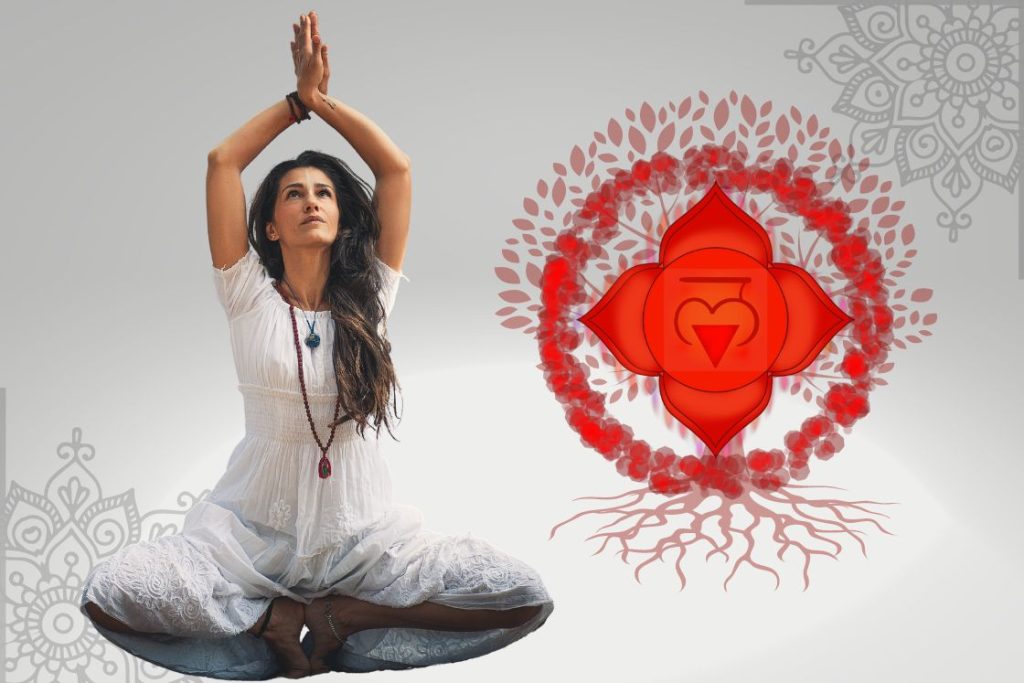
Below are grounding yoga poses that support the Root Chakra (Muladhara) by strengthening the legs, stabilising the pelvis, and calming the nervous system.
The Root Chakra, known as Muladhara, is the foundation of the entire chakra system. It governs our sense of safety, stability, survival, and belonging. When this chakra is balanced, we feel steady in the body and confident in daily life. When it is disturbed, fear, restlessness, insecurity, and physical fatigue can arise.
One of the most practical and effective ways to balance the root chakra is through grounding yoga poses combined with conscious breathing. These poses work on the legs, feet, hips, pelvis, and lower spine, helping energy settle downward and reconnect with the earth element.
This article shares simple yet powerful yoga poses for the root chakra, suitable for both beginners and regular practitioners.
Understanding the Root Chakra (Muladhara)
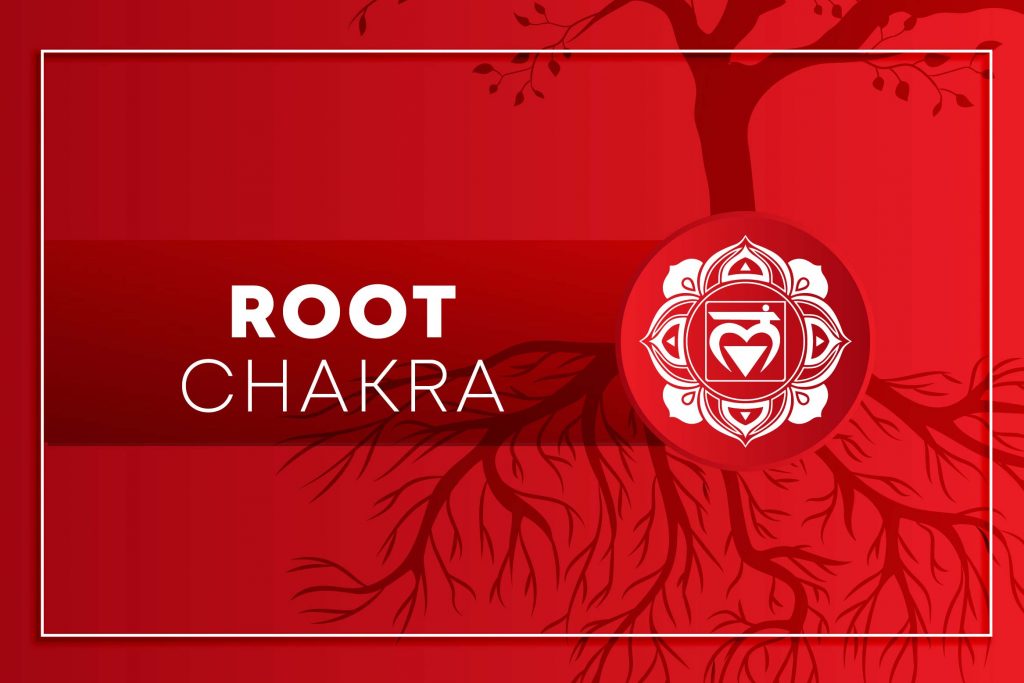
The Root Chakra, known in Sanskrit as Muladhara, is the foundation of the energy system. It governs our basic needs for safety, survival, emotional security, and stability, supporting the body’s natural fight, flight, or freeze response.
Associated with the earth element and symbolised by the colour red, the root chakra is located at the base of the spine, at the perineum, between the anus and the genitals. Its position reflects its role as a bridge between our inner energy and the physical world.
When the root chakra is balanced, you may feel:
- Grounded and calm
- Confident in daily life
- Emotionally steady
- Physically strong and supported
When it is blocked or imbalanced, common signs include:
- Anxiety, fear, or constant worry
- Feeling disconnected or “unsafe”
- Fatigue, constipation, or weight imbalance
- Irritability, impatience, or restlessness
Yoga poses that anchor the body to the ground help restore balance by calming the nervous system and stabilising energy flow.
Join Our 40 Day Live Kundalini & Chakra Meditation Course
Yoga Poses for the Root Chakra(Muladhara)
Yoga poses that ground the body, strengthen the legs, and open the hips and pelvis are especially effective for balancing the Root Chakra. These poses help stabilise energy, calm the nervous system, and reconnect you with the earth element.
Below is a simple and grounding sequence that can be practised regularly to support root chakra balance.
1. Mountain pose (Tadasana)
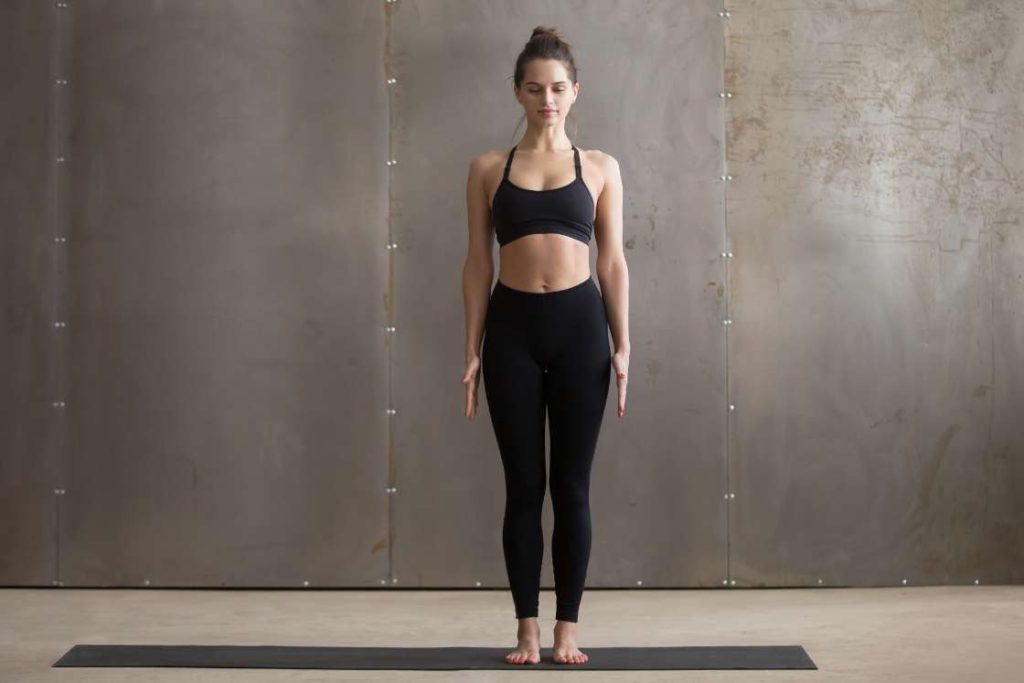
Mountain Pose is a simple yet powerful standing posture that teaches the body how to stand with awareness and stability. In this pose, you begin to sense the ground supporting and nourishing you, helping the mind settle into the present moment. By distributing your weight evenly through both feet, the body naturally feels more balanced, steady, and grounded.
Root Chakra focus: grounding through the feet, stability, and a sense of safety.
Steps to perform
- On a yoga mat, maintain a straight standing posture while keeping your feet in line with one another.
- Maintain a few inches of space between your feet so that your ankles do not touch.
- To establish a wider basis for weight distribution, spread your toes apart.
- Pull in your navel to preserve the spine’s natural curve and keep your back straight.
- Your arms may be held normally at your side. Roll your shoulder blades back and then down, keeping your shoulder away from your ears. As a result, your collarbones and chest will be opened up.
- Make sure your chin is not inclined upward or downward. Maintain a straight posture while focusing your attention on an unmoving point straight ahead.
- Maintain this pose for as long as you can.
2. Tree pose (Vrikshasana)
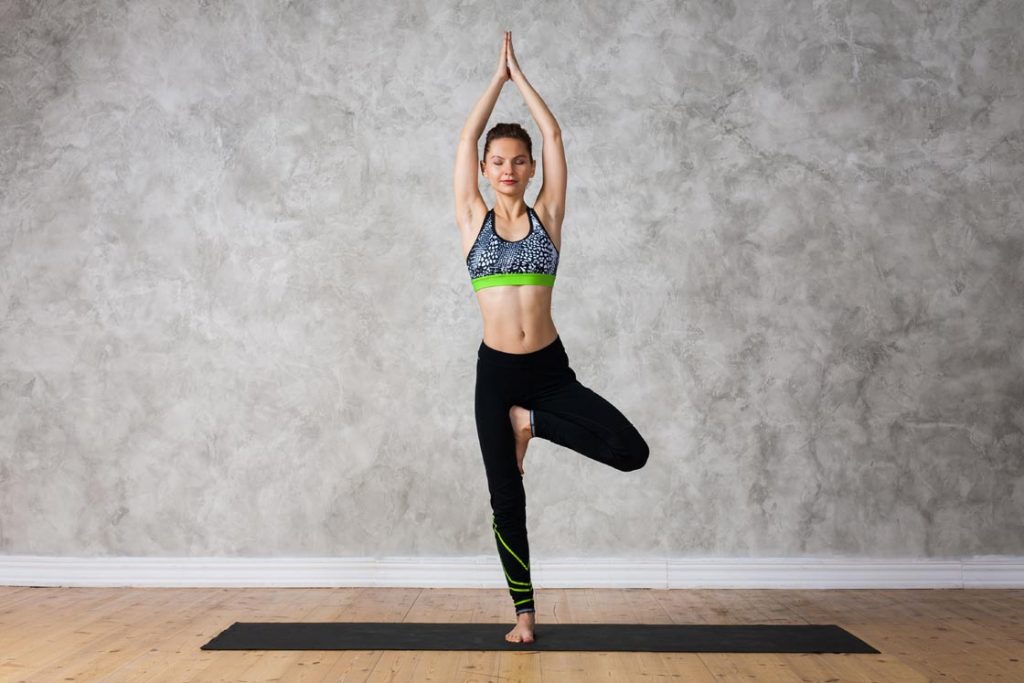
Tree Pose builds balance, strength, and steadiness by teaching the body how to root down while growing upward. With one foot firmly planted on the ground and the other lifted, the posture mirrors the natural stability of a tree deep roots below, gentle expansion above.
This pose strengthens the legs and hips while improving focus and inner balance. By grounding through the standing foot, energy is encouraged to rise steadily through the spine, activating the area at the base of the tailbone where the root chakra resides.
Root Chakra focus: grounding, balance, lower-body strength, and connection to the earth.
Steps to perform
- Start by adopting the mountain pose. Your body weight should be evenly distributed over the four corners of your feet, which should be securely planted on the mat.
- Lay some weight on your right foot and slowly lift your left leg by bending your left foot.
- The sole of your left foot should be placed on the inner of your right thigh as you rotate it to the side. Press the sole into the thigh while maintaining equal force on the sole.
- You can stretch your hands above your head and unite the palms in the Anjali Mudra.
- Maintain this position for 3-5 breaths and repeat with the right leg.
3. Warrior I (Virabhadrasana I)
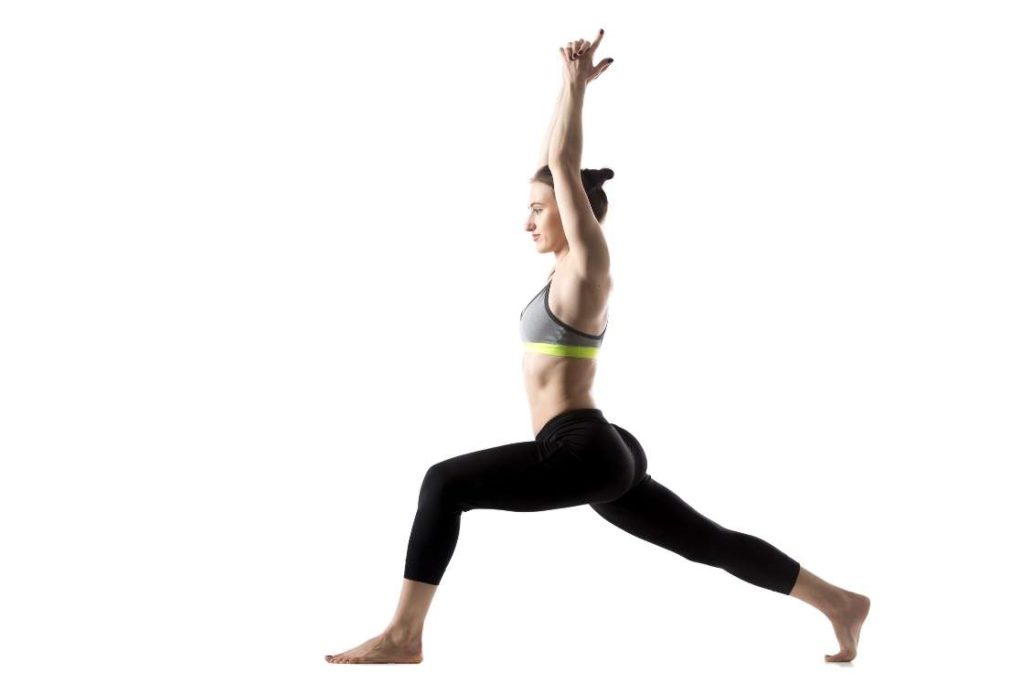
Warrior I is a powerful standing pose that builds stability, confidence, and inner strength. With the feet firmly rooted into the ground, the body feels supported and steady, allowing the mind to focus and the breath to deepen. This posture encourages you to face challenges with determination and calm resolve.
By maintaining a strong connection with the earth through both feet, energy flows smoothly through the legs, pelvis, and spine. This grounding effect supports the root chakra, helping to transform fear and uncertainty into strength and balance.
Root Chakra focus: grounding through the feet, stability, courage, and physical strength.
Warrior I is especially helpful when working with feelings of insecurity or lack of confidence, as it cultivates a sense of purpose, steadiness, and personal power.
Steps to perform
- Start by assuming the mountain pose as you face the shorter end of the mat.
- Step back with your left foot, putting both of your feet securely on the ground and bending your toes at a 45-degree angle. The left leg should be straight and your knee shouldn’t be locked.
- Your thighs should be parallel to the floor with your right knee bent to a 90-degree angle, stacking over your ankle. Ensure that the arch of your left foot is parallel to the right heel.
- Bring your arms up while opening your chest, lengthening your spine, and pulling in your abdomen.
- You can look in the front or tilt your head up to look at your fingertips if you don’t have any neck issues.
- Hold this pose for 3-5 breaths and repeat with the other leg.
4. Goddess pose (Utkata Konasana)
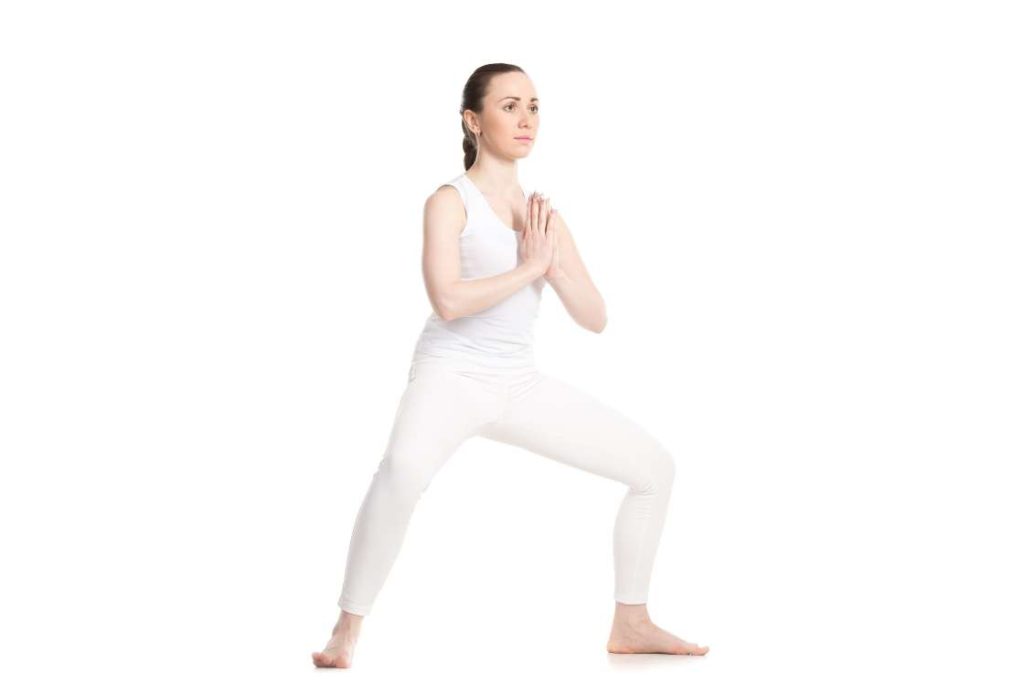
Goddess Pose is a strong, grounding posture that energises the lower body and centres the mind. It creates warmth and stability through the legs and hips while encouraging a deep sense of presence. As a wide-stance hip opener, this pose helps release physical tension and stored emotional stress from the pelvic region.
By strengthening the legs, glutes, calves, ankles, and spine, and opening the inner groins and chest, Goddess Pose supports both physical steadiness and emotional balance. The grounded stance promotes a feeling of strength, confidence, and inner support.
Root Chakra focus: grounding, stability, hip opening, and a sense of inner strength.
Steps to perform
- Stand in the mountain pose and spread your legs shoulder-width apart. Your toes should be turned 45 degrees outwards.
- Lower down till your thighs are parallel to the ground. Your knees should be stacked over your ankles.
- Keep your back straight by pulling in your navel and lowering your hips by engaging your core muscles.
- Spread your fingers and extend your hands above your head, bending them at the elbows. The elbows should form a 90-degree angle and the upper arm should be parallel to the thighs.
- Hold the pose for 3-5 breaths.
5. Garland Pose (Malasana)
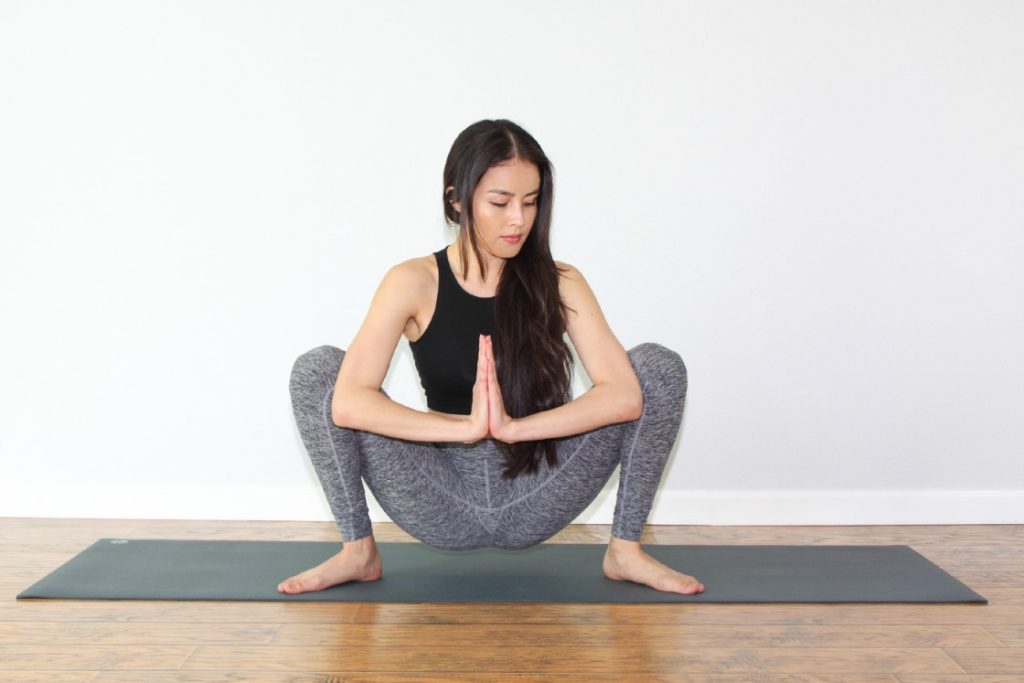
Garland Pose is a deep squatting posture that strongly grounds the body and stabilises the lower energy centres. By improving circulation in the pelvic region, this pose supports the hips and lower spine areas commonly affected when the root chakra is imbalanced.
The full contact of the feet with the ground helps absorb the earth’s energy while encouraging the release of accumulated tension. This grounding action strengthens the sense of safety and stability, both physically and emotionally.
Root Chakra focus: grounding through the feet, pelvic stability, and a sense of security.
Garland Pose is especially supportive for reconnecting with basic needs and restoring trust in the body, making it a valuable posture when working with root chakra balance.
Steps to perform
- Stand in a Mountain Pose with your feet a little wider than hip-width apart. To maintain balance, slightly lean your feet to the side.
- Start squatting down while keeping your hands clasped in front of your chest. For further support, you can tuck a yoga block under your buttocks.
- Move your elbows to the inside of your knees to prevent the knees from turning in.
- For the sake of ease, check that your spine is straight throughout. To maintain proper alignment of your spine and head, you should also maintain your forward gaze.
- Hold this position for 3-5 breaths.
6. Child’s pose (Balasana)
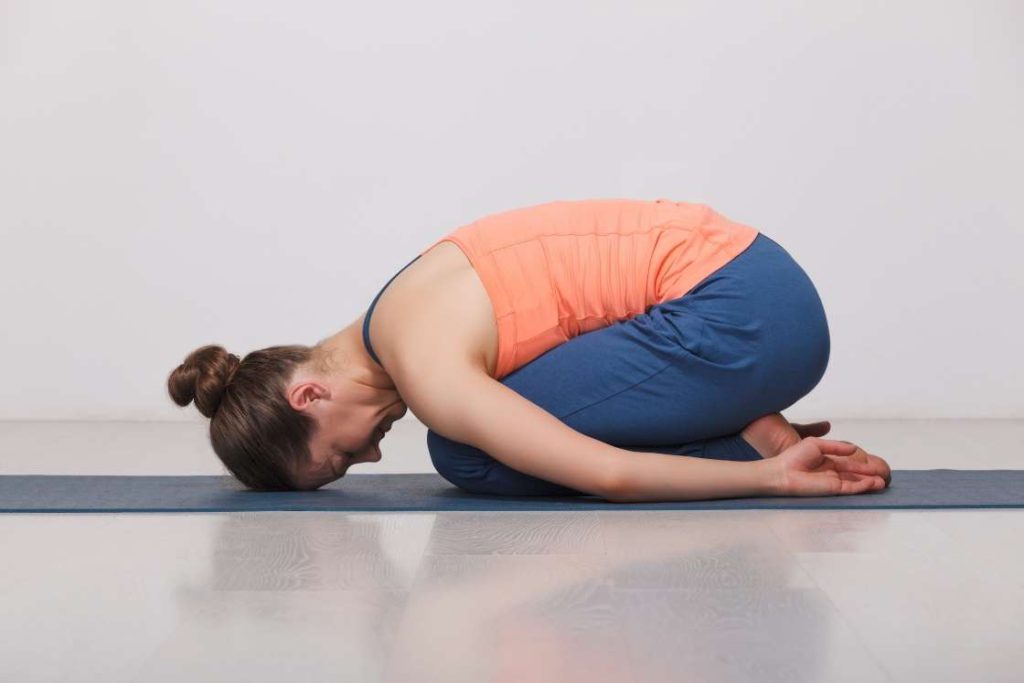
Child’s Pose is a deeply restorative posture that encourages full-body relaxation and a sense of surrender. In this pose, the body rests completely on the ground, allowing the earth to provide support and stability. This contact with the floor helps calm the nervous system and brings the mind back to the present moment.
By gently folding forward and softening the breath, Child’s Pose creates a feeling of safety and comfort. It can be practised at any point during your yoga session, especially when you need to pause, release tension, or reconnect with steady breathing.
Root Chakra focus: grounding, relaxation, emotional safety, and a sense of support.
Child’s Pose is particularly helpful for settling excess energy and restoring balance after more active standing poses.
Steps to perform
- Sit in Vajrasana (Thunderbolt Pose) on a yoga mat with your heels under your buttocks.
- The top of your feet should be flat on the floor and the big toes will be touching each other.
- Place your hands on your thighs or your knees with palms facing down.
- Start bending forward until your tummy reaches your thighs while maintaining a straight spine. Bring your forehead as close to the ground as you can or rest it on a yoga block.
- For a deeper stretch on your hips and hamstrings and bend, spread your knees apart. This will also create space to rest your upper body fully on the mat.
- As you bend forward, slide your arms as well.
- Hold this position for 3-5 breaths.
Incorporating yoga into a chakra-balancing practice
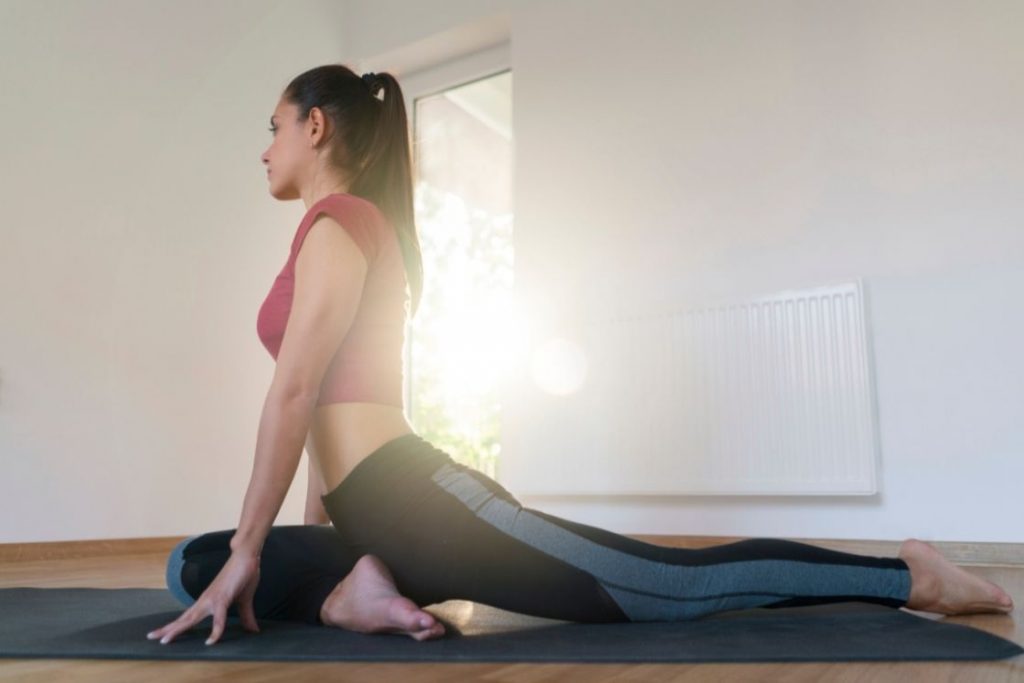
If you notice the above sequence of poses, they focus on the opening of the hip and pelvic area and emphasize being firmly planted on the ground for balancing the root chakra. Since root chakra is all about grounding, safety, security, and stability, it is obvious to include such poses in your routine.
Creating a mix of such poses will ensure that your spine is strengthened and enhance your focus and concentration while maintaining your natural posture and alignment.
Moreover, incorporating hip opening poses will also ensure a healthy function of the apana vayu, which is also governed by the root chakra.
Apart from yoga poses, there are other techniques that help in balancing the root chakra such as healing with crystals and stones, meditation, pranayama, mantra chanting, and adjusting your diet. You can combine a few of these methods with your yoga practices as well.
With crystals and stones, you can either wear them while performing yoga or place them in the area you are practicing.
With mantra chanting, you can chant, aloud or in the mind, the root chakra’s seed or bija mantra which is LAM when you are holding the poses.
Also read: 10 powerful crystals to heal the root chakra
Conclusion
It is necessary to tune into our chakras and determine which areas require attention if we are striving for optimal circulation of energy throughout the body. It’s just as crucial to stimulate chakras to generate energy as it is to remove surplus chakra energy through specific yoga positions.
The root chakra is the foundation of the entire chakra system. The proper functioning of the other 6 chakras depends heavily on the working of this chakra as it is concerned with meeting the basic survival instincts of an individual.
Imbibing yoga poses in your routine that are intended toward the root chakra location is one of the most effective ways to balance the chakra. While the above yoga poses are a suggestive list, you can also include more poses and create a sequence that suits your needs.

