


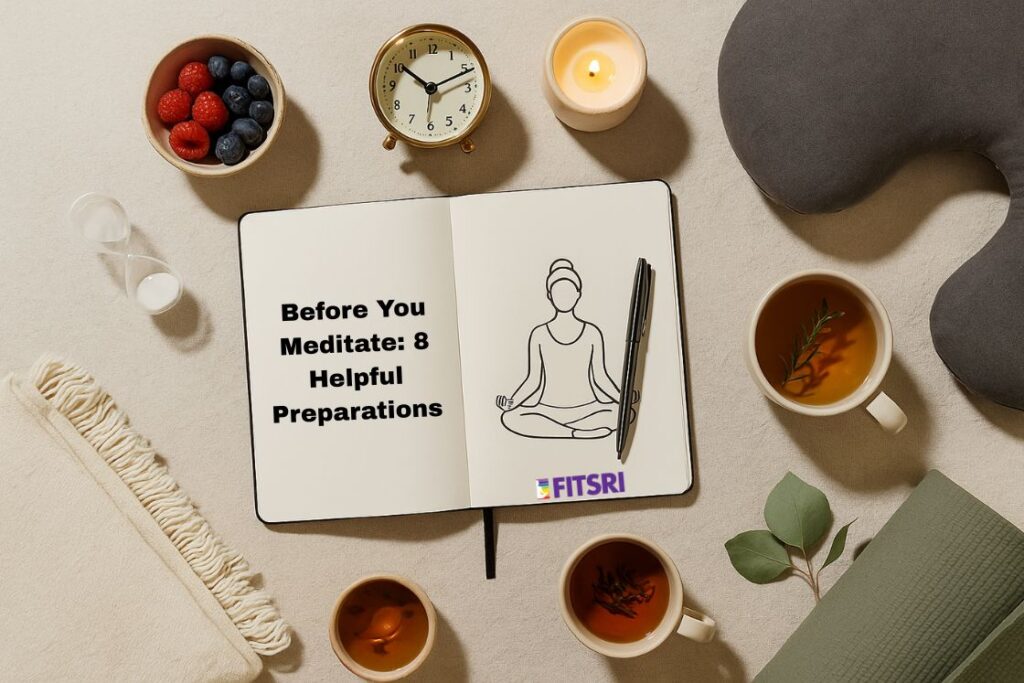
Making a promise to meditate and actually sitting down to do it are two very different things. For many people, especially beginners, the toughest part is simply being still and doing nothing. The mind wants movement, and the body tends to restlessly follow it.
A little preparation can make meditation easier. When you prepare yourself physically, mentally, and even emotionally, your discipline and motivation grow naturally. The practice becomes smoother, more enjoyable, and more consistent.
Taking a few mindful steps before you meditate helps calm your thoughts and relax your body. It sets the right mindset, so you slip into the practice without force or struggle.
To support you on this journey, here are eight important things to do before you sit for meditation.
1. Avoid heavy meals before meditation
It is important to leave enough time between eating and meditation. Ideally, maintain a gap of 1–2 hours, depending on how much and what you have eaten. If it was a light meal like a salad, oatmeal, or fruit, a 30–45 minute gap is usually fine. But after a heavy breakfast or lunch, it’s better to wait 2–3 hours so your body has time to digest.
Avoid stimulants such as caffeine, sugary drinks, or energy beverages before meditation. They increase alertness in an unhealthy way and make it difficult to calm down. Heavy meals, on the other hand, can cause lethargy and stomach discomfort, which easily distract you while sitting.
In general, stop eating or drinking at least 45 minutes to 1 hour before you start. Keeping the stomach fairly empty helps the body redirect blood and oxygen to the brain, allowing you to settle into meditation with clarity and ease.
Also Read: How to Sit Properly for Meditation?
2. Decide a time for meditation
You can meditate at any time of the day when you feel the need for relaxation. However, choosing a specific time makes it easier to turn meditation into a steady habit. When the mind knows what to expect, it becomes calmer and settles into practice faster.
Traditionally, the best time to meditate is early in the morning, especially between 4 am and 6 am, known as Brahma Muhurta. At this hour, the mind is clear, the surroundings are quiet, and distraction is minimum. Practising during this time leaves you energised and mentally fresh throughout the day.
You may also meditate in the evening, especially if it helps you unwind and sleep better. Many find that evening meditation releases stress collected during the day.
Whichever time you choose, try to stay consistent. Practising at the same hour every day helps you build discipline and deepen your meditation experience.
3. Prepare a cozy and quiet space
One of the advantages of meditation is that it doesn’t require much equipment. A yoga mat, a cushion or blanket, and a peaceful corner are enough to begin. Yet, the space you choose plays an important role in how easily your mind settles.
Pick a spot that feels calm and free from distractions. It could be your room, a quiet corner of your home, your garden, or a prayer area. Keep all gadgets aside, close the door if possible, and inform family members that you’ll need some quiet time.
To make the space feel warm and inviting, you can use a few supportive items such as scented candles, incense, a picture of a deity or mandala, a Tibetan singing bowl, or a japa mala. These tools are not essential but they can add a sense of comfort and deepen the meditative mood.
4. Perform some easy stretches
Meditation often involves sitting still for a long time, anywhere from 10 minutes to an hour. For many people, discomfort or stiffness starts appearing within just a few minutes of sitting. To avoid this, gently stretch the areas of your body that tend to tighten, especially the hips, lower back, shoulders, and neck.
Doing a few simple yoga stretches helps release tension and improves blood circulation. The body feels lighter, and restlessness naturally reduces. This makes it easier to sit comfortably, stay steady, and remain focused during meditation.
Also Read: Which is Better Hand Position for Meditation, Palms up or Down
5. Find a comfortable position
Before you begin meditation, the most important step is to choose a posture you can maintain comfortably. It is a common myth that you must sit in Padmasana (Lotus Pose) to meditate. What truly matters is comfort and stability, not forcing yourself into a difficult posture.
If sitting cross-legged feels right for you, you may do so. You can also sit in Dandasana (Staff Pose) or Vajrasana (Thunderbolt Pose). Although meditation is usually done sitting upright, you may also lie down in Savasana (Corpse Pose) if your practice allows it. However, lying down may sometimes lead to sleepiness, so use it wisely.
If sitting on the floor is uncomfortable, you can sit on a chair or even on your bed. A chair offers good back support and keeps the spine upright. A bed provides softness and may help you stay seated for a longer time.
There is no strict rule about crossing your legs or placing your hands in a particular mudra unless the technique specifically requires it. Simply sit with a straight back, relaxed shoulders, and a stable posture. This prevents discomfort from distracting your focus during meditation.
In short: comfort is key. When your body is at ease, the mind can settle more naturally.
6. Determine your intention for meditation
An intention guides your meditation. It reflects the qualities or goals you want to focus on and reminds you where to direct your attention and energy during the practice.
Setting an intention before you begin helps you stay aligned with the purpose of your session. Ask yourself what you want to achieve today- peace, clarity, stress relief, emotional balance, or simply quiet time with yourself. Think about what you have been dealing with recently and how meditation can support you today.
A clear intention boosts motivation and gives your mind a direction. When restlessness or distraction arises, you can gently return your awareness to your intention to stay centred.
7. Set the length of your practice
Before you begin, it’s helpful to decide how long you will meditate. Without a set duration, it becomes easier to end the session early or find reasons to stop midway.
Use a timer to hold yourself accountable. Set it before you start, so you don’t need to check the clock or worry about how much time has passed.
If you prefer, you can also use a guided meditation recording. Guided sessions usually run for a fixed duration, which helps you stay committed to the full practice.
8. Settle your posture and breathing
Once you sit down, take a moment to settle comfortably into your chosen posture. Adjust your body until you feel stable, relaxed, and centred.
Keep your back upright, as a straight spine helps you stay alert without strain. You may sit against a wall or use a chair for support. Sitting on a cushion or folded blanket is also helpful, as it keeps your hips slightly higher than your knees, making the posture easier to maintain.
Allow both your body and mind a few moments to become quiet. Let the muscles unwind and the thoughts soften.
Now, focus on your breath. Spend a little time slowing it down and deepening it. Before starting meditation, you may take a few deep breaths or practise Nadi Shodhana Pranayama (Alternate Nostril Breathing). This supports steady breathing and gently leads the mind into a peaceful meditative state.
Trust yourself, trust your space, and allow your body and breath to guide you inward.
Common mistakes beginners make
- Expecting instant calm
- Comparing their practice with others
- Forcing posture or breath
- Thinking they’re “doing it wrong”
Relax – meditation unfolds gradually.
Tips to support your practice
- If it helps, play soft meditation music
- Try meditating after a warm shower
- If you get cold easily, keep a shawl or blanket nearby
- Use an eye pillow to reduce visual distraction
Conclusion
You may follow all these steps or choose the ones that suit you best. Meditation is a personal journey, and it’s natural to experiment and find what works for you. Just remember that these tips are not meant to bring instant results. Building a steady habit takes time, and that’s perfectly normal. Stay patient with yourself, stay consistent, and let the practice grow naturally.

