


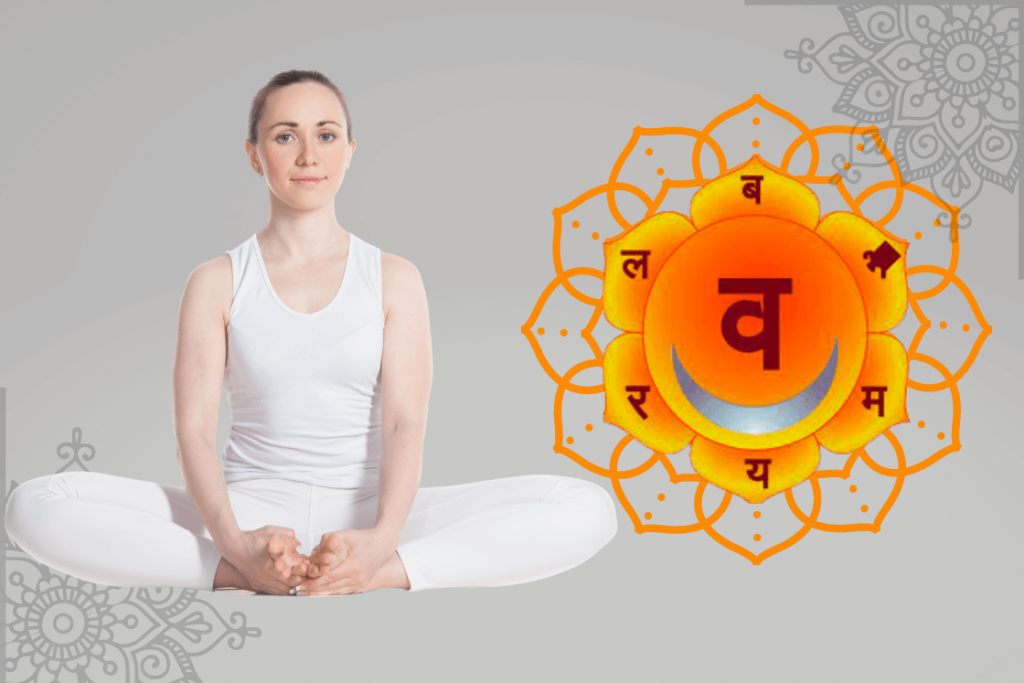
Yoga poses balance the sacral chakra by opening the hips, releasing stored emotions, and restoring the natural flow of prana in the pelvis. Regular practice supports emotional stability, creativity, and a healthy connection to pleasure and relationships.
If you feel emotionally stuck, creatively blocked, or carry persistent tightness in your hips and lower back, your sacral chakra may be asking for attention.
The sacral chakra, known as Svadhisthana, is the energy centre linked to emotions, pleasure, creativity, and our ability to flow with change. When this chakra is balanced, emotions move freely and life feels more fluid and connected.
Yoga is one of the most effective ways to balance the sacral chakra. Through gentle hip-opening postures and mindful movement, yoga helps release stored emotions, improve circulation in the pelvic region, and restore the natural flow of energy.
In this guide, you’ll learn specific yoga poses that support sacral chakra balance and how to practise them with awareness, stability, and ease.
Understanding the sacral chakra
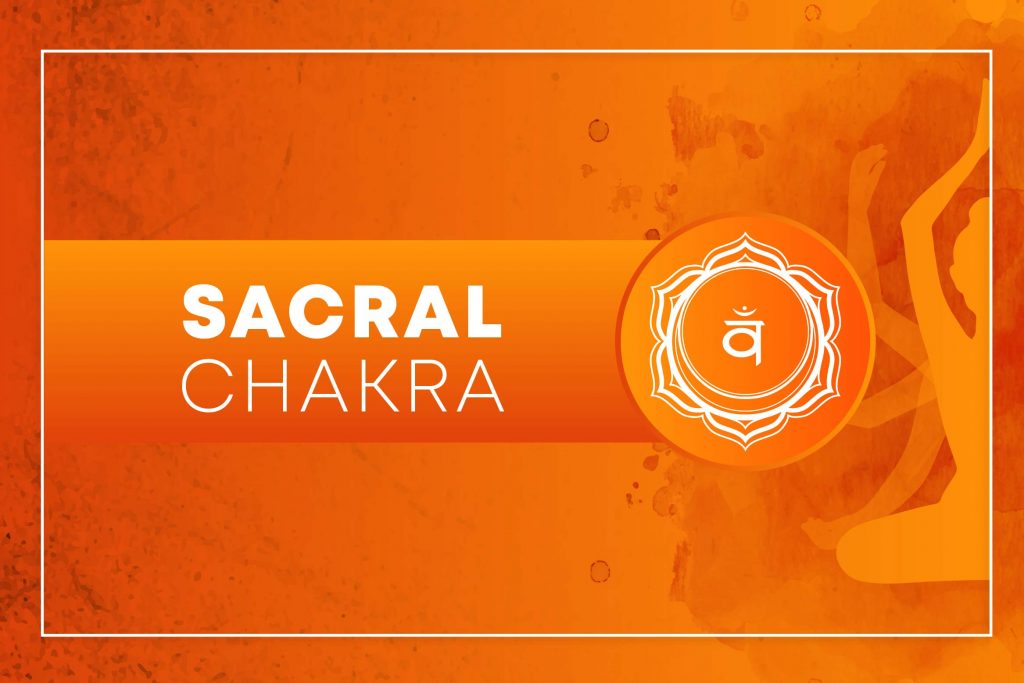
The sacral chakra, known as Svadhisthana Chakra, is located in the lower abdominal region, between the navel and the genitals. In yogic texts, its position is traditionally described as four finger widths below the navel.
This chakra governs the water element, which represents flow, adaptability, and movement. These qualities are reflected not only in the body but also in our emotional and psychological life. The sacral chakra is also associated with the movement of Vyana Prana, the vital force that supports circulation and distributes energy throughout the body. Because of its location, it is closely connected with the bladder, kidneys, and reproductive organs, influencing energy flow in the pelvic region.
Energetically, Svadhisthana is linked with the ovaries in women and the testicles in men, highlighting its role in reproduction, vitality, and creative expression.
The nature of the sacral chakra is warm and fluid. It governs emotions, sensual awareness, pleasure, creativity, and the ability to form intimate and meaningful connections. This centre shapes how comfortably we relate to our feelings, desires, and capacity for enjoyment in life.
When the sacral chakra is balanced, emotions flow naturally without suppression or excess. A person is able to experience pleasure with awareness, express feelings clearly, and maintain healthy relationships. Creativity feels spontaneous rather than forced, and emotional responses remain steady.
When the sacral chakra is imbalanced, this sense of flow is disturbed. Emotional confusion, guilt around pleasure or sexuality, heightened emotional reactions, or addictive patterns may arise. On a physical level, imbalance may reflect as lower back discomfort, reproductive challenges, urinary issues, or persistent tension in the pelvic area.
How yoga poses support sacral chakra balance
Yoga poses for the sacral chakra primarily work on the hips, pelvis, and lower abdomen the areas where sacral energy is stored. Gentle hip-opening movements help release physical tension and sluggish energy that can block the natural flow of the sacral chakra.
Because the sacral chakra is closely linked with emotions, practising these poses also supports emotional release. As the hips soften, repressed feelings and energetic blocks may surface and gradually dissolve, leading to greater emotional ease and openness.
Through mindful movement and breath, yoga stimulates the energy of the Svadhisthana Chakra, helping restore balance, creativity, and a healthy connection with pleasure and self-expression. Most importantly, these practices support a smooth flow of prana, which enhances overall vitality and well-being.
How yoga helps balance the sacral chakra
Yoga supports sacral chakra balance in the following ways:
- Hip opening: Releases tension and stagnant energy stored in the hips and pelvis
- Activation and stimulation: Awakens sacral energy through conscious movement
- Emotional release: Creates space for suppressed emotions to surface and resolve
- Sensuality and creativity: Strengthens connection to pleasure, creativity, and expression
- Energy flow and vitality: Restores balanced pranic flow throughout the body
Keeping these effects in mind, the yoga poses below gently activate and balance the sacral chakra when practised with awareness and ease.
6 Best yoga poses for balancing the sacral chakra
The following yoga poses focus on opening the hips, stabilising the pelvis, and restoring smooth energy flow in the lower body. Practised with awareness and steady breathing, these postures help release stored tension and support emotional balance, creativity, and vitality associated with the sacral chakra.
Move slowly through each pose. Keep your attention in the hips and lower abdomen, and allow sensations and emotions to arise without forcing or suppressing them.
Bound Angle Pose (Baddha Konasana)
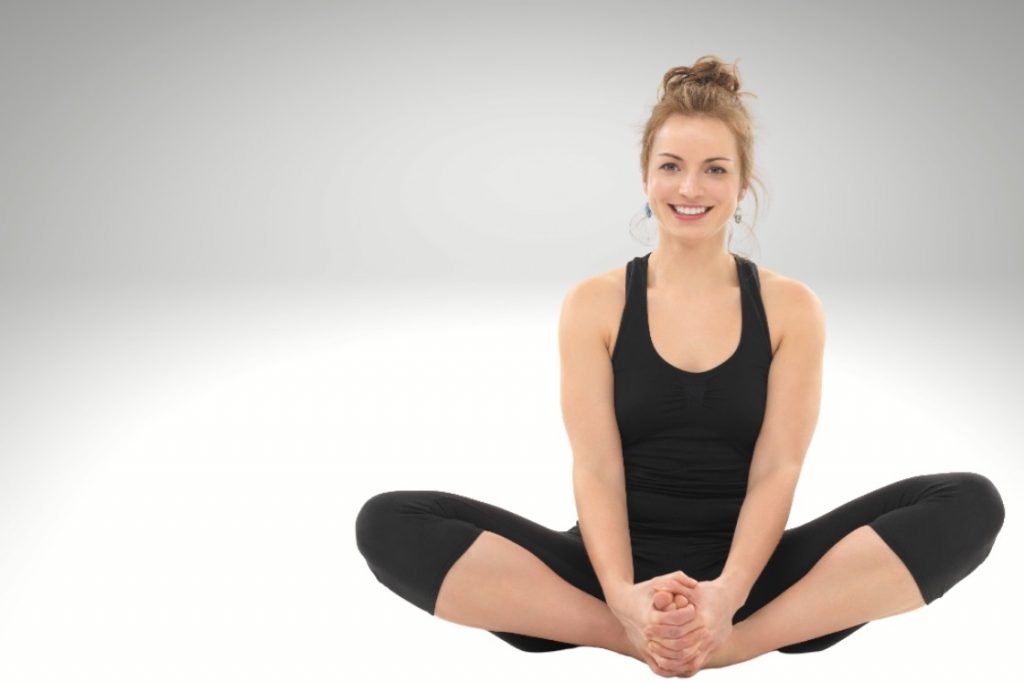
Bound Angle Pose is one of the most effective yoga poses for balancing the sacral chakra because it works directly on the lower abdomen, hips, and pelvic floor. By gently opening the hips, this pose helps release stored tension and stagnant energy from the sacral region.
Energetically, Baddha Konasana activates the pelvic area, supporting the natural flow of energy linked with emotions, creativity, and sensual awareness. It also stimulates the organs in the lower abdomen, which is why this pose is often included in practices focused on hormonal balance and menstrual comfort.
When practised with awareness, this pose encourages emotional softening and a sense of inner steadiness both essential for a balanced sacral chakra.
Steps to perform
- Sit in Dandasana (Staff pose).
- Bend your knees turning the soles of both feet turned towards each other. Join the soles as you bring your legs closer to your groin.
- Bring your feet as close to your groin as possible, depending on your flexibility.
- You can increase or decrease the gap between the feet and the groin to avoid any strain or pain.
- Try bringing your knees close to the ground, if your flexibility allows. Else you can place yoga blocks or rolled blankets under the knees for support.
- Make sure that your spine is not curving as you hold your feet to keep them together.
- Hold the pose for 3-5 breaths.
Awareness: Breathe into the pelvis and notice sensations without judgement.
Bridge Pose (Setu Bandhasana)
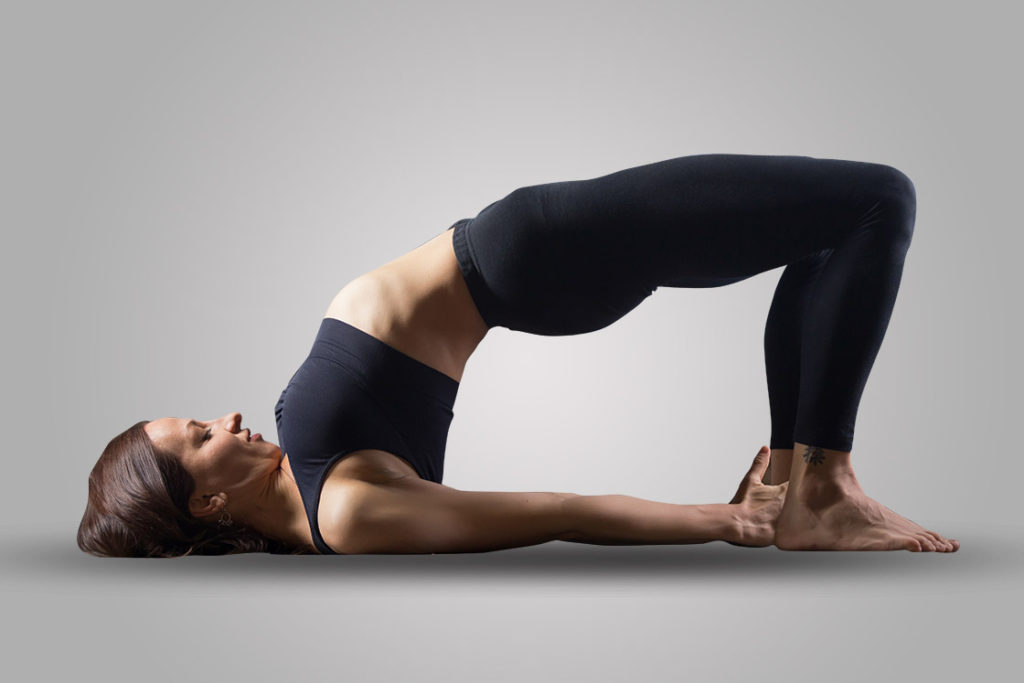
Bridge Pose gently lifts and opens the pelvis while stabilising the hip joints. This action helps ease stiffness and tightness in the hips and lower back areas closely connected with the sacral chakra.
As the hips rise, the pelvic region is softly compressed and activated. This stimulation supports the energetic area of the sacral chakra, encouraging better circulation and awareness in the lower abdomen and urinary region. When practised regularly, Bridge Pose can support pelvic stability and healthy bladder function without strain.
On an energetic level, Setu Bandhasana creates a bridge between the lower and upper body. This balance supports emotional integration, helping one feel more connected within themselves and more open in communication with others qualities linked with a balanced sacral chakra.
Steps to perform
- Lie down on your mat with your legs bent and spread them hip-width apart. Make sure your lower legs are parallel to each other.
- Place your arms beside you, palms facing down.
- Engage your core and firmly plant your soles on the mat to lift your hips. Use the support of your arms here by pressing them down as well.
- Keep pressing down your soles as you lift your thighs, hips, lower back, and upper back. Stop when only your shoulder blades and head are on the mat.
- Hold this position for 3-5 seconds.
Awareness: Allow the breath to move smoothly through the pelvis..
Pigeon Pose (Eka Pada Rajakapotasana)
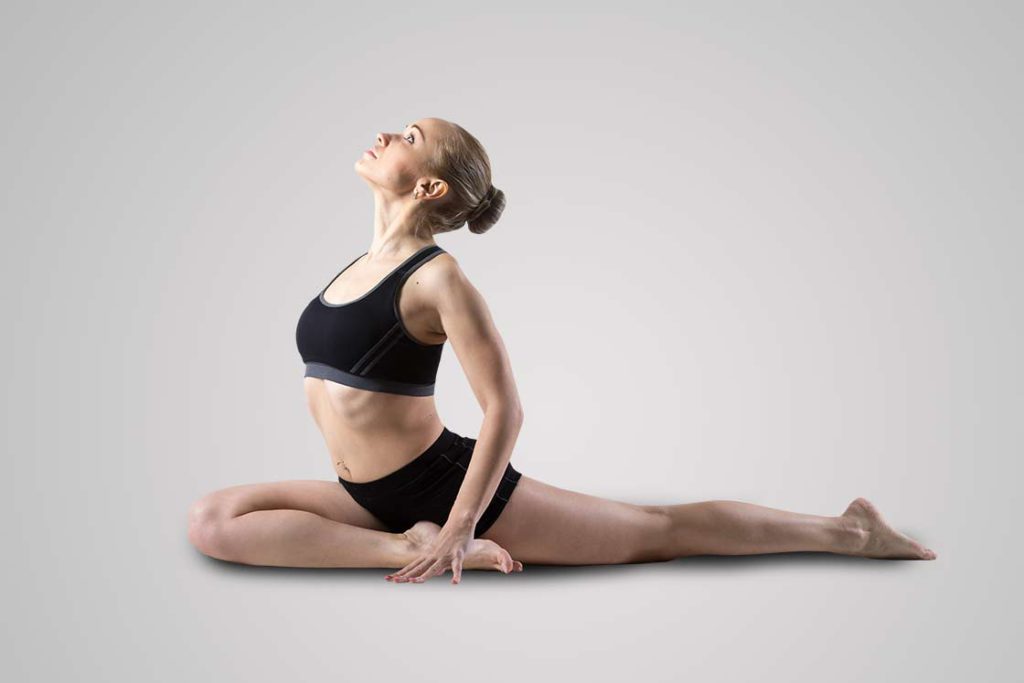
Pigeon Pose is a deep hip-opening posture that stretches the hip flexors and the small stabilising muscles around the hips. This makes it especially effective for releasing long-held tension while maintaining stability in the pelvic region.
Because the pose works directly on the hips and pelvis, it also stimulates the muscles and organs connected with the sacral area. When practised gently and consistently, Pigeon Pose is often included in sacral-focused yoga practices to support hormonal balance, menstrual comfort, and overall pelvic awareness—without force or strain.
On an energetic level, this posture invites emotional observation. As the hips soften, stored emotions may surface, allowing you to notice how you respond to intensity and stillness. This makes Pigeon Pose a powerful posture for cultivating emotional steadiness and balance in the sacral chakra.
Steps to perform
- Come to the tabletop position.
- Bring your right knee to your right wrist and place it behind the wrist or on the outside of the inner edge of the wrist, as per your flexibility.
- Turn your lower leg such that your right ankle is placed almost in front of your left hip. If possible, make sure that your lower leg is parallel to the shorter end of the mat.
- Slide your left leg back and place the top of your left foot on the ground.
- Your hips should be squared to the front of your mat. To make the pose more comfortable, place a folded blanket or towel beneath the right side of your hip.
- Hold this pose for 3-5 breaths and repeat with the other leg.
Awareness: Observe sensations and emotions calmly as the hips soften.
Goddess Pose (Utkata Konasana)
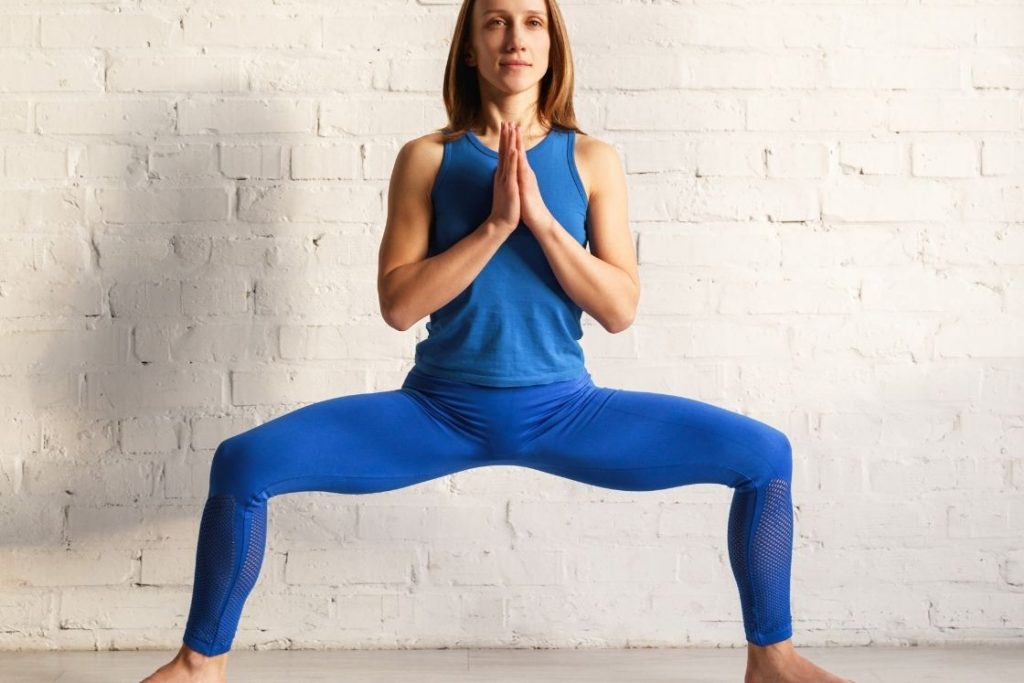
Goddess Pose is a strong, grounding posture that opens the hips while activating the entire lower body. It strengthens the calves, thighs, glutes, and core, while gently stretching the inner thighs and pelvic region.
By widening the hips and pelvis, Utkata Konasana stimulates the energetic area of the sacral chakra. This activation supports qualities linked with this centre, such as confidence, emotional stability, creativity, and a healthy connection to one’s body.
When practised with awareness, Goddess Pose helps build inner strength and steadiness. It is often included in sacral-focused practices to support pelvic health and ease discomfort related to hormonal fluctuations or menstrual tension, without strain or force.
Steps to perform
- Stand in the mountain pose and spread your legs shoulder-width apart. Tilt your toes outwards at 45 degrees.
- Lower down till your thighs are parallel to the ground. Your knees should be stacked over your ankles.
- Engage your core muscles and pull in your navel to keep your back straight.
- Spread your fingers and extend your hands above your head, bending them at the elbows. The elbows should form a 90-degree angle and the upper arm should be parallel to the thighs. Face the palms towards the front.
- Hold the pose for 3-5 breaths.
Awareness:Feel grounded through the feet while keeping the pelvis open.
Triangle Pose (Trikonasana)
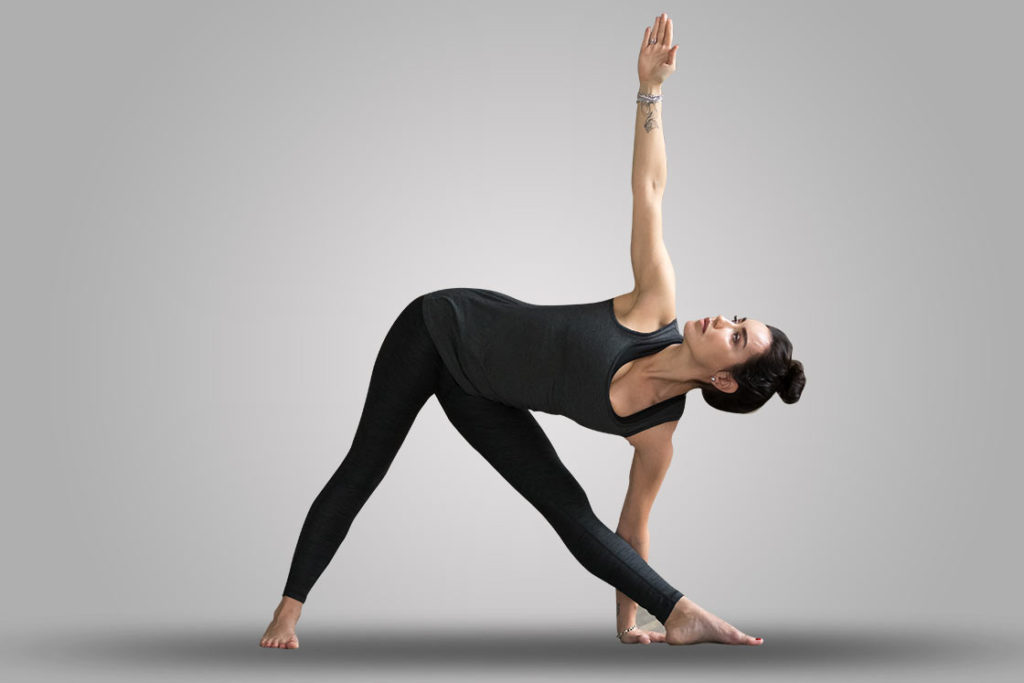
Triangle Pose is a steady, expansive posture that opens the hips, groins, and inner thighs while toning the pelvic region. This combination makes it especially supportive for balancing the sacral chakra, which is closely linked with the pelvic and reproductive area in both men and women.
By creating space in the pelvis and lower abdomen, Trikonasana encourages healthy energy movement through the sacral region. It is often included in sacral-focused yoga practices to support pelvic awareness, menstrual comfort, and overall reproductive vitality—without force or strain.
Energetically, Triangle Pose improves the circulation of prana throughout the body. This steady flow helps clear stagnation in the sacral chakra, supporting emotional balance, grounded creativity, and a sense of inner stability.
Steps to perform
- Stand in Tadasana (Mountain Pose) with your feet shoulder-width apart.
- Turn your left foot diagonally while the right foot is towards the front. Make sure your heels are aligned.
- Spread your arms sideways, parallel to the ground, with your palms facing down. Your shoulders should be away from your ears.
- Bend towards your right foot from your hips, as you bring your right arm down with you and your left arm moving upwards.
- Bend as far as you can. Typically, your fingers should touch your right foot. You can also use a yoga block at its highest side to rest your right hand.
- Your arms should form a straight line horizontally with the shoulders stacked on top of each other.
- Turn your head to gaze at your left fingertips.
- Hold this pose for 3-5 breaths and repeat the with the other leg.
Awareness: Ground through the feet and allow the pelvis to feel open yet stable.
Seated Forward Bend (Paschimottanasana)
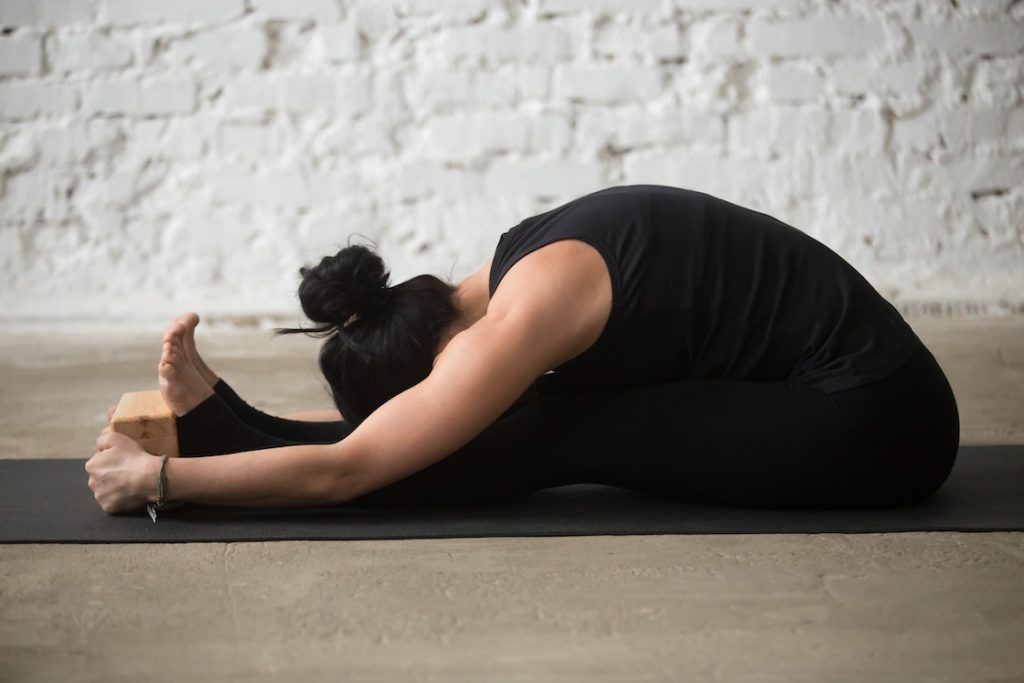
Seated Forward Bend is a calming posture that gently stretches the lower back, hips, and hamstrings, areas closely connected with the sacral region. This deep yet soothing stretch helps release stiffness from the pelvis, allowing energy to move more freely through the lower body.
By encouraging softness in the hips and lower abdomen, Paschimottanasana supports healthy circulation in the pelvic area and promotes a smoother flow of prana through the sacral chakra. The forward-folding action also has a grounding effect on the nervous system, making this pose especially helpful for emotional settling and inward awareness.
Energetically, this posture invites stillness and introspection. It helps quiet excess stimulation and supports the gentle regulation of energy associated with creativity, emotions, and adaptability key qualities of a balanced sacral chakra.
Steps to perform
- Sit in a staff pose (dandasana) and place your palms on the floor beside your hips.
- Bend forward from the hips without rounding your back. Your head should also be aligned to the spine instead of tilting forward.
- Slide the arms forward as you bend and take them as far as you can stretch outside of each leg.
- Keep bending when you feel you can no longer go further. You can also keep a cushion or a bolster on your legs to rest your torso and head.
- Hold the side of your feet with your hands if possible. Else you can loop a strap around the balls of the feet and hold the ends of the strap.
- Stay in this pose for a minimum of 3-5 breaths.
Awareness: Release effort and allow the breath to soften the hips.
Also Read: 6 Yoga Poses for Root Chakra to Feel Grounded & Balanced
Incorporating yoga into a sacral chakra–balancing practice
Yoga poses for the sacral chakra focus on mobilising and strengthening the hips, pelvis, and lower abdomen. Practising the poses shared above highlights the importance of keeping this region flexible, supported, and energetically active.
Regular practice helps improve hip mobility, ease lower back stiffness, and support healthy function of the pelvic organs. Over time, this creates a sense of physical ease and stability in the area associated with the Svadhisthana Chakra.
Beyond the physical body, these poses also work on the subtle body. As tension releases from the hips and pelvis, blocked energy begins to move more freely. This allows prana to circulate smoothly through the sacral chakra and into other parts of the body, supporting emotional balance and creative expression.
To keep the sacral chakra active and balanced, it is helpful to:
- Include a variety of hip-opening and pelvic-focused poses in your regular yoga routine
- Practise with steady breathing and awareness, rather than intensity
- Set aside time for a short, dedicated sacral chakra sequence when needed
Supporting practices for sacral chakra balance
Yoga can be complemented with simple lifestyle and awareness practices that support the sacral chakra:
- Meditation: Gently focusing attention on the lower abdomen can help bring clarity to emotions and creativity.
- Mantra: Repeating the seed sound “Vam” during meditation may help energise the sacral centre.
- Environment: Placing sacral-chakra-associated stones such as citrine, orange quartz, amber, or orange moonstone in your practice space can serve as a visual and symbolic reminder of balance and flow.
- Diet: Consuming hydrating fruits, vegetables, and mildly spiced foods supports the water element associated with this chakra.
When yoga, breath, awareness, and daily habits work together, sacral chakra balance becomes easier to maintain and more naturally integrated into daily life.
Conclusion
When the sacral chakra is out of balance, it often shows up as emotional extremes, low energy, reduced creativity, or a feeling of disconnection from oneself and others. These signs are not problems to suppress, but signals inviting awareness and gentle correction.
As the second energy centre, the Svadhisthana Chakra plays a key role in how we experience emotions, pleasure, creativity, and relationships. Keeping this chakra active and balanced allows emotions to flow naturally and supports a healthy connection with both inner feelings and outer life.
Yoga offers a practical and grounded way to restore this balance. Regular practice of sacral-focused poses helps release tension from the hips and pelvis, improves energy flow, and supports emotional steadiness. Begin with a few poses, practise them with awareness, and gradually build consistency. As comfort and stability grow, the practice can naturally deepen.
A balanced sacral chakra is not achieved through force, but through regular movement, mindful breathing, and a willingness to stay connected with your emotions and creative nature.

