



Since 2014, Veganuary has made the New Year a prime time for omnivores to try their hand at a plant-based diet — and we couldn’t be more for it. The health benefits of a plant-based diet continue to stack up: improved insulin sensitivity, reduced risk of cardiovascular disease1, improved cognition2, reduced inflammation, and more. Plus, according to experts at the University of Oxford, a vegan diet is “probably the single biggest way to reduce your impact on planet Earth.”
That said, going plant-based isn’t the only way you can take advantage of the fresh, new year to improve your wellness or reduce your climate impact. Here are five other challenges for January to help you set goals for a healthier, brighter new year.
1. High-Fiber January
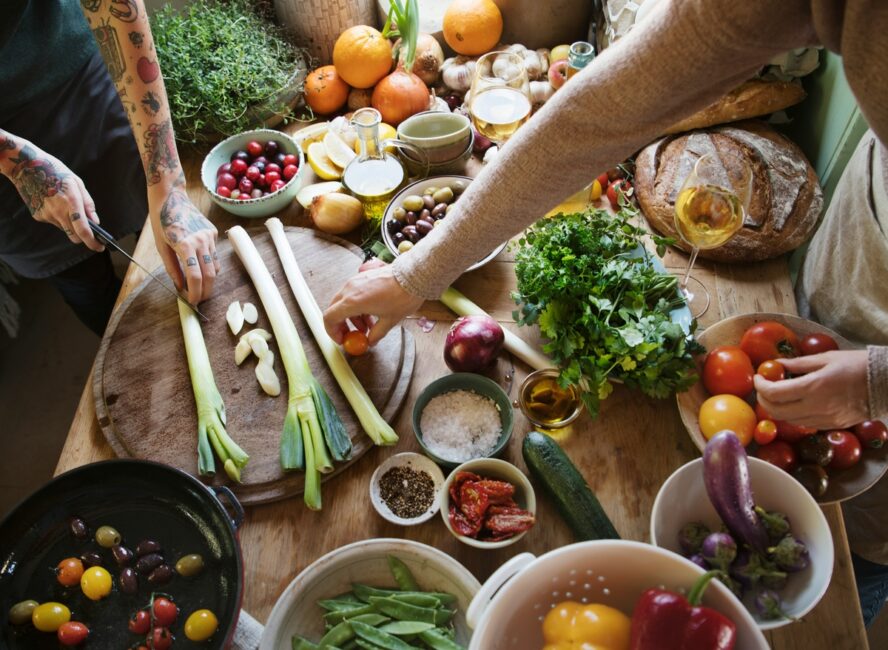
Fiber is an essential nutrient, contributing not just to healthy digestion but to improved metabolism, heart health, and even a reduced risk of mood disorders3. But according to the National Institutes of Health, roughly 95% of Americans still aren’t getting enough4.
While the official USDA recommended daily intake for fiber is 25 grams for women and 28 grams for men5, some experts recommend nearly double that: a whopping 50 grams daily6. Meanwhile, according to Harvard Health Publishing, the average American is only getting a measly 10 to 15 grams each day5.
How to Increase Your Fiber Intake
This January, it’s time to turn those numbers around. The Harvard researchers note it’s always best to get your fiber from food, and you need to be aware of varying your sources to balance soluble and insoluble fiber. Soluble fiber helps lower cholesterol and regulate blood sugar levels, and it’s found in pulses and many fruits and vegetables. Insoluble fiber is found in whole grains and serves mainly to bulk out stool and prevent constipation.
It’s not difficult to integrate 50 grams of fiber into your diet, if you do so mindfully. Start the day with some fresh or frozen fruit, like a cup of raspberries (8g fiber) or a pear (5.5g fiber), paired with whole grains like oatmeal (4g fiber for 1 cup cooked). At lunch, enjoy a portion of high-fiber veg, like a cup of green peas (9g fiber) or 2 cups of broccoli (10g fiber), topped with a serving of nuts like almonds (3.3g fiber per 1-ounce serving).
At dinner, dig into a tasty curry made with lentils (15.5 g per cup) and paired with brown rice (3.5g fiber per cup). Finish your day off with some fresh blackberries (8g per cup) as a healthy dessert, and you’re exceeding your goal.
That said, a word of caution: If you’ve been consuming a lower-fiber diet, Mayo Clinic experts recommend integrating sources of fiber slowly7. They note that adding too much fiber all at once can result in gas, diarrhea, cramping, and bloating. Consider upping your fiber by just a few grams at a time over the course of the month, and you’ll hit your goal by February.
2. Plastic-Free January

Microplastics are pervasive in our modern world, rapidly accumulating not just in the environment but in our bodies, too. According to one recent study, the average human brain contains enough of these tiny plastic particles to make a whole plastic spoon. While the presence of microplastics everywhere from tea bags to the air we breathe makes them almost impossible to avoid entirely, the best thing you can do is reduce your reliance on plastic. Not only does this help keep microplastics out of your body, it also ultimately reduces the amount of plastic being produced and released into the environment.
Your first order of business? Giving your kitchen cupboards a makeover to minimize microplastics. Swap your plastic storage containers for glass, and replace your plastic wrap with a sustainable alternative like Bee’s Wrap. If you haven’t done so already, replace your conventional nonstick cookware with a PFAS-free, non-toxic alternative, and chuck all of your black plastic cooking utensils in favor of wood or metal.
Next, turn your attention to your cleaning supplies. Seek out a zero-waste store to top up your dish soap and detergent, not to mention your shampoo and conditioner. By starting small — and challenging yourself to remove sources of plastic one-by-one rather than all at once — you’ll slowly but surely make sustainable changes to eradicate plastic from your life.
3. Zero Waste January

About a third of all food produced for human consumption around the world is wasted, according to the United Nation’s Food and Agriculture Organization8. While much of this waste happens at an industrial level, as consumers, every little bit helps.
To reduce food waste at home, we recommend first sourcing your food mindfully, taking advantage of programs like Misfits Market and Too Good to Go to stop waste at the source. Then, once you get your food home, challenge yourself to reduce your waste as much as possible. To do this, try incorporating a visual reminder like a waste jar.
Once you start your waste-free journey, you’ll be surprised by how many things can be reused in creative ways. Veggie scraps like carrot ends and onion skins can be simmered into flavorful veggie stocks or combined with chicken bones to make a rich chicken broth, while coffee grounds can be transformed into your own exfoliating scrub. Pineapple peels can be transformed into a no-waste vinegar or tea, while banana peels can be used as a moisturizing face mask.
Whatever little is left after all of these tips and tricks can, of course, be composted. Most cities today have composting programs you can join to ensure that your waste gives back to the planet.
4. Mindful Eating January
“Mindful” may well be the word of the 2020s, but it’s apt: In a world filled with distractions, taking advantage of this tenet of Zen Buddhism is a great way to ground yourself. And experts say that specifically when it comes to eating, mindfulness is a great tool to pave the way to better health.
Mindful eating, according to a 2019 study in Integrative Medicine, can improve digestive function, and reduce inflammation — plus, it can definitely improve your relationship with food9.
A 14-Step Exercise to Practice Mindful Eating

In his 2017 article for Diabetes Spectrum, the medical journal of the American Diabetes Association, Joseph B. Nelson laid out these actionable steps to fully grasp the concept of mindful eating10:
- Get a raisin and set it down in front of you. STOP; do not throw a handful of raisins into your mouth.
- Imagine you have just been dropped off on this planet, and you know nothing about where you are. You have never experienced anything from Earth. With no experience, there are no judgments, fears, or expectations. It is all new to you. Take a few deep breaths and relax.
- Look at the raisin and pick it up.
- Feel its weight.
- Examine its surface — the various ridges, shiny parts, dull parts; really look for the first time at this strange object.
- Smell this object and notice how you react.
- Roll the raisin between your fingers and listen to hear what sound it makes. Notice its stickiness.
- Notice what you are feeling about this object.
- Place the raisin between your lips and just hold it there for a few moments. What do you notice happens inside you?
- Let it roll back into your mouth, but do not chew yet, just roll it around. Is there a taste? Do you salivate? What do you want to do?
- OK, bite down, just once. What do you notice?
- Slowly begin to chew, noticing what each bite brings.
- Chew the raisin until it is completely liquefied before you swallow.
- After swallowing, close your eyes for a few moments to notice the consequence of what you just experienced.
We love this exercise because it’s so easy to replicate at any moment (and it doesn’t have to be a raisin to inspire mindfulness!).
Other Steps You Can Take to Eat More Mindfully
While of course, this exercise is quite a lot to do every time you eat, it’s worth challenging yourself to engage with your food in a grounded, intentional way whenever you can. We think January is as good a time to start as any. Even if you’re not carrying out all of these steps with every bite, here are some ways you can add more mindfulness to your mealtimes.
First, be sure you’re always sitting down when you eat. Research shows that eating in a seated position increases your sensory sensitivity, making eating a more pleasurable activity11. Next, turn off the TV (or stop scrolling social media)! Studies show that eating while watching a screen contributes to overeating, and the distraction of a screen means you’re unlikely to fully enjoy your food12.
Finally, while we’re long past the days of dictating exactly how many times you should chew your food, it’s not a bad idea to be mindful of your pace. Check in with your own hunger and satiety as you eat13, stopping before you reach the point of fullness to reduce the risk of overeating.
5. Low-Screen January

Screens don’t just need to be eradicated from mealtimes. From our phones to our TVs to our tablets, it seems screens are omnipresent these days, and it’s time to take back control. While the research is still young, one 2025 review indicated that short-form video consumption could contribute to poorer cognition, shorter attention spans, and reduced impulse control14. And we all know by now that too much exposure to the blue light emitted by our screens can have devastating effects on our circadian rhythms15.
To reduce your reliance on screens, consider designating screen-free rooms in your house. We suggest banning screens from the bedroom, where they can affect your sleep, and the dining room, where they can affect your digestion. Give your phone a “home” by placing its charger somewhere where it’s out of sight (and thus out of mind). Then try to develop a habit of putting your phone to bed when you get home from work or sign off for the day. Not having it on your person or in your pocket will help keep you from reaching for it when you don’t need it.
If you’re still finding it difficult to reduce your reliance on your screen, try to make your smartphone as boring as possible. People suggest switching your phone to greyscale mode or disabling the use of certain apps outside of specific hours. Apps like Forest can even gamify reduced screen time, offering new motivation to stay off your phone and be more present in your life.
Sources:
- https://pmc.ncbi.nlm.nih.gov/articles/PMC8210981/
- https://www.nature.com/articles/s41398-019-0552-0
- https://pmc.ncbi.nlm.nih.gov/articles/PMC11551482/
- https://www.nih.gov/news-events/nih-research-matters/health-benefits-dietary-fibers-vary
- https://www.health.harvard.edu/blog/should-i-be-eating-more-fiber-2019022115927
- https://pmc.ncbi.nlm.nih.gov/articles/PMC9298262/
- https://www.mayoclinic.org/healthy-lifestyle/nutrition-and-healthy-eating/in-depth/high-fiber-foods/art-20050948
- https://food.ec.europa.eu/document/download/b35701da-c178-4a37-b420-899195e5ba16_en?filename=fw_lib_fao-2019_en.pdf
- https://pmc.ncbi.nlm.nih.gov/articles/PMC7219460/
- https://pmc.ncbi.nlm.nih.gov/articles/PMC5556586/
- https://www.researchgate.net/publication/338112760_Extending_the_Boundaries_of_Sensory_Marketing_and_Examining_the_Sixth_Sensory_System_Effects_of_Vestibular_Sensations_for_Sitting_versus_Standing_Postures_on_Food_Taste_Perception
- https://pmc.ncbi.nlm.nih.gov/articles/PMC8671257/
- https://uhs.berkeley.edu/sites/default/files/wellness-hungersatietyscale.pdf
- https://pubmed.ncbi.nlm.nih.gov/41231585/
- https://pmc.ncbi.nlm.nih.gov/articles/PMC7065627/


