



Dijon salmon is a flavorful one-pan dinner that’s ready in 20 minutes! Flaky pan-seared salmon fillets are smothered in a creamy Dijon pan sauce, then served with tender asparagus spears.
If you love salmon, you’re going to want this creamy salmon recipe on your weekly meal plan ASAP! Also, try my honey mustard salmon, flavorful miso salmon, and baked garlic butter salmon.
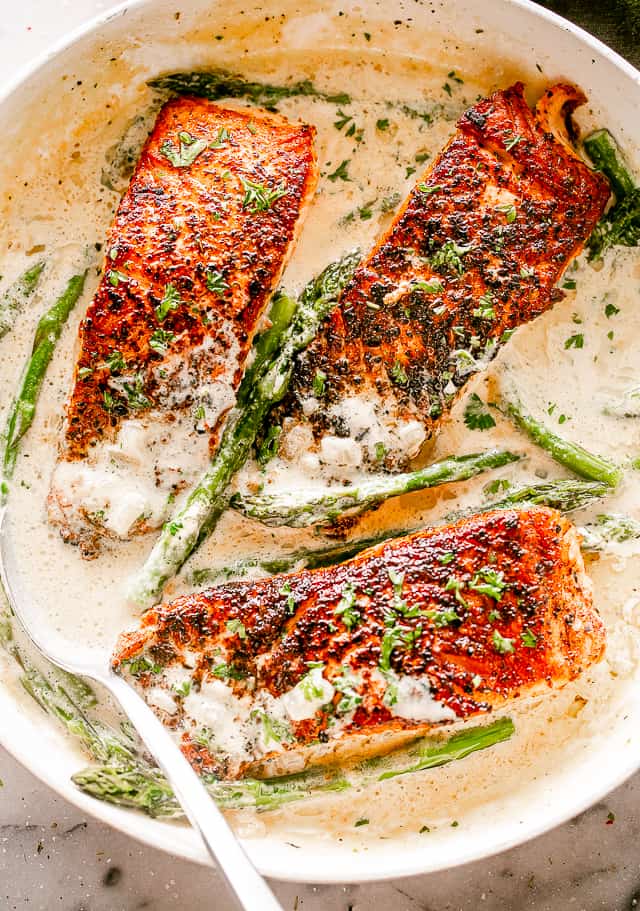
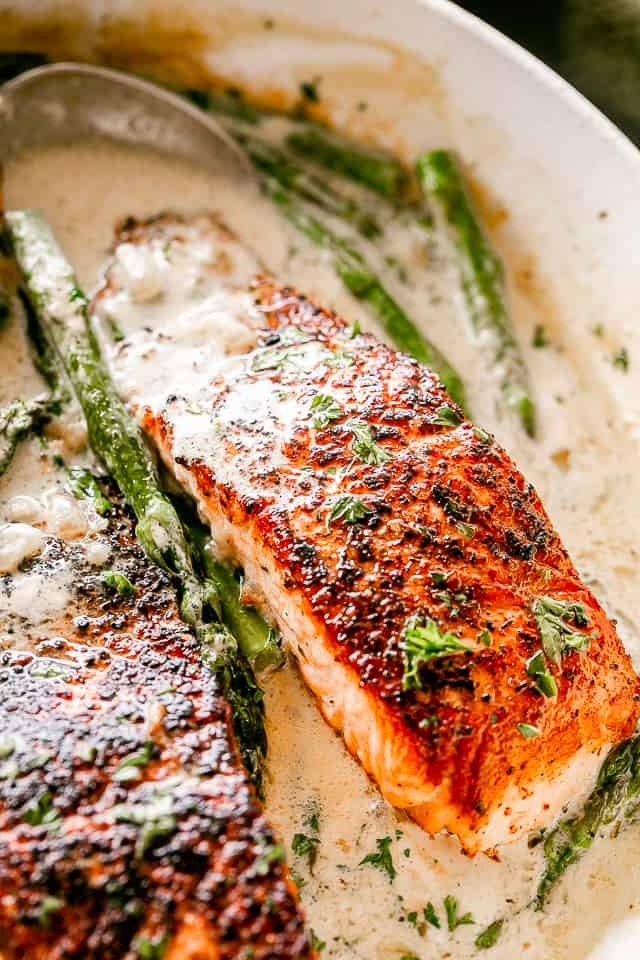
My creamy Dijon salmon is pan-seared, so it’s crispy on the outside and tender and flaky on the inside. Afterward, the creamy, garlicky Dijon mustard sauce comes together in the same pan. All the flavors meld, creating quite possibly the tastiest cream sauce to ever meet a salmon fillet!
Dijon salmon is like the seafood version of chicken Dijon. Instead of mushrooms, I add chopped asparagus (salmon and asparagus is the BEST pair, just ask my oven-baked salmon). The whole meal is ready in a single skillet in about 20 minutes, rivaling my air fryer salmon and salmon tacos as one of my go-to weeknight dinners.
What Makes This Creamy Dijon Salmon So Good
- One pan. The salmon, sauce, and asparagus cook in one skillet. It’s a comforting, tasty meal with hardly any clean-up.
- Fancy without trying. This Dijon salmon looks fancy, but preparing it is a breeze. It’s perfect to serve when entertaining.
- Quick skillet method. Cooking salmon in a skillet is the easiest, quickest, and most delicious, IMHO. Plus, all the leftover seared bits help flavor the rich, creamy mustard sauce.
- Guilt-free cooking. As if I needed a reason to love this Dijon salmon recipe even more, it’s low in carbs and keto-friendly!
Ingredients You’ll Need
Here’s a short shopping list with notes on the ingredients in this easy Dijon salmon recipe. Scroll to the recipe card for the printable details and exact amounts.
- Olive Oil and Butter – I use both to pan-sear the salmon. Butter maximizes the flavor, while oil raises the smoke point so that the butter doesn’t burn in the pan.
- Salmon – Ideally, choose Atlantic salmon that’s farmed sustainably. You can also make this recipe with wild-caught Pacific sockeye salmon. Buy pre-cut skin-on fillets, or buy a whole salmon side and cut it into fillets yourself. Ask your local fishmonger for assistance if you need it.
- Seasoning – I season my salmon fillets with a blend of Italian seasoning, garlic powder, and sweet or smoked paprika. If you have a favorite seafood seasoning that you love, go ahead and use it!
- Garlic – Freshly minced, for the sauce. If you don’t have fresh garlic, substitute 1 tablespoon pre-minced garlic or ½ teaspoon of garlic powder per clove.
- Chicken Broth – Use low-sodium chicken broth, fish stock, or vegetable broth.
- Heavy Cream – For a lighter sauce, use half-and-half instead.
- Dijon Mustard – You can use less or more mustard to taste. I don’t recommend substituting Dijon mustard with yellow mustard, as the flavor just won’t be the same.
- Asparagus – Trim the “woody” ends and chop the asparagus stalks in half so they’re easier to handle.
How to Tell When Salmon is Done
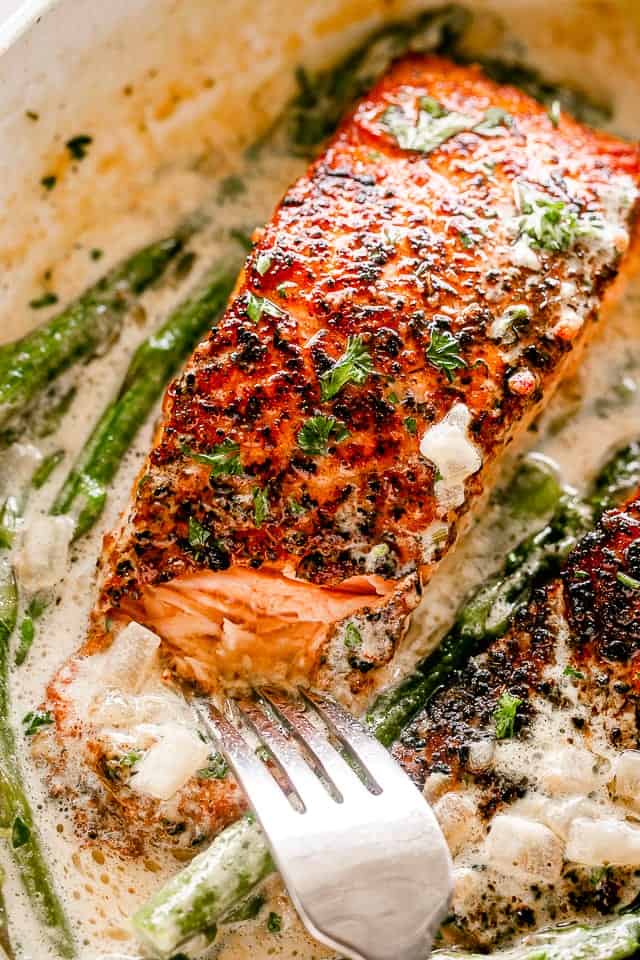
Salmon is done cooking when the internal temperature reaches around 145ºF. If you don’t have a meat thermometer, cooked salmon will be opaque and flake easily with a fork.

Recipe Tips and Variations
- Take the salmon out ahead of time. If your salmon is cold from the fridge, I recommend letting it sit out at room temperature for 15 minutes before you prep it, to take the chill off.
- Don’t crowd the skillet. You may need to cook the salmon in batches, depending on the size of your fillets and the pan you’re using.
- Hands off. Once you’ve added the salmon to the hot skillet, leave it alone. Don’t move the fillets until they’ve cooked at least ¾ of the way through (you’ll see the salmon change from translucent to opaque as it cooks from the bottom). If you try to flip it too early, there’s a good chance the salmon will stick to the pan.
- Adjust the consistency of the sauce. For a thicker, creamier Dijon sauce, let it reduce for longer over medium-low heat. For a richer sauce, stir in extra butter and let it melt until smooth.
- Different veggies. Feel free to swap the asparagus with another vegetable. Try to use veggies with similar quick cooking times, like green beans, sliced bell peppers, red onion, cherry tomatoes, or zucchini. Otherwise, this recipe is a great way to use up leftover pre-cooked vegetables, like roasted Brussels sprouts.
- Add bacon. Try a version of this recipe where you crisp bacon in the pan before adding the garlic for the sauce, or stir in cooked bacon at the end.
Pin this now to find it later
For the Creamy Garlic Dijon Sauce
-
Prep. Pat dry salmon fillets with paper towels. Meanwhile, heat olive oil and butter in a large skillet over medium-high heat.
-
Season the salmon. Season salmon fillets with salt, pepper, Italian Seasoning, garlic powder, and paprika.
-
Cook the salmon. Transfer the salmon fillets to the skillet, skin-side up. If your skillet isn’t big enough, don’t crowd the skillet; please cook the fillets in two batches. Cook for about 4 to 5 minutes, or until browned and cooked three-quarters of the way through. Flip over and cook for 4 more minutes, or until cooked through.
-
Set aside. Remove fish from the skillet and transfer to a plate; keep them covered. DO NOT discard the juices in the skillet.
-
Sauté the garlic. Return the skillet to the heat and melt the remaining butter. Stir in minced garlic and continue to cook for 30 seconds, stirring very frequently.
-
Deglaze. Slowly whisk in the chicken broth and scrape up all the browned bits from the bottom of the skillet. Bring to a simmer; lower the heat to medium and cook for 3 minutes.
-
Make the sauce. Whisk in the cream and Dijon mustard. Add the asparagus.
-
Put it all together. Add the salmon back into the skillet and simmer over medium-low heat for 4 minutes or until the asparagus is fork-tender and the sauce is thickened.
-
Serve. Remove the pan from the heat, sprinkle the salmon with parsley, and serve.
- Remove fish from the fridge 15 minutes before you’re ready to start cooking.
- Cook the fillets in an oiled hot cast-iron skillet or a nonstick pan.
- DO NOT move the fish around until it has cooked about 3/4 of the way up. Then, flip it and continue to cook for a couple more minutes.
- If you want a creamier, thicker sauce, continue to cook until the sauce is reduced to a desired consistency. You can also add some butter, stir it through, and cook until creamy.
- Keep leftovers in the fridge stored in an airtight container for up to 3 days.
Serving: 8ounces | Calories: 427kcal | Carbohydrates: 8g | Protein: 28g | Fat: 32g | Saturated Fat: 15g | Cholesterol: 135mg | Sodium: 189mg | Potassium: 881mg | Fiber: 3g | Sugar: 2g | Vitamin A: 1815IU | Vitamin C: 7.6mg | Calcium: 86mg | Iron: 3.8mg
Nutritional info is an estimate and provided as courtesy. Values may vary according to the ingredients and tools used. Please use your preferred nutritional calculator for more detailed info.
How to Make Dijon Salmon
Follow the steps below to prepare this creamy Dijon salmon recipe. I recommend using a cast-iron skillet or a non-stick pan for the best results. Make sure it’s well-oiled and hot before you add the salmon, to prevent sticking.
- Prep. First, pat dry the salmon fillets with paper towels. Then, sprinkle them all over with salt, pepper, and seasonings. Meanwhile, heat the oil and butter in a large skillet.
- Sear the salmon. Next, add the seasoned fillets to the hot pan, skin side up. If needed, cook in two batches. Pan-sear the salmon for 4-5 minutes, until it’s cooked about ¾ of the way through, then flip and sear for another 4 minutes. Set the done fillets aside on a covered plate to keep warm while you make the sauce.
Make the Sauce
Leave the leftover cooking juices in the skillet after you’ve set the salmon aside. Do NOT drain them! We’re going to turn those into our creamy garlic Dijon sauce:
- Sauté the garlic. Place your skillet back on the heat, and melt the last of the butter. Then, add the minced garlic and cook, while stirring, for about 30 seconds. Take care not to burn the garlic.
- Deglaze the pan. Next, pour in the chicken broth. Use a (non-metal) spoon or spatula to scrape the bottom of the pan, lifting all the browned bits. Lower the heat and let the broth simmer for a couple of minutes.
- Make the sauce. Now, whisk in the heavy cream, followed by the Dijon mustard, until that’s well-combined.
- Put it all together. If you’re adding asparagus, stir the halved spears into the sauce. Nestle the cooked salmon into the skillet, and let everything simmer over medium-low heat for a few minutes.
- Serve. Once the asparagus is tender and the sauce has thickened to your liking, take the pan off the heat, garnish with parsley, and serve.
How to Store Leftovers
- Refrigerate. Store the leftover salmon and Dijon sauce in an airtight container in the fridge for up to 3 days.
- Reheat. Reheat this Dijon salmon in a skillet on the stovetop or in the microwave until it’s hot throughout.

