

Last Updated on January 21, 2026 by Carrie Korem, FNTP
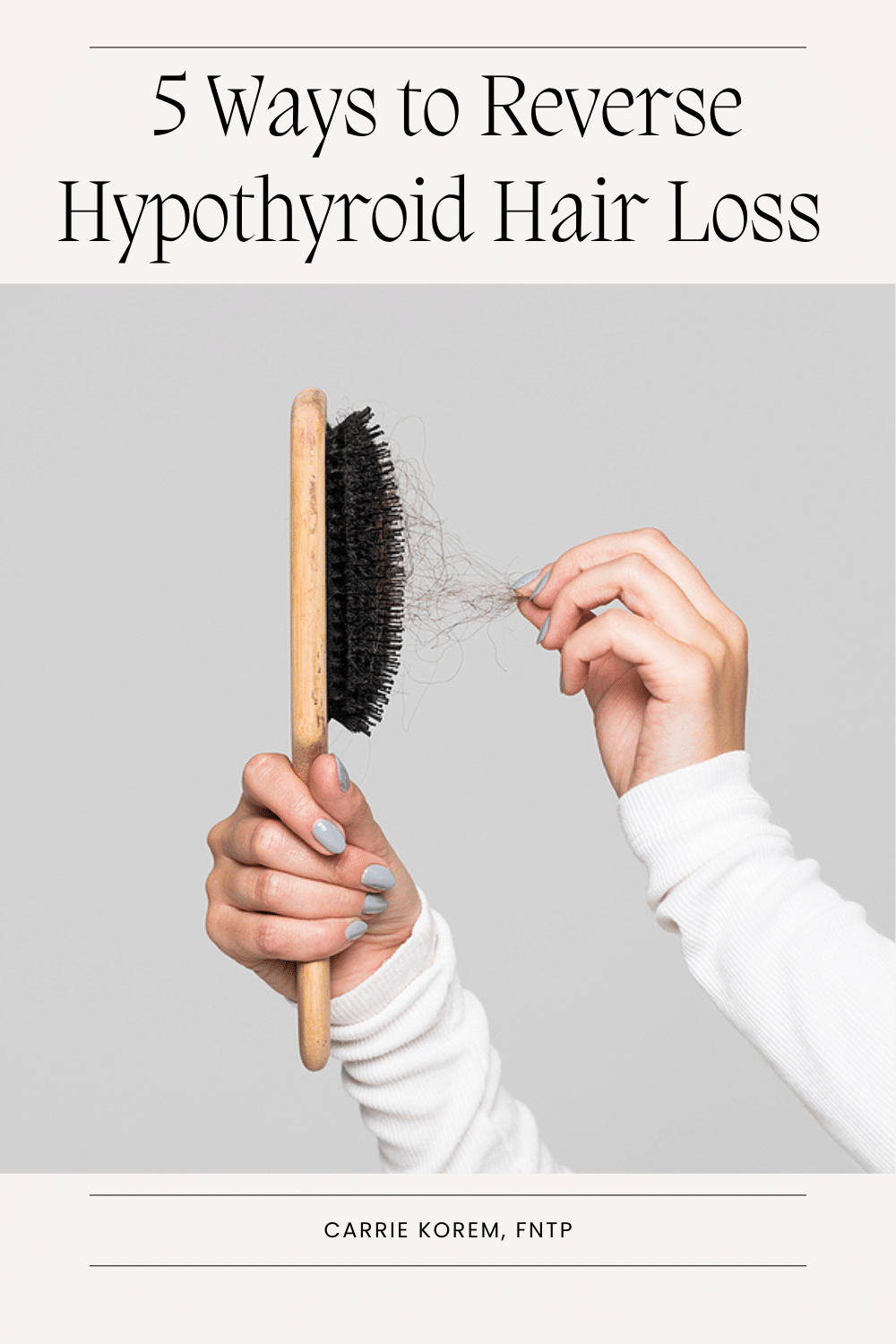
Hypothyroid hair loss is a very common symptom when you have hypothyroidism. I know this personally because I experienced it myself when I was dealing with Hashimoto’s. My hair was thinning, shedding, and not growing the way it used to.
Thankfully, I was able to reverse it using natural methods. Over the years, I’ve also worked with many women who struggled with hypothyroid hair loss. Many of them saw their shedding slow down and new growth come in once they supported their bodies the right way.
The good news is that hair loss doesn’t have to be permanent!
What is hypothyroidism?
Hypothyroidism happens when the thyroid gland doesn’t make enough thyroid hormone (ft4 or ft3). This condition also is called underactive thyroid.
It’s important to note that it’s very common for a doctor to diagnose a patient with hypothyroidism when TSH levels are high without actually testing thyroid hormones (ft4 and ft3).
What is the root cause of hypothyroid hair loss?
In many cases, hair loss is rooted in adrenal imbalance, which is another way of saying chronic stress.
This is a very common root cause of thyroid disease, including hypothyroidism, hyperthyroidism, Hashimoto’s, and Graves’.
Here’s why.
Your body does not see hair as a priority for survival. When your body is under constant stress, it uses up nutrients very quickly and puts extra strain on the adrenals.
Over time, the body becomes depleted. When that happens, it no longer has enough nutrients to support hair growth. So it sends those nutrients to more important systems like the brain, heart, and immune system.
Hair growth gets pushed to the back of the line.
Some common types of stress that can lead to hair loss include:
Mental stress
Physical stress like overworking or too much exercise
Emotional stress
Chronic illness
Viral or bacterial infections
Surgery
Environmental toxins and chemicals
Certain medications
EMFs like wifi and cell phone exposure
These stressors are also very common root causes of thyroid disease.
Can you regrow hair when you have hypothyroidism?
Yes, you can!
I saw this happen for myself, and I’ve seen it happen for many clients.
When the body gets what it needs and the stress response comes down, hair can grow again. The body is very smart and very capable of healing when it has the right support.
4 Ways to Reverse Hypothyroid Hair Loss Naturally
1. Balance your adrenals
Adrenal imbalance is one of the main root causes of hypothyroidism. It’s also a major cause of hypothyroid hair loss.
Long-term stress drains nutrients and keeps the body stuck in survival mode. When that happens, hair growth slows or stops.
Here are a few simple ways to support your adrenals:
- Eat breakfast within one hour of waking and eat three meals a day. This is not the time for fasting.
- Aim for 8 or more hours of sleep each night. Sleep is one of the best ways to lower stress hormones.
- Add 1/4 teaspoon of Celtic sea salt to water and use it throughout the day.
These small steps can make a big difference over time.
2. Eat a nutrient-dense diet
Hair needs nutrients to grow.
Eating real, whole foods gives your body the building blocks it needs for healthy hair.
Focus on foods like:
Vegetables and fruits
Organic eggs
Pastured meats
Wild seafood
Sea vegetables
Butter, ghee, coconut oil
Soaked nuts and seeds
Fermented foods
Cultured or raw dairy
Herbs and spices
The goal is to nourish your body, not restrict it.
3. Take a quality multivitamin
When the body starts losing hair, it’s often a sign of nutrient deficiencies.
Everyone’s needs are different, but in general, a good food-based multivitamin can be very helpful. It supports the body while you work on deeper healing.
Catalyn or Catalyn GF from Standard Process is a great choice.
4. Support healthy stomach acid
Low stomach acid is very common and often overlooked. It makes it harder for the body to absorb nutrients, which can lead to hair loss. Low stomach acid is actually one of the most common root causes of nutrient deficiencies.
To support digestion and proper stomach acid production:
- Eat slowly
- Sit down and relax while eating
- Avoid eating in a rush, under stress, while working, on your phone, driving or standing up
Better digestion means better nutrient absorption, which supports hair growth.
5. Use a topical scalp spray
If you want something to use directly on the scalp, this “let it grow” spray for the scalp works really well! It’s completely non-toxic and can be used as a great tool alongside the other steps listed.
Be patient with the process
Hair regrowth takes time.
First, the body has to rebuild nutrient levels and calm the stress response. Once that happens, hair can slowly start growing again.
A long-term mindset is key. You’re not just fixing hair. You’re supporting your whole body so it can heal from the inside out.
If you’d like to learn additional steps you can take to help support your thyroid, check out my class, “5 Keys to Thyroid Hormone Balance”.
It’s just 45 minutes and I promise you’ll learn something new!