


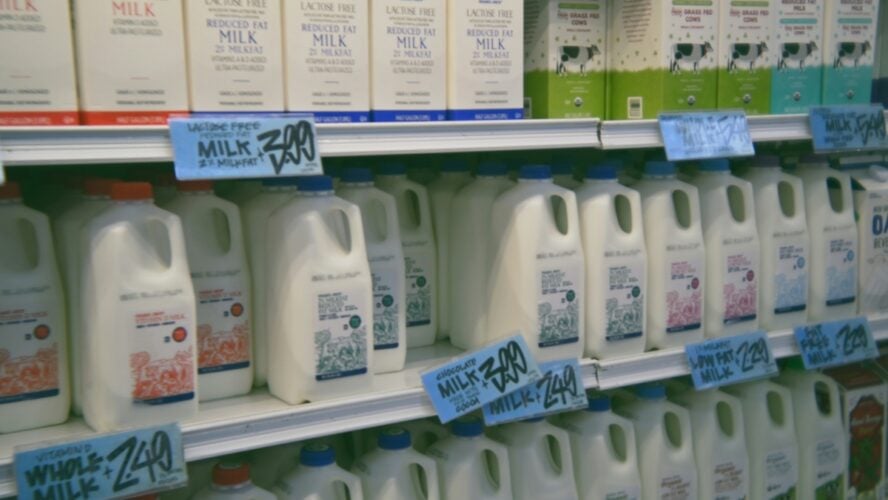
Good news for fans of rich, creamy dishes like cauliflower cheese: It turns out that consuming high-fat dairy could reduce your risk of developing dementia. A new study published in December in Neurology analyzed data from 27,670 Swedish participants over the course of about 25 years, finding that consumption of high-fat cheese and cream was associated with a reduced risk of all-cause dementia1. No such benefits were found for either low-fat versions or butter.
While the pendulum of public opinion on dairy — and fat on the whole — has swung widely over the years, this study seems to cement the health benefits of full-fat dairy once and for all.
What Are the Healthiest Sources of High-Fat Dairy?
The study authors found benefits to consuming any form of full-fat dairy, from cheese to cream to full-fat cottage cheese. But for Lena Bakovic, MS, RDN, CNSC at Live It Up, it’s important not to let this new evidence take precedence over other health considerations.
“There is still a wide body of scientific evidence correlating high saturated fat intake with risk for cardiovascular disease,” she explains. “Fat is also calorically-dense, so some individuals may choose to decrease their calories from fat for the purposes of weight loss.” For this reason, it’s a good idea to be mindful of which high-fat dairy products to integrate into your diet to best reap their fullest benefits.

“Full-fat Greek yogurt is a great example here in that it contains fat-soluble vitamins, Vitamin A and Vitamin D,” explains Bacovic, who notes that it’s also a great source of protein. “Hard cheeses such as parmesan, pecorino romano, sharp cheddar, and asiago would offer similar nutrient profiles to Greek yogurt,” she adds.
Are There Other Ways to Reap the Health Benefits of Fat?
While the benefits of high-fat dairy may sound like good news to some, this is far from a one-size-fits-all recommendation. Notably, according to Dr. Serena Goldstein, ND, many Americans tend not to tolerate dairy well, experiencing gut-related symptoms, skin issues, or other concerns.
Luckily, dairy products aren’t the only brain-healthy foods — other fat sources may offer similar health benefits for the mind. Unsaturated fats (AKA “healthy fats”), notably from plants like avocados and nuts and fatty fish like salmon, mackerel, and sardines, “can still offer similar benefits for brain health,” according to Bacovic. If you opt for blue cheese, you could also reap the longevity benefits of a compound called spermidine.
In particular, polyunsaturated fatty acids like DHA and EPA, both of which can be found in algae and fish, “are believed to be potent for protection and/or treatment of cognitive decline and dementia,” according to a 2018 study in Current Neuropharmacology2. The potent combination of lipids and protein in walnuts specifically has been found to maintain cognitive function and reduce the risk of developing dementia and other brain disorders, according to 2020 research in Nutrients3.
Is It Time to Boycott Low-Fat Dairy Once and for All?
The results of this study echo the USDA’s recently published dietary guidelines for Americans, which emphasize the health benefits of dairy. They recommend consuming three servings a day, with a focus on full-fat over fat-free or low-fat choices. But for Bacovic, there’s more nuance to this argument than it may seem.
“Low-fat dairy can conceivably be included for individuals requiring low-fat diets from a medical standpoint. Or perhaps more specifically, diets low in saturated fat content (mostly animal-based fats),” she says. “Additionally, like full-fat dairy, low-fat dairy still provides important nutrients like calcium and protein.”
So this doesn’t necessarily mean there’s a definitive, one-size-fits-all answer to the question of full-fat vs. low-fat dairy. Low-fat dairy options such as low-fat cottage cheese or low-fat yogurt can be part of a sustainable dietary approach, she says, albeit not to the detriment of full-fat versions.
“I believe that ALL foods fit as part of a healthy dietary pattern,” says Bacovic. “Dietary fat is of course a part of this recommendation.”
But if your ultimate goal is learning how to prevent dementia, replacing your low-fat dairy for high-fat dairy might not be a bad idea.
Sources:
- https://www.neurology.org/doi/10.1212/WNL.0000000000214343
- https://pmc.ncbi.nlm.nih.gov/articles/PMC6120115/
- https://pmc.ncbi.nlm.nih.gov/articles/PMC7071526/


