



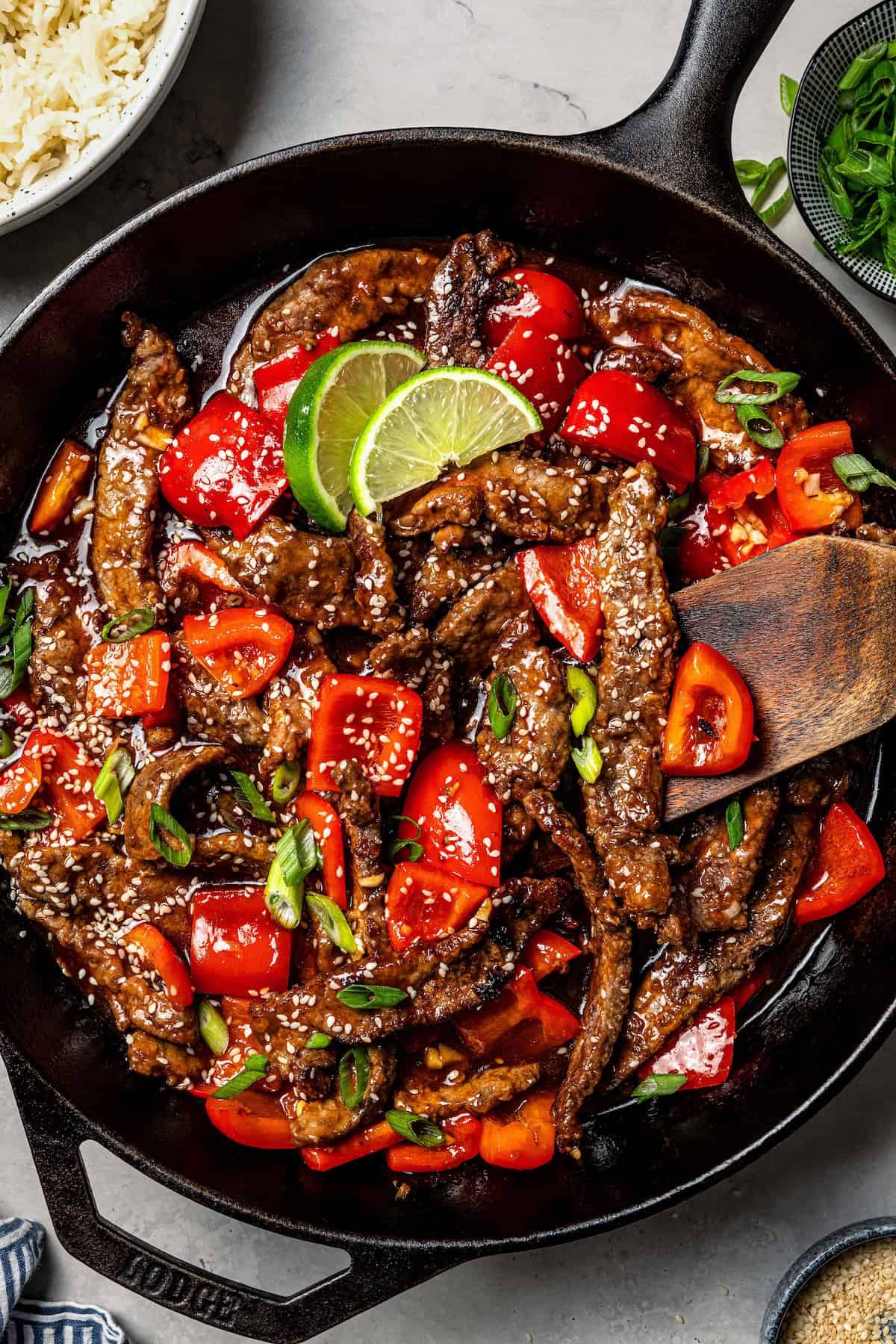
This Beijing beef with bell peppers and onions is tossed in a tangy, savory, spicy stir-fry sauce. I’ll show you how to make this Panda Express copycat with easy ingredients from your own pantry!
Serve this easy beef stir-fry with fried rice or peanut noodles for a homemade meal that’s even better than takeout.
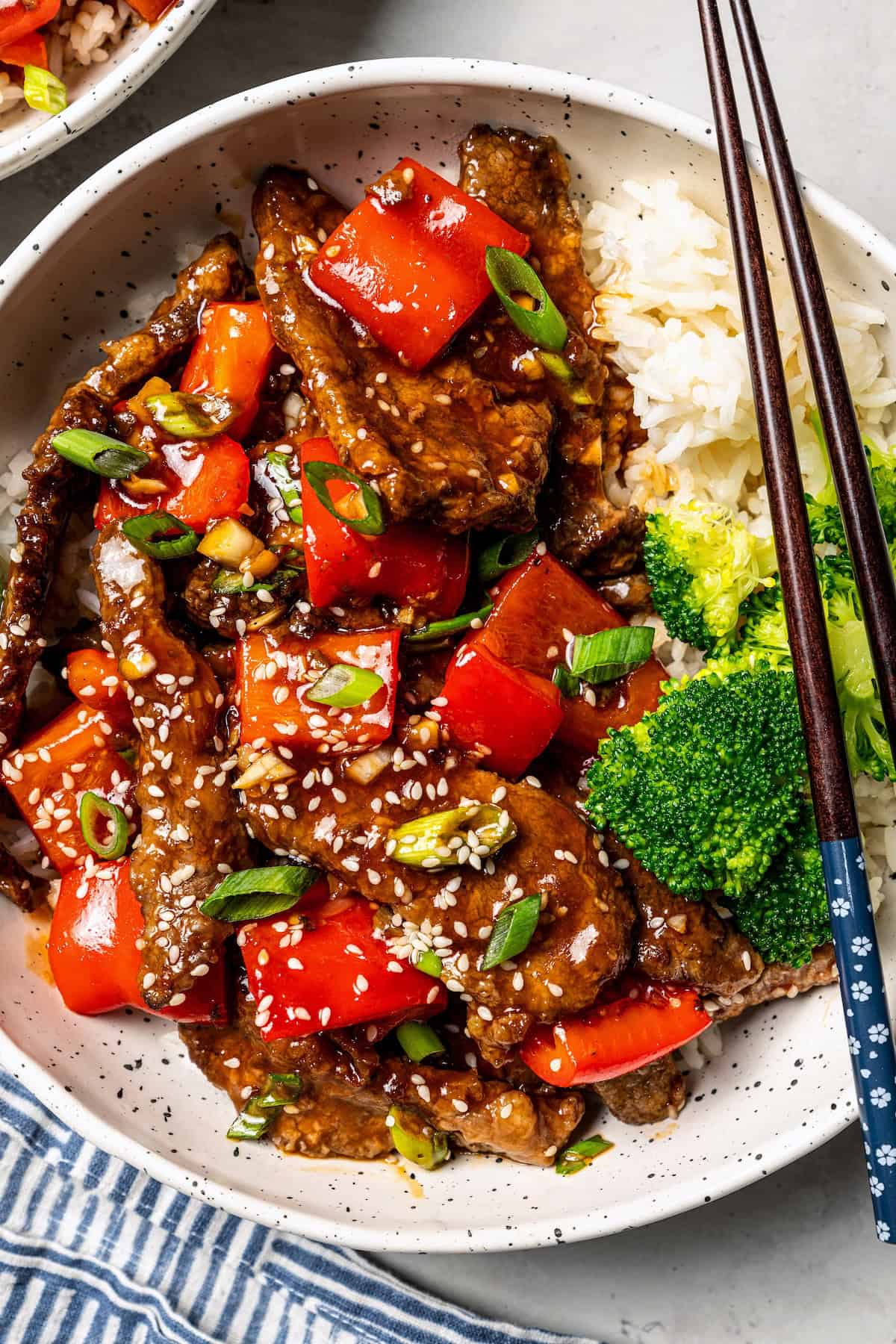
If you’ve followed the blog for a while, you’ll know that I’m semi-obsessed with recreating my favorite takeout meals. Recipes like this copycat Kung Pao beef and Hunan beef are on regular dinner rotation, and this Beijing beef recipe is my homemade version of the Panda Express stir-fry. With crispy fried beef, bell peppers, and onions in a sweet, tangy, savory sauce, I think it’s pretty darn close to the original.
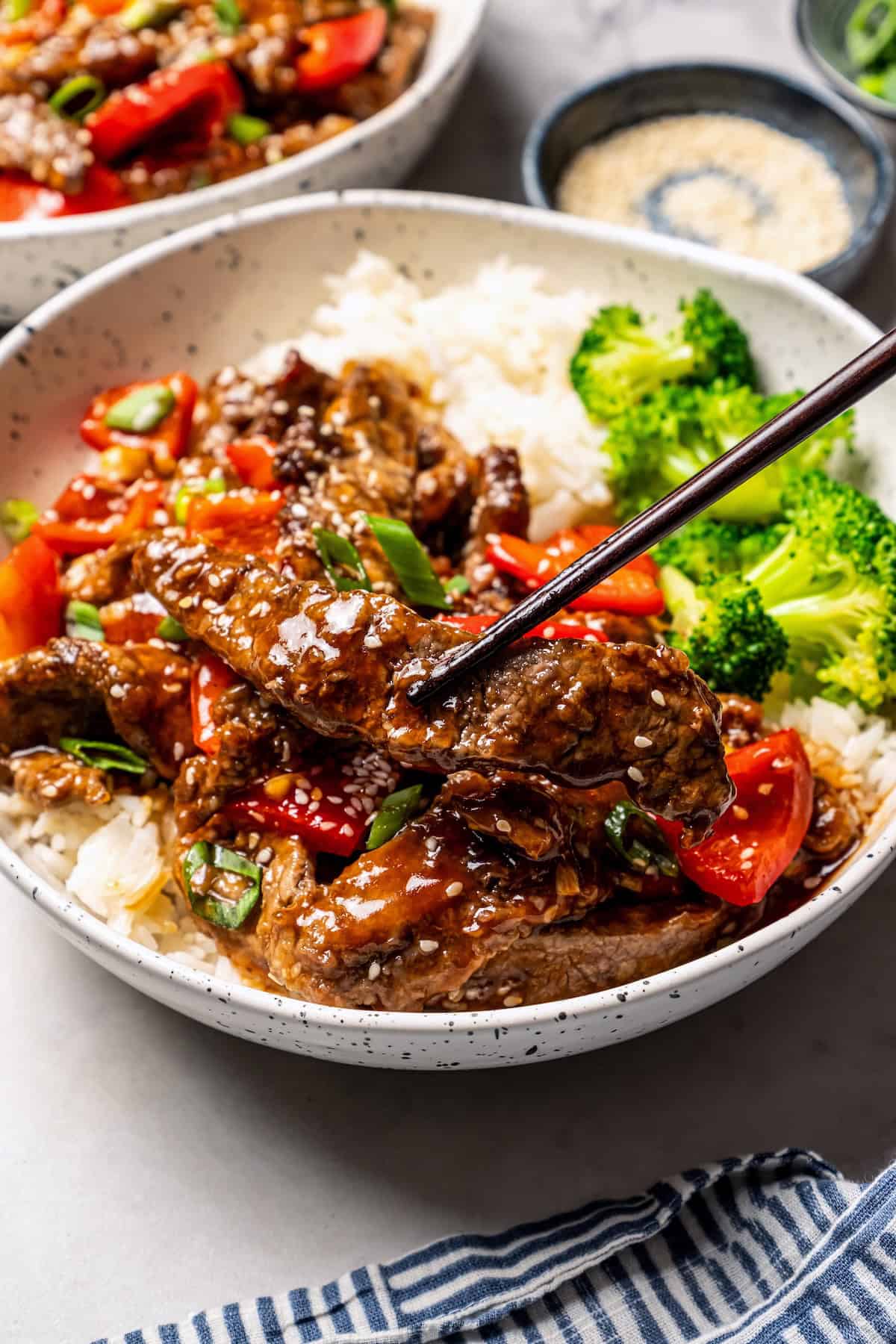
We ate this Beijing beef with jasmine rice and steamed broccoli the other night, and it was *chef’s kiss*.
About This Panda Express Beijing Beef Copycat
- Approachable. I simplified the ingredients with what I had in the pantry. Ingredients like oyster sauce are optional, but you can always use them in more stir-fry recipes.
- Easy to make at home. Anyone with a stove and a skillet can make this saucy Beijing beef in 45 minutes or less.
- Adaptable. The best part about making takeout at home is the flexibility! Adapt the spice level and veggies to your liking.
Recipe Ingredients
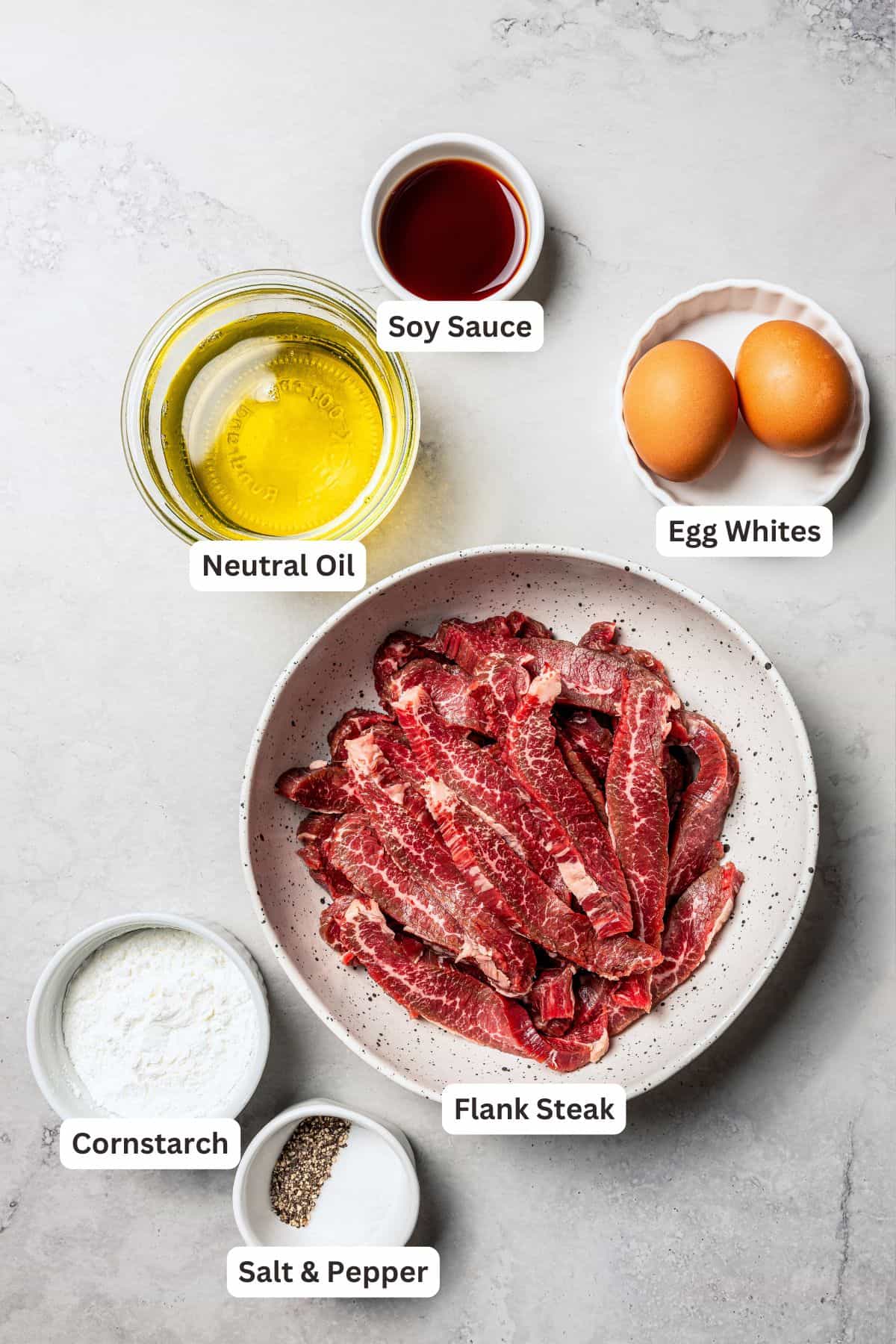
- Flank Steak – My favorite beef for stir-frying is flank steak, but you could use quick-cooking skirt steak or sirloin cut into thin ¼-inch strips.
- Soy Sauce – Low sodium soy sauce or regular. Tamari is a high-quality, gluten-free alternative.
- Egg Whites – Just the whites, lightly beaten.
- Cornstarch – I add cornstarch to the beef marinade and reserve extra cornstarch to “velvet” the beef before cooking.
- Oil – Choose a neutral oil with a high smoke point for frying, such as canola, vegetable, peanut, or avocado oil.
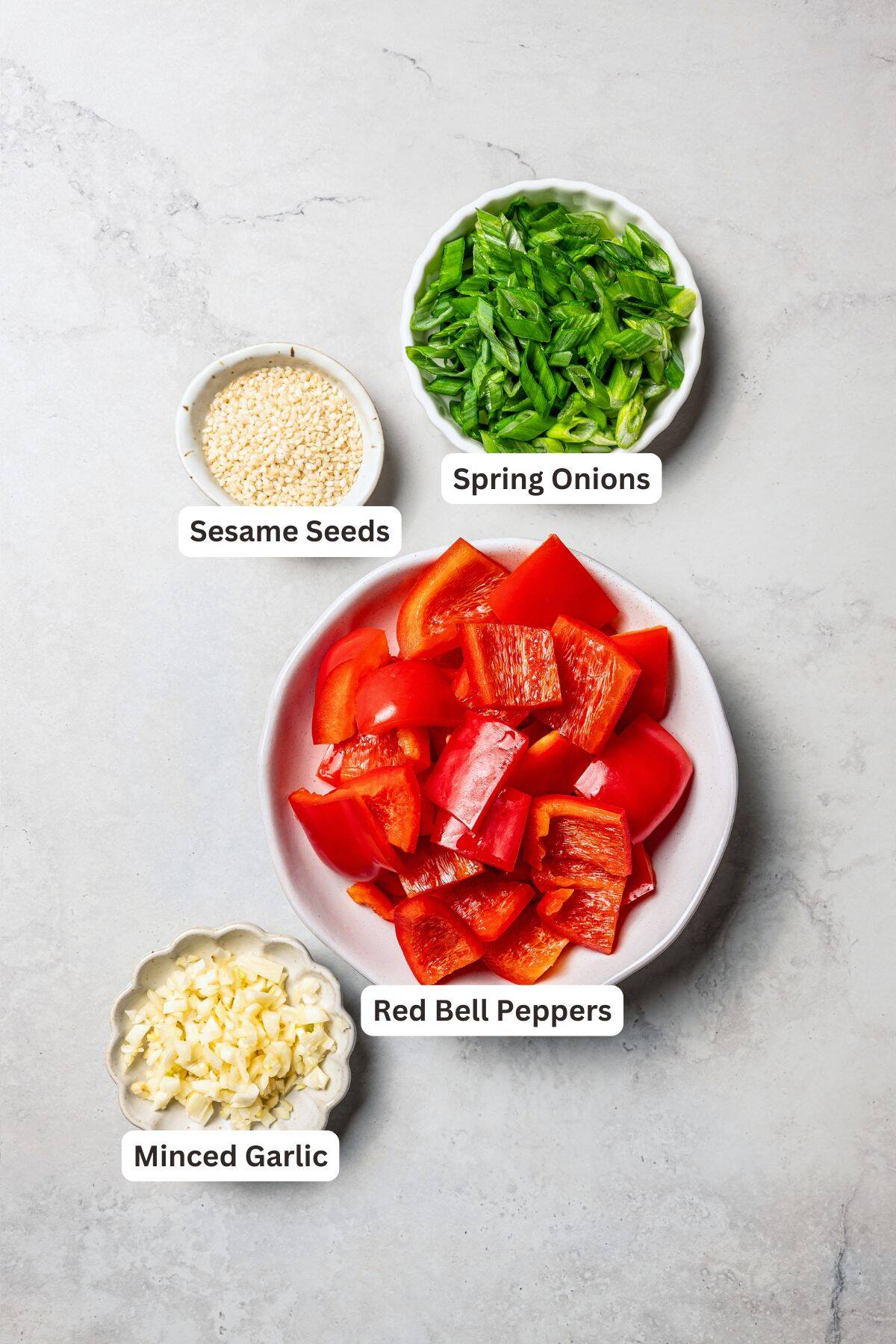
- Bell Peppers and Onions – These are the original veggies in the Panda Express Beijing beef, but you can adapt this homemade recipe with fresh or frozen stir-fry vegetables. Broccoli florets, julienne carrots, snap peas, etc., are all great choices. If frozen, thaw them fully.
- Garlic – Freshly minced. Substitute 1 tablespoon of jarred garlic for each clove.
Beijing Beef Stir-Fry Sauce
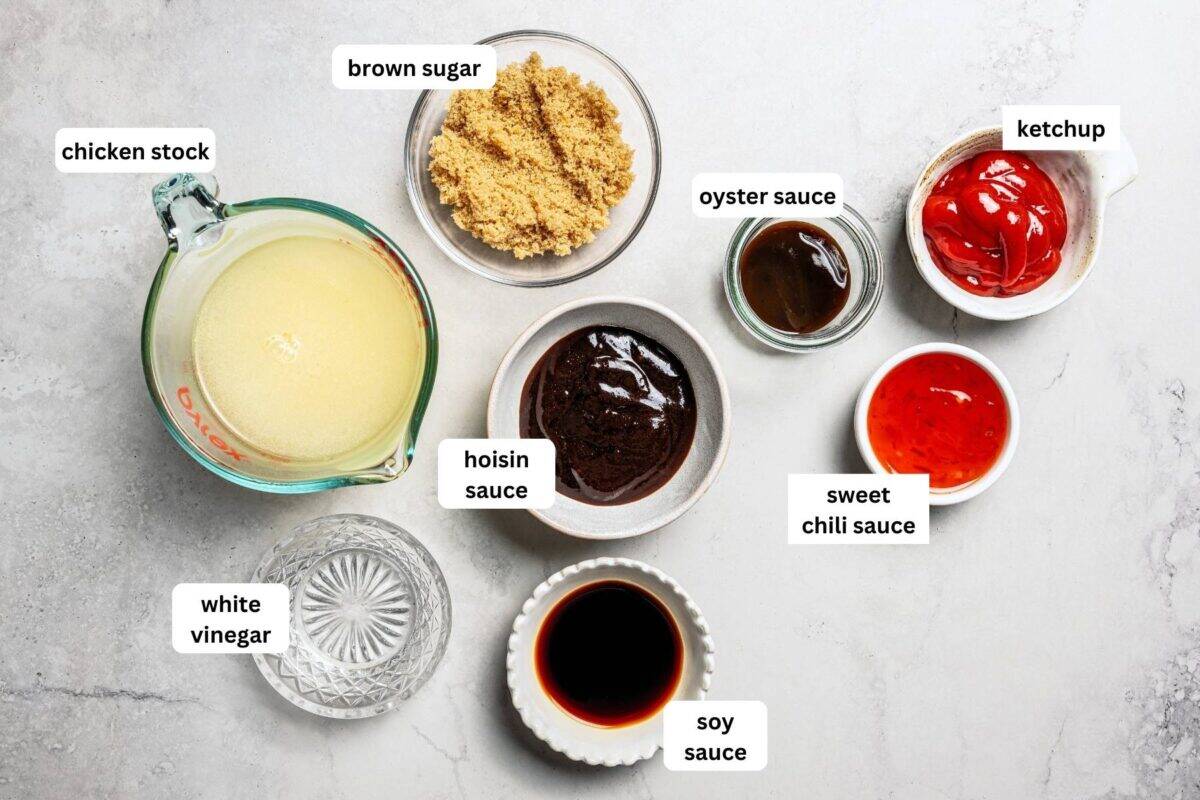
- Chicken Stock – I use low-sodium chicken broth. Beef stock will have a deeper flavor.
- Soy Sauce – Whichever soy sauce you used in the stir-fry will work in the sauce.
- Ketchup – I swear by ketchup as an easy shortcut to sweet-tangy flavor in stir-fry sauces.
- Hoisin Sauce – This is essentially Chinese barbecue sauce. You’ll find it in the condiment aisle or international food aisle in most major grocery stores. Any type of barbecue sauce works, but I highly recommend hoisin as a first choice.
- Sweet Chili Sauce – Choose your favorite depending on your preferred spice level.
- Oyster Sauce – Another bottle to pick up from the Asian condiment aisle. If oyster sauce isn’t available, you can substitute extra soy sauce or hoisin. I’d suggest adjusting to taste.
- Brown Sugar – Or white sugar, though it won’t have the same depth of flavor.
- White Vinegar – You could also use rice vinegar or white wine vinegar.
Cornstarch in Stir-Frying
Cornstarch is a key ingredient in stir-frying, and not only for thickening the sauce. Velveting is a Chinese cooking technique that coats the beef in cornstarch before frying. This is the secret to that super-tender, juicy meat with crispy edges that you get in Chinese restaurants. Don’t skip the cornstarch!
Tips for the Best Beef Stir-Fry
- Slice the steak against the grain. The grain is the lines you can see running through a piece of meat. These are muscle fibers, and cutting across them (rather than with them) severs the lines, for beef that’s tender and not chewy.
- Thicken the sauce. If you find that the sauce is a little runny, you can add a cornstarch slurry to help thicken it. Whisk together equal parts cornstarch and water. Then, add the slurry to the sauce and simmer until it thickens.
- Use low-sodium chicken stock. Soy sauce is salty enough, and too much salt will be overkill.
What to Serve With Beijing Beef
Frequently Asked Questions
Beijing beef is crispy, tangy, and spicier than Mongolian beef, which is sweeter and savory. Give my Mongolian beef recipe a try if you’d prefer a milder dish.
The original recipe is spicy thanks to chili flakes. However, this version tames the heat slightly with sweet chili sauce instead. You can adapt the heat to taste by adding extra chili or a hotter chili sauce.
Pin this now to find it later
-
Marinate the beef. Using a whisk, beat the soy sauce, egg whites, and 1 tablespoon cornstarch in a large bowl. Season to taste with salt and pepper. Add the sliced steak, cover with plastic wrap, and refrigerate for 30 minutes to marinate.
-
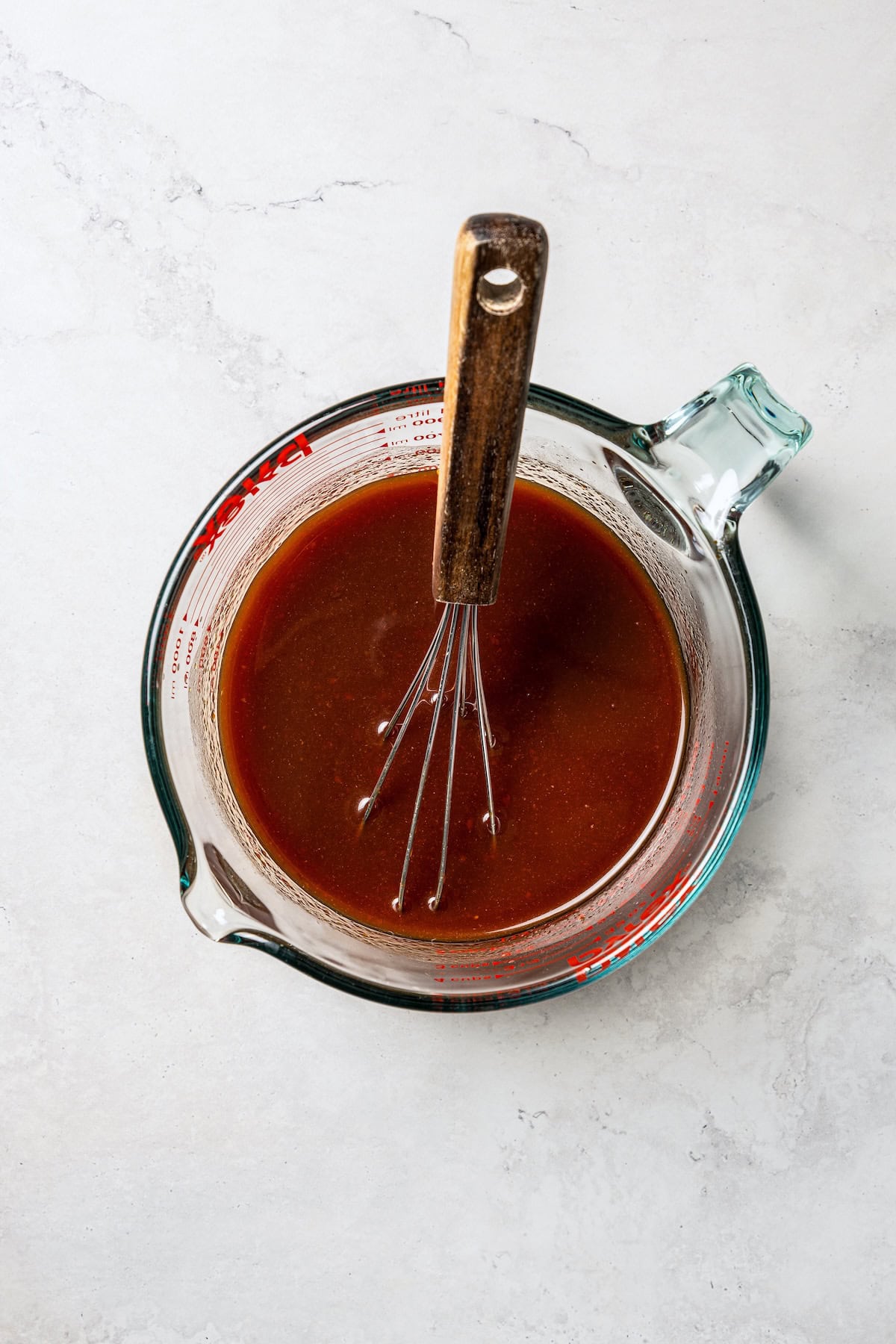
Make the sauce. Combine all the sauce ingredients in a bowl. Set aside.
-
Velvet the beef. Remove the beef from the marinade. Discard the marinade. Coat the beef slices with the ¼ cup of cornstarch. You can do this in two batches.
-
Cook the beef. Heat the cooking oil in a large skillet or wok to 350˚F. Once heated, add the beef and cook for 3-4 minutes or until done. Remove the beef slices with a slotted spoon and move them to a paper-lined plate to drain. Try not to crowd the pan and cook the beef in two batches.
-
Cook the veggies. Remove most of the oil from your skillet or wok, leaving about 2 tablespoons. Add the bell pepper and cook, stirring until crisp-tender, about 2 minutes. Stir in the garlic and cook for 15 seconds, or until fragrant. Remove the veggies from the skillet and transfer them to the plate with the beef.
-
Thicken the sauce. Add the sauce to the same skillet or wok. Cook for 3 to 5 minutes or until it thickens.
-
Put it all together. Stir the beef and veggies back into the pan with the sauce and toss to combine.
-
Serve. Serve warm, garnished with sesame seeds and spring onions.
- Slice the steak against the grain for tender meat.
- If needed, you can thicken the sauce with some cornstarch slurry.
- If you do not have oyster sauce, you can use more hoisin or soy sauce.
- Use low-sodium chicken stock because soy sauce is salty enough.
Calories: 359kcal | Carbohydrates: 42g | Protein: 30g | Fat: 7g | Saturated Fat: 3g | Polyunsaturated Fat: 1g | Monounsaturated Fat: 3g | Cholesterol: 69mg | Sodium: 1378mg | Potassium: 650mg | Fiber: 2g | Sugar: 28g | Vitamin A: 1865IU | Vitamin C: 77mg | Calcium: 57mg | Iron: 3mg
Nutritional info is an estimate and provided as courtesy. Values may vary according to the ingredients and tools used. Please use your preferred nutritional calculator for more detailed info.
How to Make Beijing Beef
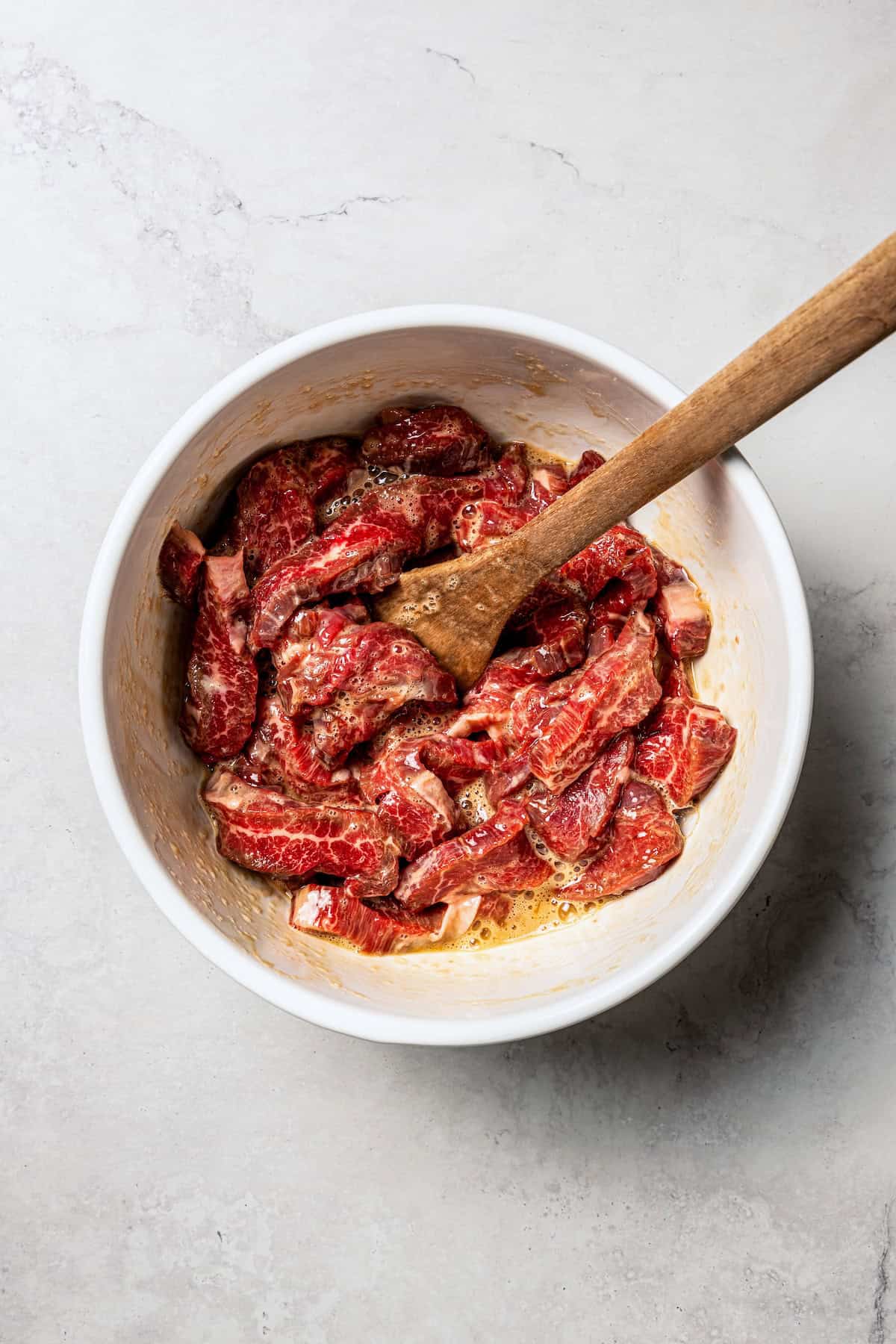
- Marinate the beef. Start by beating together soy sauce, egg whites, 1 tablespoon of cornstarch, and salt and pepper to taste. Add the steak slices to the marinade and refrigerate for 30 minutes.
- Make the sauce. Meanwhile, mix all the sauce ingredients in a new bowl.


- Velvet the beef. Discard the marinade, and dredge the beef slices lightly in cornstarch to coat. You may need to do this in batches.
- Cook the beef. Next, heat the oil in a hot skillet or wok. Aim for 350ºF (use a candy thermometer if you have one). Then, fry the beef for 3-4 minutes, until it’s golden. Using a slotted spoon or metal tongs, move the cooked beef to a paper towel-lined plate to drain.


- Cook the veggies. Drain most of the oil from your skillet, leaving about 2 tablespoons behind to cook your veggies. Add the bell peppers and cook until they’re tender-crisp. Stir in the garlic, then transfer the vegetables to the plate with the beef.
- Heat the sauce. Pour the prepared sauce into the same skillet. Simmer for 3 to 5 minutes, just until it thickens.
- Put it all together. Finally, return the beef and veggies to the skillet with the sauce, and toss to coat. Serve this Beijing beef warm, topped with sesame seeds and a sprinkle of spring onions if you’d like. Enjoy!

Storing and Reheating Leftovers
- Refrigerate. Store leftover Beijing beef in an airtight container for up to 4 days in the fridge.
- Reheat. Warm the beef and sauce on the stovetop or in the microwave. If needed, add a splash of water or broth to help loosen up the sauce if it’s become dry from storage.

