


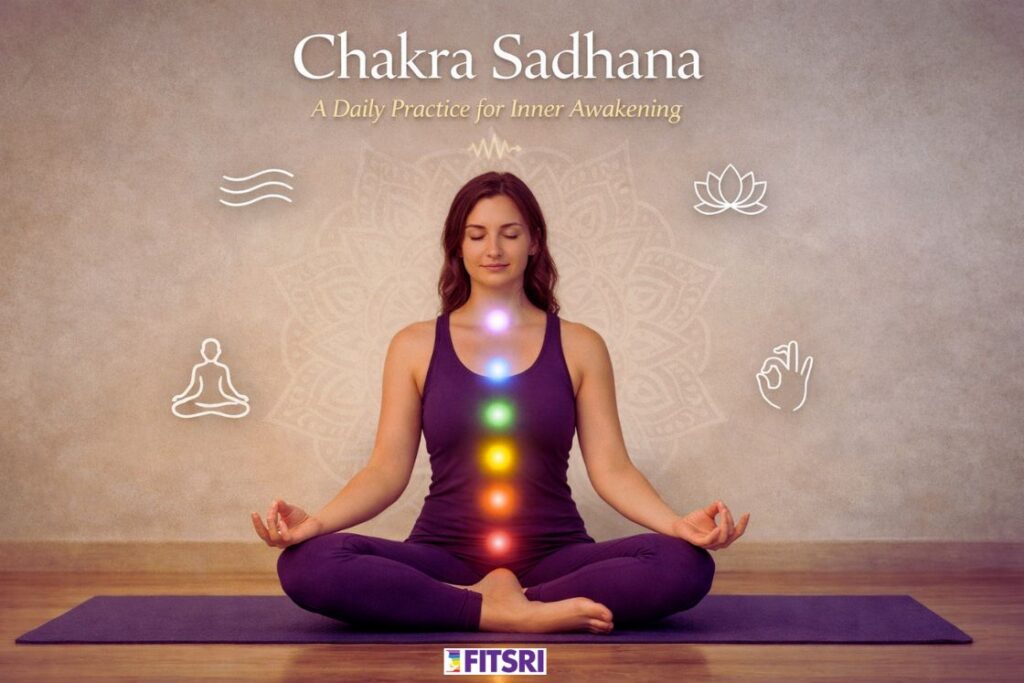
Many people first encounter yoga through physical postures. Over time, however, it becomes clear that yoga is not only about flexibility or fitness. Beyond the physical postures, yoga also includes practices that work with the breath, the mind, and subtle energy.
One important part of this system is chakra sadhana – a daily yogic practice that brings awareness to the body’s energy centres and gradually refines the flow of prana.
You may have heard the word chakra before. It often appears in modern wellness discussions, but its roots are far older and deeper. In traditional yoga, working with the chakras is not simply visualising colours or imagining energy moving through the body. It is a structured practice that combines asana, breathwork, mantra, meditation, and subtle energy techniques.
This article explains what chakra sadhana is, where it comes from, and how beginners can approach it in a grounded and practical way.
What is chakra sadhana?
To understand the meaning of chakra sadhana, it helps to look at the two words separately.
Sadhana
In yoga, sadhana means a regular spiritual practice that is done consistently over time. The word comes from a Sanskrit root meaning “to accomplish” or “to move toward a goal.”
A sadhana is not something you do occasionally when you feel inspired. It is something you return to every day. Through repetition and discipline, the practice gradually transforms the body, mind, and awareness.
Chakra
The word chakra literally means “wheel” or “circle.” In yogic philosophy, chakras are subtle energy centres located along the central channel of the body, running from the base of the spine to the crown of the head.
Each chakra is associated with particular qualities of awareness, emotional patterns, and physiological functions.
Chakra Sadhana
When these ideas come together, chakra sadhana refers to a daily practice designed to:
- bring awareness to the chakra system
- balance the flow of prana
- gradually awaken deeper levels of consciousness
Rather than being a single technique, chakra sadhana is a system of practices that work together to influence the energetic body.
Where do chakra practices come from?
The chakra system used in yoga today comes mainly from Tantric and Hatha Yoga traditions.
Detailed descriptions of the chakras appear in classical texts such as:
These texts describe the chakras as subtle centres within the pranic body and explain methods of meditation, mantra, and breath practices used to awaken them.
Over time, these teachings developed into the systematic practices that are now known as chakra sadhana.
Understanding the energy body: Prana and the chakras
Before you can understand chakra sadhana, it helps to understand what the practice is actually working with.
In yogic philosophy, the human being is not just a physical body. We also have what is sometimes called the pranic body an energetic layer that underlies and animates the physical. Prana is the life force, the vital energy that flows through us. When prana flows freely and evenly, we feel well, clear, and alive. When it becomes blocked or unbalanced, we may feel sluggish, anxious, stuck, or unwell.
The chakras are points where this energy concentrates and moves. Think of them a bit like hubs on a wheel, or junctions in a road network. Energy moves through them, and when a junction is blocked, traffic backs up. Chakra sadhana is the practice of keeping those junctions clear and functioning well.
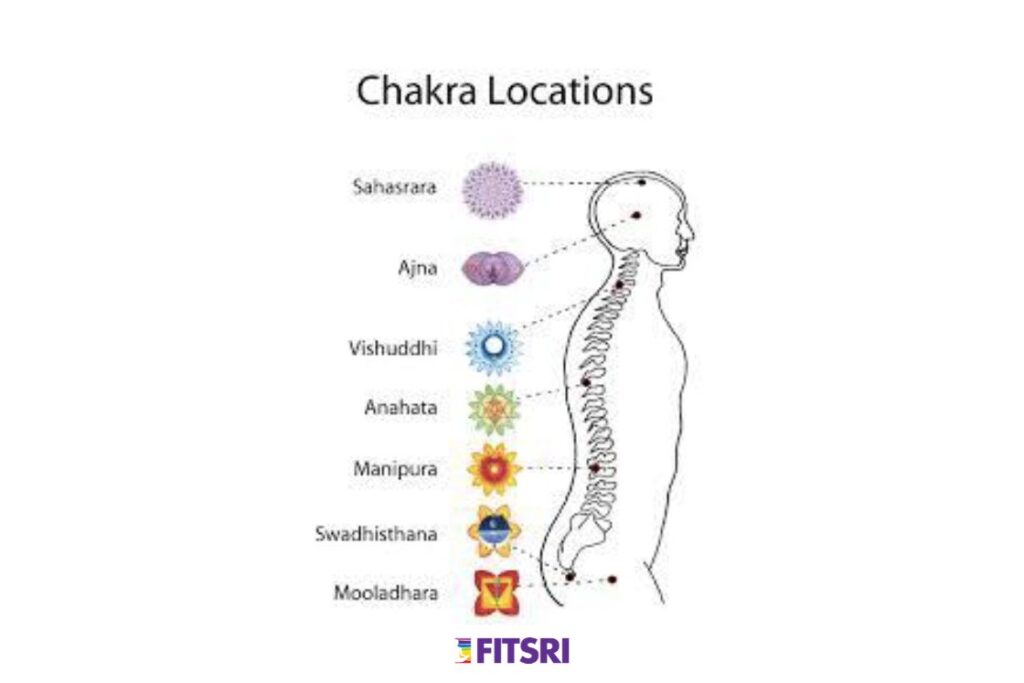
The seven main chakras, moving from the base of the spine upward, are:
- Mooladhara — at the base of the spine, associated with groundedness and the sense of security
- Swadhisthana — at the sacral region, associated with creativity and the emotional body
- Manipura — at the navel centre, associated with willpower, digestion, and energy
- Anahata — at the heart, associated with love, connection, and compassion
- Vishuddhi — at the throat, associated with expression and communication
- Ajna — between the eyebrows, associated with intuition and clarity of mind
- Sahasrara — at the crown of the head, associated with expanded awareness and spiritual experience
A complete chakra sadhana works with all of these centres though different practices target different chakras more specifically.
Chakra Sadhana and Kundalini Energy
In classical yoga traditions, chakra practice is closely connected to the concept of kundalini.
Kundalini is described as a dormant spiritual energy resting at the base of the spine. Through consistent practice of yoga, pranayama, and meditation, this energy gradually awakens and moves upward through the central channel of the body.
As it rises, it passes through the chakras, activating deeper levels of awareness.
Traditional teachings emphasise that kundalini should not be forced. Instead, chakra sadhana prepares the body and mind so that the awakening process happens naturally and safely.
What practices are used in chakra sadhana?
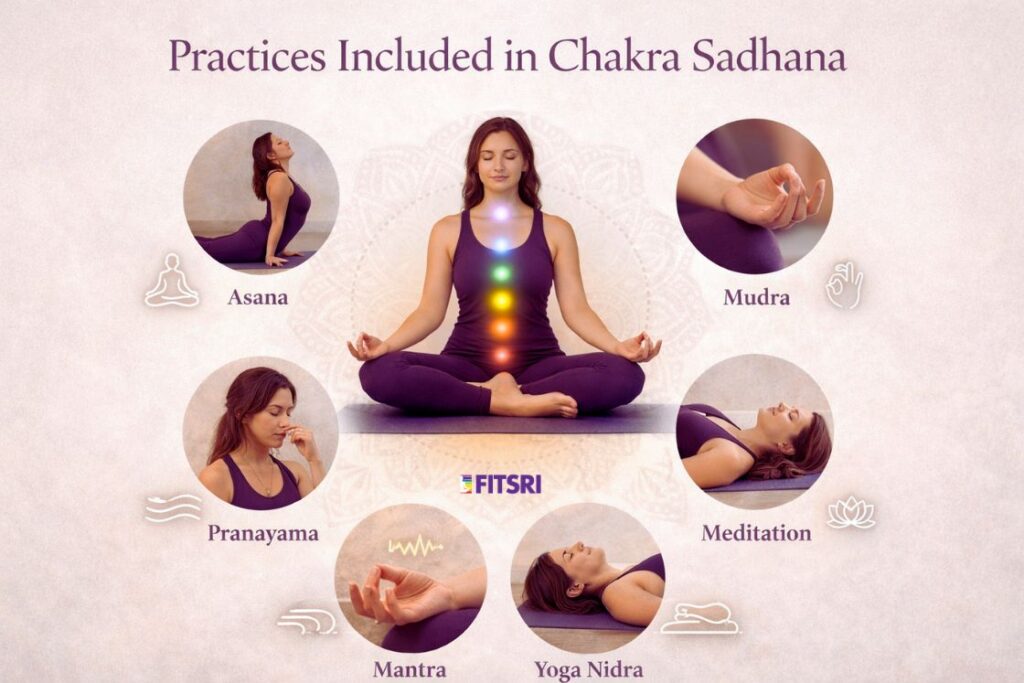
This is where many people get confused. They think working with chakras means sitting quietly and visualising coloured lights. And while visualisation can be part of the practice, traditional chakra sadhana is much more complete than that. It uses the whole body, the breath, sound, gesture, and the mind together.
Here is what a traditional chakra sadhana may include:
1. Asana — Physical Postures
Specific yoga postures are used to stimulate different areas of the body where chakras are located. For example, standing postures and forward bends work with the lower chakras, while chest-opening postures work with the heart centre, and inversions influence the upper chakras.
The purpose of asana in chakra sadhana is not flexibility or fitness- it is to move prana, remove physical tension, and prepare the body to sit comfortably in meditation.
2. Pranayama — Breath Practices
Pranayama is one of the most powerful tools in chakra sadhana. The breath is directly connected to the pranic body, and by regulating the breath, you directly influence the flow of energy.
Different pranayama practices have different effects. Nadi Shodhana (alternate nostril breathing) balances the left and right channels of the body and calms the nervous system. Bhramari (humming bee breath) creates a vibration that is felt throughout the head and chest, which is particularly effective for the upper chakras. Kapalabhati (skull-shining breath) activates and cleanses the lower energy body.
Beginners are always advised to learn pranayama from an experienced teacher before practising independently.
3. Yoga Mudra — Hand and Body Gestures
Mudras are specific gestures– usually of the hands, but sometimes of the eyes or the whole body — that redirect the flow of energy. They work partly through the nerve endings in the fingers and partly through the practitioner’s conscious intention.
A simple example is Chin Mudra: touching the tip of the index finger to the tip of the thumb, with the other three fingers extended. This gesture is commonly used during meditation to create a circuit of energy in the hands and support inward awareness.
Different mudras correspond to different chakras and energy qualities. Over time, you begin to notice that these subtle gestures genuinely change something in how you feel during practice.
4. Bandha — Energy Locks
Bandhas are internal muscular contractions that lock and redirect prana within the body. There are three main bandhas:
- Mula Bandha — a gentle contraction at the pelvic floor, which roots energy and stimulates the lower chakras
- Uddiyana Bandha — a drawing-in of the abdomen after exhalation, which moves energy upward
- Jalandhara Bandha — a chin lock that contains energy in the upper body during breath retention
These are intermediate-to-advanced practices and should be learned properly before including them in daily sadhana. When used correctly, they are extraordinarily effective at moving prana through the chakra system.
5. Mantra — Sacred Sound
Sound is central to traditional yoga practice. Every chakra has a seed syllable — called a bija mantra associated with it. These are single-syllable sounds that carry a vibrational quality corresponding to that energy centre.
The bija mantras for the seven chakras are: LAM, VAM, RAM, YAM, HAM, OM, and a deep silence for the crown.
Repeating these sounds either aloud or internally — during meditation creates a vibration in the body that resonates with the corresponding chakra. This is not mystical thinking; it is simply the observation that sound creates physical vibration, and that different vibrations have different effects.
Beyond the bija mantras, longer mantras may also be used in sadhana. So Ham (meaning “I am that”) is a widely used mantra that synchronises with the natural rhythm of the breath.
6. Meditation and Dharana — Focused Awareness
Meditation in chakra sadhana usually begins with dharana, which means concentration — holding the mind on a single point. You might focus on the location of a chakra in the body, on a visualisation, on a mantra, or on the breath.
A classical method involves moving awareness slowly through each chakra, feeling the location in the body, sometimes visualising a colour or symbol, and repeating the associated mantra. This is done methodically, from the base upward, and allows the mind to settle while the energy body is activated.
Over time, concentration deepens into genuine meditation — where there is less effort and more simple, open awareness.
7. Yoga Nidra — Yogic Sleep
Yoga nidra is one of the most distinctive and effective practices in traditional yoga. It is sometimes called “yogic sleep” because it guides the practitioner into a state between waking and sleeping a deeply restful but fully aware state.
In this state, the body is completely relaxed and the conscious mind is quiet, but awareness remains. This is when the deeper layers of the mind become accessible. Chakra-based yoga nidra often includes rotation of awareness through the body, breath awareness, and guided visualisation through the chakras.
For beginners, yoga nidra is often the easiest entry point into deeper yogic practice because it requires no effort only willingness to lie still and follow the guidance.
Join Our 40-Day Live Tantra Based Kundalini Yoga Course
How a daily chakra sadhana might look
You do not need two hours and a dedicated yoga room to begin a chakra sadhana. A simple, consistent practice of 30 to 45 minutes done every day is far more valuable than an occasional two-hour session.
A basic structure might look like this:
1. Begin with a few minutes of stillness. Simply sit and observe your breath. Let the day’s noise settle.
2. Move through some asana. Choose postures that target the area you are working with, or simply move through a basic sequence to warm the body and release tension.
3. Practise pranayama. Five to ten minutes of Nadi Shodhana or another suitable breathing practice will shift your energy and prepare you for meditation.
4. Sit for chakra meditation. Use a guided practice or simply move awareness through each chakra, spending a minute or two at each one, silently repeating the associated bija mantra.
5. Close with yoga nidra or silent sitting. Allow the practice to integrate before moving into your day.
The best time for sadhana is early morning traditionally before sunrise — when the mind is quieter and the energy of the day has not yet built up. But if early morning is not possible, any consistent time will work. What matters most is that you show up daily.
Chakra sadhana vs chakra meditation
These two terms are often used interchangeably, but they are not exactly the same.
Chakra meditation usually refers to a single practice where a person focuses attention on the chakras. This may involve visualising the chakras, repeating a mantra, or simply bringing awareness to different energy centres in the body.
Chakra sadhana, however, is a broader daily practice. It may include several yogic techniques that work together to balance and activate the chakras, such as:
- yoga postures (asana)
- breathing practices (pranayama)
- mantra chanting
- meditation
- relaxation practices like yoga nidra
In other words, chakra meditation is one part of a larger system, while chakra sadhana refers to the complete practice that supports deeper inner awareness.
Benefits of chakra sadhana
When practised regularly, chakra sadhana can gradually influence the body, the mind, and the way we experience daily life. The changes are usually subtle at first, but they build over time with consistent practice.
1. Physical benefits
Working with the breath, posture, and relaxation practices can support the body in several ways:
- reduced physical tension in the muscles
- better sleep and deeper rest
- improved breathing patterns
- more stable energy throughout the day
2. Mental and emotional benefits
Because chakra practices involve breath awareness and meditation, they often influence the nervous system and emotional state.
Many practitioners notice:
- clearer thinking and better focus
- reduced stress and anxiety
- greater emotional balance
- a stronger sense of calm during daily challenges
3. Deeper inner effects
With regular practice, chakra sadhana may also support deeper personal awareness.
Over time, practitioners may experience:
- increased self-awareness
- better understanding of personal habits and emotions
- a stronger connection between body, breath, and mind
- the ability to enter deeper states of meditation
Chakra sadhana is not about instant transformation, but about steady inner development through daily practice.
Who can practise chakra sadhana?
Chakra sadhana is suitable for most adults who are willing to approach it sincerely and consistently.
- Beginners can start with the simpler elements — asana, gentle pranayama, yoga nidra, and basic chakra meditation — and gradually introduce more advanced practices as they grow.
- Intermediate practitioners who already have a yoga and meditation foundation will find that chakra sadhana gives their practice more depth and direction.
Those dealing with high stress, anxiety, or feeling emotionally stuck often find that this systematic approach is particularly helpful because it addresses both the physical body and the energetic roots of those experiences.
Who should be cautious: People with a history of serious mental health conditions, particularly psychosis or dissociation, should approach intensive chakra and energy practices carefully and ideally with professional guidance alongside their yoga practice. Pranayama and energy work can be powerful, and that power needs to be respected.
Tips for beginners
- Start small and stay consistent. Twenty minutes every day is better than ninety minutes once a week. The daily rhythm is what makes sadhana work.
- Learn the foundations first. Before you dive into mudras, bandhas, and advanced pranayama, get comfortable with basic asana and simple breath awareness. The foundations matter.
- Find a qualified teacher. Reading about chakra sadhana is a good start, but there is no substitute for learning from someone who has practised and understood these things themselves. A good teacher will also help you personalise the practice for your situation.
- Don’t force experiences. Some people begin chakra practice expecting dramatic kundalini experiences. The expectation itself gets in the way. Approach the practice with curiosity, not ambition. Let it unfold naturally.
- Keep a practice journal. Note down what you did, how long you practised, and anything you noticed — physically, emotionally, or mentally. Over weeks and months, you will begin to see patterns that are genuinely useful.
- Be patient with yourself. There will be mornings when the mind will not settle, when practice feels dry, when you wonder if it is doing anything. These are normal phases. Keep showing up.
Conclusion
Chakra sadhana is not about chasing mystical experiences or forcing energy to move in dramatic ways. At its core, it is simply a disciplined practice of bringing awareness to the body, breath, and mind.
Through regular practice, the flow of prana becomes more balanced and the mind becomes quieter. Over time, this creates the conditions for deeper states of meditation and inner clarity.
Like many aspects of yoga, the real effects appear slowly. But with patience and consistency, chakra sadhana can become a meaningful path for exploring the deeper dimensions of yoga.
Continue your chakra practice
If you feel drawn to explore chakra sadhana more deeply, learning with proper guidance can make the practice clearer and more meaningful.
Our 40-Day Live Kundalini Yoga Course teaches many of the traditional practices mentioned in this article, including chakra awareness, pranayama, mantra, meditation, mudra, and daily sadhana.
👉 Explore the 40-Day Live Kundalini Yoga Course
FAQs
The effects of chakra sadhana usually develop gradually. Some people notice improvements in relaxation, breathing, or mental clarity within a few weeks. Deeper changes in awareness and emotional balance often come with consistent practice over months or years.
Yes, beginners can practise simple forms of chakra sadhana at home. Basic breathing exercises, gentle yoga postures, and short meditation sessions are safe starting points. However, more advanced practices such as bandhas or intense pranayama should ideally be learned from an experienced teacher.
Not necessarily. Some traditions work with one chakra at a time, especially when addressing specific emotional or energetic patterns. Other approaches guide awareness through all seven chakras in sequence during meditation. Both methods are used in yoga practice.
Yes, chakra sadhana is closely related to Kundalini Yoga. In traditional yogic teachings, the chakras are part of the pathway through which kundalini energy rises during spiritual awakening. Chakra practices help prepare the body and mind for this process.
Many practitioners find that chakra sadhana makes meditation easier. Practices such as breath control, mantra, and body awareness help calm the mind and create better concentration, which naturally supports deeper meditation.
Chakra sadhana comes from ancient yogic traditions that developed in India. While it has spiritual roots, the practices themselves are not tied to a specific religion. Many people practise chakra meditation simply as a way to develop awareness, relaxation, and mental clarity.
Early morning is traditionally considered the best time for yoga and meditation practices. At this time the mind is usually quieter and the body is rested. However, chakra sadhana can also be practised in the evening or at any consistent time that fits your daily routine.

