


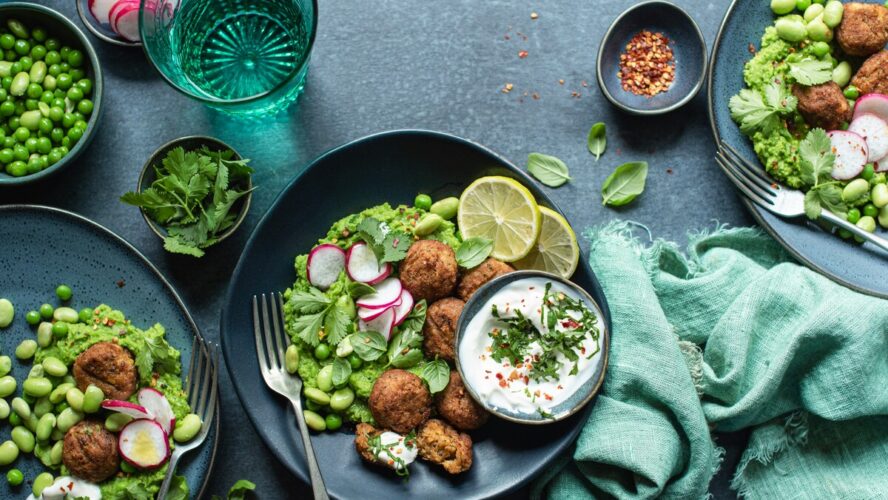
Which diet is better for heart health: low-carb or low-fat? According to experts from Harvard… neither one. Turns out it’s not the quantity of macronutrients like carbs and fat that make a difference for heart health — it’s the quality. But what exactly does that mean?
Macronutrients Aren’t the Deciding Factor for Heart Health
To come to the conclusions published in February inJACC, researchers from Harvard T.H. Chan School of Public Health assessed diet and health data from nearly 200,000 men and women participating in the Health Professionals Follow-Up Study, Nurses’ Health Study, and Nurses’ Health Study II1.
The researchers found that those whose diets were rich in high-quality, plant-based foods and low in animal products and refined carbohydrates enjoyed higher HDL cholesterol, lower levels of triglycerides, and a 15% lowered risk of heart disease — no matter their macronutrient ratio. On the flip side, when participants consumed the very same macronutrient breakdown while relying on a diet rich in refined carbohydrates and animal products, their risk of cardiovascular disease spiked.
“The health benefits were similar between healthy low-carbohydrate and healthy low-fat diets even when they emphasize different compositions of macronutrients,” explains first author Zhiyuan Wu, postdoctoral research fellow in the Department of Nutrition. “Healthy versions of both low-carbohydrate and low-fat diets were associated with lower risk of coronary heart disease, more favorable cardiovascular biomarkers, and metabolomic profiles, supporting that diet quality matters more in the settings of low-carbohydrate and low-fat diets.”
These takeaways dispel any lingering myths regarding the heart health benefits of a focus on macros alone. “Low-carbohydrate and low-fat diets have been widely promoted in the U.S. over the past two decades for weight control and metabolic health, but their effects on heart disease risk have remained unclear,” said Wu. “Our findings help debunk the myth that simply modulating carbohydrate or fat intake is inherently beneficial, and clearly demonstrate that the quality of foods constructing low-carbohydrate and low-fat diets is what’s most important to protect heart health.”
What Does a Heart-Healthy Diet Look Like?

These results prove that a heart-healthy diet can be quite varied in terms of macronutrient breakdown. Instead of focusing on fat and carbs, it’s way more important to build your diet around Michael Pollan’s maxim, “Eat food, not too much, mostly plants.”
“For clinicians, dietitians, and patients, our study suggests that promoting an overall healthy eating pattern, rather than strict macronutrient restriction, should be a central strategy for the primary prevention of heart disease,” said corresponding author Qi Sun, associate professor in the Departments of Nutrition and Epidemiology.
For individuals, this is going to mean a whole lot more flexibility. Whether you prefer a diet plan lower in carbs or lower in fat, there’s a good version of the diet that keeps you full, satisfied, and happy. The main focus should be on including as many plant-based and unrefined foods as possible in your diet.
“The healthier versions of both low-carb and low-fat diets were built around whole grains, fruits, vegetables, beans, nuts, and olive oil,” explains Kathleen Benson, CSSD, CPT, RDN at VNutrition, who was not involved in the study.
“I read this as support for a whole-food, nutrient-dense pattern overall rather than a specific macronutrient prescription,” she continues. “That aligns closely with patterns like the Mediterranean diet, where the focus is on minimally processed foods and overall dietary quality rather than strict macro targets.”
Tips for Adopting a Heart-Healthy Diet
For someone looking to apply these principles to their own diet, Benson recommends “building a simple, consistent pattern around whole, minimally processed foods” like whole grains, non-starchy vegetables, fruits, legumes, nuts, and plant-based protein sources. Seek out foods that are rich in fiber and unsaturated fats, both of which, she says, “clearly influence lipid markers and long-term cardiovascular risk.”
The natural flexibility of such an approach crucially helps with a major problem that folks adhering to such diets often encounter, according to Benson: consistency.

“The most important factor is whether someone can maintain the pattern over time,” she says. “That usually means creating structure that is realistic, like rotating grains week to week, batch-cooking a protein, using leftovers intentionally, keeping olive oil and nuts as primary fat sources, and building most meals around vegetables and plant foods. Variety matters across the week, however, it doesn’t need to look different every single day, and leftovers can be helpful for consistency. The consistency of that pattern is what tends to support heart health over the long term.”
What Foods Are Actually Detrimental for Heart Health?
While this research allows us to stop demonizing specific macronutrients once and for all, there are a few items that should now be even more solidly housed on our list of “sometimes foods”. For Wu, these include animal-derived foods that are high in fat and protein, like dairy or meat, especially when processed, as well as “low-quality carbohydrates” like refined grains, added sugar, and processed snacks.
For Benson, we should be avoiding high-carb, low-fat items like white bread, white rice, low-fiber cereals, pastries, packaged snack foods made with refined flour, and sugary foods labeled “low fat,” as well as low-carb, high-fat, animal-derived options like butter, fatty red meats, and processed meats. Instead of focusing too much on macronutrients, keep consumption of these foods minimal. This kind of intention in your diet will pave the way for improved heart health over time.
Sources:


