


Resort design is undergoing a bit of an identity crisis and honestly, it’s about time. For years, the industry was obsessed with making “statements.” We ended up with spaces that felt more like checklists of expensive amenities than actual places to relax.
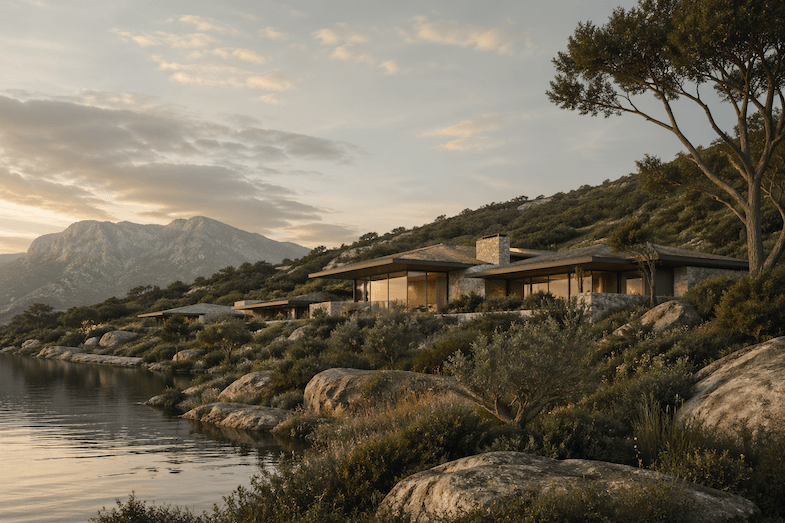
Today, the momentum has shifted. Travelers are looking for intelligence over ego. We want spaces that feel considered, not just assembled. Here is a look at what’s actually changing in the world of high-end design and why the “expensive for the sake of it” era is finally fading.
When the Pool Stopped Being the Main Event
For a long time, resort design ran on addition. More amenities, more square footage, more drama. The infinity pool. The lobby sculpture. The waterfall feature nobody asked for but everybody photographed anyway.
That logic is losing its grip. Not because travelers want less, but because they’ve started to notice when they’re being distracted rather than genuinely looked after. A thoughtfully designed 2 bedroom villa in Bali, for instance, often delivers more through cross-ventilation and an honest garden than a sprawling block with a rooftop bar and a gym full of equipment that gets used twice a week by the same three guests.
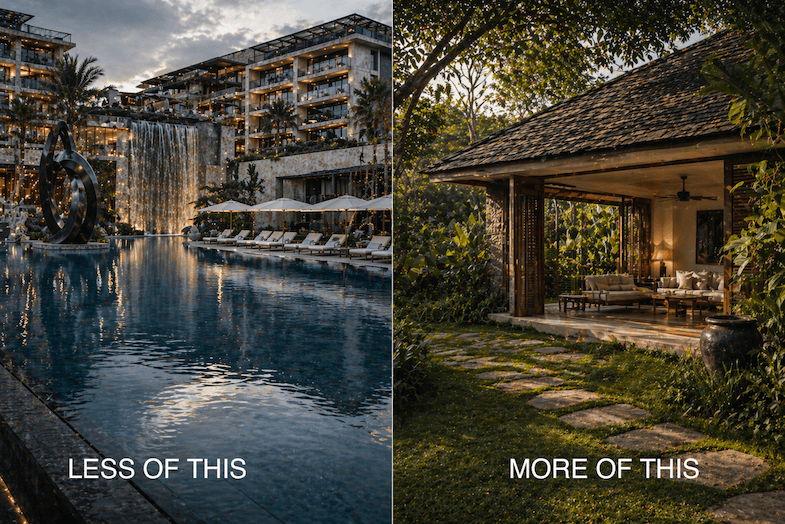
The shift is partly generational. Partly a recalibration that happened quietly around 2021. People who spent months reconsidering what comfort actually means don’t need to be impressed at check-in. They need to sleep well. Eat outside without being cold. Feel like the space understands how a human body moves through a day.
That sounds obvious. And yet most resorts still get it wrong.
What “Considered Design” Looks Like in Practice
It’s easy to throw the word “minimalism” around, but most of the time, that just results in cold, clinical rooms that feel like high-end hospitals. Considered design is different. It means every window orientation and ceiling height exists for a reason.
Take Alila Villas Uluwatu in Bali. They didn’t just flatten the cliff to build a hotel. The architecture works with the topography. The villas are positioned to catch the southeast trade winds, meaning natural cooling isn’t just a “green” marketing bullet point—it’s literally how the building functions. That’s the difference between architecture and mere decoration.
The “Local-First” Reality Check
The shift toward local materials isn’t just a philosophical choice; it’s a practical survival tactic. Logistics in places like Lombok or Zanzibar have become wildly unpredictable over the last few years.
Smart developers stopped waiting for imported Italian marble that takes six months to arrive. Instead, they’re leaning into:
- Rammed Earth: Providing natural thermal mass that keeps rooms cool without the AC screaming 24/7.
- Engineered Bamboo: Not just for decoration anymore but used in serious load-bearing structures.
- Reclaimed Timber: Sourced from old fishing boats or docks, giving the space a history you can’t buy from a catalog.
The result? The property actually looks like it belongs to the ground it sits on.
The Air Conditioning Elephant in the Room
Let’s be honest: passive cooling is hard to do. It requires the architect to make tough decisions about roof overhangs and building orientation in the first week of design. Most developers default to massive HVAC systems because it’s easier to budget.
But guests are noticing. There is a tangible, physical difference between staying in a room that breathes and one that feels like a sealed plastic box. With electricity costs rising, the “breathable” villa is no longer just a hippie dream — it’s the only model that makes financial sense for the long term.
Architecture That Responds to Its Actual Location
The consistent mistake international hotel groups made entering Asian resort markets in the early 2000s was treating “tropical” as a single design category. Bali and Phuket received similar pavilion structures, similar pool configurations, similar open-air restaurants. They looked fine in brochures. They didn’t feel like anywhere specific.
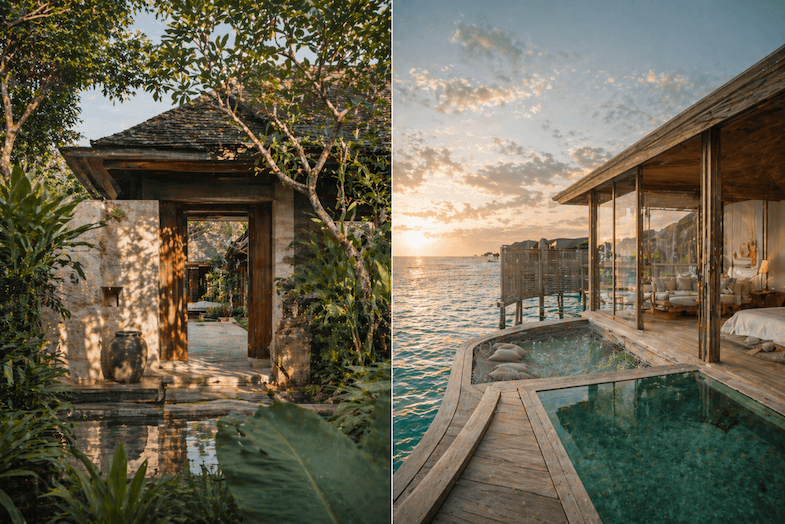
Locally developed properties told a different story. Vernacular Balinese architecture is grounded in Tri Hita Karana, a philosophical framework concerned with balance between people, nature, and the sacred. That produces specific spatial principles: compound orientation, threshold design, the placement of functional zones relative to sleeping areas. These aren’t stylistic choices. They’re structural logic that makes certain spaces feel settled and others feel subtly wrong without being able to say why.
Contemporary architects working in Bali, Alexis Dornier, Maximilian Jencquel, the team at BLINK Design Group, are doing something more interesting than surface imitation. They use those underlying principles as a starting point and then push the geometry somewhere new. The result is spaces that feel rooted without feeling nostalgic, which is a harder balance to strike than it sounds.
In the Maldives, the challenge is different. You’re building on fragile coral atolls. The best new designs, like those at Soneva Jani, treat the water relationship as active. The architecture is designed to trigger specific behaviors — like a bed positioned perfectly for the sunrise or floors that open to the lagoon — rather than just providing a backdrop for an Instagram photo.
Smart Tech vs. Human Logic
Different environments demand different architectural responses. The same is increasingly true for technology. We need to be direct about “smart” rooms: most of it is useless.
- What works: Invisible systems that manage energy based on real-time occupancy. This saves 20–30% on costs without the guest ever knowing it’s there.
- What fails: Complicated bedside tablets or voice-controlled lights that guests give up on after five minutes.
The best technology in a resort is the kind you don’t have to talk to. If a guest has to call the front desk just to figure out how to turn off a reading light, the architecture has failed.
What Actually Matters Now
The direction is becoming readable. Less volume, more precision. Less imported spectacle, more local intelligence. The properties worth watching right now are the ones where the architect clearly spent time understanding the site before drawing a single line.
For guests, that translates to something concrete: better natural light, better sleep, a sense of place that doesn’t dissolve the moment you close the shutters. For developers, it means properties that age with some dignity and photograph honestly, with no gap between the marketing image and the experience on the ground.
That gap, incidentally, is where most resort disappointment comes from. And closing it is, ultimately, what good architecture is supposed to do.

