


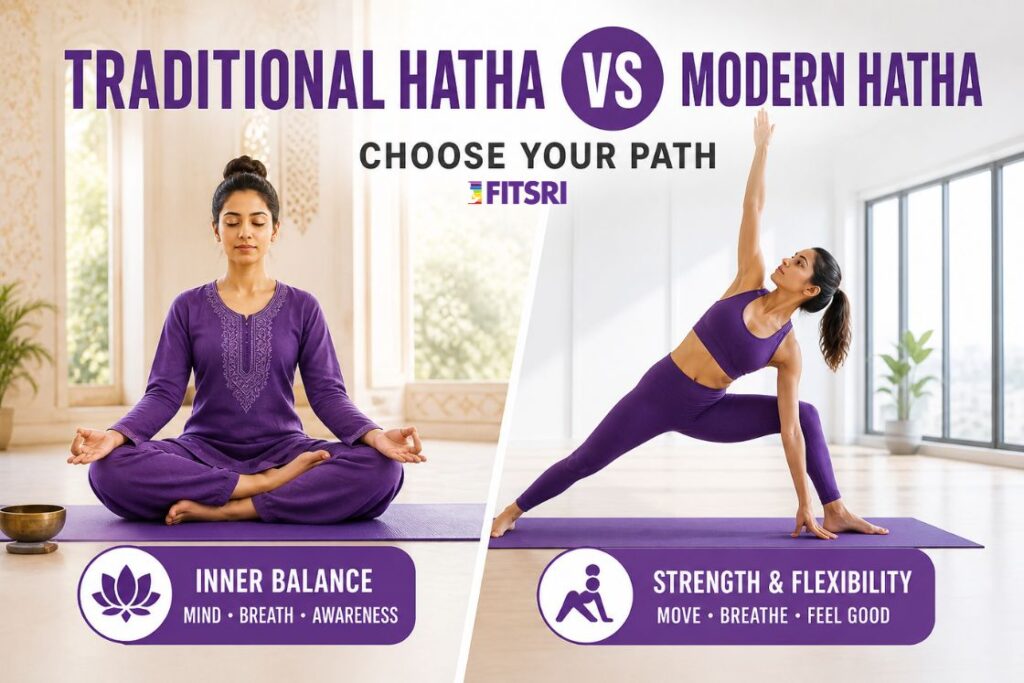
Walk into any yoga studio in London, New York, or Sydney and ask for a Hatha Yoga class. You will find one. But walk into ten studios, and you will likely find ten different styles, all called Hatha Yoga.
This can be confusing, especially if you are new to yoga or trying to understand what you are really practicing.
Hatha Yoga is often presented as a gentle, beginner-friendly class focused on stretching and relaxation. But in its traditional form, it is much more than that. It is a complete system that includes breathwork, meditation, and internal practices designed to bring balance to the body and mind.
This guide explains the difference between traditional Hatha Yoga and modern Hatha Yoga, so you can clearly understand what each one offers and choose the approach that fits your needs.
If you have ever felt that your practice is helping physically but something still feels incomplete, this will help you understand why.
What Does Hatha Yoga Mean?
The word Hatha comes from Sanskrit.
- Ha means sun
- Tha means moon
These are symbolic terms, representing two opposite energies in the body, not the physical sun and moon.
Hatha Yoga is about balancing these energies so the body and mind can come into a steady, stable state.
It is not about flexibility. It is not about touching your toes.
It is about creating the right conditions inside the body so that something deeper, like meditation and inner awareness, can happen.
This is how Hatha Yoga is described in traditional texts, and it is still how it is taught in classical systems today.
What Is Traditional Hatha Yoga?
Traditional Hatha Yoga is a complete system. It comes from classical texts like the Hatha Yoga Pradipika (15th century) and the Gheranda Samhita.
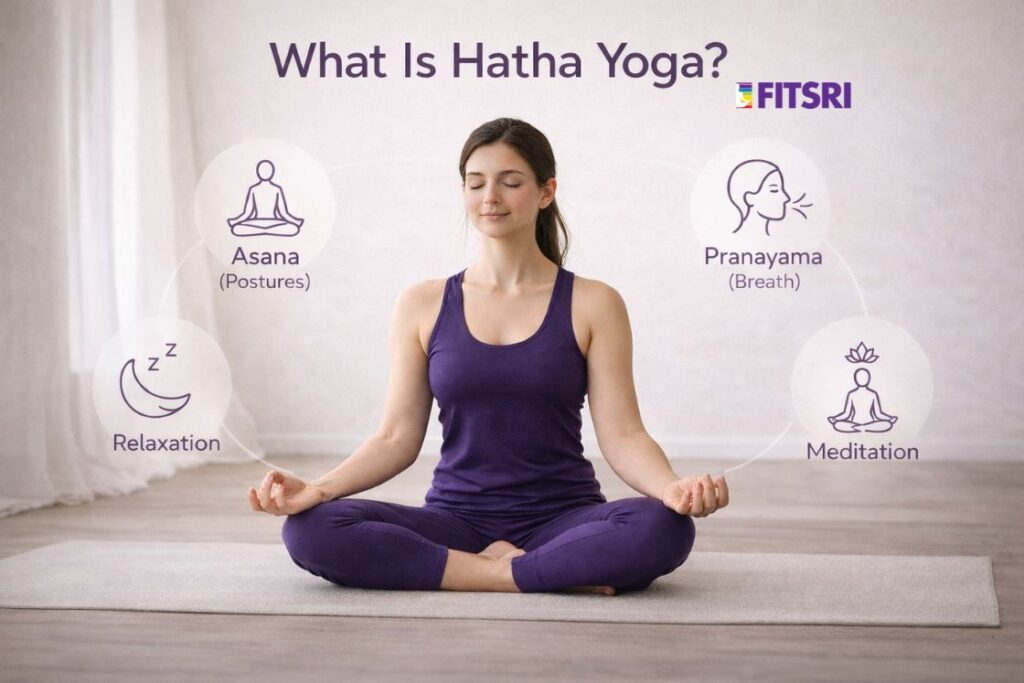
It includes six main limbs:
- Asana (physical postures, held with full awareness)
- Pranayama (deliberate breath control, not just breathing)
- Shatkarma (cleansing practices for the internal body)
- Mudra and Bandha (energy seals and internal locks)
- Dharana (concentration practices)
- Dhyana (meditation)
The postures in traditional Hatha are a preparation, not the destination. They exist to make the body steady enough to sit in meditation for long periods.
A traditional class moves slowly. Postures are held with attention on breath and sensation. The teacher says less and guides more. Silence is considered part of the practice.
What Is Traditional Hatha Yoga A Beginner’s Guide
What Is Modern Hatha Yoga?
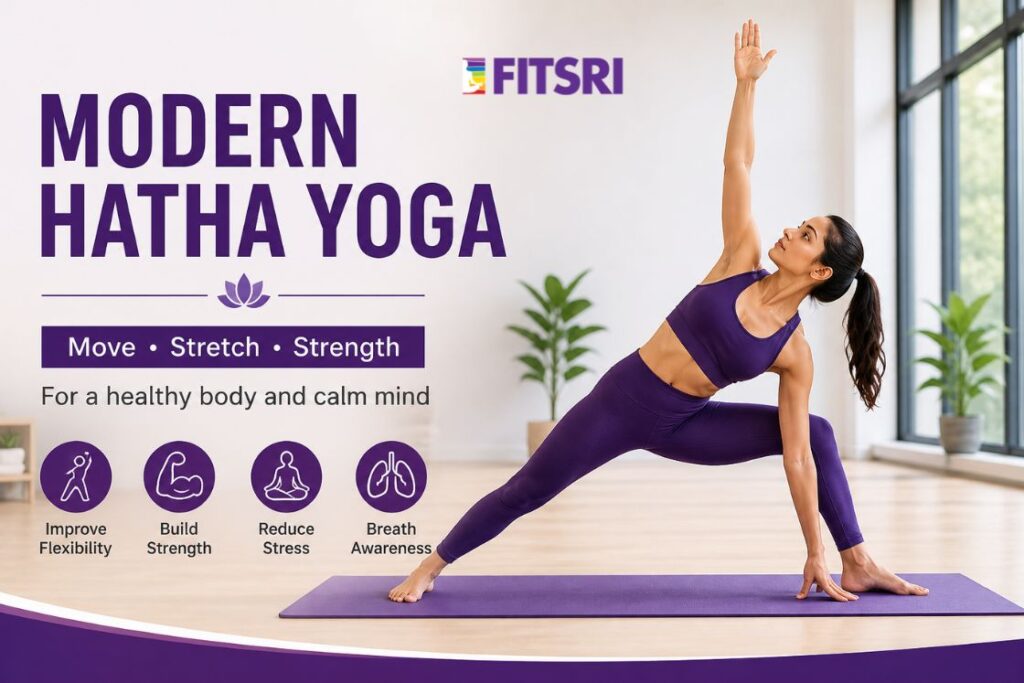
Modern Hatha Yoga developed mostly in the 20th century. Teachers like T. Krishnamacharya, Swami Sivananda, and later B.K.S. Iyengar shaped what we now know as yoga in the West.
As the practice spread globally, it was simplified to reach more people. That simplification worked. Hundreds of millions of people practice yoga today because of it.
In most studios today, a Hatha class means:
- Slower pace compared to Vinyasa or Power Yoga
- Basic standing, seated, and floor postures
- Breathing cues woven into movement, but rarely taught as a separate practice
- Light relaxation at the end, sometimes called Savasana
- Little or no formal meditation
It reduces stress, builds strength, improves posture, and calms the nervous system. These are not small things.
But if you compare it to what the texts describe, much of the original system has been left behind.
Traditional Hatha Yoga vs Modern Hatha Yoga
| Traditional Hatha Yoga | Modern Hatha Yoga | |
|---|---|---|
| Goal | Inner balance and spiritual growth | Physical fitness and stress relief |
| Postures | Held longer, inward focus | Shorter holds, alignment-focused |
| Breathwork | Core practice | Secondary element |
| Meditation | Essential part | Optional or minimal |
| Cleansing (Shatkarma) | Included | Rarely taught |
| Teaching style | Lineage-based training | Short certification courses |
| Pace | Slow and still | Slow to moderate |
Is Hatha Yoga Good for Beginners? Which One Should You Choose?
Yes. Hatha Yoga is widely considered one of the most beginner-friendly styles because of its slower pace and simple structure.
Both traditional and modern Hatha Yoga are suitable starting points. The real difference comes down to what you are looking for in your practice.
Choose modern Hatha Yoga if:
- You want to get started without feeling overwhelmed
- You want to improve flexibility and manage stress
- You prefer structured classes in studios or online
Modern Hatha is easier to access and helps you build a consistent routine.
Choose traditional Hatha Yoga if:
- You are curious about yoga beyond physical postures
- You want to learn pranayama and meditation properly
- You are comfortable practicing more slowly and going deeper over time
Traditional Hatha adds more depth and helps you understand the purpose behind the practice.
In both approaches, beginners learn postures step by step. With proper guidance, Hatha Yoga is safe, accessible, and effective for building a long-term practice.
There is no wrong starting point. Many people begin with modern yoga and gradually move toward traditional practices as their understanding grows.
Can You Combine Traditional and Modern Hatha Yoga?
Yes, and for most practitioners, this is not only possible but often the most practical and sustainable approach.
You do not need to choose between traditional and modern Hatha Yoga as two separate paths. In reality, they can support each other when understood correctly.
Modern Hatha Yoga can serve as a strong starting point. It helps you become familiar with basic postures, improves flexibility, builds strength, and creates a regular practice routine. For many beginners, this structure makes yoga accessible and easier to continue.
However, in traditional teaching, Hatha Yoga was never limited to physical postures. The body was only the first step. Practices like pranayama, mudra, bandha, and meditation were essential parts of the system, designed to work on deeper levels of awareness.
A balanced approach is to begin with modern Hatha Yoga and gradually introduce traditional elements over time.
For example:
- Start by adding simple breath awareness during your practice
- Then learn structured pranayama techniques separately
- Slowly include short meditation sessions after asana
- Develop stillness and inward focus, not just movement
This progression allows the practice to evolve naturally without becoming overwhelming.
As a teacher trained in the traditional Indian system, this is often the path that feels most realistic for modern students. You are not replacing modern yoga. You are completing it.
Over time, the practice shifts from something you do with the body to something you experience internally.
This is where Hatha Yoga begins to reveal its deeper purpose.
What Gets Lost When Yoga Travels
When yoga moved from India to the West, it was adapted to fit a very different culture. Classes became one hour. Studios needed to fill seats. Teacher trainings became shorter. The physical practice was easier to sell than the philosophical one.
None of that was malicious. But it meant that the breath practices, the cleansing techniques, the meditation, and the philosophical context were quietly dropped from most programs.
What remained was a beautiful version of yoga. But a partial one.
If you have ever left a yoga class feeling stretched but not quite settled, this might be why. The postures opened the body. But the rest of the system was not there to complete the work.
Signs You Are Ready to Go Deeper
You do not need years of experience to explore traditional Hatha Yoga. You just need honest curiosity.
- Your physical practice feels good but somehow incomplete
- You want to understand pranayama as a real practice, not just breathing cues
- Meditation interests you but sitting still feels impossible
- You want a teacher who studied deeply, not just completed a training
- You are drawn to the philosophy, not just the postures
These are not signs of being advanced. They are signs of being ready.
How to Find a Traditional Hatha Yoga Teacher
Ask specific questions before joining a class.
Do they teach pranayama separately, not just as a warm-up? Do they include meditation as part of the session? Who trained them and for how long? Have they studied in India or under a recognized lineage?
Reliable schools include the Bihar School of Yoga, the Sivananda tradition, Kaivalyadhama in Lonavala, and the Iyengar tradition. Teachers trained in these systems have usually studied for years, not weeks.
A genuine traditional teacher will welcome your questions. They are not selling a product. They are passing on a practice.
Conclusion
Modern Hatha Yoga is a genuine and valuable practice. It has brought real benefit to millions of people and continues to do so.
Traditional Hatha Yoga is the complete system from which modern yoga grew. It includes everything the modern version offers, plus the practices that help you go inward.
If you are practicing yoga only for fitness, modern Hatha will serve you well.
If you sense there is more to it, you are right. And traditional Hatha Yoga is a good place to find out what that is.
The practice has not disappeared. It has just been waiting for people who are ready to ask the right questions.

