



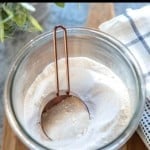
Looking for the best non toxic homemade laundry detergent recipe that actually works? This easy powdered DIY laundry detergent is natural, effective, HE-safe, and made without artificial fragrances or harsh chemicals.
It’s easy and inexpensive to make and helps reduce unnecessary toxins in your home.

Why You Should Make Your Own Detergent
If you’re like me, you care about your budget, your family’s health, and the environment. When thinking about healthy living, it’s easy to focus heavily on diet, but it’s crucial to think about your home as well.
Because things that come into contact with the outside of your body are just as important to healthy living as the things that you put inside your body.
And think about it. You wear clothes 24/7, so what you wash them in matters!
I’ve tried out all kinds of homemade laundry detergent formulas over the years but was never really happy with them. In fact, you can read in this post about Why I Stopped Making Laundry Detergent.
Literally, I stopped trying and switched to a natural brand I liked, and also tried soap nuts, but unfortunately, the brand was discontinued, and my son and I seemed to develop a rare allergy to soap nuts so back to the drawing board of formulating a DIY Laundry Soap I went.
And now we have a winner!
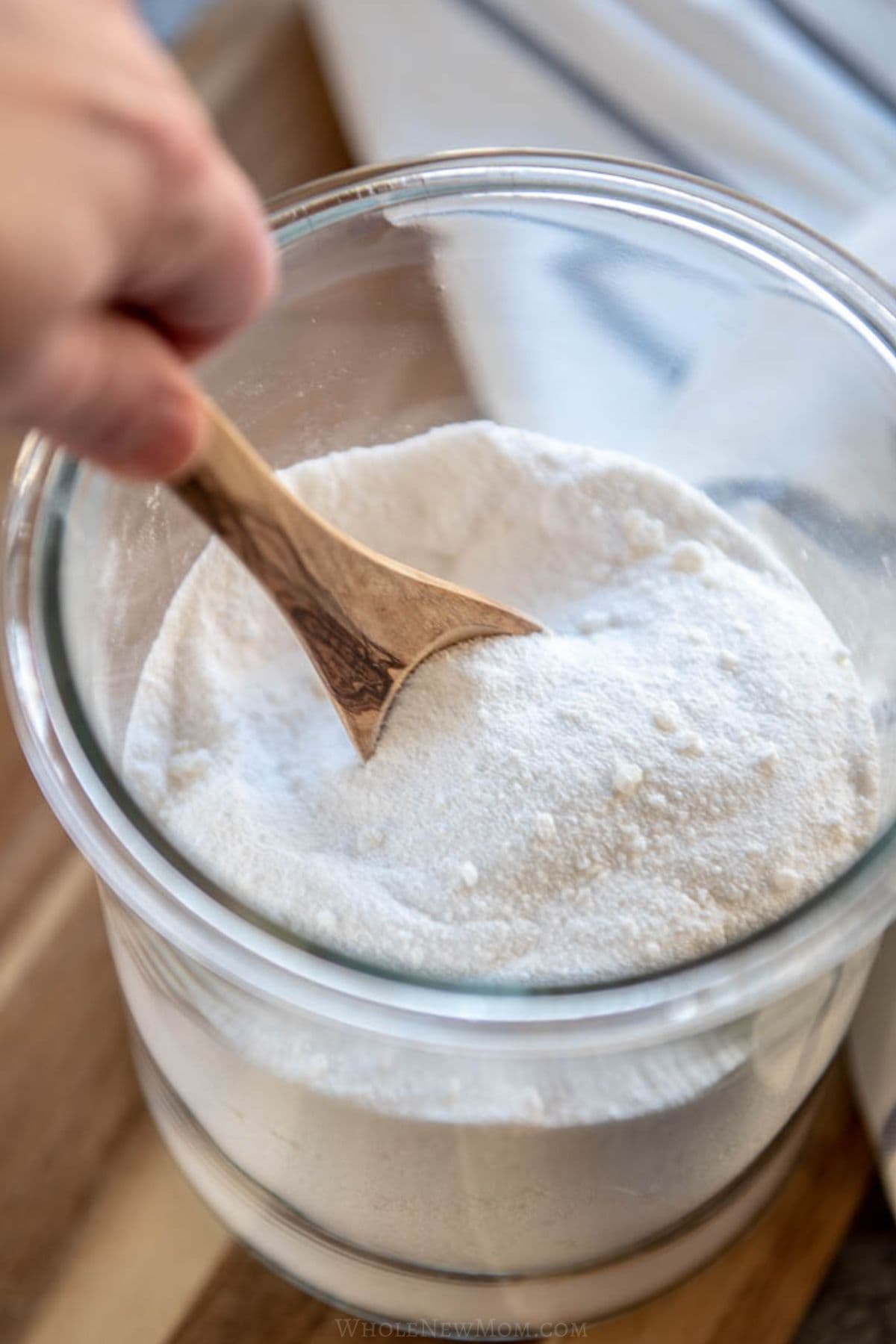
This recipe makes a powder detergent, which I personally prefer over the mess of liquid laundry detergent.
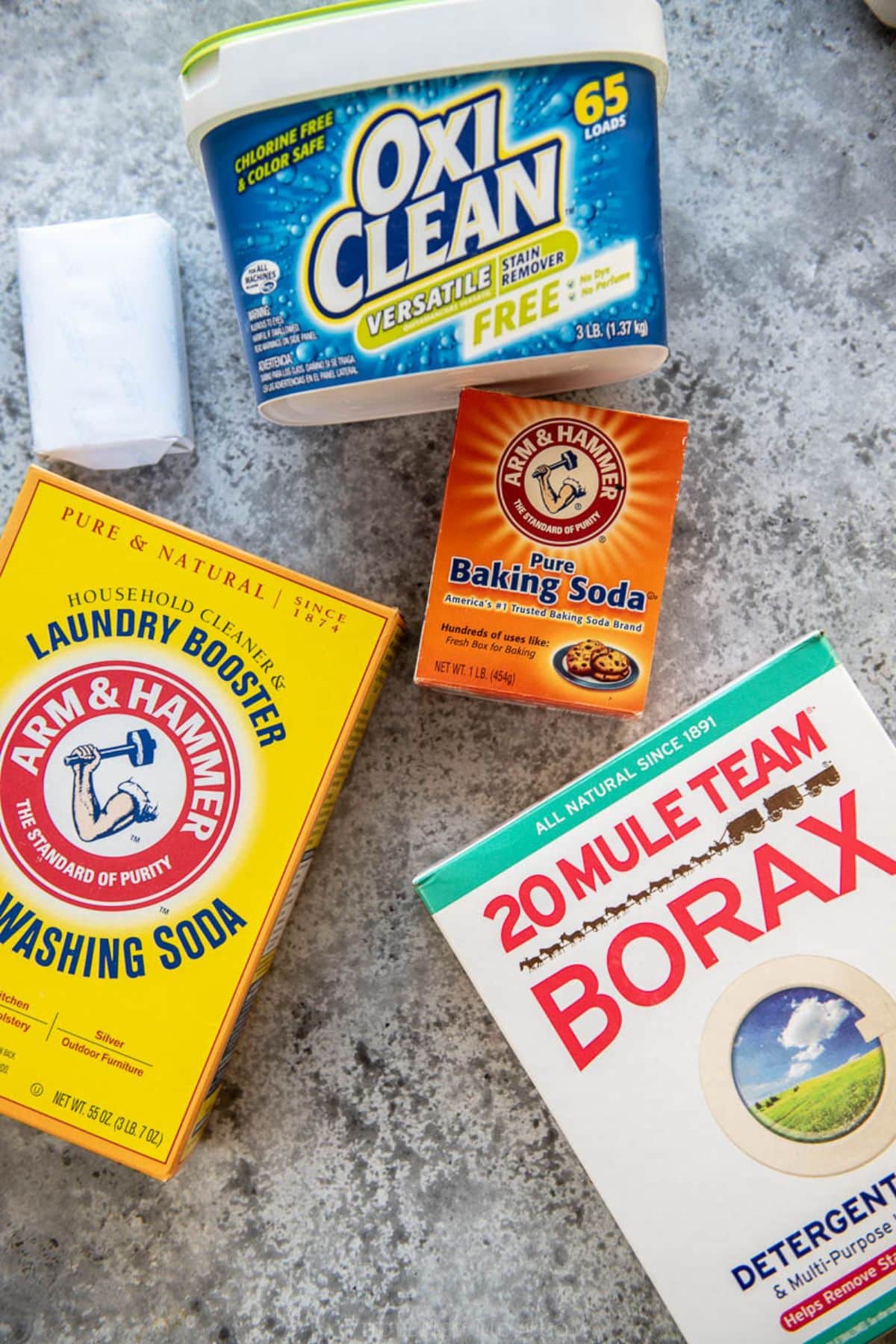
Ingredients
Following is more on each ingredient including the role each one plays in creating a safe and effective detergent.
Castile Bar Soap
Castile soap is made with fruit or vegetable fats (usually coconut or olive oils) and is helpful with removing dirt and stains from clothes. Because it’s not made with animal fats, it’s safe to use with HE washers or washers that drain into a septic system.
Borax
This recipe calls for 1 3/4 cups of borax (a.k.a. sodium borate, sodium tetraborate, or disodium tetraborate), which is a natural mineral compound that converts some water molecules into hydrogen peroxide, giving it the ability to clean and bleach.
Some sources say that borax is best in hot water, but other sources say it doesn’t matter. If you’re concerned about using borax, this post about borax safety can help.
Washing Soda
You’ll also need 1 3/4 cups of washing soda). Washing soda (aka sodium carbonate or soda ash) is an effective stain lifter that doesn’t stain (or “bleach”) clothes.
Since it’s highly alkaline, it’s also effective it helps treat hard water, allowing the detergent to work properly so that clothes get clean and don’t build up residue during washing.
Baking Soda
Baking soda works to dissolve dirt and grease and soften clothing thanks to its mild alkaline qualities. And it’s a great deodorizer, working to remove odors, fabric softener, and cleaning agent that won’t bleach your clothes.
OxiClean Free (or Pure Sodium Percarbonate)
OxiClean is an oxygen-based, chlorine-free, and color-safe stain remover. It can be used on any machine-washable fabrics. OxiClean is basically sodium percarbonate with additives so you can just purchase straight sodium percarbonate and use less of it as outlined in the recipe card. Either will work for this recipe.
I used to add essential oils to this detergent for fragrance, but I now usually leave them out. In powdered detergents, the scent often fades during washing and drying, and adding oils can sometimes cause the powder to clump. If you’d still like to use them, especially if you hang your clothes to dry, add just a few drops at a time while making the powder and mix thoroughly.
Directions
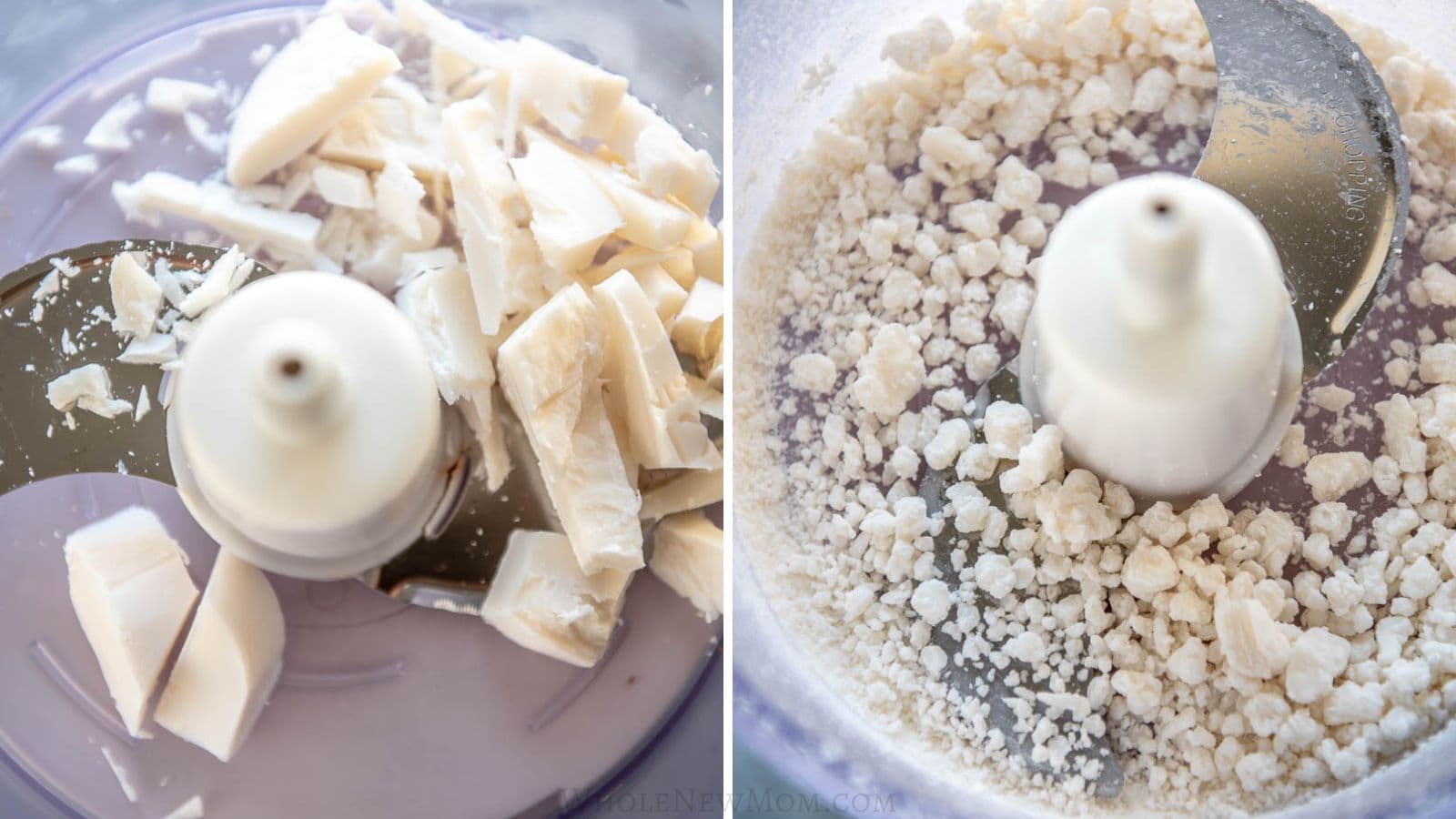
- Chop up the castile soap bar to make it easier to process.
- Put the chopped soap pieces into the bowl of a food processor and pulse.
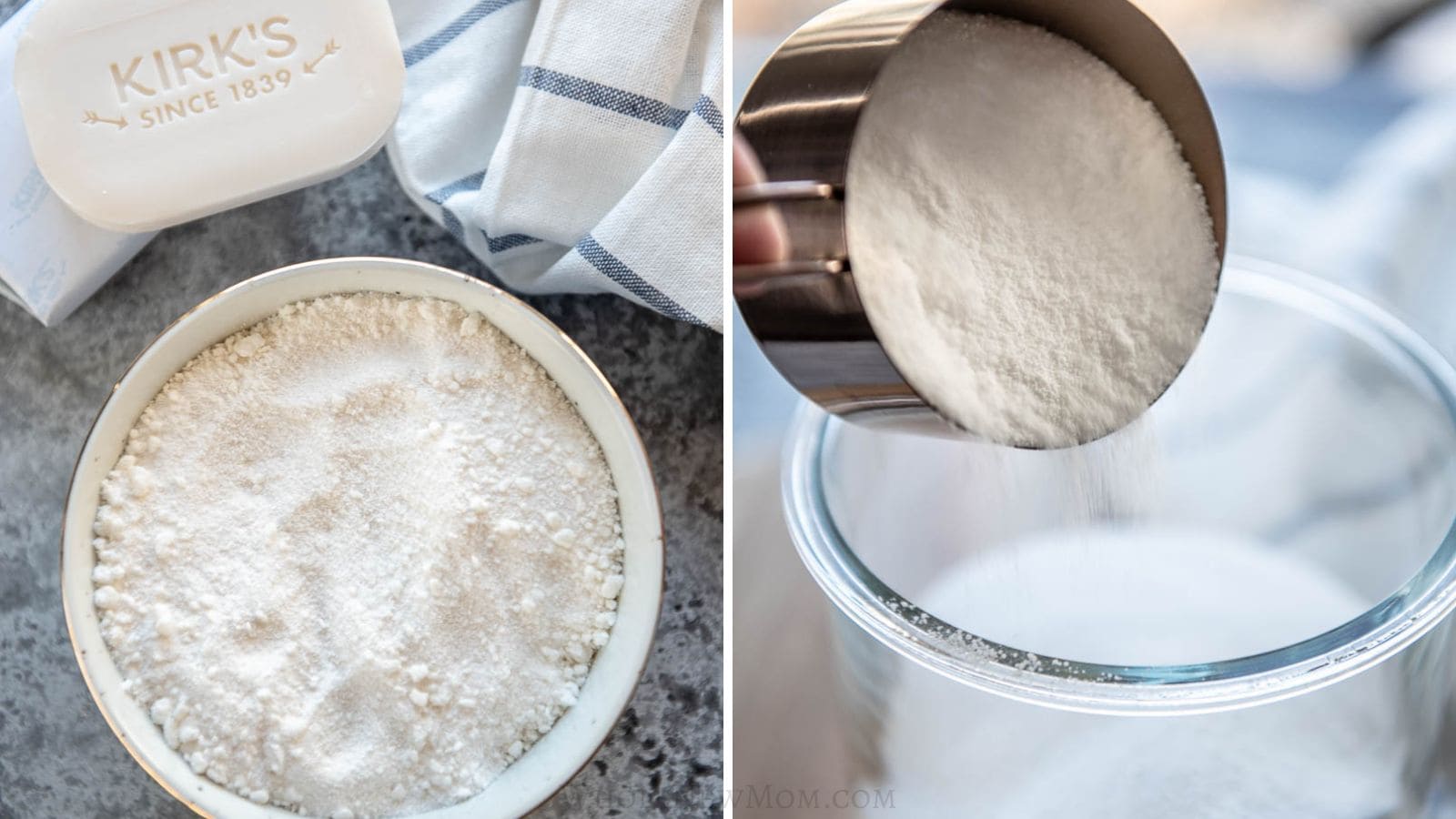
- Add the baking soda and pulse.
- Add remaining ingredients and pulse to a powder.
- Store in an airtight container.
How to Use
To use this detergent, simply add about 2 tablespoons directly into your washer bin with your clothes (you might want to only use 1 tablespoon for HE front loaders. Easy peasy. Add more, if desired, for larger or more heavily stained loads.
FAQs
Here are the most common questions regarding making DIY laundry detergent, along with their answers.
What’s the best bar soap to use for this detergent?
While many detergent recipes recommend using fels Naptha soap, I personally don’t recommend it since it has some ingredients (like artificial fragrances) that I don’t want on my clothes.
Castile soap works great for this recipe, but you could also use any other natural, non-toxic bar soap.
Can you use this homemade detergent in an HE (high-efficiency) washing machine?
Yes. When used in the recommended amounts, this recipe is low-sudsing and works in front-loading HE machines.
Will this homemade detergent irritate sensitive skin?
We haven’t had any problems at all (and we have had issues with sensitive skin). The ingredients included are natural and usually safe for all skin types. However, everyone is different, so I recommend trying a small batch to test before committing to this larger batch size.
If you prefer, you can use this gentle laundry detergent for babies and sensitive skin.
Where can you buy ingredients for this homemade detergent?
I’ve included Amazon links to help you find everything you need. You can also find these ingredients at Walmart, Target, and some grocery stores. I buy my baking soda in large bulk bags at Costco since we use it for all sorts of things.
Do you need to use a fabric softener with this homemade laundry detergent?
You shouldn’t need to since the alkaline properties of baking soda and washing soda soften fabric. However, if you want to soften more, you can use plain distilled vinegar as a natural fabric softener, and the smell washes out so you won’t smell it at all!
How much DIY laundry detergent does this recipe make?
This recipe makes approximately 7 cups of detergent, which works out to about 56 loads. Could you double or triple that if you wanted to? Sure!
However, this recipe makes a good amount so that you don’t have to make it once a month and yet it doesn’t take up too much storage space.
How do you keep homemade laundry detergent from clumping?
If you live in a humid area, your DIY detergent may clump sometimes. Here are some tricks to help you prevent (or break up) clumping:
- store your detergent in an air-tight container.
- place a dessicant in with your detergent.
- pop your detergent back into the food processor if you do end up with a few clumps that don’t break up easily.
What’s a good OxiClean alternative?
OxiClean is basically sodium percarbonate with additives so you can just purchase straight sodium percarbonate and use less of it. You would want to use about 1/4 the amount of the percarbonate, so for this recipe, that would be 5 tablespoons.
Since you are therefore reducing the amount of bulk of the entire recipe you might think you should use less detergent for each load, but it’s basically just reducing the amount by about 1/24, so that’s not likely worth trying to do.
Is homemade laundry detergent safe for washing machines?
Some people make the claim that homemade laundry detergent isn’t safe for washing machines, and can void the warranty and cause all kinds of issues.
Let’s clear that up.
I looked into this and found that there are reports of people using homemade detergents for many years with no issues. It seems that the problem isn’t using these products, but using too much of them. Instead of throwing out the laundry soap with the bathwater, just use less, starting with 1 tablespoon of detergent per load.
Is borax safe to use in homemade laundry detergent?
There’s a lot of confusion online about borax safety. After digging into the research myself, I personally feel comfortable using borax in homemade cleaning products like this one. You can read more about the research and safety discussion here.
When used properly in cleaning applications, borax has been used safely for decades. As with any cleaning product, it should be handled responsibly and kept out of reach of children.
What can you use instead of borax in homemade laundry detergent?
If you prefer not to use borax and/or you just don’t have it in your home, you can use more baking soda in its place. I haven’t tried this, but it should work out fine since baking soda has similar properties to borax of softening water, deodorizing, and boosting laundry detergent.
Why don’t my clothes smell clean after washing them?
First of all, you could be using too much detergent, which leads to buildup, which leads to bad smells.
There are ways to clean your washing machine (more on that later) but one thing I use is HOCl with either the Force Of Nature machine or the Ecoloxtech device (uses only salt and vinegar): no expensive capsules needed.
I spray the inside of the machine every other load, along with following the manufacturers directions for cleaning the machine.
How can you prevent buildup from homemade detergent in a washing machine?
Some people (especially those in cloth diapering groups) have reported that washing your clothes in a homemade detergent that has soap in it will leave deposits/residue on your clothing. Others say that this isn’t a problem.
I noticed it for a short time, but I was using too much “detergent” for my washing machine (the white streaks didn’t look great on my black top–not the best fashion statement). Once I stopped that, the problem stopped.
One way to address this by adding in about 1/4 cup borax to your load. Borax has other benefits, such as addressing mold, so it’s great to do this anyhow.
You can also occasionally run an empty, large laundry load with 2 – 4 cups of white vinegar added, depending on the size of your machine.
Again, make sure to only use the recommended amounts to each load.
Other Healthy Home Helps
This Homemade Laundry Detergent will save you money and is a great way to reduce toxins in the home. Here are some other great ways to clean and green up your home:
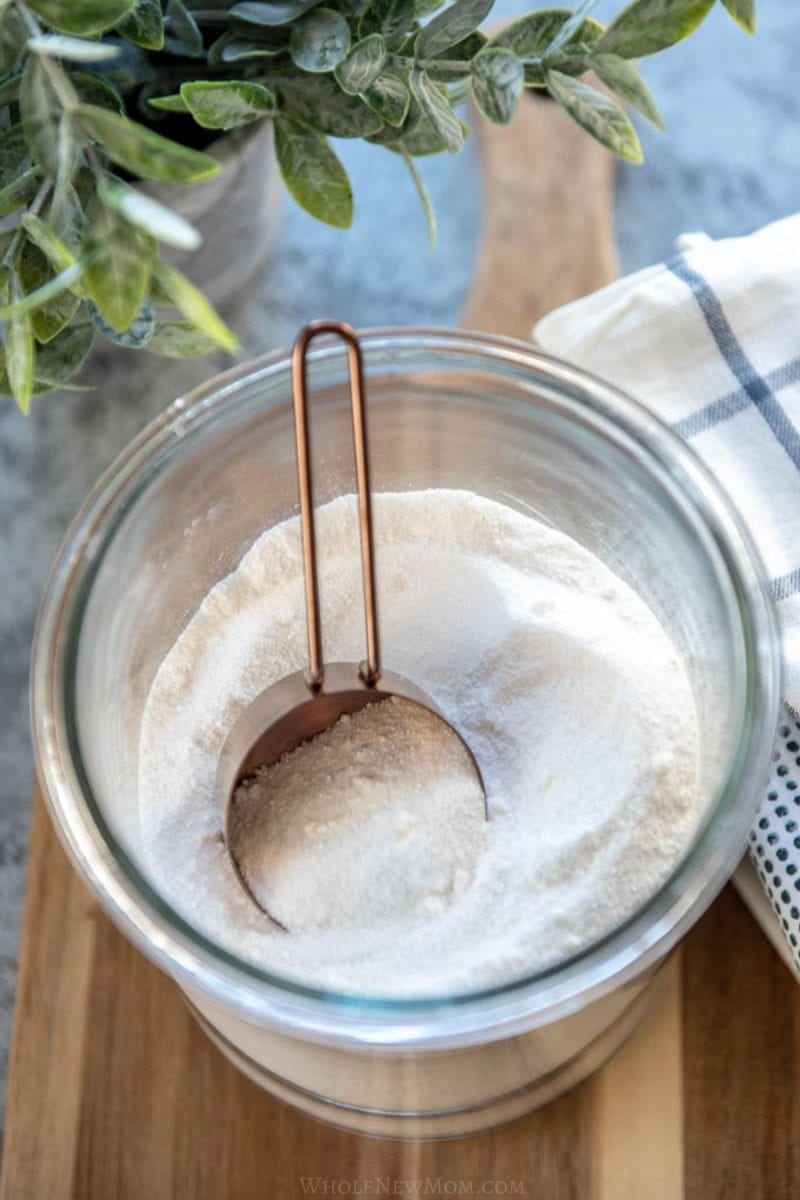
Making your own laundry powder is fast, easy, and inexpensive, helps keep toxins out of your home and the environment, and gives you total control over the ingredients!
I really think you’ll enjoy this. One of my readers likes it so much, she gifts it to others for Christmas, and all of the recipients have liked it too!

-
Airtight container like small bucket, large mason jar, or other glass jar
- 1 4 oz bar Castile soap (I use Kirk’s brand)
- 1¾ cup borax
- 1¾ cup washing soda
- 1½ cup baking soda
- 1 1/4 cup OxiClean Free (or 5 tablespoons sodium percarbonate)
-
Grate the castile soap with a grater.
-
Put the grated castile soap pieces in a food processor bowl. Pulse until only large crumbs (no chunks) remain.
-
Add remaining ingredients to the food processor and alternate pulsing and blending until well combined.
-
Store detergent in an air-tight container to help avoid clumping.
-
Simply add about 2 tablespoons directly into your washer bin with your clothes (you might want to only use 1 tablespoon for HE front loaders). Add more, if desired, for larger or more heavily stained loads.
Clumping Prevention: If you live in a humid climate, your laundry detergent can have a tendency to clump up. To help avoid that, you might wish to keep a dessicant in with your detergent.
Borax Substitute: If you aren’t comfortable using it, or just don’t have borax in your home, you can use more baking soda in its place. I haven’t tried it, but it should work out fine since baking soda has similar properties to borax of softening water, deodorizing, and boosting laundry detergent.
You can dissolve the detergent in water before using if you find it makes it work better. Just add the liquid directly to the drum.
Don’t Feel Like DIYing?
I’ve tried a few natural detergents over the years, but recently I found one that I LOVE. It’s Rowe Casa’s Liquid Laundry Detergent.
It’s very reasonably priced for being a liquid and it’s in a lovely container as well. The bergamot lavender scent is so pleasant that it and the bottle make doing laundry actually an unexpectedly nice experience. Get 20% off your first order with code WNM.
Can’t wait to hear how this laundry detergent works for you!

