



With its hydrating flesh and refreshing flavor, watermelon is the quintessential summer fruit. But when it comes to nutrition, you may wonder, “Is watermelon healthy?” Although you may think watermelon is mostly made up of water, the answer is a resounding yes — this juicy fruit is more nutrient-dense than it seems.
Watermelon is more than just crunchy water and sugar. Fiber and antioxidants abound in each serving of this treat. We’ll dig into watermelon nutrition facts to start, then answer the question “Is watermelon good for you?” with a discussion of watermelon benefits. Finally, we’ll cover how to choose the best watermelon so you can enjoy the best flavor it has to provide.
Watermelon Nutrition Facts
Before we get into the health benefits of watermelon, let’s dive into watermelon nutrition facts1,2,3.
| Nutrients in watermelon | Per 2-cup/280g serving of watermelon flesh | Per 100g of watermelon rind |
| Calories | 84 | 19 |
| Water (g) | 256 | 94.7 |
| Total Carbohydrate (g) | 21.1 | 4.17 |
| Total Sugar (g) | 17.4 | 2.22 |
| Total Fiber (g) | 1.12 | 1.5 |
| Total Fat (g) | 0.42 | 0.07 |
| Protein (g) | 1.71 | 0.53 |
| Vitamin A (IU) | 1590 | — |
| Beta-carotene (mcg) | 848 | — |
| Vitamin C (mg) | 22.7 | 7.1 |
| Potassium (mg) | 314 | 272 |
| Lycopene (mcg) | 12700 | — |
| Lutein and zeaxanthin (mcg) | 22.4 | — |
| Citrulline (mg) | 43.81mg/g flesh juice | 45.02mg/g rind juice |
— = information currently unavailable through the USDA nutrient database
Watermelon calories are within a low range, with most calories coming from carbohydrates. These carbohydrates consist of dietary fiber and natural sugars.
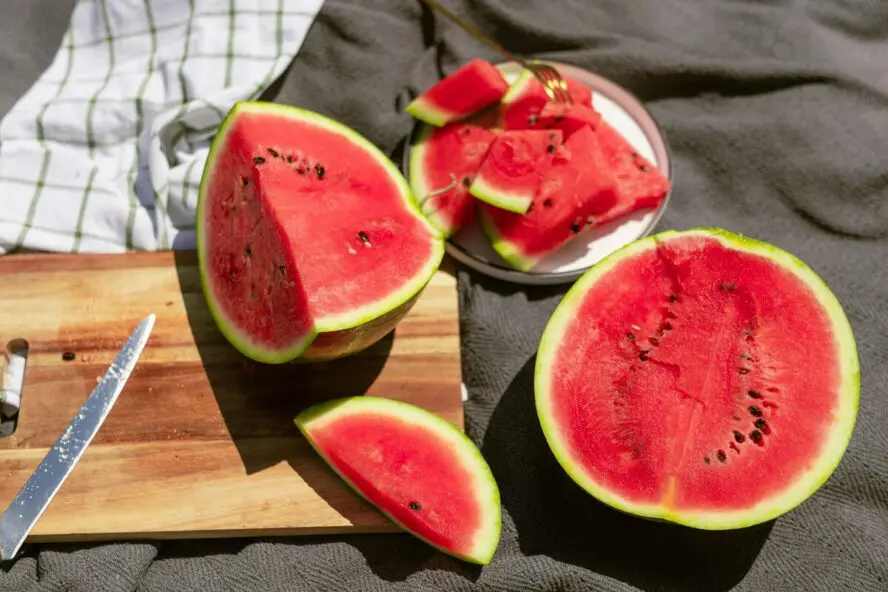
But with so much focus on watermelon’s hydrating properties, it can be easy to forget that it offers other benefits. Beyond the carbs and the fluids, each 2-cup serving of watermelon includes a potent dose of antioxidants like lycopene for heart health and citrulline for positive vascular health (like blood pressure lowering effects)4,5,6.
Furthermore, watermelon flesh contains a significant amount of vitamin A in the form of beta carotene content. A 2026 study reports that these nutrients offer significant antioxidant, anti-inflammatory, and anti-platelet potential7.
The Nutrients that Make Watermelon Worth Eating
Let’s dig a bit deeper into watermelon health benefits by looking at three nutrients in this fruit that make it especially unique and nutritious: lycopene, citrulline, and electrolytes8.
Lycopene
Lycopene is an antioxidant known for its role in improving cardiac function, boosting insulin resistance, and supporting liver health9,10,11. A 2026 study also shows that lycopene can help support skin health by lessening oxidative stress on skin cells and boosting the skin’s inner strength through its role in collagen production. In turn, lycopene can also support skin elasticity, strength, and healing12.
Tomato often gets praised for its lycopene content, but watermelon actually contains more lycopene per cup. The average cup of diced red, ripe tomato contains around 4630 micrograms of lycopene, while the same amount of watermelon contains around 6350 micrograms of lycopene13.
Citrulline
The unique benefits of watermelon come from this fruit’s antioxidant properties, especially from its L-citrulline content, from which watermelon gets its scientific name, Citrullus lanatus14. Although other foods contain this compound, watermelon is one of the richest sources of L-citrulline.
A 2025 study reports that the amino acid L-citrulline in watermelon indirectly works to improve the synthesis and bioavailability of nitric oxide during L-arginine metabolism15. As a result, this antioxidant helps promote smooth muscle vasodilation, or in simpler terms: It leads to lower blood pressure16.
Not only that, but recent studies show that L-citrulline may also help support exercise recovery. A 2026 study of untreated males with hypertension shows that just six days of supplementation with six grams of L-citrulline daily helped support cardiovascular recovery after high-intensity exercise17. Another study found that combining L-citrulline intake with exercise shows potential to reduce abdominal fat mass and blood pressure18.
If citrulline is what you’re after, the rind of a watermelon contains even more of this nutrient than the flesh, so it’s worth finding creative ways to take advantage.
Hydration + Electrolytes

Finally, there’s a reason everyone associates watermelon with hydration — this delicious fruit is made up of 92% water, along with a rich source of potassium19. This makes watermelon a wonderful food to support hydration on these hot summer days.
It’s important to note though that those with kidney disease or diabetes should be careful not to consume too much watermelon, no matter how refreshing. This is because too much potassium can lead to conditions like hyperkalemia, or an excess of potassium in the blood, in those with weakened kidneys20.
What About the Sugar in Watermelon?
After covering the many beneficial nutrients in watermelon, you may be wondering if the fruit has any downsides — particularly as it relates to sugar content. The sugar content in watermelon is nothing to scoff at, but it does help that it’s all-natural sugar.
Why does this matter? Well, if you look at nutrients in isolation, it can paint a misleading picture. The glycemic index (GI) of watermelon (a number that illustrates how quickly carbohydrates are broken down and absorbed into the bloodstream) is 74, which is on the higher side21. This is definitely something to be aware of, as watermelon calories are on the lower end and are mostly composed of natural sugars. However, the glycemic load (GI/carbohydrate grams per serving divided by 100) is only around 4. This is because the high water content of watermelon dilutes the real impact of its natural sugars on your blood glucose levels.
So, is watermelon high enough in sugar for anyone to limit eating it? To put its sugar content into context — an antioxidant-rich 2-cup serving of watermelon features about 17 grams of sugar, vs. a whopping 37 grams of sugar in a 12 fl. oz. can of regular cola22. Add that to the fact that cola holds zero real nutritional value (compared to watermelon’s many nutritional benefits), and you can bet that we’d choose watermelon any day of the week. Plus, watermelon’s natural sugars have a low impact on the blood glucose levels of most people.
The moral of the story? You can’t go by grams of sugar alone when assessing the nutritional quality of a food.
Who Should (or Shouldn’t) Eat Watermelon?
The overall nutritional value of watermelon can benefit just about any dietary pattern. In fact, a 2022 review of NHANES (National Health and Nutrition Examination Study) shows that those who included watermelon as a regular part of their diet had, as compared to those who did not eat watermelon often23:
- 5% higher intake of dietary fiber, magnesium, potassium, and vitamin A
- More than 5% lower intake of added sugars and total saturated fatty acids
- Higher intake of lycopene and other carotenoids

The only group of people who should be watching both natural and added sugar intake are those who are managing diabetes or insulin resistance, making them more sensitive to glucose than other people. These individuals should limit their portion size of watermelon to no more than two cups per day and should pair watermelon with a protein source like cottage cheese or Greek yogurt to help better manage blood glucose levels.
Watermelon Is on the Clean 15
Beyond the nutritional benefits, one huge bonus of watermelon is that it earned a spot on the 2026 Clean 15™. The Clean 15 is a list compiled by the Environmental Working Group (EWG) of conventional produce items that contain the least amount of pesticide residues24. Watermelon’s hard protective shell puts it at number 10 out of 15.
You should still wash the outside of the watermelon well before cutting it to prevent contamination by any dirt or bacteria that may be present on the outside of the watermelon when it is harvested. Overall, however, the flesh inside is protected by the outer rind, and therefore at low risk for contamination from pesticide residue and other compounds from the soil.
What Does This Mean for Your Grocery Budget?
This ranking suggests that conventional watermelon is a safe, budget-conscious choice — you can rest assured that even if you don’t splurge on organic, you’re likely safe from pesticides. You can instead spend the money you’ve saved on organic versions of the Dirty Dozen™ items like spinach, grapes, apples, blueberries, and strawberries25.
How to Pick a Perfectly Ripe Watermelon
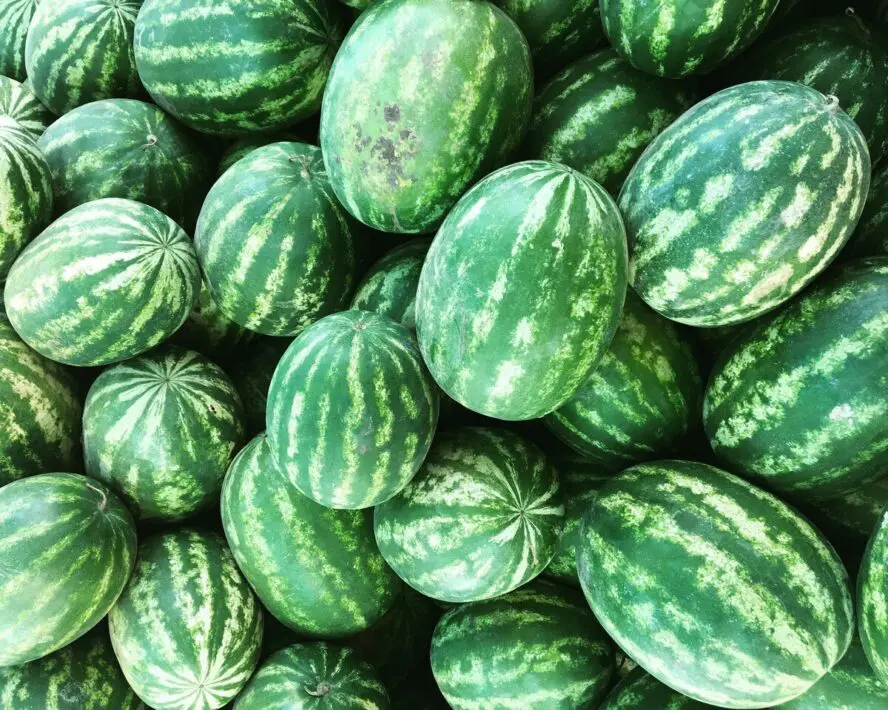
Now that you know how healthy watermelons are, let’s talk about how to choose a perfectly ripe watermelon so you can enjoy the flavor of this fruit at its finest26,27.
- Field spot: Look for a creamy yellow spot on the bottom of the watermelon. This spot indicates that the watermelon sat on the field to ripen on the vine under the sun. The more yellow the tone, the better.
- Heavy for its size: A ripened watermelon, since it is mostly water, should be heavy for its size. This will indicate that it is nice and juicy inside.
- Hollow sound when tapped: A hollow sound will indicate ripeness, while a higher pitched sound will indicate that the watermelon is still immature.
- Webbing on the surface: Often mistaken for a negative sign of damage, scarring or rough brown webbing patches on a watermelon actually indicates bee pollination and can signify a sweeter watermelon flesh.
Bonus Tip: Although it’s not the sweetest part, the white rind of watermelon is edible, and as mentioned earlier, has an even higher citrulline content than the flesh. Some people enjoy pickling diced white rind for salads, or freeze drying sliced white rind for a unique snack option28.
The Bottom Line
Watermelon is a genuinely nutritious food. Not only is it rich in antioxidants, potassium, and fiber, but it has a low glycemic load and is on EWG’s Clean 15. Because of these attributes, watermelon definitely earns its place at the summer table.
Frequently Asked Questions
Yes, watermelons are healthy enough for most people to eat every day. However, those who are managing their blood sugar levels should be sure to watch their portion sizes and would benefit from pairing watermelon intake with a protein source to help better manage blood glucose levels.
Watermelon contains around 8 to 9 grams of sugar per cup of flesh, with a GI of 74. However, due to its water content, the glycemic load is only 4, which is lower than a banana29.
According to the USDA Nutrient Database, every 280 gram serving (roughly equivalent to 2 cups of diced watermelon flesh) contains ~84 calories.
Yes, watermelon currently sits at number 10 on the Clean 15™ list30.
Yes, the high water and fiber content of watermelon support satiety at a low-calorie density.
Watermelon primarily contains Vitamins A and C, with small amounts of B vitamins.
Yes, watermelon contains the antioxidant lycopene, and in amounts greater than that of tomatoes (which are typically known for their lycopene content)!
Sources:
- https://fdc.nal.usda.gov/food-details/167765/nutrients
- https://fdc.nal.usda.gov/food-details/2747676/nutrients
- https://pmc.ncbi.nlm.nih.gov/articles/PMC6456243/
- https://pmc.ncbi.nlm.nih.gov/articles/PMC9592950/
- https://www.clinicalnutritionespen.com/article/S2405-4577(25)02881-5/abstract
- https://pmc.ncbi.nlm.nih.gov/articles/PMC12566930/
- https://pmc.ncbi.nlm.nih.gov/articles/PMC12844114/
- https://link.springer.com/article/10.1007/s11883-021-00978-5
- https://pmc.ncbi.nlm.nih.gov/articles/PMC12835580/
- https://pmc.ncbi.nlm.nih.gov/articles/PMC13074409/
- https://pmc.ncbi.nlm.nih.gov/articles/PMC13069146/
- https://pmc.ncbi.nlm.nih.gov/articles/PMC12389399/
- https://fdc.nal.usda.gov/food-details/170457/nutrients
- https://pmc.ncbi.nlm.nih.gov/articles/PMC9318495/
- https://pmc.ncbi.nlm.nih.gov/articles/PMC12566930/
- https://link.springer.com/article/10.1007/s11883-021-00978-5
- https://link.springer.com/article/10.1007/s00421-026-06298-3
- https://www.sciencedirect.com/science/article/pii/S0965229926000221?via%3Dihub
- https://www.mayoclinichealthsystem.org/hometown-health/speaking-of-health/the-wonders-of-watermelon
- https://www.acpjournals.org/doi/10.7326/aimcc.2023.1084?__cf_chl_f_tk=pqH9InEYZDPiGr2b74hZn.a2AOg20.3cTBESZ_ZTgWs-1782834257-1.0.1.1-tiNKmqXL0qmcU.drt9I6Oa8qQAl8Ax6c7gdX88BNKsk
- https://pmc.ncbi.nlm.nih.gov/articles/PMC7352659/
- https://fdc.nal.usda.gov/food-details/174852/nutrients
- https://pmc.ncbi.nlm.nih.gov/articles/PMC9692283/
- https://www.ewg.org/foodnews/clean-fifteen.php
- https://www.ewg.org/foodnews/dirty-dozen.php
- https://www.watermelon.org/the-slice/how-to-choose-a-watermelon/
- https://site.extension.uga.edu/evansag/2025/07/how-to-pick-a-ripe-watermelon-and-why-you-should-enjoy-one-this-summer/
- https://www.watermelon.org/recipes/
- https://lpi.oregonstate.edu/mic/food-beverages/glycemic-index-glycemic-load
- https://www.ewg.org/foodnews/clean-fifteen.php