


Last Updated on August 3, 2026 by Carrie Korem, FNTP
There’s a lot of confusion about which cooking oils are healthiest, so today I’m going to break it all down for you.
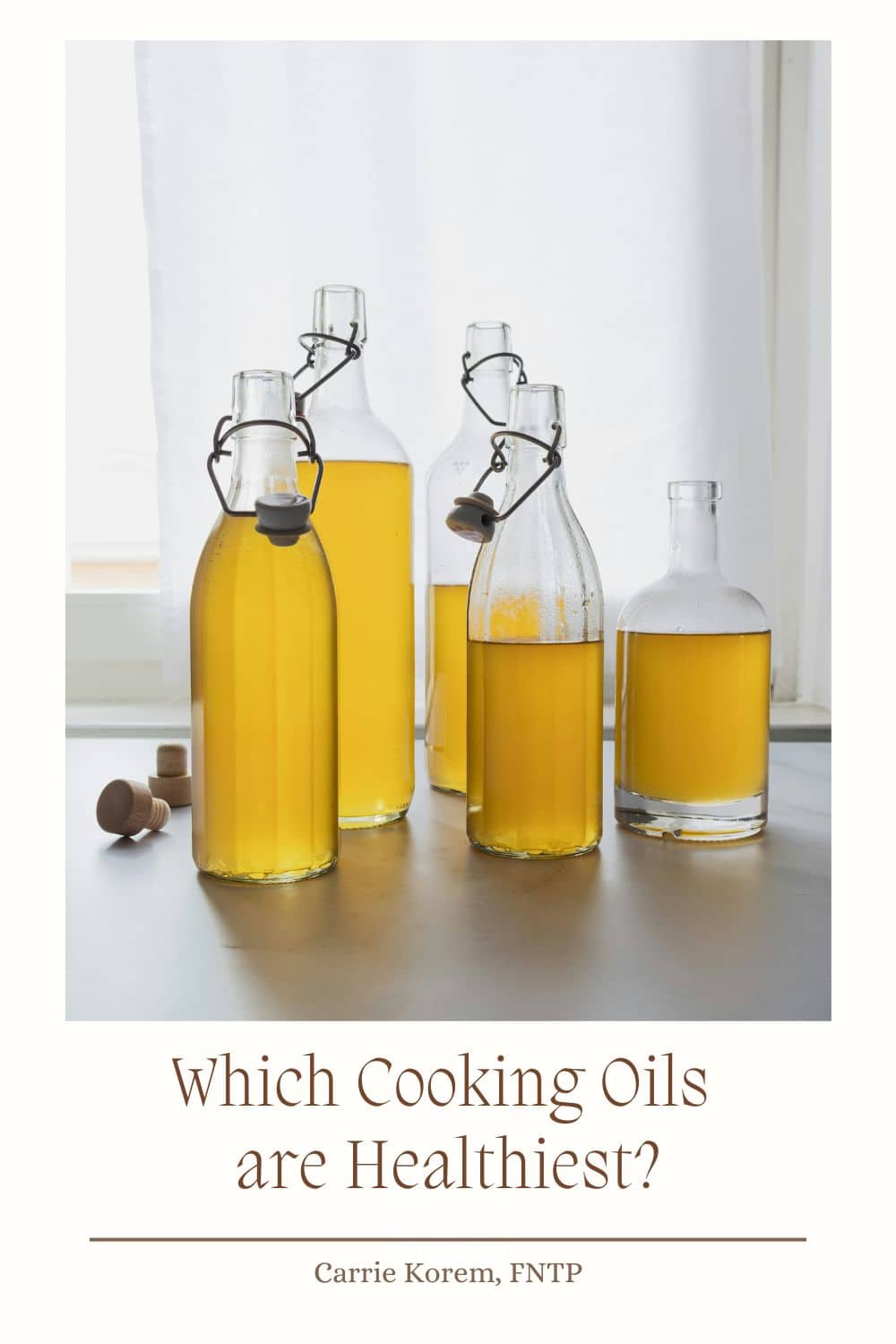
First, it’s important to understand there are basically three kinds of fats: saturated, monounsaturated and polyunsaturated. Let’s take a closer look.
Saturated Fats and the Benefits
Saturated fats are stable, don’t go rancid easily and are solid at room temperature. Saturated fats are not the cause of our modern diseases as we’ve been told in the media. They actually play a vital role to keep the body healthy.
Here are some helpful things saturated fatty acids do for the body:
- They are a healthy source of cholesterol which supports healthy bones, the nervous system, hormone production, proper serotonin levels, health of the intestinal wall, mineral metabolism and muscle tone.
- They give our cells necessary stiffness and integrity.
- The omega-3s in saturated fats decrease inflammation and strengthen the immune system.
- They play an important role in healthy bones – for calcium to be effectively incorporated into the skeletal structure, at least 50% of the dietary fats should be saturated.
- They protect the liver from toxins.
Here’s a quick list of saturated fats that are good to include in the diet:
Butter
Ghee
Lard
Coconut oil
Tallow
Duck fat
Monounsaturated Fats and the benefits
These fats are also stable fats and are liquid at room temperature. Monounsaturated fats are best used at lower temperatures because when the heat gets turned up, they oxidize. Oxidation creates free radicals and free radicals damage the cells of the body, so this is why it’s important to not use these oils at higher heats.
Two popular monounsaturated fats are:
Extra-virgin olive oil
Avocado oil
Polyunsaturated Fats and the benefits
Polyunsaturated fats are not stable and are liquid at room temperature. These omega-6 fatty acids should be eaten in very small quantities because high levels of these fats in the diet can contribute to heart disease, weight gain and inflammation in the body. It’s a myth that we need to avoid polyunsaturated fats completely. We do need them to help the body heal and stay in homeostasis. The key is that we need to get the omega-3 to omega-6 ratio should be between 2:1 and 1:1 to maintain a healthy immune system and reduce inflammation.
Some healthy forms of polyunsaturated fats are:
Flaxseed oil
Walnut oil
Macadamia nut oil
We always want to stay away from processed polyunsaturated fats such as canola oil, corn oil, soybean oil, margarine, and vegetable oils. These processed oils wreak havoc on the body and should be avoided entirely.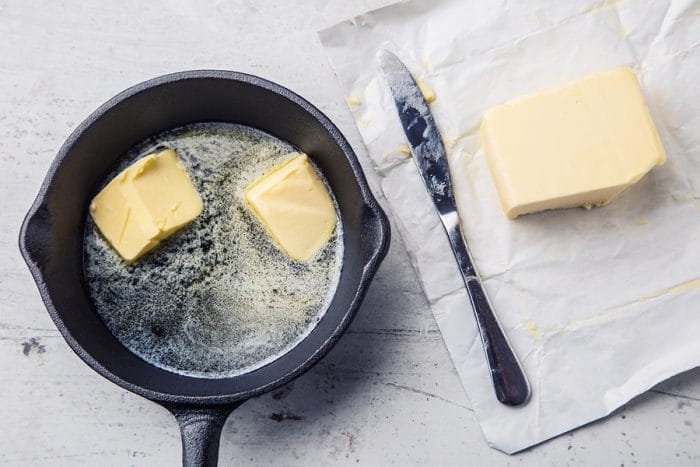
Here’s a list of the best oils and fats for cooking and baking and which temperature to use them at.
Healthiest Oils and Fats for Higher heat cooking:
- Ghee, or clarified butter, has become one of my favorite cooking fats. It can withstand high temperatures without oxidizing or smoking and it lends a nice buttery, nutty flavor. Many who are lactose intolerant can handle ghee because it is pure butter oil with the milk solids removed. You can either make your own or purchase from a company like Pure Indian Foods or Organic Valley.
- Tallow is the fat rendered from cows and is a great choice for high heat cooking such as roasting for frying. If it is from a grass-fed animal this fat is rich in CLA (conjugated linoleic acid), is an anti-inflammatory, and is rich in omega-3 fatty acids.
- Lard is the fat rendered from pigs and is also great for roasting or frying. It also is rich in CLA, is anti-inflammatory and is rich in omega-3 fatty acids.
- Duck Fat is another healthy saturated fat that is good for higher heat cooking. It pairs well with root vegetables and is one of my favorites to roast with.
- Chicken Fat is also a great healthy saturated fat for higher heat cooking.
- Palm Oil or Palm Shortening, if it comes from a sustainable farm, is a good choice for cooking or baking.
Healthiest fats and oils for low to Medium Heat Cooking
- Butter – Organic, pastured butter is my go-to for medium heat cooking and baking. Grass-fed butter contains healthy omega-3 fatty acids, fat soluble vitamins, is very supportive of the thyroid and endocrine system, and a healthy source of cholesterol, which the body uses to make hormones. It’s also a short-chain fatty acid that’s quickly used for energy in the body and rarely stored as fat.
- Coconut Oil – this is a rich saturated fat that has antimicrobial and antiviral properties. I like to use this oil in baked goods, desserts and Asian cooking.
Healthiest oils for very low temperature cooking:
1. Olive oil – is most beneficial when it’s used in its raw form because of the high percentage of oleic acid, but it does has a medium smoking point, so it can be used for a light sauté or low-heat baking. I know olive oil is what’s most recommended for roasting, but olive oil will oxidize at higher heats, which breaks down the nutrients, so it’s best to use this oil at a low heat or raw.
2. Avocado Oil – a good unrefined, cold-pressed avocado oil is best used for salad dressings or very light cooking.
3. Sesame oil – this oil is a combination of monounsaturated and polyunsaturated and is best for low temp cooking or drizzling.
Healthy oils to only be eaten raw or cold:
1. Flaxseed Oil should never be heated and always consumed raw or cold. It’s a great oil to drizzle over salads, add to a morning smoothie or over other cold dishes. It’s best to use flaxseed oil in small quantities because the body absorbs it slowly.
2. Nut Oils like Walnut, Macadamia, Almond, etc should all be eaten raw.
Unhealthy Oils and Fats to Avoid (highly refined and inflammatory)
Canola Oil
Corn Oil
Vegetable Oil
Crisco
Grapeseed oil
Rice Bran Oil
Hemp Oil
Soy Oil
Cottonseed oil
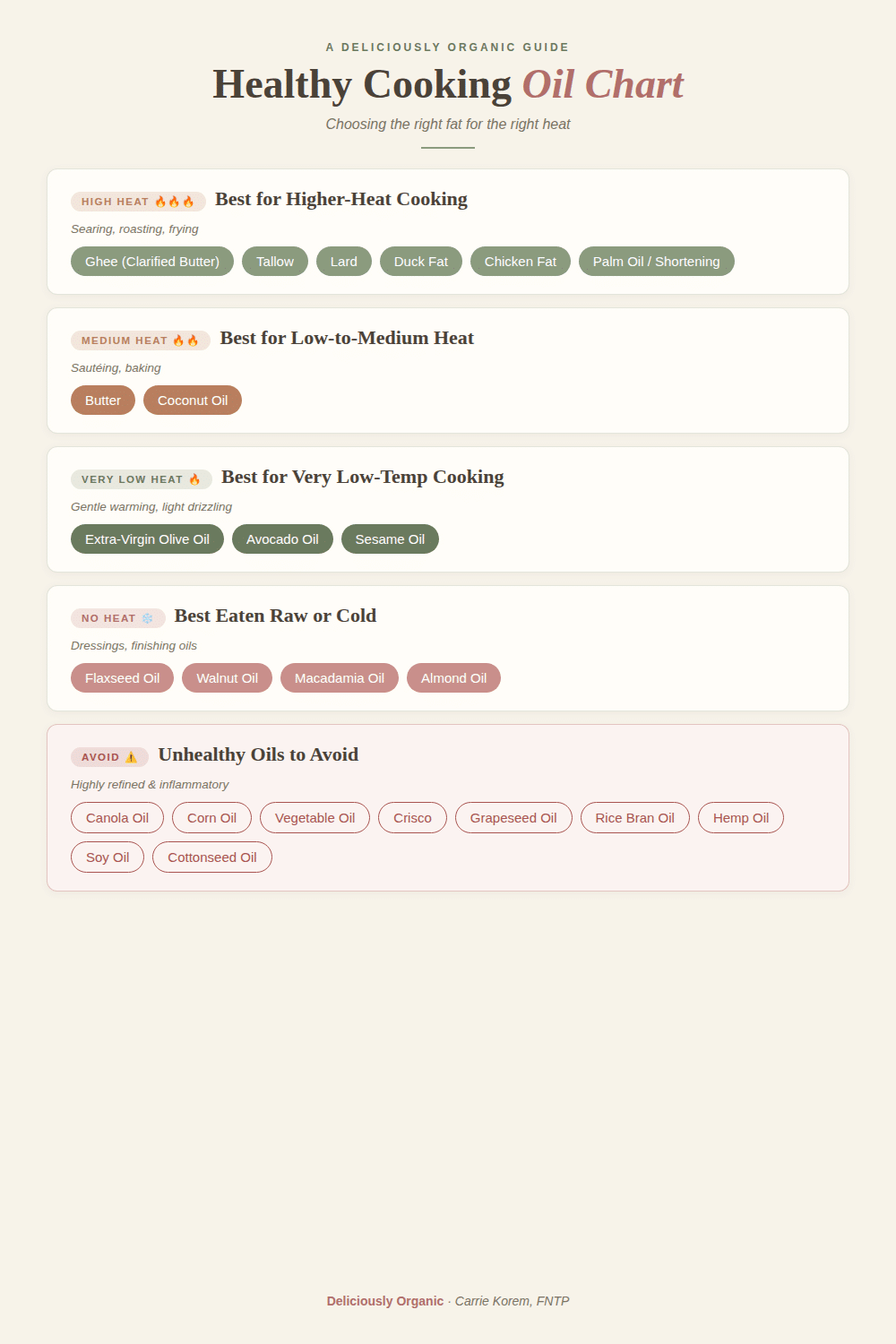
Healthy Cooking Oil Chart (print this off for easy reference!)
How to Incorporate Oils into Your Diet in a Healthy Way
- Drizzle an extra-virgin olive oil or avocado oil over your salad. Or use it in homemade salad dressing
- Use butter or coconut oil to sauté vegetables at low temperatures
- Roast vegetables or meats with ghee, tallow, lard or duck fat
- Fry eggs in butter
Here are some great articles for further reading about the importance of healthy fats in the diet:
The Skinny on Fats (a must-read!)
The Cholesterol Myths
Eat Fat, Lose Fat
The Great Cholesterol Myth
Sources:
Watkins, B A, et al, “Importance of Vitamin E in Bone Formation and in Chrondrocyte Function” Purdue University, Lafayette, IN, AOCS Proceedings, 1996; Watkins, B A, and M F Seifert, “Food Lipids and Bone Health,” Food Lipids and Health, R E McDonald and D B Min, eds, p 101, Marcel Dekker, Inc, New York, NY, 1996
Alfin-Slater, R B, and L Aftergood, “Lipids,” Modern Nutrition in Health and Disease, 6th ed, R S Goodhart and M E Shils, eds, Lea and Febiger, Philadelphia 1980, 134
https://www.westonaprice.org/health-topics/abcs-of-nutrition/saturated-fat-body-good/

