



From meditation to intermittent fasting, yoga to high-intensity interval training, you’ve been integrating loads of healthy living practices into your life. But did you know that when you do these things is almost as important as what you’re doing?
“Timing your wellness practices isn’t just a scheduling preference,” explains Valentina Lipskaia, Founder & Clinical Psychologist at Dzeny. “It has real neurological and psychological grounding, and getting it right can meaningfully amplify results.”
Claudia Armani, Health Coach and founder of The Healthy Gourmet, agrees. She cites natural circadian rhythms as a crucial component contributing to the regulation of sleep, hormones, metabolism, and other physiological processes.
“In a healthy circadian rhythm, cortisol is higher in the morning and lower in the evenings to facilitate sleep,” she continues. “Ideally, your wellness practices and eating regimen should align with them.”
In this new series, we’ll be exploring the best time of day to take part in different wellness practices. We’re starting things off with what many experts claim is the best way to start the day: meditation.
Meditate First Thing in the Morning
Meditation is a great way to gain focus and center yourself — and for most of our experts, this is ideally one of the first things you’ll do upon waking.
“Meditate before the day makes its first demand on you — otherwise you spend the whole day reacting instead of choosing,” explains Gio White, founder of Marcus, a Stoic practice app for iOS combining daily journaling, guided meditation, and reflection.
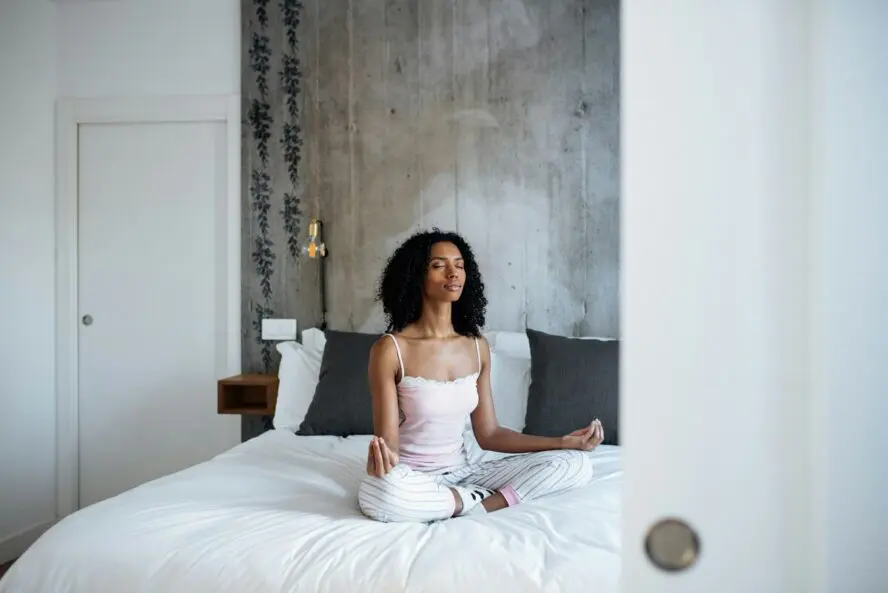
By taking a few minutes to meditate “before email, before the news, before anyone needs anything from you,” he explains, “you’re setting the terms of your attention instead of letting the day set them for you.”
Lipskaia agrees. “For meditation, morning tends to be the most effective window for most people,” she says. She cites the natural cortisol awakening response — a rapid increase in cortisol levels in the first half-hour after waking — as one of the core reasons why.
“Cortisol naturally peaks within the first hour of waking,” she explains, “and a brief mindfulness practice during this window helps regulate that stress response before the day’s demands take over.”
Jenna Armitage, owner of GoodGood Studio in London, is also a fan of the benefits of morning meditation. “Right when you wake up, cortisol spikes,” she says. “For a lot of people that’s exactly when the racing thoughts and tight chest show up, before they’ve even stepped out of bed.”
And this is all backed up by scientific research. Armitage cites a 2013 study showing that morning mindfulness meditation lowered cortisol levels in the blood in just four days1.
“There’s also research suggesting morning cortisol measurements show the biggest response to meditation compared to any other time of day,” she says. “You’re training your nervous system to draw inward before the noise gets loud, and that gives you an anchor to come back to for the rest of the day.”
Meditate at the End of the Day
That said, there’s also an argument for meditating later in the day.

“Post-work meditation — around 5 to 6 PM — is genuinely underrated,” says Lipskaia. “It acts as a psychological ‘transition ritual,’ helping the nervous system shift out of performance mode.”
In her clinical work, she says, Lipskaia notices that clients who have a hard time sleeping, in particular, can benefit from an evening meditation practice. “It interrupts rumination cycles before bed,” she says.
Dana Kraszczynski, Founder of Dana Joyce Wellness, a Therapeutic Sound Bath Practitioner and meditation teacher, agrees. “If your primary goal for meditation is to help you unwind faster at the end of the day, then after work is the ideal time,” she says. And don’t forget the benefits of meditation for sleep! “If you are looking to improve your sleep quality, you might try meditation right before bed.”
For White, “the most durable practice is bookended: a short morning meditation to prime your intentions, and an evening reflection to review how you actually did.” And while he prefers this two-pronged approach, he advises beginners to approach it practically. “If someone can only do one,” he says, “I tell them to start in the evening, because it’s honest.”
“Morning meditation is aspiration,” he continues. “Evening reflection is accountability, and accountability is what actually changes behavior over weeks and months.”
Meditate Right Before Working Out

For Ben Walker, Founder & Personal Trainer, Anywhere Fitness, the best time to meditate should also take into account the timing of another activity we’ll be exploring in this series: exercise.
Since meditation with slow, controlled breaths can help improve oxygen intake, he explains that the practice “can help regulate heart rate and keep the nervous system in a calm state.
“Going into a workout with high cortisol levels can contribute to higher heart rate and blood pressure during performance,” he says. “It will affect your concentration, increase blood glucose, and cause greater muscle tension. This increases the risk of injury and [affects] the ability of your body to recover faster post workout.”
Deep breathing and meditation, he explains, facilitates the body’s ability to perform cellular respiration during aerobic exercise, contributing to a better session and easier recovery.
How to Integrate a Meditation Practice Into Your Day
If you’ve not yet integrated meditation into your day, it’s easy to start, according to Armitage.
“Meditation gets way too much of a mystical reputation,” she says. “It’s not about sitting cross legged for an hour or ‘doing it right.’” She argues that a simple practice is best — especially if you want to be consistent.
“[Take] ten deep belly breaths before you touch your coffee,” she suggests. “Or just standing in the shower, eyes closed, really feeling the water hit your skin instead of thinking about your inbox. That’s it. That’s meditation.”
Once you’ve started your practice, White suggests adding a bit more introspection to your daily routine.

“[The philosopher] Seneca described lying in bed each night and asking, ‘What bad habit have you put right today? What fault resisted? In what respect are you better?’” he says. “The morning sets the aim; the evening checks the aim against reality. One without the other tends to drift.”
Meditate When The Spirit Moves You
So ultimately, when is the best time to meditate? Well, while there are certainly arguments for setting your meditation sessions at a specific time of day (especially if you have specific goals for the practice), don’t let the “perfect” schedule get in your way. For Kraszczynski, the most important factor in choosing a time is when you can be consistent.
“All of these suggestions come with the caveat that if you are always skipping meditation because the ‘ideal’ time doesn’t fit with your schedule, then it’s time to rethink your goal,” she explains. “The ideal meditation practice is the one that happens, and that happens consistently. So it is equally important to consider when you are most likely to practice daily.”
Kezia Joy, RDN, seconds this thought. “Many people are in pursuit of their perfect daily schedule; however, the importance of having a consistent routine greatly outweighs finding the perfect time,” she says. “Your best daily routine is one that you have been able to perform consistently on an everyday basis.”
Sources: