


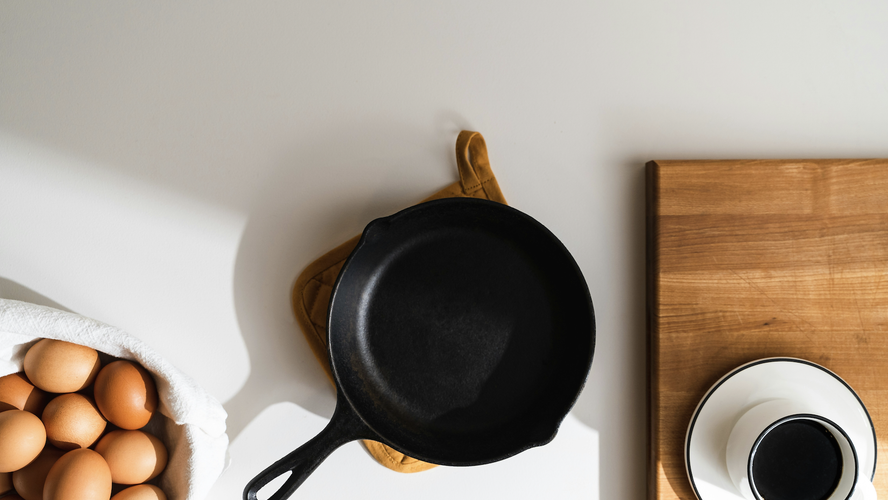
My Lodge cast iron skillet has been my go-to piece of cookware for over a decade. I use it for everything from crispy-edged eggs and weekend pancakes to long-simmered pasta sauces and cinnamon rolls. If you’re new to cast iron, welcome. You’re going to love it.
The first step toward working with a new skillet is to season it. Or, if you have a trusty skillet that’s not quite as nonstick as it used to be, a proper seasoning session can bring it right back.
Here’s the simple formula for an expert-level result: apply a very thin coat of high-smoke-point oil to the cooking surface, wipe off the excess, then bake the skillet upside down at 500°F for one hour. Repeat up to three more times to really lock it in.
The reward is an incredibly smooth, nearly nonstick cooking surface — one that’s completely free of PFAS — that only gets better with every use.
Want more top picks? Sign up for the newsletter for more well-researched, non-toxic living guidance and smart wellness advice.
What Is Cast Iron Seasoning, Exactly?
Seasoning is the process of heating oil past its smoke point so it bonds to the cast iron surface. As you repeat this process over time, those bonded layers build on top of each other, creating the slick, naturally nonstick patina that makes a well-loved cast iron skillet feel almost like cooking on glass. That dark, smooth finish is not grime. It’s years of good cooking.
Why Cast Iron Is Worth a Little Upkeep
In my opinion, cast iron is the premier cookware material for skillets. And I say that as someone who cooks with a lot of different pans. It’s extraordinarily durable: I still use a Le Creuset enameled Dutch oven that my grandmother received as a wedding gift, and the non-enameled pieces tend to outlast even that. A well-maintained cast iron skillet can genuinely be a lifetime purchase, or longer.
It’s also completely free of PFAS, PTFE, and the synthetic materials found in most conventional nonstick cookware. If you’ve been looking for a way to get a nonstick cooking experience without a coating that can degrade over time, a properly seasoned cast iron skillet is the answer.
When it comes to cooking performance, the thick, heavy construction gives you exceptional heat retention and even distribution — this is the pan you reach for when you want a deeply caramelized sear, a golden crust on a cornbread, or a chicken thigh with genuinely crispy skin. It goes from stovetop to oven to grill to campfire without complaint. If you’re curious how it stacks up against other materials, our comparison of carbon steel, stainless steel, and cast iron breaks it down.
The one real trade-off is weight. Cast iron skillets are heavy, significantly heavier than stainless or ceramic nonstick, and require two hands to maneuver, especially when full of food. If that’s a concern, carbon steel is a lighter alternative worth considering.
Our Favorite Cast Iron Skillets
Ready to invest in a skillet worth seasoning? Our guide to the best cast iron skillets covers eight chef-tested options across a range of price points, from Lodge’s accessible everyday workhorse to Smithey’s heirloom-quality pieces. If you’re also in the market for another cast iron staple, our Staub vs. Le Creuset Dutch oven comparison is worth a read.
What You Need to Season Cast Iron
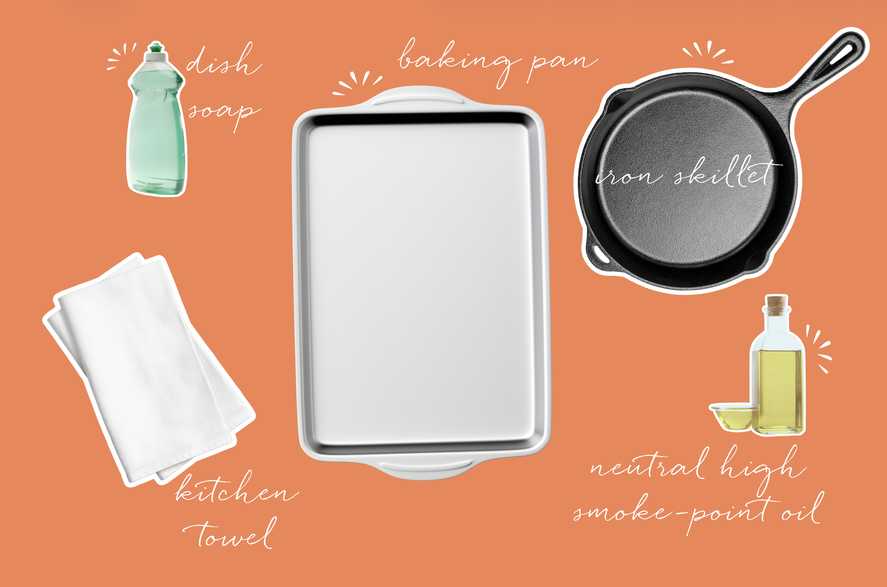
- Dish soap. The first step is a thorough wash with mild dish soap and warm water.
- A neutral, high-smoke-point oil. Vegetable oil, grapeseed oil, and avocado oil all work well. Avoid olive oil and butter (more on that below).
- Paper towels or a lint-free cloth. You’ll use these to apply the oil evenly and buff away any excess before the pan goes in the oven.
- A baking sheet. This sits on the lower oven rack to catch any drips.
The Best Oil to Season Cast Iron
You need a neutral-flavored oil with a high smoke point — one that can withstand 500°F without burning.
Avocado oil, grapeseed oil, and refined vegetable oil are all solid choices.
Avoid olive oil (too low a smoke point and too much flavor), butter (same issue), and any unrefined oils that will leave behind off-flavors rather than a clean seasoning.
How to Season a Cast Iron Skillet in the Oven, Step by Step
STEP 1: Clean the Pan
Preheat your oven to 500°F and place one rack in the center and one on the bottom.
While it heats, scrub the skillet thoroughly with hot water and a small amount of dish soap.
Rinse it clean, then dry it completely — first with a dish towel and then by setting it over medium-low heat for a few minutes until all the moisture has evaporated. Any water left on the surface can cause rust, so take your time here.
STEP 2: Apply a Thin Layer of Oil
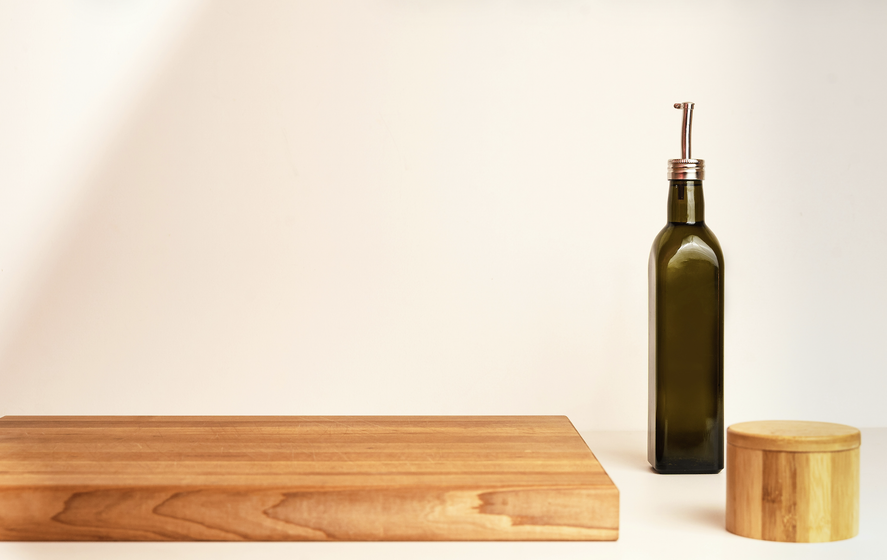
Add a small drizzle of oil to the pan, less than you think you need.
Use a paper towel or lint-free cloth to rub it into every surface: the cooking surface, the side walls, and the exterior.
Keep buffing until the pan looks smooth and uniformly shiny.
Then use a clean towel to wipe away any excess. This step is critical: too much oil bakes into a tacky, sticky layer that’s the opposite of what you want.
The pan should look almost dry before it goes in the oven.
STEP 3: Bake Upside Down
Place the baking sheet on the lower rack to catch drips, then set the oiled skillet upside down on the center rack.
Bake for one hour at 500°F.
When the hour is up, turn off the oven and leave the pan inside to cool completely — this can take a couple of hours.
If you’re seasoning a brand-new pan, repeat the entire process up to four more times for the most durable result. Each round builds another layer of bonded seasoning.
How to Season Cast Iron Without an Oven
If you don’t have access to an oven, you can season your skillet on the stovetop. Just know it will be smoky.
Turn on your range hood vent, oil and buff the pan exactly as described above, then set it over medium-high heat.
Heat until you see the first wisps of smoke, then continue heating for 10 to 15 minutes. The smoke is the oil polymerizing and bonding to the iron — this is what you want.
Turn off the heat, let the pan cool completely to room temperature, and repeat up to four more times.
Do You Need to Season a New, Pre-Seasoned Skillet?
No. If your skillet arrives pre-seasoned, you can cook with it right out of the box. Over time, if you notice rust spots, dry patches, or food starting to stick more than it used to, that’s your signal that it needs another round of seasoning.
Think of it as maintenance rather than a one-time project.
How to Care for Cast Iron So the Seasoning Keeps Building
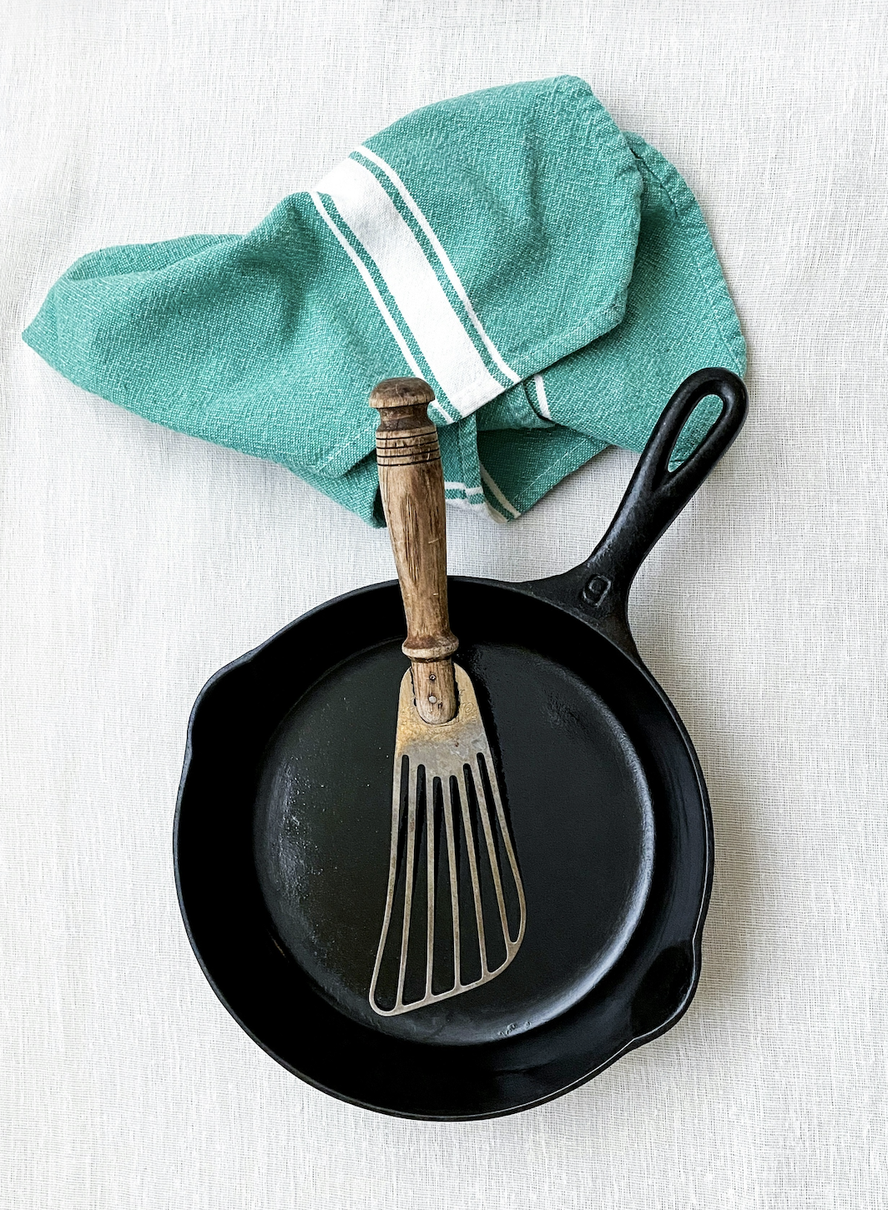
The best thing you can do for your cast iron is to cook in it regularly. Every time you heat oil in the pan, whether you’re searing a steak, frying an egg, or sautéing greens, you’re adding another microscopic layer of seasoning. A pan that gets used every day develops a thick, glossy patina that makes it nearly as nonstick as any coated pan on the market, without any of the coating concerns.
A few habits worth building: dry your pan completely after washing, apply a very light film of oil after each use if the surface looks dry, and avoid cooking highly acidic foods like tomato sauce or wine-based braises until the seasoning is well established — acid can strip a young seasoning. Once the pan is deeply seasoned after many months of use, it can handle occasional acidic dishes without issue.
Looking for recipes to break in your skillet? Our guide to cast iron cooking is a good place to start, and this technique for cooking eggs without sticking works beautifully in a well-seasoned skillet.
Common Cast Iron Seasoning Mistakes (and How to Fix Them)
- Using too much oil. This is the most common mistake and results in a sticky, gummy surface that feels worse than an unseasoned pan. The fix: buff the pan vigorously after applying oil and wipe away every bit of excess before it goes in the oven. The pan should look almost dry.
- Using the wrong oil. Butter, olive oil, and unrefined oils have too low a smoke point and too much flavor. They won’t polymerize properly and can leave behind a rancid smell. Stick to neutral, high-smoke-point oils.
- Not using enough heat. The oven needs to be at least 450°F, and ideally 500°F. At lower temperatures, the oil never fully breaks down and bonds to the iron. Instead, you end up with a half-baked seasoning that wipes right off.
- Seasoning a wet pan. Any moisture left on the surface before you start will prevent the oil from bonding and can cause rust. Always dry the pan completely, over heat if necessary, before the oil goes on.
- Trying to season over rust or debris. You can’t season away imperfections. If your pan has rust, scrub it off with steel wool, wash, dry completely, then start your seasoning from scratch. The good news is that even a badly rusted pan can usually be fully restored.
Cast Iron Seasoning FAQs
Should I season cast iron at 350 or 450°F?
Use at least 450°F, and ideally 500°F. At lower temperatures, the oil won’t fully break down and polymerize, so it won’t form a proper bond with the iron. You’ll end up with a soft, tacky layer rather than a hard, slick one.
Can you use olive oil to season cast iron?
No. Olive oil’s smoke point is too low.
It starts to break down before it can properly bond to the iron at seasoning temperatures. It also has a strong enough flavor that it can leave an off taste on the pan. Stick to avocado, grapeseed, or refined vegetable oil.
How long does it take to season cast iron?
One round of seasoning takes about an hour of baking plus a couple of hours of cooling time. For a new pan, plan to do this up to four more times over the following days. You can do one round a day until you’ve built up a solid base of seasoning.
Do you oil cast iron after seasoning?
Yes. Use cooking oil every time you cook in the pan, and apply a thin film after washing and drying if the surface looks at all dry. Every time oil hits a hot cast iron surface, you’re adding to the seasoning. This is how a pan that you buy brand new becomes an heirloom.
How do you know if cast iron is properly seasoned?
A well-seasoned cast iron skillet has a deep, dark, smooth patina that looks almost lacquered. Food releases cleanly from the surface, and water beads up and rolls off rather than spreading across the pan. If your pan passes those two tests, it’s in good shape.