



My German pancake recipe takes minutes to prepare and bakes up super soft, puffed, and flavorful. If you love traditional pancakes cooked on a skillet, these 6-ingredient German pancakes are guaranteed to be a favorite, too!
Nothing says “it’s the weekend” at my house more than a full breakfast spread, and this is the pancake that ends up on the table with baked French toast and these mini silver dollar pancakes.
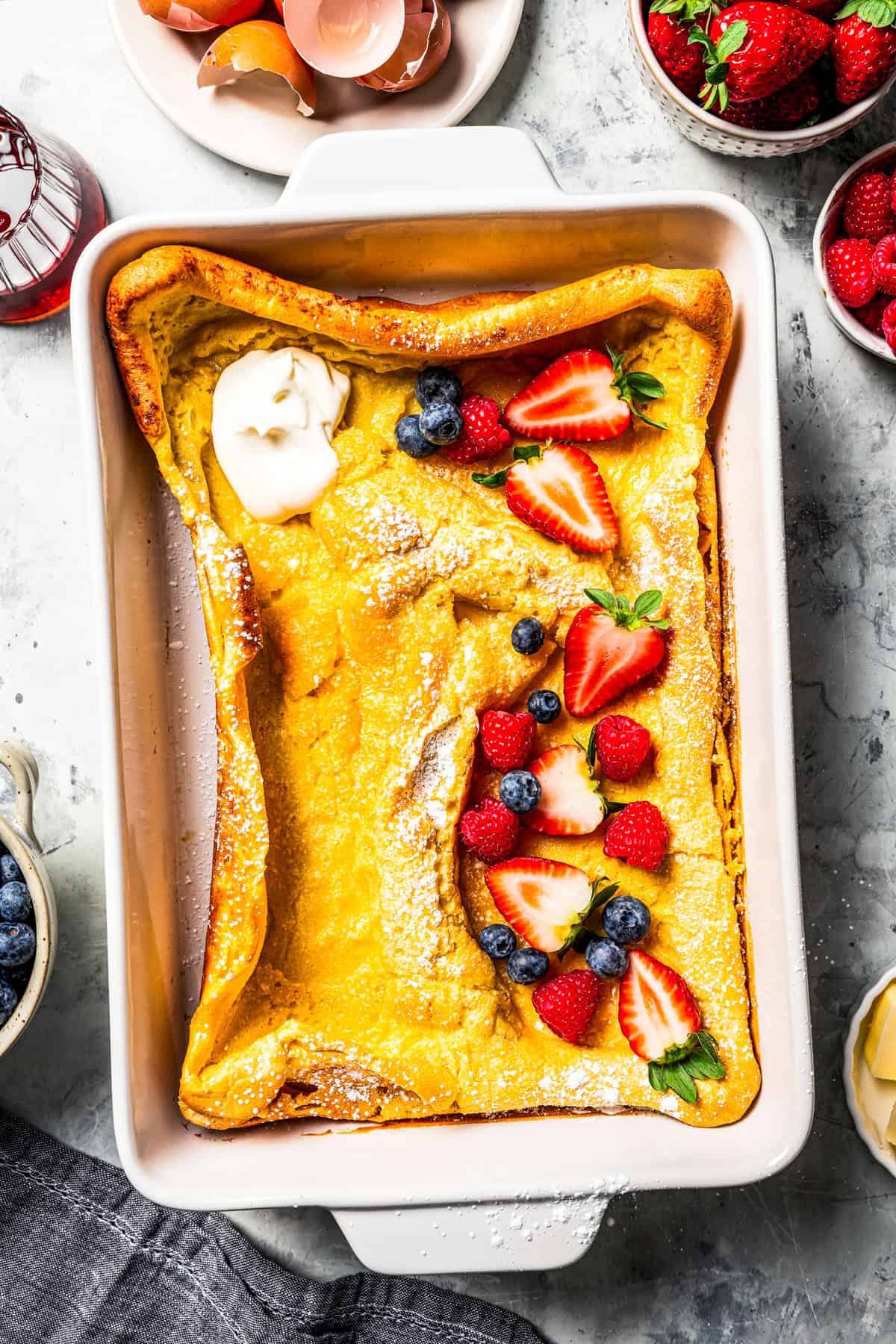
German pancakes are a crowd pleaser around here. Topped with powdered sugar and fresh fruit on a weekend morning, or drizzled with maple syrup at brunch, they’re the best! This pancake is a bit like a cross between a sheet pan pancake and a Yorkshire pudding. If you’ve never had one before, you’ll want to fire up your oven ASAP!
This German Pancake Recipe Is…
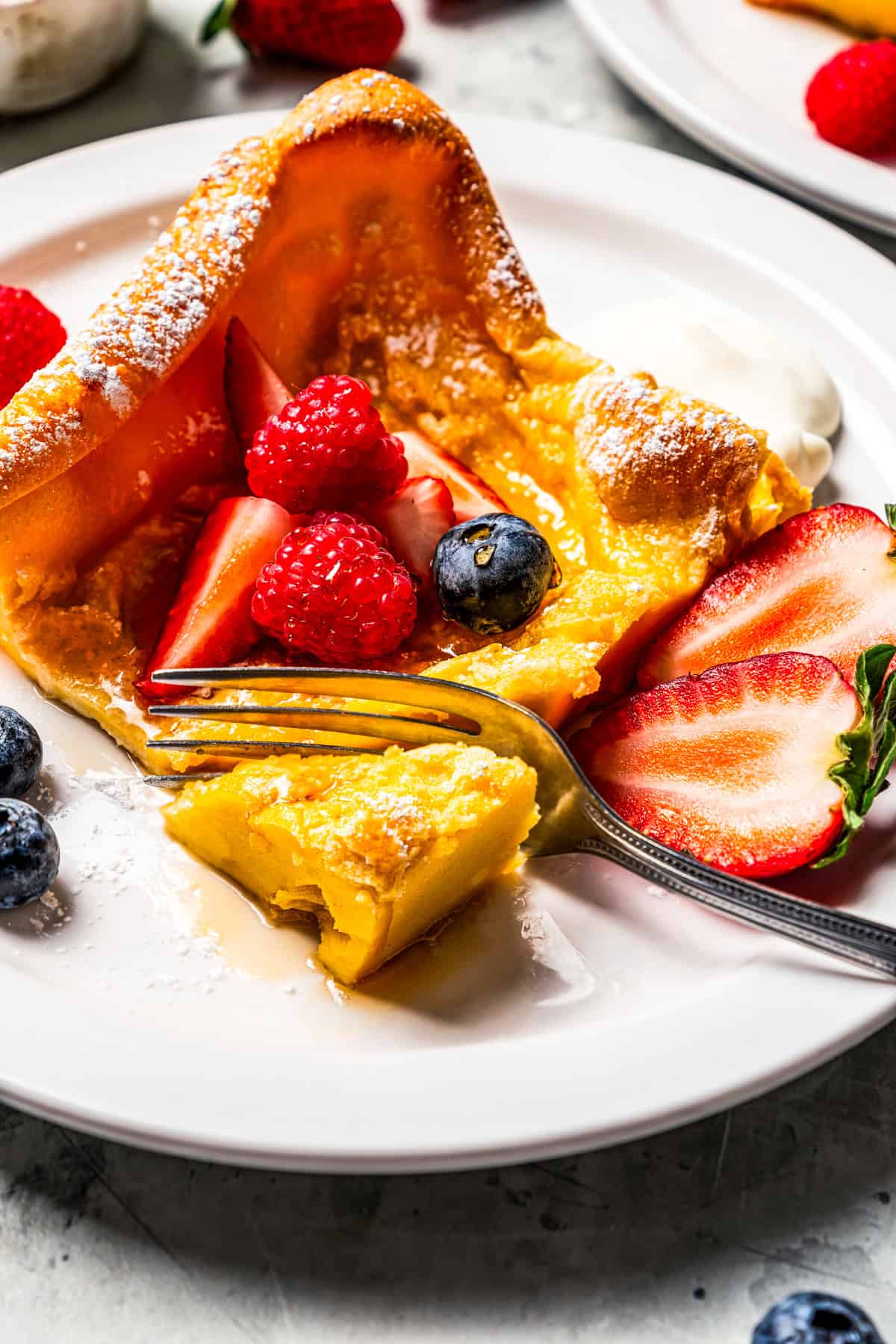
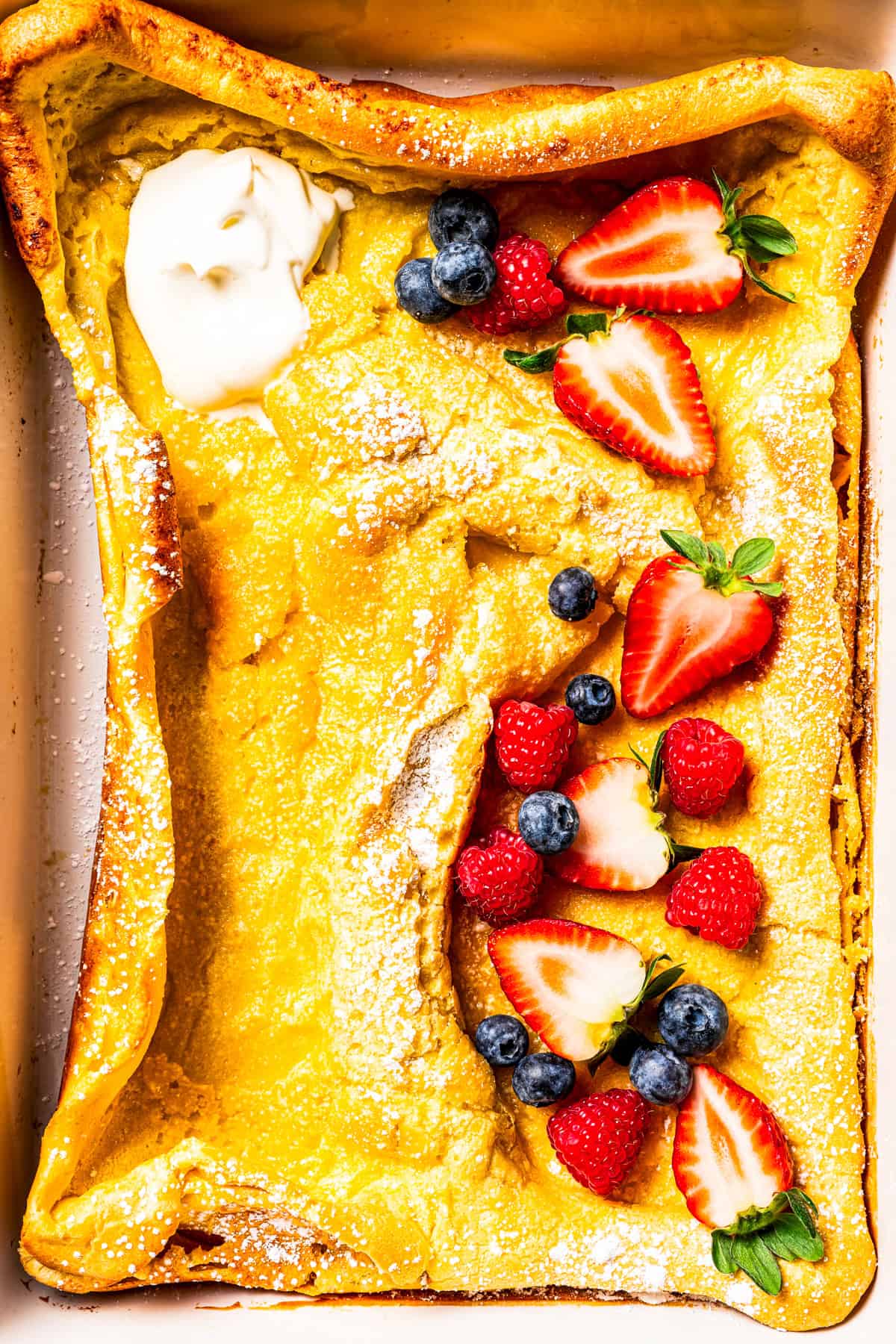
- Soft and fluffy. German pancakes are typically thicker than your average flapjack, with a moist, fluffy interior and crispy, golden edges.
- Baked all at once. Unlike traditional buttermilk pancakes or drop scones, you don’t need to get out your skillet or griddle. We’ll bake this pancake in a 9×13 dish instead!
- Sweet or savory. Serve your German pancake topped with syrup and powdered sugar, or go with breakfast for dinner and make it savory by omitting the vanilla.
What Is a German Pancake?
German pancakes, also called Dutch baby pancakes, are actually an American recipe for a large pancake that’s baked instead of fried. The pancake rises as it bakes, and falls as it cools. I’ll show you how easy it is to make with classic ingredients, including eggs, milk, flour, and butter.
Fun fact: Another name for this type of pancake is a Hootenanny or a Hooligan!
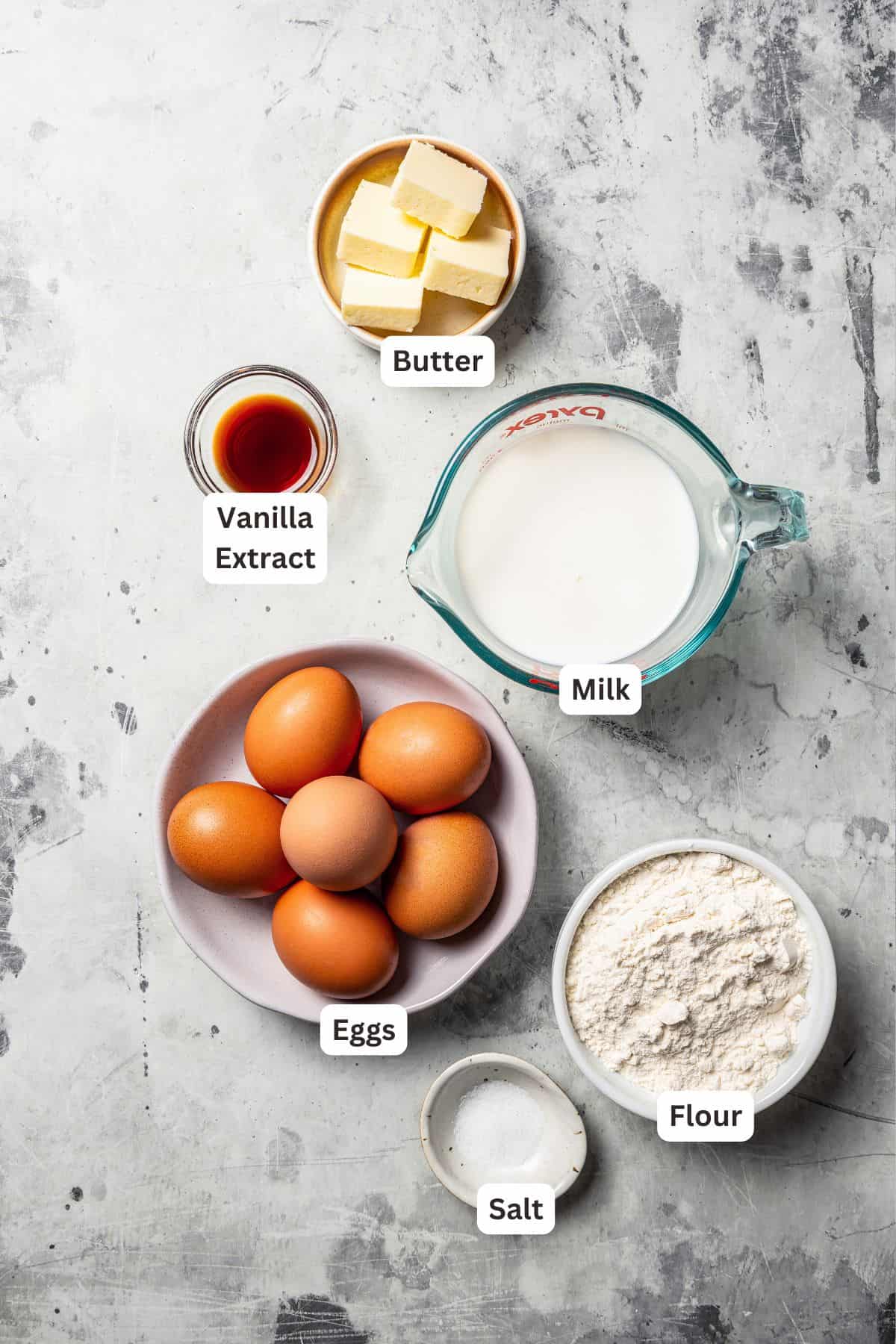
You Need Only 6 Ingredients
Here’s a look at the short shopping list for these easy German pancakes. If you’re anything like me, they’re already on hand. 😉 Scroll to the recipe card for the printable recipe followed by step-by-step instructions.
- Eggs – This German pancake recipe calls for a full half-dozen eggs to give the pancake lift and structure, since there’s no leavening.
- Milk – Any kind will work, including whole milk, 2%, plant-based, etc.
- Vanilla – Make sure to use pure vanilla extract or an equal amount of vanilla paste. For a savory pancake, skip this ingredient.
- Flour – Spoon and level the flour to avoid overmeasuring. This means to spoon the flour into your measuring cup and level it off afterwards. Don’t scoop directly from the bag, or you’ll end up with too much.
- Butter – Salted or unsalted.
- Salt – If you’re using salted butter, consider reducing or skipping the added salt in the recipe.
Recipe Tips
- Let the batter rest. This quick step is essential for super-tender, extra-fluffy, flavorful pancakes. Resting hydrates the flour and relaxes the gluten (which can otherwise make pancakes chewy). It also allows any dry flour pockets to fully dissolve into the batter.
- Bake on the middle rack. Any higher than the middle rack, and your pancake might puff up enough to touch the grill.
- Deflating is expected. In fact, when it comes to German pancakes, deflation is encouraged. Your pancake may sink in the middle after baking, and that’s completely normal. You’ll fill it with toppings soon enough!
- Use the blender. I love using my blender as a shortcut to make everything from pie crust to pancake batter. It’s as easy as adding the ingredients to the blender or food processor and pulsing until the batter comes together.
Optional Toppings
I like to have my pancakes topped with butter, confectioners’ sugar, and fresh berries or strawberry sauce. They’re also delicious dressed with maple syrup or any of these easy pancake topping ideas:
Like a crêpe, Dutch baby pancakes can be sweet or savory. So, you can also add toppings like feta, fresh herbs, and plain yogurt, as I do with my savory French toast recipe.
Serving Suggestions
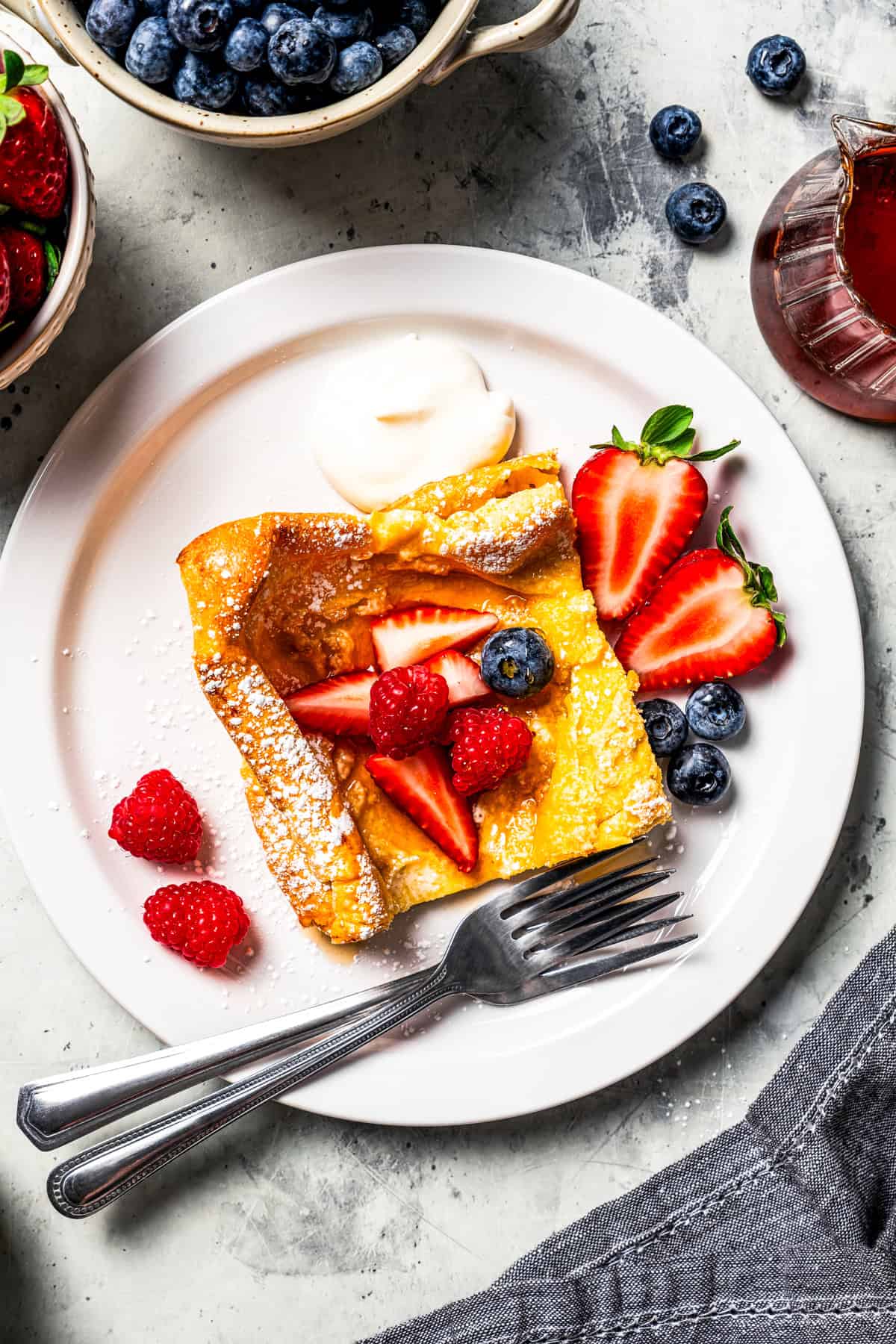
I’ll often make German pancakes for a family brunch alongside egg bites and crispy air fryer bacon. It’s also an excellent dish to make for a holiday crowd. Make German pancakes for Easter, served with deviled eggs and a ham and cheese quiche, and mimosas.
As a savory option, serve the pancake slices Yorkshire pudding-style as a side to a pot roast and gravy.
Pin this now to find it later
-
Beat the eggs. Meanwhile, whisk the eggs in a large bowl.
-
Add milk. Add the milk and vanilla, and beat with the whisk until well combined.
-
Add the dry ingredients. Using a sifter or a fine mesh strainer, sift the flour and salt over the egg mixture in the bowl. Then, stir it all together until you have a smooth batter. Set the batter aside to rest for 5 minutes.
-
Prepare to bake. While the batter rests, preheat the oven to 400°F. Add the butter to a 9×13 rectangular dish. Place the baking dish in the oven and allow the butter to melt completely, about 3-5 minutes.
-
Bake the pancake. Carefully remove the baking dish from the oven and pour in the pancake batter. Bake the pancake for 20-25 minutes or until the edges are brown and puffy.
-
Serve. Remove from the oven and serve your German pancake while still warm, dusted with powdered sugar.
- Sifting is optional. You can absolutely just whisk the flour and salt together before adding them to the egg mixture.
Calories: 234kcal | Carbohydrates: 18g | Protein: 9g | Fat: 13g | Saturated Fat: 7g | Polyunsaturated Fat: 1g | Monounsaturated Fat: 4g | Trans Fat: 0.3g | Cholesterol: 189mg | Sodium: 146mg | Potassium: 148mg | Fiber: 1g | Sugar: 2g | Vitamin A: 540IU | Calcium: 80mg | Iron: 2mg
Nutritional info is an estimate and provided as courtesy. Values may vary according to the ingredients and tools used. Please use your preferred nutritional calculator for more detailed info.
Ceramic vs. Metal Pans
Many German pancake recipes use a metal or cast-iron pan. I used a ceramic baking dish. You can use a metal one, but keep in mind to reduce the baking time by a few minutes, as the pancake will bake faster in a metal pan.
How to Store
- Refrigerate. Store any pancake leftovers covered in the fridge for 3-4 days.
- Reheat. Warm the pancake either whole in the oven, or you can zap individual servings in the microwave.

