


Tonight is the first night of an 8 day celebration for the Jewish holiday Chanukah/Hanukah. Did you ever wonder why Hanukkah falls on different dates each year?
It’s because Jewish holidays follow the ancient over 5000 year old Hebrew lunar calendar dating back to biblical days. Therefore, Jewish holiday dates shift each year on our regular solar Gregorian calendar that is now used. (Actually Hindu/Sikh, Islam, and Chinese follow a lunar cycles too for their holidays so their holidays fall on a different solar calendar day each year too)
Meaningful Traditions and Symbolic Objects of Hanukkah
The Hanukkiah (Hanukkah Menorah)

A nine-branched candle holder, called a hanukkiah or menorah, is lit over the eight nights of Hanukkah. One candle is added each evening and lit with the tallest candle called shamash, or helper candle. The growing light represents hope, resilience, and the miracle that took place on Hanukkah. It is customary to place the menorah in a window to share the story of Hanukkah publicly. Some families also display an electric Hanukkiah/Menorah.
Oil and Traditional Hanukkah Foods
Because oil is central to the Hanukkah story, it is customary to eat foods fried in oil during the holiday. Popular Hanukkah foods include potato latkes (pancakes) and jelly-filled donuts known in Hebrew as sufganiyot.

Since I don’t eat fried foods, I came up with an air-fryer version for crispy air-fryer vegan potato latkes .
The Dreidel
A dreidel is a four-sided spinning top with Hebrew letters on it—Nun, Gimel, Hey, and Shin—which stand for “Nes Gadol Haya Sham,” meaning “A great miracle happened there.” Playing dreidel is a traditional Hanukkah game, especially enjoyed by children. Children often play with Chanukah gelt.

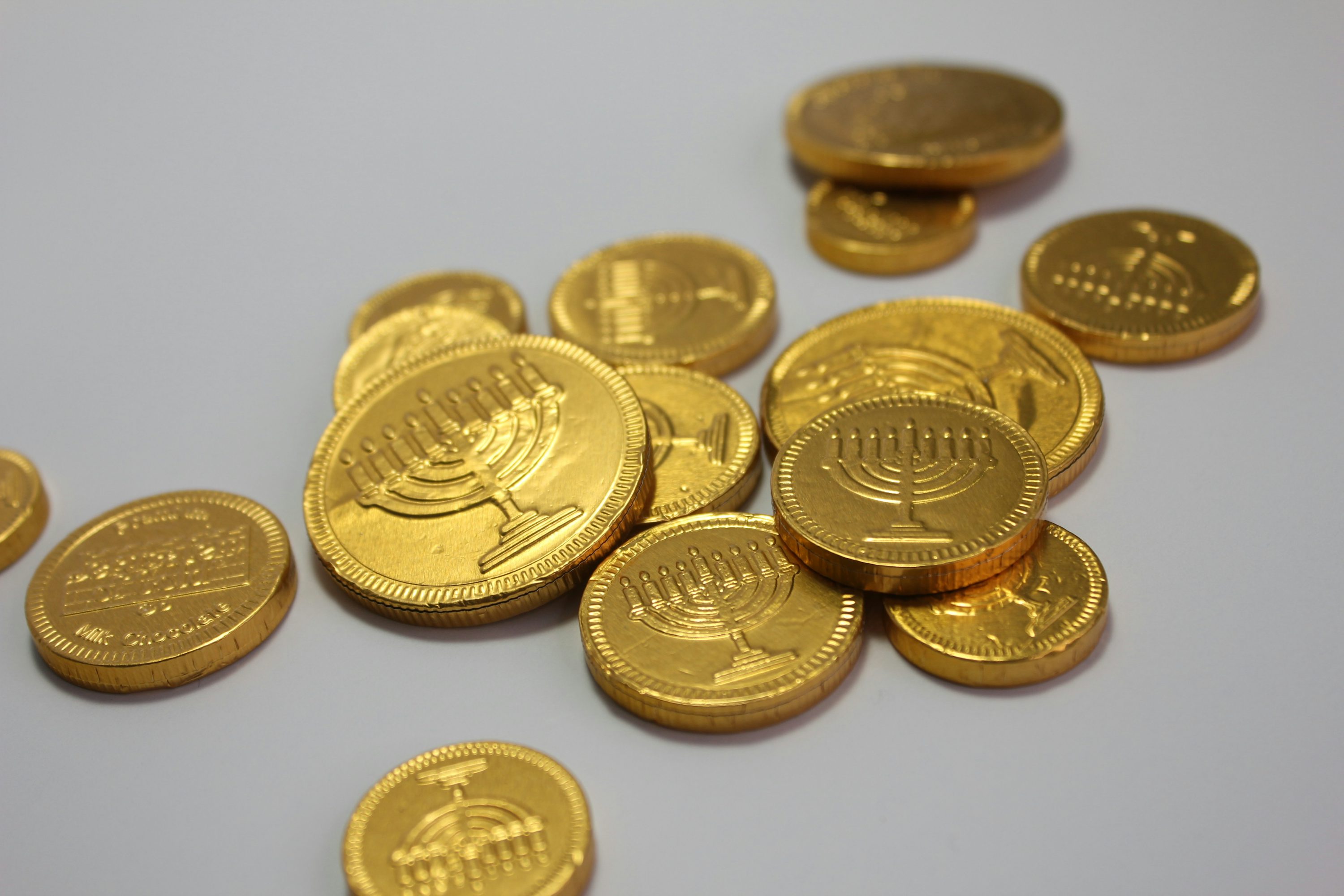
Hanukkah Gelt
Gelt, often chocolate coins or small amounts of money, is given to children during Hanukkah. It symbolizes reward, generosity, and remembrance of Jewish history. It is often used to play dreidel. When I was young (60 years ago), we used nuts with shells to play. People didn’t eat as much candy.
Blessings and Hanukkah Songs
Each night, families recite blessings before lighting the candles, followed by traditional Hanukkah songs that celebrate joy, gratitude, and the miracle of light.

Together, these Hanukkah traditions and symbolic objects help us remember the story of the holiday and reinforce its timeless message: even a small light can overcome darkness.
Like Christmas, in modern times, it has become customary to exchange gifts during Chanukah.
I live in South Florida where there is a substantial Jewish population. Many of the local parks and beaches will be having festivals tonight and candle lightings (with light bulbs) on giant outdoor menorahs.

In our condo building with over 600 units about 30% is of the Jewish faith. Since many of us are snowbirds and not near our families, we will celebrate with neighbors – first we will have an outdoor pot-luck get together near the pool area, and then when it gets dark, a candle lighting ceremony (electric bulbs) in our condo lobby. We will say the blessings and sing Hanukah songs. Of course there is also a large Christmas tree in the lobby and we will have other activities for Christmas as we get closer to Christmas.

Some Added Thoughts:
The neighbors in our condo have gotten together in previous years to celebrate Hanukkah and it always amazes me because we have a very diverse group of people in South Florida. They come from countries such as Venezuela, Columbia, Cuba, Russia, Ukraine, Morocco, Syria, Egypt, Paris, Mexico etc) Some barely speak English, yet, the Jewish people all know the same Hebrew prayers for the candle lighting and many of us know and sing the same songs for the holiday. It is quite amazing and very fun and unifying.
A popular song in English ; This song is translated from Yiddish and it is also translated into Hebrew.
 |
| Translated from an originally Yiddish song from Europe called, OY Chanukah! |
 |
| Part of the Hanukkah decoration in a nearby park in Sunny Isles, Florida
Chanukah this year is December 14- Dec 22, 2025  |
