


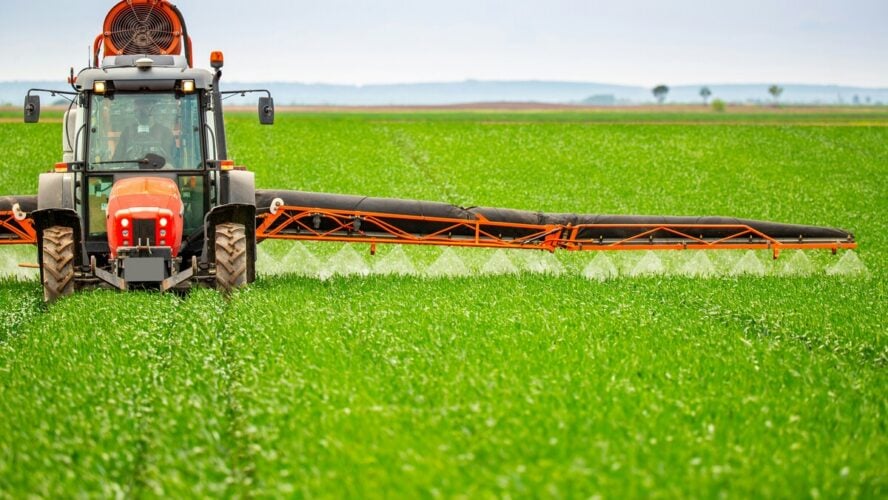
Syngenta is the Swiss-based agrichemical giant behind the weedkiller Gramoxone, a paraquat-based product. In early March, Syngenta announced that it would cease producing Gramoxone at its Huddersfield, United Kingdom facility by the end of June.
This is good news because paraquat has been linked to a number of health implications, including an increased risk of Parkinson’s disease and non-Hodgkin lymphoma. More than 70 countries have banned agricultural use of the chemical, but it continues to remain legal in the United States.
This is the last production facility worldwide where the Swiss-based company is currently making this product. This announcement marks a step forward in the continued push to ban paraquat once and for all.
Why Experts Are Skeptical About Syngenta’s Announcement
Despite this hopeful news, experts caution against celebrating too soon. “Gramoxone is the most popular paraquat brand product in the US, but they are only 40-50% of paraquat sales,” says Environmental Working Group Legislative Director Geoff Horsfield. Indeed, Syngenta cites “significant competition” as one of the chief reasons for halting production1 — and even this, according to Horsfield, may only be a temporary halt.
“Syngenta makes no comment on their Gramoxone brand,” says Horsfield of the company’s recent announcement. “They do not commit to end the Gramoxone brand. They do not commit to not selling paraquat.”
According to Horsfield, Syngenta (which was acquired by Chinese state-owned chemical conglomerate ChemChina in 2017) could relaunch production of Gramoxone at any time. “Syngenta [ChemChina] has a pesticide manufacturing facility in China,” he says, “meaning it is possible that they could shift production there.”
He stresses the importance of a nationwide paraquat ban to ensure that the chemical is absent from American fields once and for all. “The only way to ensure we can protect communities and farmers from paraquat is for governments to ban paraquat,” he says.
Legality of Paraquat Around the World
Paraquat was first synthesized in 1882 and has been used as an herbicide since 1962, after the 1955 discovery of its weedkilling properties at the laboratories of Imperial Chemical Industries in Berkshire, England. Gramoxone has been produced in the UK ever since, albeit solely for export since 2007. It was in this year that the European Union (to which Britain still belonged at the time) finally outlawed its use, after Sweden took the European Commission to court for ignoring evidence of paraquat’s neurotoxicity. (The herbicide has been outlawed in Switzerland, Syngenta’s headquarters, since 1989.)
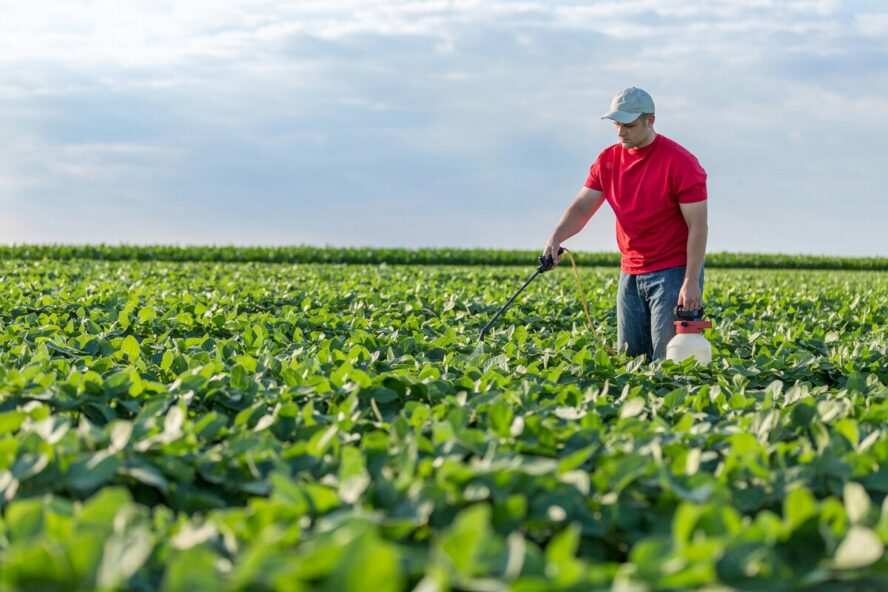
This means that for nearly 20 years, Great Britain produced an herbicide so lethal it refused to spray it on its own fields. Slow Food explored this ironic double-standard in depth, highlighting the regulatory gap that has allowed EU countries to produce and export tens of thousands of tons of dangerous pesticides to low- or middle-income countries, where misuse of paraquat specifically has led to over 1,000 deaths2.
In 2018, according to a joint investigation from Public Eye and Unearthed, British authorities approved the export of more than 28,000 tons of paraquat-based products3. And in the same year, EU member countries approved the export of 81,615 tons of pesticides containing substances banned for use in Europe. Syngenta was shown to be the largest exporter “by far,” exporting nearly three times as much as Corteva, its closest competitor. Today, despite a 2020 promise to ensure that “hazardous chemicals banned in the EU are not produced for export,” the practice continues.
Use of Paraquat in the U.S.
While three-quarters of the countries that import pesticides banned in Europe are low- or middle-income countries, the United States is a notable exception when it comes to paraquat. The U.S. has yet to ban this dangerous chemical — paraquat has been used here since 1964, primarily on soybeans, cotton, corn, grapes, pistachios, and peanuts. From there, it makes its way into not only crops but a range of everyday household foods and products, like Cheerios.
While Syngenta’s announcement may keep Gramoxone off of American fields (for now), Horsfield cites other potential sources like Axill, Helena Agri Enterprises, Jacobo LLC, Source Dynamics, and RedEagle International. And that’s not even scratching the surface of other harmful pesticides like dicamba and the widely controversial glyphosate (found in Monsanto’s Roundup).
“It is difficult to fully map out where companies may produce paraquat because it is all proprietary information,” he says. He also notes, nevertheless, that “dozens of other brands in the US and elsewhere still use paraquat — and most of those production facilities are based in China or Taiwan.” Much like Great Britain, despite these exports — China banned the use of paraquat in its own agriculture in 2017; Taiwan banned it in 2018.
Twelve states are currently weighing bills to limit the use of paraquat or prohibit it entirely, with some legislation focusing specifically on the area near public schools. In early January, EPA Administrator Lee Zeldin posted on social media that the agency would “freshly reassess the safety” of the chemical.
Paraquat and Parkinson’s Disease
Paraquat is linked to a number of health risks, the most well-documented of which is an increased risk of Parkinson’s Disease. A 2019 meta-analysis of 13 studies found that paraquat exposure could increase the likelihood of developing Parkinson’s by 64%4, and a 2024 study in the International Journal of Epidemiology found that people living or working within 500 meters of paraquat application could more than double their chances of developing the disease5.

Syngenta is currently facing more than 8,000 lawsuits brought by people in the States who allege that they developed Parkinson’s Disease as a direct result of these products. The company maintains that paraquat does not cause Parkinson’s disease, calling the evidence “fragmentary” and “inconclusive.” But according to the EWG, Syngenta has long understood the health risks of paraquat. They write that the company “spent decades hiding this knowledge from the public and the EPA6.” And in 2022, The New Lede obtained and published damning evidence: the so-called “Paraquat Papers,” which revealed a corporate coverup scheme from within the company dating back to the 1950s7.
“Though the documents reviewed do not show that Syngenta’s scientists and executives believed that paraquat can cause Parkinson’s, they do show a corporate focus on strategies to protect product sales, refute external scientific research, and influence regulators,” reported The New Lede at the time.
Other Health Risks of Paraquat
Parkinson’s is not the only health hazard linked to the herbicide. Studies have also linked the chemical to increased risk of thyroid disease8, impaired kidney function9, and cancers of the cervix, penis, lungs, blood, and skin10. And in 2025, EPA released a memorandum noting that the chemical’s potential for volatility is more uncertain than previously considered, meaning higher risks for bystanders11. They may also have lasting effects on developing brains via exposure in pregnant women.
In conclusion, while Syngenta’s announcement is certainly good news for the health of Americans, it’s far from the end of the battle.
Sources:
- https://www.syngenta.com/media/syngenta-cease-paraquat-production-uk-2026
- https://www.slowfood.com/blog-and-news/banned-at-home-sold-abroad-the-eus-pesticide-hypocrisy/
- https://www.publiceye.ch/en/topics/pesticides/banned-in-europe
- https://pubmed.ncbi.nlm.nih.gov/30474499/
- https://academic.oup.com/ije/article/53/1/dyae004/7597790
- https://www.ewg.org/news-insights/news-release/2026/03/syngenta-stopping-global-paraquat-production-doesnt-end-need
- https://www.thenewlede.org/2022/10/secret-paraquat-papers-reveal-corporate-tactics-to-protect-weed-killer-linked-to-parkinsons-disease/
- https://pubmed.ncbi.nlm.nih.gov/39449422/
- https://www.mdpi.com/1660-4601/18/6/3278
- https://pmc.ncbi.nlm.nih.gov/articles/PMC3058830/
- https://www.epa.gov/ingredients-used-pesticide-products/paraquat-dichloride


