


| Sanskrit Pronunciation | Hamsasana (HUM-saa-Suh-nuH) |
| Meaning | Hams = Swan / asana = pose |
| Pose Type | Prone and Balancing |
| Pose Level | Intermediate |
| Anatomy | Core, Palm, elbow, hamstrings |
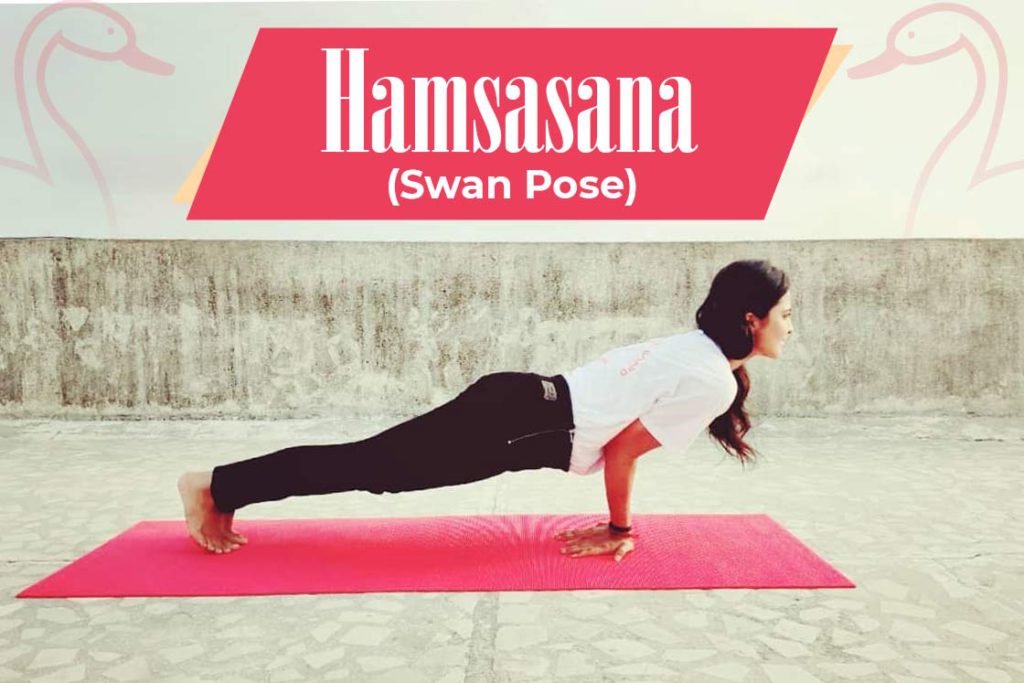
Swan Pose is an intermediate balancing pose that needs active use of the core, glutes, calves, hands, and toes. In this pose, the body is balanced in a prone position, which makes the asana more challenging.
When observed from a distance, this asana looks very similar to Plank Pose, but with a slight lift. Therefore, practitioners can prepare their body well by practising Plank Pose, which helps them handle and enjoy the challenges of this beautiful asana.
Meaning
Hamsasana is a Sanskrit word in which “Hamsa” means Swan and “Asana” means Pose. However, this asana has a deeper meaning when we look closely at the word itself. The syllables “Ham” and “Sa” from the root word represent breath and spirit respectively. The breath used during the practice of this asana helps awaken the spirit that is often covered by self-doubt and insecurity. This makes a person feel more joyful, confident, and positive in life.
Hamsa or Swan is the vehicle of Hindu deity Saraswati, she is well known by the ‘mother or the goddess of knowledge’. Hence, the swan-like concentration in Hamsasana makes the practitioner attentive enough, that he/she grasp things into the mind as none does.
Apart from that, the white color of the Swan represents peace and love. So, practicing this asana enriches one’s inner self with a deep sense of love, compassion, and respect, respectively.
Now let’s practice this pose with guide below;
Practice guide to swan pose
The following steps can be followed for the safe practice of Hamsasana.
Contraindications
- Swan Pose puts pressure on the abdomen. Therefore, practising this asana during pregnancy, menstruation, or the postnatal period may be unsafe and should be avoided.
- People with high blood pressure should refrain from practising Hamsasana, as this position may increase strain and lead to heart-related issues.
- Practitioners who have undergone abdominal, lower back, or waist surgery should avoid Hamsasana. This pose places body weight on the core muscles, making it unsuitable during recovery.
- If there is any injury to the wrists, palms, elbows, shoulders, or feet, Hamsasana should not be practised. Continuing with the pose may worsen the existing injury.
Preparatory Pose
How to do swan pose (Hamsasana) steps
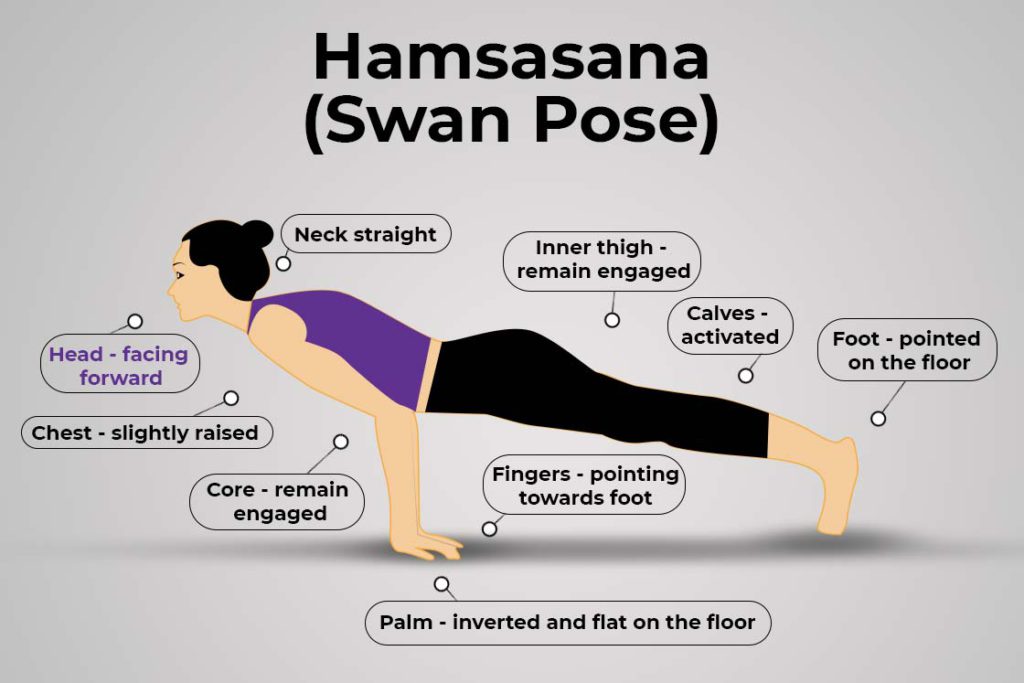
- Begin in Vajrasana (Thunderbolt Pose). Slowly separate your knees to create a small gap between them and place your palms on the floor in that space.
- Rotate your hands so that the fingers point towards your feet and the back of the elbows face forward.
- Gently move your pelvis forward and rest your abdomen on the base formed by the elbows. Engage your core muscles to steady and adjust the body.
- Place your head lightly on the floor a little ahead to help straighten your legs. Then lift your head and try to balance your body weight on the palms and pointed toes.
- Hold the pose according to your comfort level. You may hold the breath briefly or breathe gently and shallowly.
- To release, place your head back on the floor, bring the legs back to the starting position, and slowly lift your body by easing the pressure on the abdomen. Release the palms, bring the knees back together, return to Vajrasana, and relax.
Follow up Poses
Mayurasana is a good follow-up pose after practising Hamsasana for 2–3 rounds. In Hamsasana, the hamstrings, core, and quadriceps are prepared to lift the body while the toes remain on the floor. In Mayurasana, the legs are lifted completely, and the toes do not rest on the floor.
Beginners Tips
- Beginners who do not have enough strength in their hands should practise Chaturanga Dandasana. This helps build the required strength and conditions the hands properly before attempting Hamsasana.
- For new practitioners, pressing the elbows firmly against the abdomen may be difficult, especially if the core muscles are weak. In such cases, direct practice should be avoided, or the pose should be practised gently.
- As this asana is physically demanding, the whole body stays actively engaged. Beginners should pay extra attention while entering and coming out of the posture. Move slowly and steadily to avoid strain.
Precautions
Keep the following points in mind to avoid injury in Swan Pose:
- When you spread your knees to place your hands on the floor, make sure your hands are placed directly under the abdomen, on the rectus abdominis muscles. A wrong hand position may put pressure on internal organs.
- While shifting your body weight onto the elbows, take support by gently placing your head on the floor. This also helps in straightening the legs behind, with the toes resting on the floor.
- Avoid letting your neck drop in the final position of Hamsasana. Keep the neck slightly arched and gaze forward. This helps activate the mind and allows you to stay in the pose for a longer time.
Props and modifications
- If there is pain or discomfort in the abdomen while placing the elbows against it, a folded cloth can be placed on the abdomen to reduce the pressure from the elbows.
- If a practitioner feels discomfort while lifting the head and gazing forward, a wooden block can be placed under the palms. This adds height to the base and helps keep the neck more comfortable and aligned.
- Straightening the legs may take time and strong core muscles. Practitioners can keep the knees on the floor or use a block for support until they build enough strength and balance.
Variations
By making small changes to the basic posture, practitioners can practise these variations of Swan Pose.
1. Sleeping Swan Pose
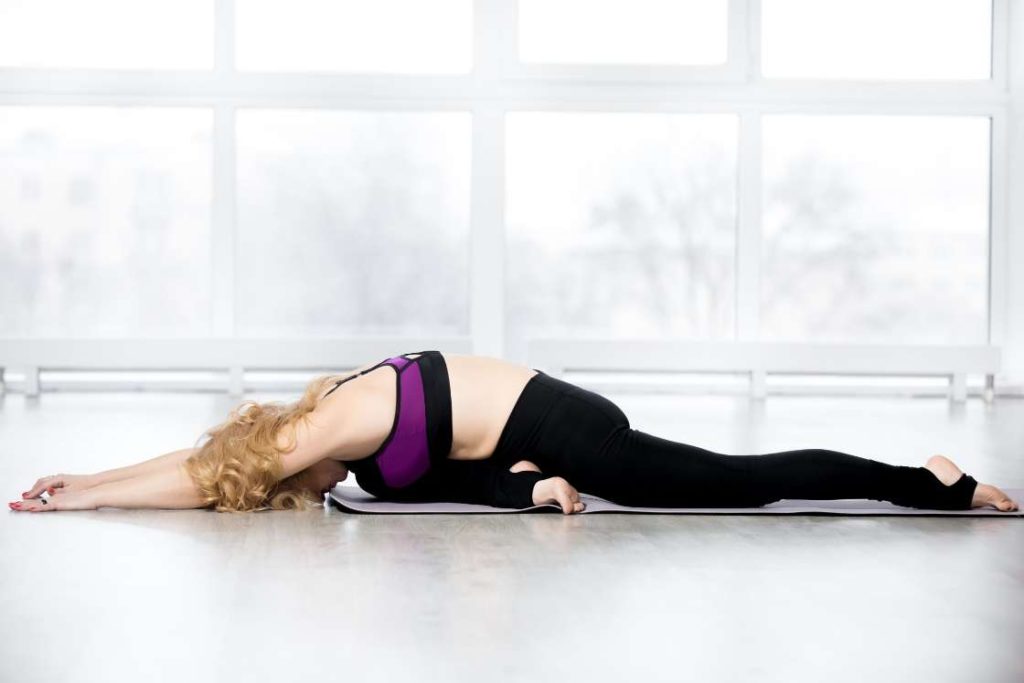
Sleeping Swan Pose gives a deep stretch to the hamstrings and a gentle inward bend to the spine. In contrast, Hamsasana mainly focuses on muscle strength and improving breathing.
- Begin in Cat Pose, with all four limbs properly aligned.
- Bring your right knee forward and place it between your hands. Extend your left leg straight back behind you.
- Slowly slide to the right and sit on the inner side of the right thigh. Bend the right knee to form a right angle and flex the right foot in front of the left hip.
- Keep the hands straight on the floor and open the chest. Draw the shoulder blades back and down, keeping a gentle curve in the spine.
- Hold the pose as per your comfort. Avoid forcing the stretch. To release, slowly bring the right foot back, draw the left leg in, and return to Cat Pose.
2. Dolphin plank one legged raised
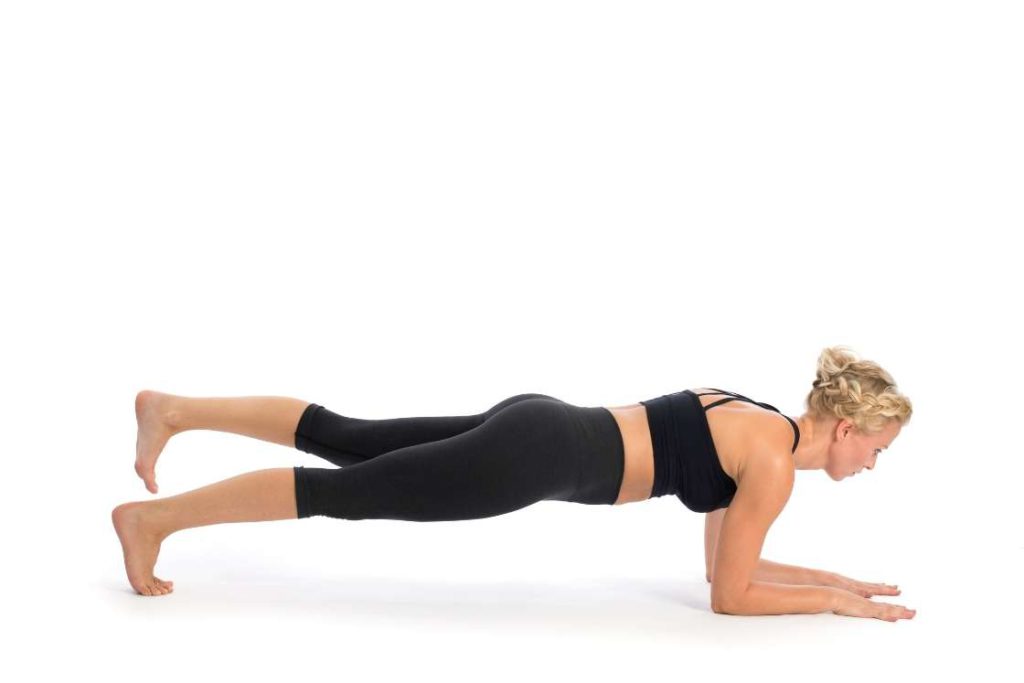
In Hamsasana, the body rests on the palms and pointed toes, while the middle part of the body is supported by the elbows, which makes the pose challenging. In Dolphin Plank One-Leg Raised, the body stays in a forearm plank position, with the added action of lifting one leg at a time.
- Begin in Plank Pose, with the upper body supported by the palms and the lower body resting on the toes.
- Lower the forearms to the floor, keeping them parallel to each other. Place the elbows directly under the shoulders and tuck the toes into the floor to activate the pose.
- Inhale and lift the right leg up by engaging the core, glutes, and lower back muscles. Hold for a few seconds, then exhale and place the right leg back on the floor.
- Next, inhale and lift the left leg up, then exhale and bring it back down. Repeat as per your comfort and then gently release the pose.
3. Plank pose four limbed staff pose flow
This variation is similar to the first stage of Hamsasana, where the upper body moves upward and downward at angles of about 135° and 45°. In Hamsasana, there is no such change in angle, as the body is balanced on the elbows, palms, and pointed toes.
- Begin in Plank Pose. Keep your hands and legs aligned and parallel to each other. The body rests on the palms and toes.
- From here, inhale and press through the toes, inner thighs, core, and palms to lift the upper body. Try to keep the arms and legs straight while the body moves into a slanted position.
- Hold for a few moments, then exhale and lower the body down. Stop just above the floor, with the elbows bent and close to the ribs. Hold briefly, then return to Plank Pose in a controlled manner.
Swan pose (hamsasana)benefits
The following are some of the main benefits one may experience by practising Swan Pose regularly.
1. Calms the mind: Hamsasana, as the name suggests, promotes the qualities of a swan. Regular practice improves balance and body control, which helps develop patience and coordination. Over time, this leads to a calmer and more focused mind. According to one study, this asana may also help reduce verbal aggression in young individuals.
2. Promotes Digestion: In this prone position, the body rests on the elbows, which places gentle pressure on the abdominal area. This creates a mild massaging effect that helps improve the functioning of the digestive organs. It may also help in relieving constipation and piles.
3. Strengthens Immunity: This asana requires good physical effort, and holding the pose for some time helps improve breathing. Better breathing supports blood circulation, which supplies oxygen and nutrients to the muscles. This process helps reduce stress and improves the quality of sleep. As a result, immunity is strengthened and the body becomes more resistant to various illnesses.
4. Stabilizes pressure in the ears: Hamsasana places strong focus on breathing, which helps maintain energy and supports the whole body. This breathing process helps open the Eustachian tube, which connects the upper throat to the back of the nose. As air moves through this passage, it helps balance pressure in the ears. This supports better balance and coordination in daily activities.
5. Helpful in Obesity: Hamsasana is a physically demanding pose that actively engages many muscles. When practised regularly over time, it helps burn calories. It also stimulates metabolism, which supports the body in reducing excess fat. In this way, it helps in managing obesity.
6. Activates Manipura Chakra: In Swan Pose, the joined elbows support the abdomen around the navel area, which is the seat of the Manipura Chakra. Regular practice with proper breathing helps stimulate the flow of energy through the subtle channels of the body. As a result, the navel chakra becomes active.
Conclusion
Swan Pose is a strenuous asana that helps improve overall muscle strength and stability. It also supports mental calmness by improving blood circulation during the practice.
Practitioners can include this asana to create balance between the physical and mental aspects of the body. With a normal body type, one can use variations and modifications to gradually progress and master this asana.

