



In 2024, a nutritional debate went viral over an unlikely topic: oatmeal. A then viral Instagram video made the case that oatmeal might not be a healthy breakfast, especially if you sit at a desk all day. “You’re gonna massively spike your blood glucose,” the speaker declared, “and then you’re not gonna use all that energy from the carbs.”
The video received instant pushback — after all, many rely on oatmeal as an easy breakfast staple. But was there any truth to it? Well, here’s the thing — not all oatmeal is the same, and some versions of oatmeal may not be as healthy for you. Oatmeal’s health benefits come down to things like oatmeal fiber content, sugar content, the type of oat, the way the oat is processed, the presence of herbicides like glyphosate, and more.
So, Is Oatmeal Healthy or Not?
Let’s start by setting the record straight: whole oats are good for you. If you’re using them to make your oatmeal, you’re already winning — whole oats are naturally nutrient-dense. This is largely due to their high fiber content, but specifically their beta glucan content.
Beta glucan is a type of soluble fiber found in oats and barley that can reduce your blood sugar levels after meals, leading to slower carbohydrate digestion and absorption of glucose1. This basically means that when eaten regularly, this type of fiber can help people with prediabetes or diabetes better manage their blood glucose levels.
Beyond helping to regulate blood glucose levels, other health benefits of oatmeal include2,3:
- Staying fuller longer after meals, due partly to its beta glucan and total fiber content
- Supporting growth of good bacteria
- Helping to manage heart health
When it comes to heart health, a February 2026 study by the University of Bonn researchers found that just two days of eating oats could reduce LDL cholesterol (AKA “bad” cholesterol) by 10%4. Not only that, but these improvements lasted for six weeks after consumption.
Not All Oatmeal Is the Same: A Guide to Oat Types
Now before you go stocking up on the first oats you see in the grocery store, let’s talk about the differences between the four major types of oatmeal, from fiber content to glycemic index (GI)5,6.
Steel Cut Oats
Steel cut oats are made from the oat groats, or oat kernels, that have had their hard hulls removed. They are then cut parallel to the side of the groat into two to four pieces. Because of this minimal processing, steel cut oats have a coarse texture and a long cooking time of around 20–30 minutes.
When it comes to nutrition, steel cut oats contain the most fiber of the commonly known oats, at around 12 grams of fiber per 100 grams of oats. For those wanting to prioritize fiber in their diet (we’d argue that should be everyone), oatmeal is a great breakfast choice. They also have the lowest GI of the most common oat types at around 53. For reference, any foods with a GI lower than 55 are considered low-GI foods.
Both of these facts make them great for glucose control7, resulting in the best oatmeal for gut health.
Rolled (Old-Fashioned) Oats
Rolled oats are oat groats that are put through a process of steaming and flattening with rollers. This gives them a softer texture and shorter cooking time than steel cut oats, at around 5–10 minutes. There is a small trade-off for this convenience, however — rolled oats contain 10.4 grams of fiber per 100 grams and have a slightly higher GI of 598. The softer texture of rolled oats make them great for overnight oats recipes.
Quick Oats
If you’re after something a bit quicker in the mornings, you can prepare a bowl of creamy quick oats in as little as 3–5 minutes. These oat groats are also put through a steaming and rolling process, but they are rolled even flatter than rolled oats, speeding up their cooking time. Since these oats go through more processing than rolled or steel cut oats, this oatmeal’s glycemic index is slightly higher than rolled oats, and they contain about 9.4 grams of fiber per 100 grams9.
Instant Oats
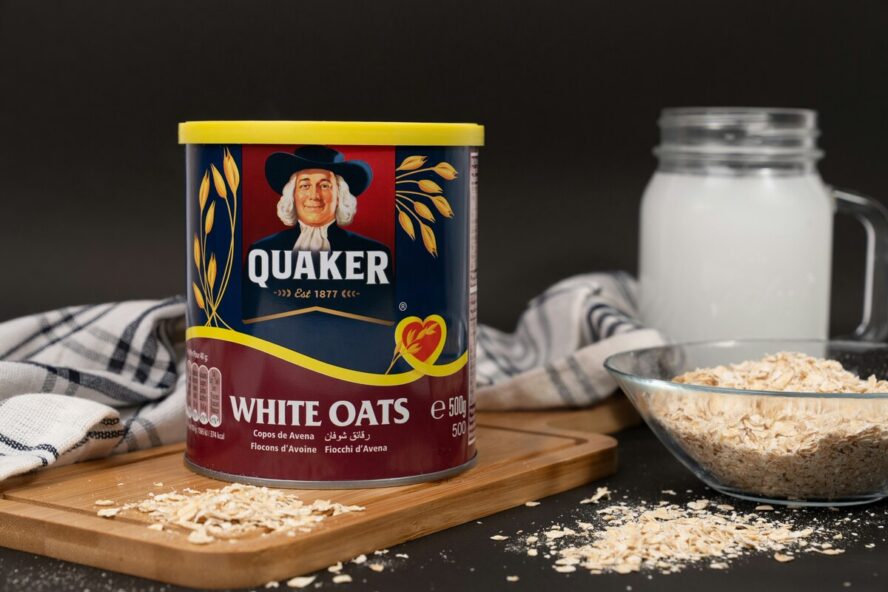
Finally, the quickest cooking oats by far are instant oats, which can be made in the microwave in just two minutes. This type of oats goes through similar processing as quick oats, but have the highest GI at around 67, often contain added sugar, and only contain around 8 grams of fiber per 100 grams of oats10. So is instant oatmeal good for you? While there are still benefits to be had in terms of fiber, they’re far from the healthiest type of oatmeal out there.
What About Overnight Oats?
One of the main benefits of overnight oats is that they can be prepared in advance, making them a nutritious addition to any busy schedule. So what are overnight oats, exactly? It’s a method of preparing oatmeal that doesn’t require any cooking, so it’s super simple to just throw everything into a jar and let it soak.
Not only is this method of eating oats convenient, but research shows that soaking rolled oats overnight may increase resistant starch content as the oats cool11. This in turn feeds beneficial gut bacteria and adds a prebiotic dimension beyond regular cooked oatmeal12.
Overnight Oats Recipe
If you want to jump on this nutritious and delicious meal prep trend, you can make overnight oats by following the steps below:
- Place oats, your preferred sweetener, and any dried fruits, nuts, or seeds to a jar with your favorite milk, plant-based milk, or water.
- Seal the jar and place it in the refrigerator overnight.
- In the morning, you can eat the softened oat mixture cold or heat it in the microwave for a few minutes to warm it up and further soften the texture.
Does Oatmeal Spike Blood Sugar?
No, oatmeal should not spike blood sugar. Unless you’re preparing instant oats with a high amount of added sugars, oatmeal is a relatively low-GI food. In fact, in its natural state, oatmeal without any added sugar can actually benefit metabolic health by reducing post-meal glucose levels13.
You can further boost this benefit by choosing steel cut or rolled oats versus the quicker cooking oats. If you want extra credit, try adding toppings like nut butter, nuts, or seeds, or pairing your oatmeal with greek yogurt — all of which will further improve the GI of your oatmeal14.
Is Oatmeal Gluten-Free?
Oats are naturally gluten-free, but cross-contamination during processing is common. When you see “gluten-free” on a food product label, it means that the product contains an FDA set gluten limit of less than 20 parts per million (ppm)15. This level of 20 ppm is the lowest that can be reliably detected in foods. This also goes for foods that carry the label “no gluten,” “free of gluten,” or “without gluten.”
This label is vital for those with celiac disease or gluten sensitivity, and oats with this label are typically fine to consume for those avoiding gluten. However, if you have celiac disease (an autoimmune disorder which means just a crumb of gluten can cause damage to the small intestine), you may still want to proceed with caution. Note that this is not a substitute for professional medical advice — see your primary care physician when making changes to your lifestyle.
The Case for Organic Oats

Now that you know which type of oat product may be right for you, it’s also worth discussing the difference between organic vs. conventional oatmeal. Read below for three distinct contamination concerns in conventional oats that may have you reaching for organic oatmeal from now on.
- Glyphosate: This well-known pesticide may be more present in conventional oatmeal products than organic brands. While glyphosate levels have dropped in recent years, The Environmental Working Group has found glyphosate residue in conventional oat products16. To be safe, it’s still good to opt for organic oatmeal when you can — USDA Organic certification prohibits synthetic pesticides, including glyphosate17.
- Chlormequat: This plant growth regulator has shown up in higher levels on various food products in recent years, and choosing organic can help you avoid it altogether. Although there haven’t been many human studies on this compound, some early animal studies show the potential for this compound to negatively impact endocrine and reproductive function18.
- Cross-contamination risk: Aside from potential pesticide content, conventional oats are also more likely to experience cross-contamination with gluten during processing. Oats are at substantial risk for cross-contact with gluten-containing grains, likely due to crop rotation wheat, barley, or rye (or proximity to fields growing these grains). For example, a study that tested oat products labeled “gluten-free” found that 35% tested with quantifiable gluten greater than or equal to 5 mg/kg (ppm). While these trace amounts may not be harmful to those with gluten sensitivities, it may still be of note to those with celiac disease19. Organic certification often (though not always) correlates with more careful, dedicated processing facilities.
Can Oats Help Remove ‘Forever Chemicals’ from Your Body?
Before we wrap this up, it’s worth noting there is another surprising and emerging benefit of eating oats. Some early research shows that oat beta-glucan supplementation may help reduce the concentration of multiple PFAS compounds in human blood.
PFAS, or per- and polyfluoroalkyl substances, are synthetic chemicals found in nonstick cookware, food packaging, contaminated water, and a range of everyday household objects20. A 2025 study shows that the beta-glucan in oat products may trap PFAS in the gut the same way it traps bile acids21. This in turn can help prevent reabsorption, essentially helping you “flush” PFAS chemicals from your system.
Although more studies need to be done to confirm such findings, these early results offer hope that foods like oats may help the body fight harmful compounds absorbed from our environment.
Final Thoughts
Oats are a delicious and nutritious food for just about everyone, but it’s worth noting that not all oatmeal is created equal. You can choose your oatmeal based on your preferences and dietary needs, but we always recommend going organic if it’s accessible to you. If you need to watch your sugar levels, it’s a close call between steel cut vs. rolled oats. Steel cut is the best when time allows, but rolled oats can provide an overnight preparation option when time is tight.
Finally, if nutritional value is what you’re after, try to limit or avoid flavored instant packets that are higher in sugar and added preservatives. But one thing is clear — no matter how you eat it, oatmeal is an optimal breakfast or snack choice to help protect your heart, gut, and overall health.
Frequently Asked Questions
Oatmeal is a good option for an everyday meal, since it contains a rich source of beta glucan fibers to support metabolism. Just be sure to limit added sugar components in your daily oatmeal to keep blood glucose spikes minimal.
Due to its ability to keep you fuller longer in between meals, oatmeal can be a helpful part of any weight loss regimen22. By filling your gut with healthy fiber at the start of your day, you’re less likely to snack before lunch, meaning you’re less prone to consuming excess calories throughout the day.
This factor could help you reduce overall calorie intake each day, which could help you lose weight in the long term23. Still, it’s important to remember that weight loss ultimately depends on a balanced diet and exercise program, not just consuming any one specific food.
Oatmeal is naturally gluten-free, but not all oatmeal on the market is unless it says so on the label. If you’re someone with celiac disease or gluten sensitivity, look for certified gluten-free products for reassurance that the oatmeal you are choosing is safe.
Overnight oats and cooked oats both hold nutritional value, but overnight oats may have additional health benefits. The time spent soaking overnight gives the fibers time to ferment and produce more resistant starch, which can then act as a prebiotic feeding good bacteria in your large intestine. Key benefits can include lower blood sugar levels, increased satiety, and improved gut health.
Yes, oatmeal contains protein, although it generally gets more credit for its fiber content than its protein content. For context, one-half cup of rolled oats has 6 grams of protein and 4 grams of fiber.
Sources:
- https://pubs.rsc.org/en/content/articlelanding/2025/fo/d5fo00353a
- https://jn.nutrition.org/article/S0022-3166(22)00376-5/pdf
- https://pmc.ncbi.nlm.nih.gov/articles/PMC8625765/
- https://www.uni-bonn.de/en/news/017-2026
- https://jn.nutrition.org/article/S0022-3166(22)00044-X/fulltext
- https://pmc.ncbi.nlm.nih.gov/articles/PMC8229445/
- https://fdc.nal.usda.gov/food-details/2346397/nutrients
- https://fdc.nal.usda.gov/food-details/2346396/nutrients
- https://fdc.nal.usda.gov/food-details/172989/nutrients
- https://fdc.nal.usda.gov/food-details/171664/nutrients
- https://pmc.ncbi.nlm.nih.gov/articles/PMC6326951/#!po=1.02041
- https://hopkinsdiabetesinfo.org/what-is-resistant-starch/
- https://pubmed.ncbi.nlm.nih.gov/39137936/
- https://www.sciencedirect.com/science/article/pii/S0022316624003924?via%3Dihub
- https://www.foodsafety.gov/blog/gluten-free-label-now-it-means-something
- https://www.ewg.org/news-insights/news/2023/04/going-going-gone-ewg-finds-glyphosate-levels-drop-oat-based-products
- https://www.ams.usda.gov/rules-regulations/organic/labeling
- https://journals.sagepub.com/doi/10.1177/02601060251328772?url_ver=Z39.88-2003&rfr_id=ori:rid:crossref.org&rfr_dat=cr_pub%20%200pubmed
- https://pmc.ncbi.nlm.nih.gov/articles/PMC10702567
- https://www.sciencedirect.com/science/article/abs/pii/S0041008X24003879
- https://link.springer.com/article/10.1186/s12940-025-01165-8
- https://pmc.ncbi.nlm.nih.gov/articles/PMC9930024/
- https://www.researchgate.net/publication/393776517_The_Impact_of_Oatmeal_on_Weight_Status_and_Changes_A_Systematic_Review


