


COLUSA, Calif. — Early on, Jean Franklin got some career advice she followed religiously: “Pay yourself first.” So she did, socking away hundreds of thousands of dollars in retirement savings by the time she became a stay-at-home mom at age 41.
She and her husband, Charles, a former high school teacher who goes by Chaz, planned to retire comfortably in the three-bedroom house where they raised their kids about 60 miles northwest of Sacramento.
But early last year, the 63-year-old became unsteady on her feet. One morning in May, she woke up with slurred speech and landed in the hospital, then rapidly lost the ability to move the right side of her body.
In August, as doctors continued to puzzle over a possible diagnosis, the couple received a notice saying that on Jan. 1 their combined health care premium payments through the state insurance exchange would shoot up from $540 a month to $3,899 a month. The reason: Federal enhanced premium subsidies expiring at the end of last year would no longer offset their payment.
They immediately canceled a monthlong cruise they’d been planning with friends and looked through their retirement accounts.
“Now, instead of thinking about where we can go in our retirement, we’re asking the question, ‘Are we still going to be able to stay where we are because of the health care costs?’” said Chaz, who retired in 2021 at age 59.
Then they received more bad news. In October, at the age of 63, Jean was diagnosed with ALS, a debilitating disease that will eventually leave her unable to speak, swallow, or breathe on her own. But Jean’s condition allowed her to enroll in Medicare, the federal health insurance program that covers adults 65 and older and people with disabilities. The diagnosis saved them roughly $1,600 a month in premiums — little comfort as Jean lost her ability to walk, bathe, and dress herself.

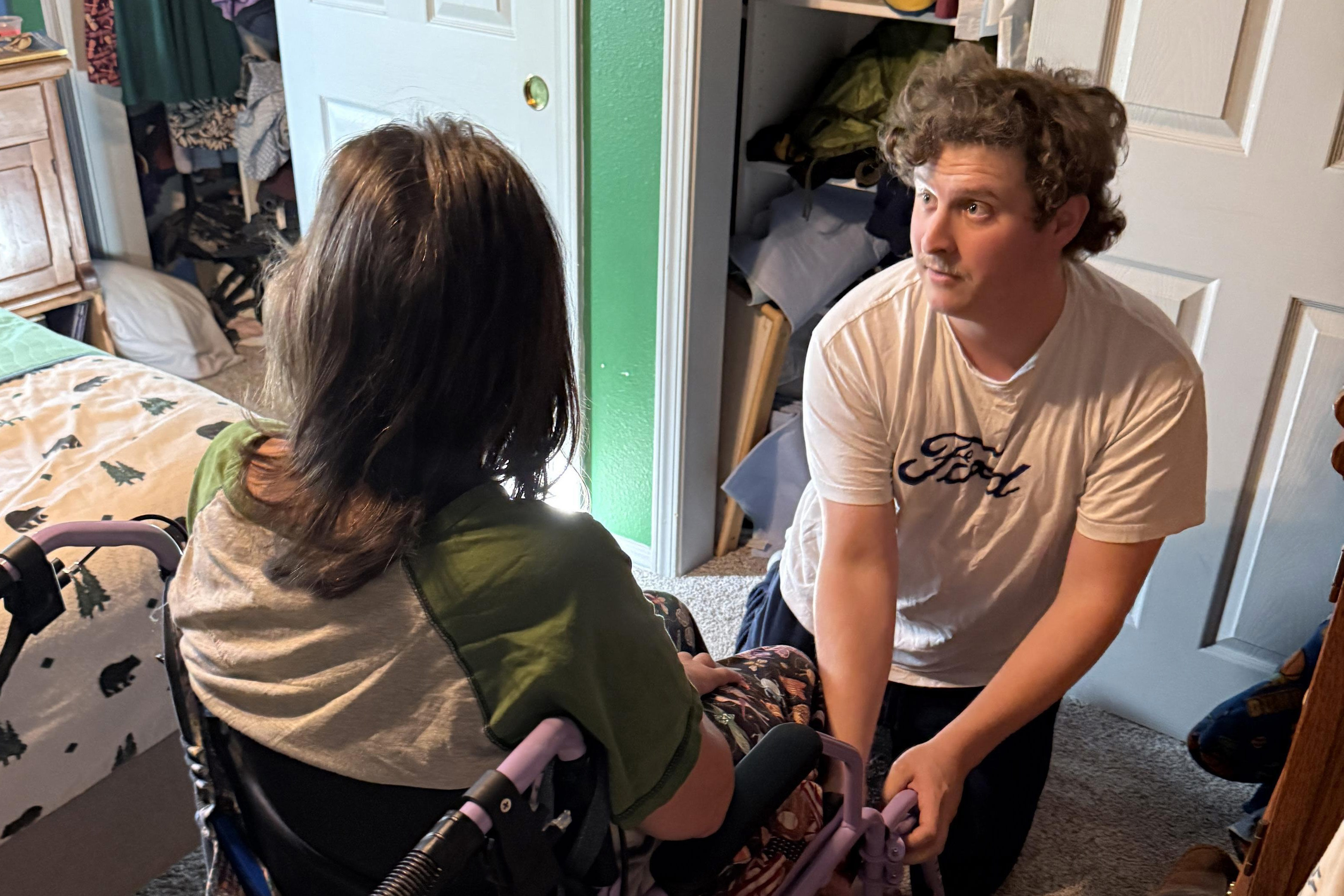
“It’s kind of morbid that, because of my diagnosis, I got put on Medicare right away, so at least we don’t have to pay that out-of-pocket,” Jean said, sitting in a wheelchair in her living room, a quilt draped over her legs to guard against the intense chills she now often gets. “We’re not going to get buried under this.”
Yet the premiums for Chaz’s plan and her Medicare remain a significant strain on their finances. The $2,300 a month they now owe, which includes roughly $342 in premium payments for Jean’s Medicare supplemental insurance, is higher than their monthly mortgage and eats up more than a quarter of their budget.
The Franklins are among the 22 million people across the nation facing greater financial pressure after Congress chose not to extend 2021 enhanced federal subsidies. That assistance helped more than double enrollment in Obamacare plans to over 24 million.
The Congressional Budget Office estimated in 2024 that, without an extension of the tax credits, the number of uninsured Americans would climb by 2.2 million this year alone. As of January, nationwide enrollment in ACA plans was down about 1.2 million year over year, though experts say it could be months before the full effects of rising premiums are known, as people miss payments and lose coverage.
The groups hit hardest will be early retirees, middle-income earners, and people living in high-cost states, said Stacey Pogue, a senior research fellow at the Center on Health Insurance Reforms at Georgetown University. The Franklins are all three.
Jean Franklin, 63, and Chaz Franklin, 64, of Colusa, California
Chaz and Jean Franklin thought they’d saved enough to retire comfortably. But when they found out the premium payment for their “silver” Affordable Care Act plan would soon rise from $540 a month to $3,899, they had to reevaluate. A couple of months later, Jean was diagnosed with ALS, a debilitating neurodegenerative illness that qualified her for Medicare. Her premium payment dropped to $342 a month. The couple still pays a combined $2,300 a month in premiums, more than a quarter of their budget. “It’s the terrible irony that because my wife got a disorder, I’m saving money, and a lot of it,” Chaz said.
“They fell off what we call a subsidy cliff,” Pogue said. “It’s very, very shocking, the amount that a person would have to absorb.”
That’s because the expanded tax credits made the biggest difference for people nearing retirement age who sat just above previous income eligibility thresholds, Pogue said. People such as the Franklins, who likely wouldn’t have qualified for financial help before expanded credits were implemented, are now losing that support at a time when insurers have responded to the uncertainty by dramatically raising rates.
Roughly half of people who were expected to lose eligibility for premium tax credits were ages 50 to 64, according to an analysis by KFF, a health information nonprofit that includes KFF Health News.
Republicans who opposed the extension have said the premium assistance went directly to insurance companies rather than consumers, incentivizing fraud and wasteful coverage. They also say the enhanced subsidies, which had no upper income limit for eligibility, were far too generous in capping premium payments at 8.5% of income, no matter how much an enrollee made.
“Most Americans would agree that taxpayers should not be subsidizing the health insurance of someone making $250,000,” U.S. Rep. Ken Calvert, a California Republican who voted against an extension in January, wrote in an Orange County Register op-ed. “I cannot accept the simple extension of a program that will line the pockets of insurers and is riddled with fraud at the expense of the American taxpayer.”
Patient advocates say the premium increases and expiration of subsidies have forced people into difficult choices. “The young people who are healthy are the first to say, I’m going to roll the dice” and forgo coverage, said Rebecca Kirch, executive vice president of policy and programs at the National Patient Advocate Foundation. “Those who are remaining in the system — because they have no choice — are holding off care, they’re holding off their meds, they’re going without necessary food.”
While the Franklins are getting by, they have relied on their sons to pay for a motorized recliner to assist with lifting Jean and a handicap van to transport her. Chaz, who broke a tooth a year ago, delayed fixing it because a crown would cost him $1,000.
This year, the couple will draw $36,000 more than they had anticipated from their retirement savings, most of it to cover Chaz’s insurance premiums.
“I have a nest egg,” Chaz said. “But there’s a lot of people around here who don’t.”
For a while, he was outraged.
“I wish Congress would get off their butts and solve this issue,” said Chaz, who is a registered Republican but blames both sides of the aisle. “You’re so busy bickering over stupid crap and it’s both parties pointing fingers and blaming. Where was this discussion two years ago?”
Now, Chaz said, he’s focused on making Jean, his wife of 27 years, as comfortable as possible.
Before she got sick, they did practically everything together — hiking, traveling, tai chi, amateur photography, and bug-hunting. One of her favorite specimens was the rain beetle, a fuzzy scarab-like insect that can’t feed as an adult, relying solely on fat stores from its larval stages.
In the mornings, Chaz and their sons, Charlie and Louis, take turns lifting Jean, dressing her, and helping her use the bathroom. It’ll be fodder for the counselor, she jokes to her sons, when they inevitably need therapy later in life.


Most days, Jean’s outdoor adventures rarely extend beyond being wheeled to her back patio, where she loves to watch their backyard chickens bobble around. Chaz’s stubbornness makes him a great patient advocate. Charlie always seems to know exactly when she needs a big hug, and Louis tells jokes that can still make her snort with laughter.
“I don’t know what I would do without my boys making me laugh,” she said.
In December, Chaz will turn 65, old enough to qualify for Medicare himself. “After this year — knock on wood — we should be OK,” Jean said, before pausing and shooting her husband a wry smile.
“Well, you’re gonna be OK.”
Are you struggling to afford your health insurance? Have you decided to forgo coverage? Click here to contact KFF Health News and share your story.

