


The Third Eye Chakra, or Ajna, is the energy centre located between the eyebrows. It is known as the “Third Eye” because it represents inner seeing the ability to look beyond everyday perception and understand deeper truths. This chakra influences how you use intuition, imagination, insight, and clear thinking. It supports decision making and shapes how you interpret both your inner world and the world around you.
Spiritual significance
In Indian tradition, the Third Eye marks the shift from ordinary perception to awakened understanding. This idea is often linked to Varanasi, a sacred city believed to offer liberation because it symbolises the end of limited identity. When awareness rises to the Third Eye, the ego is said to “die,” opening the doorway to a deeper level of consciousness.
Throughout yogic history, enlightened Rishis and Yogis were known for their expanded inner vision. Their “divine eye” allowed them to see without the limits of time, emotion, or thought. They experienced life directly, without separation between the seer, the act of seeing, and what is seen.
Ancient scriptures offer well-known examples of this inner vision:
- Maharishi Valmiki is believed to have composed the Ramayana through insight that revealed subtle, cosmic records.
- Sanjay, in the Mahabharata, received third-eye vision from sage Vyasa, enabling him to narrate the Kurukshetra battle in real time, including the warriors’ mental states.
- In the Bhagavad Gita, Krishna tells Arjuna: divyam dadāmi te cakṣuḥ-“I give you divine eyes to see My cosmic form,” granting him a vision far beyond ordinary perception.
In yogic understanding, Ajna is considered a powerful gift associated with Lord Shiva, whose trinetra represents clarity, insight, and transformative inner fire. Ajna is called the command centre because it directs intuition, foresight, and deeper awareness. It also bridges the sense of individuality with a broader understanding of life.
In yogic understanding, the Third Eye is a gift associated with Lord Shiva, whose trinetra represents clarity and transformative inner fire. Ajna is called the “command centre” because it guides intuition, foresight, and deeper awareness. It also bridges the sense of individuality with a larger understanding of life.
Third eye chakra or ajna: the command centre
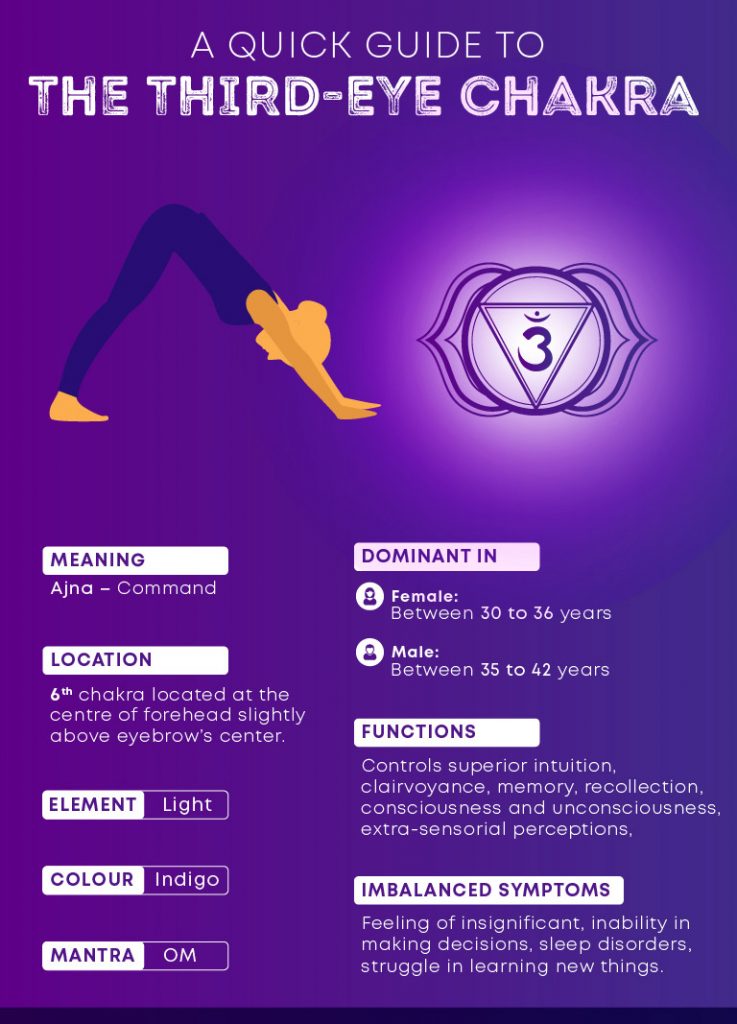
The Third Eye Chakra, or Ajna, is often called the command centre because it guides perception, intuition, and deeper awareness. As the sixth of the seven major chakras, it serves as the gateway to higher consciousness and the centre through which spiritual energy awakens and becomes steady.
Carl Jung expressed this inner shift beautifully when he said:
“Your vision will become clear only when you can look into your own heart. Who looks outside, dreams; who looks inside, awakes.”
This reflects the purpose of Ajna to turn awareness inward so inner clarity can emerge. The meaning of Ajna is “command” or “perceiving” centre. It is here that we begin to transcend the sense of separation between a personal “I” and the rest of existence. As this chakra becomes balanced, inner and outer experiences feel more unified.
Located between the eyebrows on the forehead, the Third Eye Chakra is the centre of intuition and foresight. It supports clear insight, helps interpret subtle information, and strengthens the ability to recognise patterns and deeper truths.
Where Is the third eye chakra located?
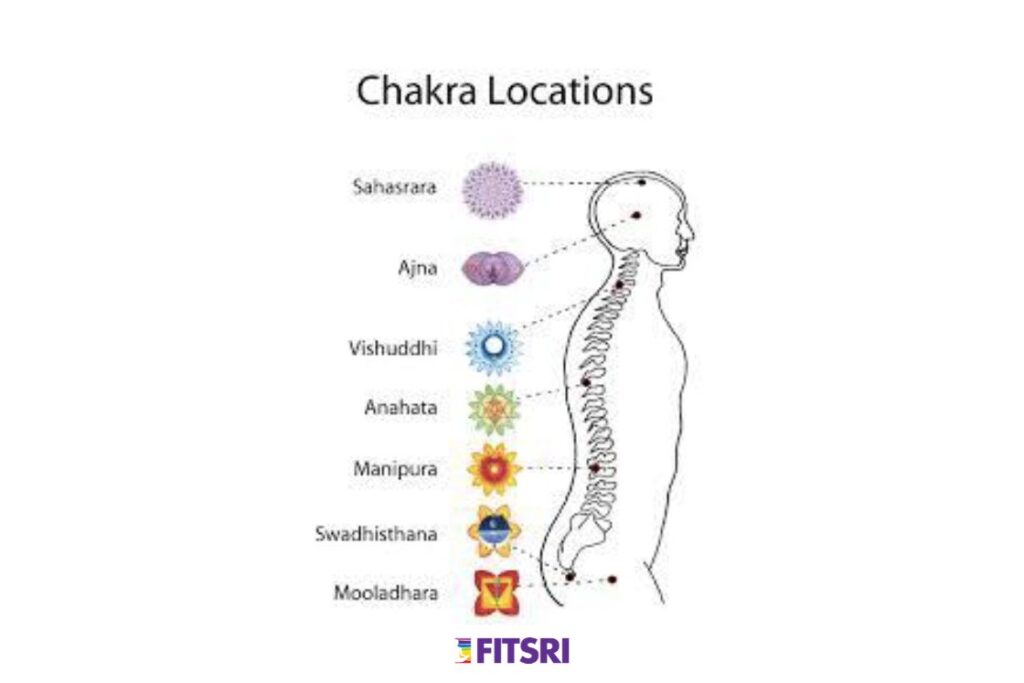
The Third Eye Chakra is located between the eyebrows, slightly above the bridge of the nose. This point, often called the brow centre, is where attention naturally gathers during meditation. If you imagine your inner eyebrows extending toward each other, the chakra sits at the point where they would meet.
Energetically, Ajna is positioned behind the eyes, in the middle of the head. While there are smaller energy points along the forehead, the Third Eye is lower and more central than these secondary chakras.
Anatomical connections
Ajna is linked with key structures in the brain:
- Pituitary gland, located behind the forehead, influencing hormones and growth
- Pineal gland, which regulates sleep cycles and responds to light
The pineal gland has long been associated with spiritual insight because of its sensitivity to light and ability to influence inner and outer rhythms.
Color significance of the third eye chakra
The main colour of the Third Eye Chakra is indigo, a deep blue-violet shade. Some people also experience this chakra as a translucent purple or bluish-white glow.
This colour is meaningful because it represents:
- Clear perception and insight
- A connection to intuitive awareness
- The ability to understand subtle meaning beyond physical senses
- Symbolic and imaginative thinking
- The movement of energy from physical awareness to higher spiritual understanding
Indigo is often used in meditation because it helps calm the mind and improves focus.
What the third eye chakra symbol represents
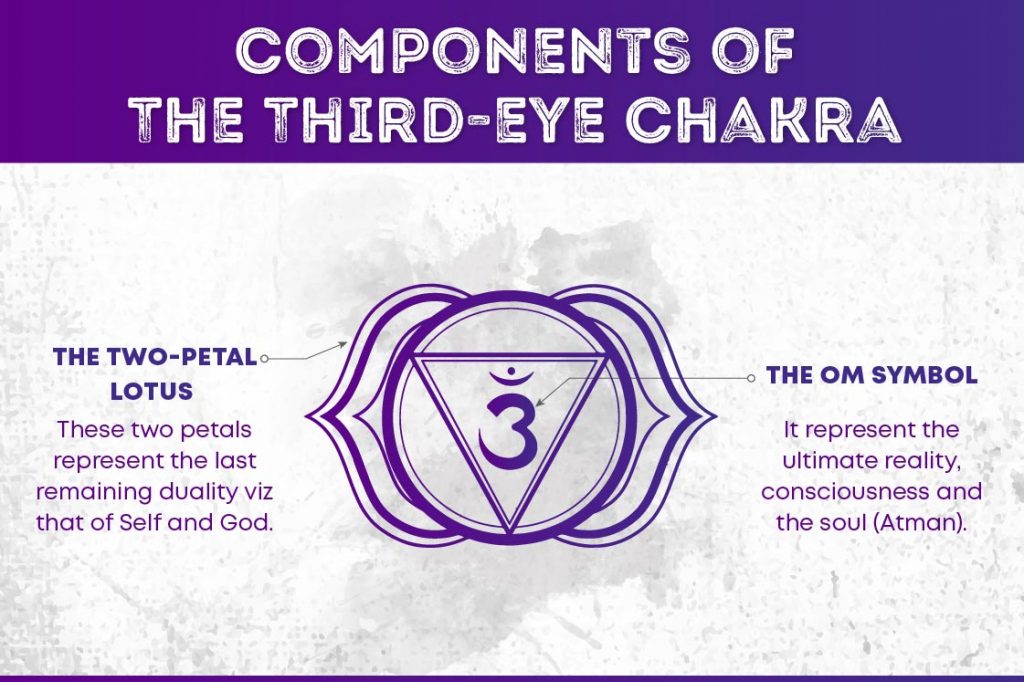
The symbol of the Third Eye Chakra is a two-petalled lotus with a downward-pointing triangle and the symbol OM at the centre.
Each part has its own meaning:
- Two petals – represent the last layer of duality, such as self and the Divine
- Circle – symbolises the inner space or stillness within awareness
- Downward triangle – represents Shakti, or inward-moving energy
- Shivalingam above the triangle – represents consciousness
- OM symbol – represents pure awareness, the soul, and the essence of reality
Together, these elements show how inner vision rises from duality toward unity and insight.
Third eye chakra mantra and energy frequency
The Third Eye Chakra is connected with the seed sound OM (AUM). This sound helps calm the mind, organise thoughts, and bring awareness to the space between the eyebrows.
- Mantra: OM
- Musical note: A
- Frequency often associated: 426.7 Hz
These vibrations are believed to support intuition, clarity, and relief from mental tension, headaches, and fatigue.
Because this chakra connects to the pituitary and pineal glands, its energy is also associated with the eyes, nose, sinuses, and mind-body communication.
Element associated with the third eye chakra
The element of the Third Eye Chakra is Light.
Light represents insight, understanding, and the ability to see beyond the physical. Ajna does not only “see”-it interprets, offering meaning and guidance.
This chakra is connected with:
- The brain
- Brow area
- Pituitary and pineal glands
- Eyes and nose
- Carotid nerve plexus
It is also the place where the three major energy channels Ida, Pingala, and Sushumna meet and move upward together. This union brings a shift from everyday awareness to a deeper inner consciousness.
What the third eye chakra controls
The Third Eye Chakra controls how we understand and interpret the world beyond ordinary thinking. It governs intuition, inner vision, imagination, and the ability to see patterns that are not immediately visible. When this chakra is steady, it becomes easier to recognise insights, trust instinct, and make thoughtful decisions.
Ajna also shapes clarity of mind. It helps you observe thoughts without becoming overwhelmed by them and supports the ability to focus, visualise, and reflect. Because of its connection to deeper awareness, the Third Eye plays a central role in self-understanding and the ability to sense subtle energy or emotional cues in others.
In everyday life, this chakra guides intuitive thinking, creative problem-solving, and the awareness that comes from looking within rather than relying only on external information.
Signs your third eye chakra is balanced
A balanced Third Eye Chakra brings a steady sense of clarity and inner confidence. You may notice that decisions feel easier, intuition is stronger, and your mind stays calm even when life becomes busy or uncertain.
Common signs of a balanced Third Eye include:
- A natural sense of insight and understanding
- Clear thinking and the ability to see situations from a wider perspective
- Vivid imagination and creative ideas that flow easily
- Strong intuitive guidance that feels reliable
- Awareness of subtle emotional and energetic shifts
- Steady focus during meditation or reflective practices
When Ajna is balanced, you experience both clarity and calmness. Your inner and outer worlds feel connected, and you move through daily life with a sense of purpose and direction.
Signs of an overactive or blocked third eye chakra
When the Third Eye Chakra shifts out of balance, it may become either underactive or overactive. Each pattern affects clarity, intuition, and the ability to trust your inner guidance.
Common signs of an underactive third eye include:
- Difficulty understanding spiritual ideas
- Feeling disconnected from intuition
- Trouble seeing the bigger picture
- Relying only on personal beliefs without being open to new perspectives
- Feeling stuck, confused, or unable to make decisions
- Struggling to recognise solutions or understand situations clearly
When this chakra is low in energy, the mind feels dull or closed, and it becomes harder to trust inner guidance.
Overactive third eye
An overactive Third Eye Chakra means the mind is too active or overstimulated. Thoughts may become intense, scattered, or unrealistic.
Common signs of an overactive third eye include:
- Overthinking every detail
- Judging situations too quickly
- Becoming overly logical or detached from emotions
- Imagining problems that are not happening
- Misreading spiritual ideas or giving them too much meaning
- Excessive fantasising, which may lead to anxiety or stress
When this chakra is overactive, the mind can feel restless and pulled away from reality.
Common causes of third eye chakra imbalance
Imbalances in the Third Eye Chakra often develop when the mind is overwhelmed or disconnected from inner awareness. Stress, emotional strain, and lifestyle patterns can all influence how clearly this chakra functions.
Common causes include:
- Chronic stress or mental fatigue, which makes it difficult to stay centred
- Lack of purpose or direction, leading to confusion or doubt
- Disrupted sleep cycles, affecting the pineal and pituitary glands
- Overthinking or constant stimulation, which clouds intuition
- Emotional strain or unresolved fears, reducing clarity
- Limited time for reflection, preventing deeper insight
These factors can make the Third Eye either dull and inactive or overly active and scattered. Addressing the root cause helps restore the natural balance of intuition and clear perception.
How to open or balance the third eye chakra
Balancing the Third Eye Chakra is about calming the mind and improving inner focus. Yoga poses are helpful because they increase blood flow to the forehead, relax the nervous system, and naturally guide attention to the brow centre.
a. Yoga poses that support the third eye
These poses are simple to recognise and easy for beginners to understand.
- Forward Bends: Forward bending poses bring the head below the heart. This increases circulation to the forehead and helps quiet the mind. When the mind settles, it becomes easier to feel the space between the eyebrows, which supports Third Eye awareness.
- Child’s Pose: In Child’s Pose, the centre of the eyebrows touches the ground. This gentle pressure stimulates the Third Eye area, helps release mental tension, and creates a sense of calm. Many people find this pose naturally brings focus to the brow centre.
- Dolphin Pose: Dolphin Pose lifts the hips and sends more blood flow toward the head. It builds strength in the upper body while energising the forehead region. The increased circulation and focus make it supportive for awakening inner clarity and intuition.
These poses guide attention inward, relieve mental stress, and help prepare the mind for meditation-three key elements in opening the Third Eye Chakra
Join Our 40-Day Live Kundalini & Chakra Meditation Course
b. Meditation practices
Meditation is one of the most effective ways to activate and balance the Third Eye Chakra. These simple practices help calm the mind and bring attention directly to the space between the eyebrows.
- Focus on the brow center: Sit comfortably and gently bring your awareness to the point between the eyebrows. This helps train the mind to stay steady and supports the natural function of the Third Eye.
- Visualising indigo light: Visualise a small indigo or deep blue light at the brow centre. This colour is linked to the Third Eye and helps the mind stay focused without strain.
- Chanting om: Repeating the sound OM creates a steady vibration that quiets thoughts and improves concentration. Many beginners find that this simple sound makes it easier to connect with inner clarity.
These meditation methods help reduce mental noise and make intuitive awareness easier to recognise.
c. Diet and lifestyle
Lifestyle choices strongly affect the Third Eye because they influence sleep cycles, mental clarity, and overall balance.
- Spend time in natural light: Light exposure helps regulate the pineal gland, which is connected to the Third Eye.
- Eat antioxidant-rich foods: Blueberries, purple grapes, eggplant, and other deep-coloured fruits support brain health and mental clarity.
- Include omega-3 foods: Walnuts, chia seeds, flaxseed, and fish support focus and cognitive function.
- Prioritise rest and sleep: A well-rested mind is more alert, intuitive, and clear.
These simple habits support the physical and energetic functions that help the Third Eye stay balanced.
d. Crystals and tools
Crystals can help beginners focus during meditation by giving the mind a physical point of attention.
- Amethyst
- Lapis Lazuli
- Sodalite
- Purple Fluorite
Placing a stone on the brow centre during rest or meditation can help anchor attention and promote calm.
Balancing Ajna is less about force and more about steady, patient practice. Small steps done regularly create the clarity and insight associated with an open Third Eye.
Benefits of an open third eye chakra
An open Third Eye Chakra improves how you think, understand situations, and connect with your inner guidance. The benefits are simple and easy for beginners to recognise.
- Stronger intuition: You sense what feels right and make choices with greater confidence.
- Clearer thinking:Your thoughts are organised, calm, and less easily overwhelmed.
- Better insight: You understand the deeper meaning behind situations instead of reacting quickly.
- Improved imagination: Creative ideas, visualisation, and problem-solving become easier.
- More self-awareness: You notice your emotions and thoughts without confusion.
- Balanced judgement: You respond thoughtfully and stay centred, even during stress.
When the Third Eye is open, the mind becomes steady and intuitive, creating a strong sense of direction in daily life.
Conclusion
The Ajna Chakra is more than a centre of thought it is the centre of attention and inner guidance. It helps you choose where to direct your focus, which supports both mental clarity and overall well-being.
Understanding the Third Eye Chakra gives you insight into your physical, emotional, and mental patterns. When this chakra is balanced, it strengthens intuition, steadies the mind, and supports a sense of purpose. Because Ajna influences awareness and will-power, its harmony brings the mind and body back into balance, creating a foundation for clearer thinking and a healthier way of living.
FAQs about the third eye chakra
1. What happens when the Third Eye Chakra starts to open?
When the Third Eye begins to open, people often notice clearer thinking, stronger intuition, and a sense of “inner knowing.” You may also experience vivid dreams, deeper self-awareness, or a calm feeling during decision-making. These shifts are usually gentle and gradual.
2. Is it safe to open the Third Eye Chakra?
Yes, when practised mindfully. Opening the Third Eye is safe when supported by grounding habits like breathing practices, yoga, and healthy routines. Problems generally arise only when people force results or skip foundational practices such as calming the mind.
3. How long does it take to open the Third Eye Chakra?
There is no fixed timeline. Some people feel changes within weeks, while for others it may take months. Consistency in meditation, mindful living, and inner reflection matters more than speed.
4. Can the Third Eye Chakra close again?
Yes. Stress, lack of sleep, emotional overload, and constant mental stimulation can dull Third Eye awareness. Regular practices like meditation, grounding yoga, and quiet reflection help maintain clarity.
5. What sensations are common during Third Eye meditation?
People often feel light pressure between the eyebrows, warmth, tingling, or a gentle pulsing. These sensations are normal and simply indicate focused attention. They should never feel painful or overwhelming.
6. Can anyone activate the Third Eye, or is it only for advanced practitioners?
Anyone can work with the Third Eye Chakra. Beginners can safely start with simple breathing exercises, visualisation, and calm concentration. Advanced practices are not required to build intuitive clarity.
7. Do you need a guru or teacher to awaken the Third Eye Chakra?
A teacher can offer guidance, but it is not required. Many people strengthen their Third Eye through steady personal practice. The most important factors are patience, clarity, and a grounded approach to inner awareness.

