


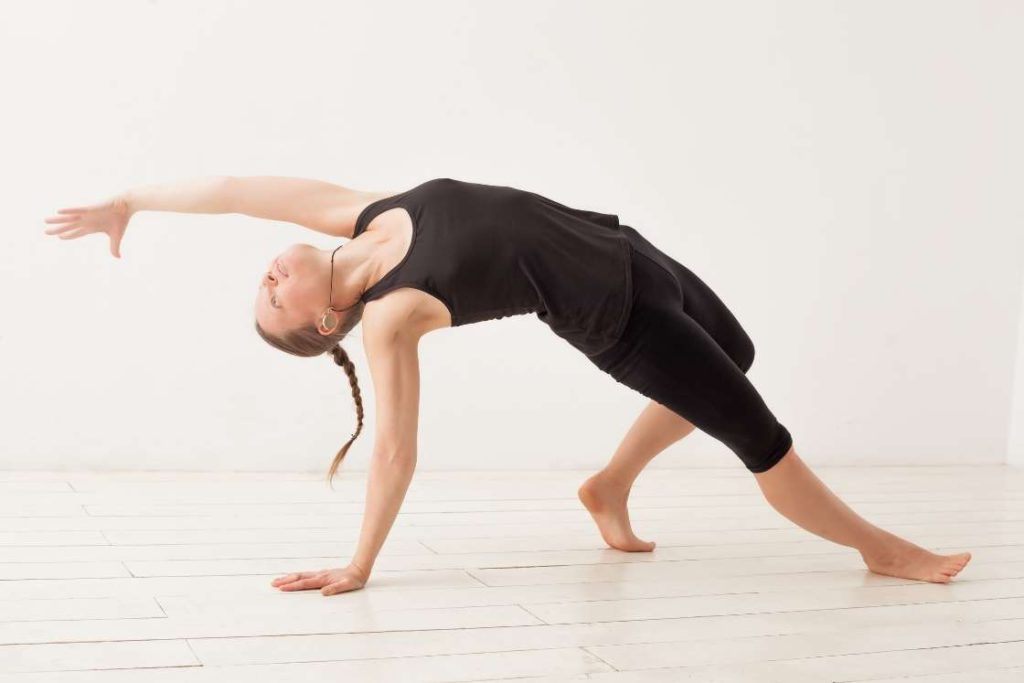
| Sanskrit Pronunciation | Camatkarasana (Cha-mat-kaar-AHS-anah) |
| Meaning | Camatkar = surprise or miracle / asana = pose |
| Pose Type | Prone, back-bend stretch |
| Pose Level | Intermediate |
| Anatomy | Gluteus maximus, triceps, hamstrings, quadriceps |
| Other Names | Flipped Dog Pose, Dancing Dog Pose, |
Camatkarasana, also known as Wild Thing Pose, is a joyful yoga backbend that opens the heart, chest, and mind. It is often practised to build confidence, improve flexibility, and experience a sense of freedom in the body.
The meaning of Camatkarasana comes from the Sanskrit word camatkara, which means “surprise” or “miracle.” This reflects the sudden opening and uplifting feeling the pose creates, both physically and emotionally.
Camatkarasana is a dynamic flipping backbend where the body moves from Downward-Facing Dog into a heart-opening posture. As the chest lifts and the spine arches, the pose encourages trust, courage, and a leap of faith. This is why yogis describe it as a pose that awakens joy and inner strength.
Often called Wild Thing Pose, Camatkarasana helps practitioners explore movement beyond comfort zones. It opens the heart and shoulders, energises the body, and supports emotional release. Because the torso flips upward from Downward Dog, it is also known as Flip the Dog Pose.
Camatkarasana practice guide
Go through this practice guide carefully before attempting the pose to avoid any injury or harm.
Contraindications
- Do not practise this pose if you have carpal tunnel syndrome.
- Avoid this posture if you have any injury in the wrists, elbows, back, or rotator cuff muscles.
- People with high blood pressure or heart-related problems should skip this practice.
- It is not advisable to perform this pose if you feel heaviness in the head.
Preparatory poses
Prepare the body for this dynamic backbend with the following poses. These poses help improve balance and strengthen the shoulders, arms, back, and hips.
Camatkarasana(wild thing pose) steps
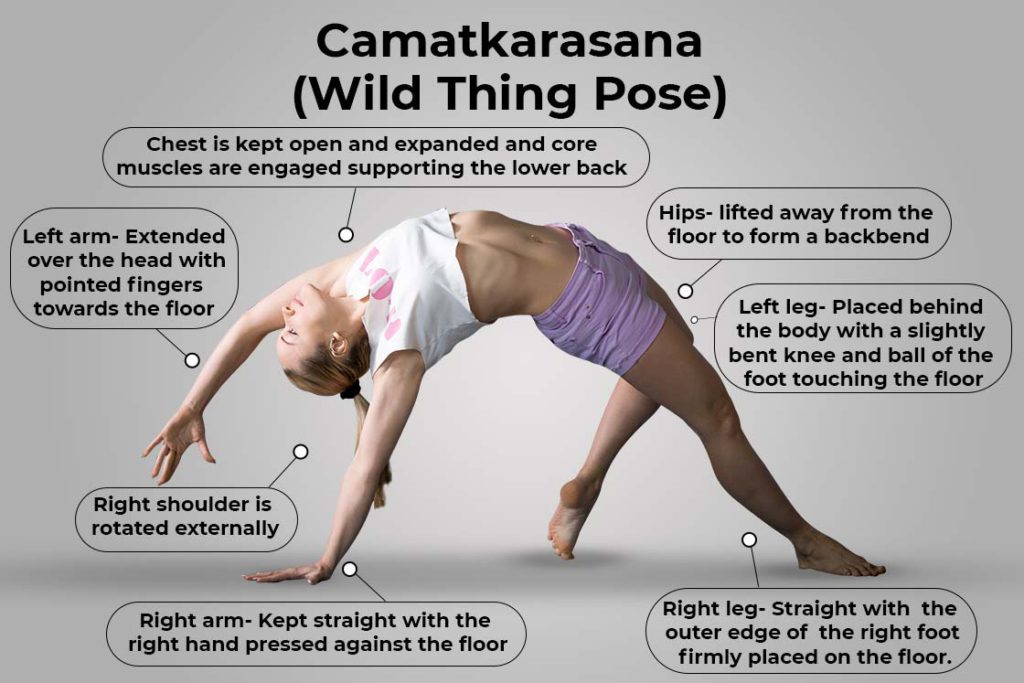
- From Downward-Facing Dog, shift your shoulders forward over your wrists to come into Plank Pose.
- Place your right hand slightly in front of your shoulder and roll onto the outer edge of your right foot.
- Step your left foot behind you with a bent knee and rotate the torso, keeping the right leg straight.
- Press the ball of your left foot and the outer edge of the right foot into the floor to lift the hips upward.
- Gently drop your head and neck back.
- Lift the left side of your body and extend your left arm over your head to deepen the backbend.
- Hold the pose for 5–10 breaths, keeping the left fingertips reaching towards the floor.
- To release, lift the left arm and pivot on the right foot to return to Downward-Facing Dog. Repeat on the other side.
Follow-up poses
Precautions
- Warm up the shoulders, wrists, and spine properly before practising Camatkarasana to avoid strain or injury.
- Keep the supporting shoulder stable and avoid collapsing into the wrist, as this can cause discomfort or injury.
- Do not force the backbend. Enter the pose slowly and only move as far as your body feels comfortable.
- Keep the core muscles engaged throughout the pose to support the lower back and maintain balance.
- Avoid dropping the head suddenly. Support the neck and move it gently into extension.
- If you feel pain in the wrists, shoulders, or lower back, come out of the pose immediately.
- Use modifications or practise under guidance if you are new to backbends or have balance concerns.
Camatkarasana variations
1. Camatkarasana grabbing foot
As the name suggests, in this variation the free hand is used to hold the ankle of the same-side foot. Keep the neck muscles relaxed and allow the chest to open fully.
2. Camatkarasana knee-to-floor
This variation begins from an all-fours position. Lift your left hand, then straighten the left knee while keeping the left foot on the floor. The right knee and right palm remain on the floor.
From here, expand the chest and engage the core muscles. Extend the left arm over the head and gently move into a comfortable backbend.
3. Camatkarasana with one leg
From Camatkarasana, bend the right leg and keep the right foot firm on the floor. Lift the left foot off the floor, bending the left knee and pointing it towards the ceiling. Cup the left knee with your left hand.
Then straighten the left leg and hold the left big toe with the thumb, index, and middle fingers. Extend the left leg outward while keeping the hips and shoulders squared.
4. Camatkarasana foot to the head
This is a combination of the first and third variations. From Camatkarasana, lift the left foot off the floor and bend the knee. Hold the left foot with the free left hand and gently draw it towards the head, similar to Natarajasana.
Camatkarasana (Wild Thing Pose) benefits
Camatkarasana offers physical, mental, and energetic benefits. This heart-opening backbend improves flexibility, strengthens the spine, shoulders, and core, boosts circulation, and builds confidence while creating feelings of joy, freedom, and emotional release.
1. Improves spinal flexibility
This is a backbending posture done by opening the chest and shoulders. The neck and back muscles are stretched, which strengthens the upper back and gradually improves spinal flexibility.
2. Strengthens the arms and legs
In Camatkarasana, one arm supports the body while the other extends freely. The leg muscles stretch as the torso lifts and turns into a backbend. These actions help build strength and flexibility in the arms and legs.
3. Builds core strength
While moving from Downward-Facing Dog into the backbend, the core muscles stay active. The abdominal muscles stretch and engage, which helps strengthen the core.
4. Enhances lung capacity
This pose deeply opens the chest. It stretches and expands the lungs, rib cage, shoulders, and upper abdomen. The intercostal muscles support the body during balance, improving breathing and helping the diaphragm work more effectively.
5. Helps improve digestion
The abdominal muscles stretch strongly while flipping into the backbend. Balancing on one hand and extending the other increases this stretch, which stimulates the digestive organs and supports better digestion.
6. improve blood circulation
In this pose, the heart comes slightly above the head, creating a mild inversion. The chest expansion also gives the heart a gentle workout. This helps improve overall blood circulation.
7. Stimulates the energy chakra
During this backbend, the neck, heart area, and lower abdomen experience deep stretching. This stimulates the Anahata (heart), Vishuddha (throat), and Svadhisthana (sacral) chakras.
As a result, the pose supports emotional balance, self-love, and self-acceptance. It boosts confidence, reduces fear, and improves communication and self-expression.
8. Psychological benefits
Camatkarasana requires patience, balance, and strength. This helps improve mind–body coordination and concentration.
The mild inversion also increases the flow of oxygen-rich blood to the brain, which can help reduce stress, anxiety, and low mood when practised regularly.
Conclusion
Flip your body into Camatkarasana and enjoy the depth of the pose as you explore the wild side within.
This pose is a great way to expand your potential and clear mental blocks. Follow this practice guide to experience its fulfilling effects and move towards a better version of yourself.

