


In my opinion, Chiang Rai, Thailand is quite an underrated place that is well worth more than a rushed day trip from Chiang Mai.
This province in the far north of Thailand is home to some of the most artistic temples in the country, it also has stunning nature, unique culture and makes an easy base from which to explore the surrounding mountains and the Golden Triangle.
I’ve loved my visit to Chiang Rai and feel that more people should take the time to spend a few days here so I wrote this blog post – my Chiang Rai travel guide which includes all the best things to do in Chiang Rai and all the practical tips you need to plan your own trip. I’ve included the ideal 3 day Chiang Rai itinerary as well as more places to visit if you have more time to explore Chiang Rai.
I hope it helps you to plan an unforgettable trip to Chiang Mai and that you fall in love with this part of Thailand as much as I did!

My Chiang Rai Travel Guide & Itinerary : Temples, Culture & The Golden Triangle
Where is Chiang Rai
Chiang Rai province is located in far northern Thailand, close to the borders with Laos and Myanmar. The capital city, Chiang Rai city, is the northernmost major city in the country and sits in a region that used to be known as the Lanna Kingdom and is defined by a unique culture, mountains, rivers, and long-standing cross-border connections
Chiang Rai is around 190 kilometres north of Chiang Mai, and while the two cities are often mentioned together, they feel very different on the ground. Chiang Rai is smaller, quieter, and more laid back, with easy access to rural landscapes and the Golden Triangle region.
As the northernmost province, Chiang Rai makes it a natural base for exploring northern Thailand’s borderlands, tea-growing hills, and Mekong River scenery. At the same time, Chiang Rai town itself is compact and easy to navigate but still has numerous temples and plenty to see, do and eat and makes a great base for any itinerary for Chiang Rai.

How Many Days to Spend in Chiang Rai
For most people, three days in Chiang Rai is ideal. It’s enough time to see the city’s most striking temples, enjoy Chiang Rai town itself, and take a full-day trip to the Golden Triangle without feeling rushed.
On Day 1 you should visit Chiang Rai’s iconic temples like the white temple, blue temple and black house and enjoy a relaxed evening in town at the night bazaar. Day 2 can be spent exploring lesser known temples, cultural museums, and hot springs. On day 3 get out of the city and into the border regions and see the Golden Triangle.
If you only have less time I recommend taking a guided tour as the temples and attractions are mostly a bit out of town and a tour will allow you to see much more in less time. For example, this Explore 7 Sites of Chiang Rai Tour visits many of the highlights in just one, very full, day.
However, if you have the time I would recommend spending at least 2 days in Chiang Rai for the best experience and spreading out your sightseeing instead of rushing from place to place.
On the other hand, if you can spend four or five days in Chiang Rai you can get more off the beaten path and explore at a more relaxed pace. Even if you had time to spend 1 week in Chiang Mai you wouldn’t get bored or run out of things to do and places to visit in and around Chiang Rai which I’ll let you know about in this guide.
For a first visit, though, planning a 3 day Chiang Rai itinerary is best – it gives you enough time to experience all the highlights and best things to do in Chiang Rai at a relaxed pace.

Best Time to Visit Chiang Rai
Choosing the right time to visit Chiang Rai makes a noticeable difference to how much you enjoy the trip. In my experience, the best time to visit Chiang Rai is between November and February. This is the cooler season in northern Thailand, with lower humidity, clearer skies, and comfortable daytime temperatures.
In Winter, Average daytime highs during these months are around 25–28°C (77–82°F), with cooler mornings and evenings that can drop to 15–18°C (59–64°F). These conditions are ideal for sunrise viewpoints, temple visits, and longer day trips exploring places like the Golden Triangle.
November to February is also the peak season for tourism so it’s wise to book your accommodation in advance and be aware that the famous temples will be at their busiest (but you can avoid the tour bus groups from Chiang Mai but arriving before them!)
March to May is the hottest time of year. Daytime temperatures regularly climb to 33–36°C (91–97°F), and sightseeing can feel tiring, especially around midday. If you visit during this period, starting early, planning shaded breaks, and keeping afternoons flexible makes the experience far more comfortable.
June to October is the rainy season. Temperatures are slightly lower than peak summer, usually around 28–32°C (82–90°F), but humidity is higher. Rain tends to fall in short, heavy bursts rather than all-day downpours, and the countryside is at its greenest. Temples are often quieter during this time, although cloud and mist can affect viewpoints and hill trips on some days.
One thing worth noting is the burning season, which typically peaks between February and April. Air quality can be an issue during this time, particularly in northern Thailand. Conditions vary year to year, but it’s something to be aware of if you’re sensitive to haze or respiratory issues.
Overall, if you want to enjoy Chiang Rai at its most comfortable and visually striking, aim for the cooler months. That said, the city’s slower pace and spread-out attractions mean it’s far more forgiving than larger destinations in the hotter months, and with a bit of planning and flexibility for weather conditions, this itinerary for Chiang Rai could work all year-round.

Getting to and around Chiang Rai
The easiest way to reach Chiang Rai is by flying. There are regular direct flights from Bangkok, the journey takes about 1 hour 30 minutes and low cost carriers like Air Asia make flights very affordable. Chiang Rai’s airport (CEI) is small, efficient and not far from town.
The time it takes from landing at the airport to reaching your hotel in Chiang Rai’s city center usually takes no more than 20 minutes.
If you are already traveling in the north of Thailand there are buses services that connect Chiang Rai to all other major towns, however it’s not connected to the train line. The most popular way to travel from to Chiang Rai is by bus overland from Chiang Mai. The bus ride takes around three to four hours and it’s a popular route so it’s worth booking in advance. I booked my ticket on 12Go Asia.
It used to be possible to enter Myanmar (Burma) from Mae Sai to Tachileik, but this is no longer recommended due to political instability in Myanmar. You can still cross over to Laos from Chiang Khong and take the slow boat from Huay Xai to Luang Prabang in Laos.
The slow boat to Laos takes about 2 days but it’s well worth it if you’re up for an adventure as Luang Prabang is one of the most beautiful and well preserved towns in Southeast Asia. You can book your slow boat ticket here and read my guide to Luang Prabang if you’re thinking of heading there next.
Chiang Rai is small and easy to get around, but there’s not so much public transport and many of the temples are located outside of the city center so you’ll need to plan some kind of transport to make the most of your trip.
Within town, Grab and local taxis work well for short journeys. For temples outside the centre, such as the White Temple, Blue Temple, Black House, and Wat Huay Pla Kang, using taxis or hiring a driver for the day is far more practical than trying to piece things together with public transport. You could also rent a car or motorbike and explore Chiang Rai yourself.
For the Golden Triangle, I strongly recommend either a guided tour or a private driver. Distances are longer, stops are spread out, and having someone else handle the logistics lets you focus on the experience rather than navigation.
Top Activities, Tours and Day Trips from Chiang Rai
The best place to book guided tours and day trips is on Viator and Get Your Guide as you can read reviews from previous guests – plus cancellation is usually free if your plans change.
The top guided tours of Chiang Rai include:
Where to Stay in Chiang Rai

There’s plenty of accommodation in Chiang Rai for all budgets and types of traveller, from guesthouses. homestays and hostels in town within walking distance to the bus station and night bazaar to luxury resorts by the riverside perfect for families and couples.
For this Chiang Rai itinerary, staying in or close to Chiang Rai town works best as you can explore the town on foot and visit the night bazaar in the evening. If you don’t mind traveling 10 minutes into town there are some more luxurious hotels nearby with stunning surroundings that will make your visit to Chiang Rai really memorable from the moment you check in.
Accommodation Options in Chiang Rai
Budget:
- Saijai Cafe and Hostel – One of the most popular backpacker hostels in Chiang Rai, with a relaxed, social atmosphere and central location. It’s well located for the Night Bazaar and walking street but in a quiet area. Both dorms and private rooms are available, there’s a nice onsite cafe too and the staff are really kind. This hostel is ideal if you’re travelling on a budget but still want comfort. Check rates and reviews here.
- Chedi Chiangrai Boutique Hotel – A great boutique style budget hotel located in the center of town offering clean, simple rooms with air conditioning and good value pricing. It’s a solid option if you want privacy without hostel vibes. Staff are helpful and there’s a basic breakfast too. Check rates and reviews here.
Mid-Range Hotels
- Le Patta Hotel Chiang Rai – Centrally located, comfortable, and consistently well reviewed with spacious rooms and a refreshing swimming poll which is a welcome bonus after exploring the temples, plus you can walk to the Night Bazaar and Clock Tower in the evening. Check rates and reviews here.
- Laluna Resort – A garden-style resort set around a lily pond with cute Thai-style houses just outside the centre. An outdoor swimming pool and massage are available on site for the perfect way to wind down after a day exploring. This resort offers more space and a quieter feel while still being a short taxi ride from town. Check rates and reviews here.
Luxury Hotels
PIN ME 😀

What to do in Chiang Rai – The Perfect 3-Day Chiang Rai Itinerary
Here’s how I recommend spending 3 days in Chiang Rai to see all the top attractions including the iconic temples, fascinating cultural museums, a trip to the Golden Triangle and some hidden gems.
Day 1: Iconic Temples & Chiang Rai at Night
I recommend starting your Chiang Rai itinerary by seeing the most iconic temples, most are located a little out of town so you’ll need to organise some transport to get around.
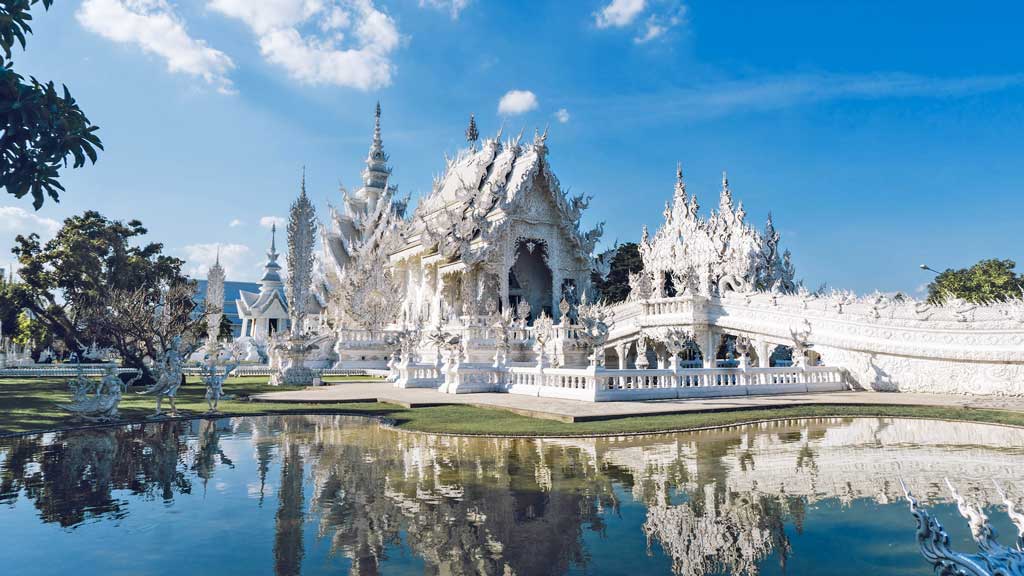
The first major stop is Wat Rong Khun (The White Temple), Chiang Rai’s most famous landmark. Building work on this modern temple by local artist Chalermchai Kositpipat started in the 1990s and it’s still work in progress. It feels more like an evolving modern art installation than a traditional religious site, and taking your time to look at the details makes the experience far more rewarding than a quick walk-through.

Make sure to take your time and look behind you when you enter the main temple building and you’ll see modern icons like Keanu Reeves and Michael Jackson integrated with Buddhist art. This is one unique temple – I’ve never seen anything else quite like it. I’d even say that the white temple is one of my favourite temples in the world – and I’ve seen alot of temples!

I recommend visiting Wat Rong Khun (The White Temple) earlier in the day, before 10am when the bus tour groups arrive from Chiang Mai for the best experience. As of 2026 the price for foreign visitors to enter is now 200 Thai Baht.

As with all Thai temples, modest dress is required to enter – both men and women need to cover up both shoulders and knees. You’re not allowed to take photos inside the main temple building too, but there’s plenty more photo spots at this fantastical temple so you won’t be short of opportunities.
The white temple is constantly being expanding, there’s a golden pavilion, a magical art cave and a great gift shop where you can buy some stunning art. There’s even a golden toilet block!

After the White Temple, continue to Wat Rong Suea Ten ( The Blue Temple), another incredible temple that will blow you away. Wat Rong Suea Ten translates to the house of the dancing tiger but it’s mostly known as the Blue Temple due to its deep blue tones, gold detailing, and stunning modern design.

This is another famous and popular temple but it is free to enter and is often less crowded than Wat Rong Khun (the White Temple) and there’s a small museum here too and a couple of drinks stalls.
The interior is just as impressive as the exterior so it’s well worth spending some time to soak it all in and marvelling at the beautiful white buddha and the amazing ceiling and artwork all around.

A good place to stop for lunch on the way to the next attraction is Give Green Farm House. This family run restaurant serves organic food by a lily pond near to the Black House Museum. They also offer cooking classes.
After lunch it’s time to visit Baan Dam Museum (the Black House.) Even though many people refer to it as the black temple because of it’s flamboyant architecture it’s not a temple. In fact, it is the world’s largest collection of animal remains that have been made into furniture and art installations
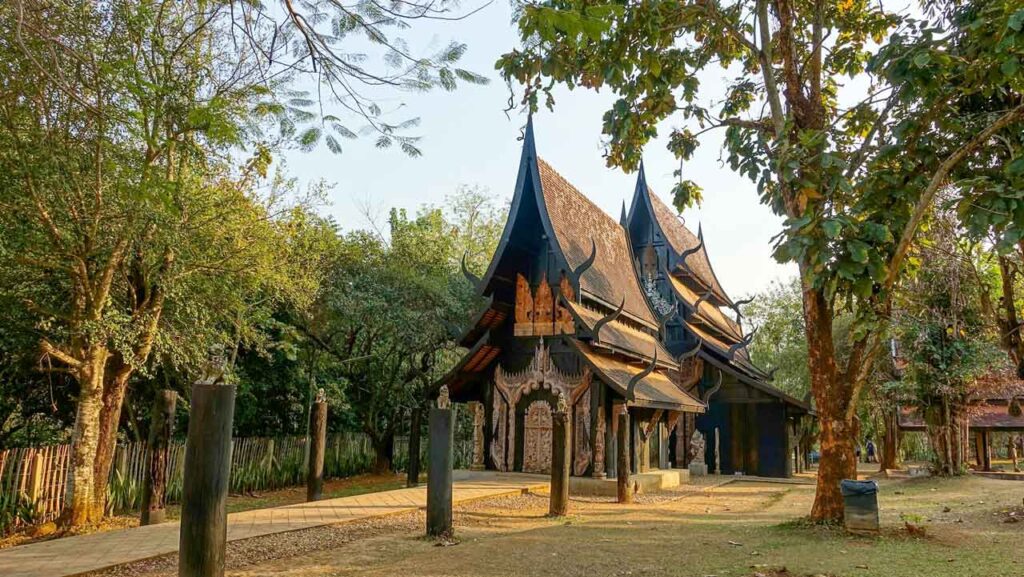
The Black House is a striking contrast to the heavenly White Temple. It’s a collection of dark, provocative buildings created by the local artist Thawan Duchanee. The museum contains multiple black buildings filled with dark, eclectic art – think skeletons, crocodile skins and chairs made from buffalo horns!

This place is a little strange and unsettling yet still fascinating, and it adds another layer of depth to Chiang Rai’s artistic identity and is a truly unique place.
And the Black House is not just one building, there are about 40 buildings spread across the woodland, each slightly different, so take time to explore and enjoy the unique architecture and art.

In the evening, it’s time to experience Chiang Rai at night – there’s not a wild nightlife scene here but that doesn’t mean you’ll be bored in the evenings.
Start at the Chiang Rai Night Bazaar, it’s compact, easy to navigate, more relaxed than night markets in larger Thai cities yet still has plenty of food stalls and a bar where you can get a cold beer.

The night bazaar is a good place to try northern Thai dishes, (don’t worry it’s not all fried insects) wander without a plan, and ease into the slower rhythm of the city. If it’s a weekend, check out the walking street nearby for more Thai snacks and souvenirs.
After dinner take a short stroll to the Chiang Rai Clock Tower – a golden architectural masterpiece made by the same artist at the White Temple. Try to time your visit with the light and music show which is held at 7, 8 and 9 pm.
From a practical point of view, Day 1 works best with either a hired car, motorbike, driver or guided tour, as most of the temples and attractions are outside town. You could also use a combination of Grab and short taxi rides. Starting early helps avoid crowds at Wat Rong Khun.
If you’d rather not organise transport for the temples yourself and would like to know more about these unique pieces of artistry and devotion, there are half-day and full-day temple tours departing directly from Chiang Rai.
Many of the tours visit 7 attractions in one day which I think is good if you’re short on time but I felt it was a bit rushed for me so I rented a motorbike for this day. If you’d like to join a guided tour this full day small group Chiang Rai tour visits the White Temple, the Blue Temple and the Black House and includes a hotel pick up and drop off, lunch and a visit to the hot springs.
Day 2: Offbeat Temples, Culture, Art & Hot Springs
After a full first day of headline temples, on day 2 I recommend visiting some quieter temples, cultural parks, museums and just getting off the beaten track by having the time to go places that the rushed day trips from Chiang Mai don’t have time to go!
If you’re willing to start before breakfast and want to see a lesser visited temple then it’s worth heading up to Wat Phra That Doi Khao Kwai Kaew.

This long standing hilltop temple is revered by Thais but doesn’t see many tourists. It’s best visited at sunrise and you’ll get to admire the view over Chiang Rai so it’s the perfect place to start your trip.
After visiting Wat Phra That Doi Khao Kwai Kaew, head back to your hotel or to one of the cafes in town town for breakfast – I loved the Breakfast Factory for it’s wide range of breakfasts served in cute surroundings.

After breakfast, visit Wat Phra Kaew, a typical, traditional Buddhist temple that dates back to the 14th century with an interesting past.
Wat Phra Kaew is one of the most historically important temples in the city as it is believed to be where the Emerald Buddha was once housed, long before it was moved to Chiang Mai and eventually Bangkok’s Grand Palace.
Nowadays you can see a fine replica of the original Emerald Buddha. The temple is usually quiet and crowded, compared to the more theatrical modern temples.

If you want a better understanding of the unique culture of Chiang Rai then not far from Wat Phra Kaew is Mae Fah Luang Art and Cultural Park. Set within landscaped gardens, the park focuses on Lanna culture, royal heritage, and traditional Thai architecture.
And if you’re thinking of visiting hill tribe villages or trekking in the hills, you should also visit the Hill Tribe Museum and Education Center. This small but informative museum focuses on the lives, history, and challenges faced by hill tribe communities in the region.

The Hill Tribe Museum adds important context and makes a visit to the hill tribe villages feel more meaningful and respectful, rather than just observational. It also helps set realistic expectations about the experience.
For lunch, head to Lalitta Café – one of the most beautiful, fairytale like cafes in the world! With winding gardens and a huge waterfalls topped with fairies, this place is an instagrammers dream.

But even if you’re not bothered about that it’s a unique place to explore and take some time to rest and refresh with a drink and something to eat. There is an entrance fee on 100 baht so take you’re time to explore the gardens rather than rushing through just taking photos.
In the afternoon, not far from Lalitta Cafe, you’ll find Wat Huay Pla Kang (the “Temple of Mercy.”) This temple complex on the outskirts of town contains 3 temples all dedicated to Guan Yin (the Goddess of mercy) and was one of my favorite experiences in Chiang Rai.

There’s lots to see at d Wat Huay Pla Kang. First check out, the 49-meter high Phop Chok Dhamma Chedi, often refered to as the ‘Red Temple’, this pagoda is guarded by golden dragons and shows influences from Thailand, China, and Europe.
Then take a look at the little The White Viharn, a typical Buddhist temple, before heading up to the enormous Guan Yin statue that overlooks the complex. You can take an elevators up inside the statue and peak out of Guan Yin’s third eye for wide views across the surrounding countryside.

Once you’re templed out there are several natural hot springs near Chiang Rai town where you can soak your tired feet in the warm waters and get a traditional Thai massage. One of the closest to town is Pong Phra Bat Hot Springs.
From a practical point of view, Day 2 is easy to manage with a hired car, motorbike, driver or short taxi or Grab rides. It’s not really walkable as the afternoons activities are on the outskirts of town but it’s worth it because these places aren’t on most of the tour groups itineraries – but you can hire a private driver and create your own guided tour if you want.
If you still have energy in the evening, you can return to town for a low-key dinner, but this is also a good night to keep things simple and rest up before the longer day trip on Day 3.
Day 3: The Golden Triangle, Mekong River & Chiang Rai’s Borderlands
Make sure to leave time in your itinerary for Chiang Rai to head out and explore beyond the city.
On day three I recommend taking a Golden Triangle day trip which will take you beyond Chiang Rai town and out into the landscapes that give the region its identity.
This day is less about temples and more about nature, geography, borders, and the layered history of northern Thailand.

The first stop is the Golden Triangle, where Thailand, Laos, and Myanmar meet at the confluence of the Ruak and Mekong rivers.The Myanmar side is mostly undeveloped while there’s quite a lot happening on the Laos side.
Standing here helps you understand just how interconnected this region is, and how trade routes, rivers, and borders have shaped life in northern Thailand for centuries. This area used to be a major global opium and heroin production hub from the 1950s to the early 2000s.
From here, most itineraries include a boat trip along the Mekong River, which gives you a different perspective on the border region. The river is wide and slow-moving, and the journey is more about atmosphere than distance.

Our boat trip allowed a brief stop in Laos, a much less touristy and less developed country than Thailand.
All we needed was a picture of our passports and our tour guide arranged it so that we didn’t need to buy a Laos visa. We were also treated to some snake whiskey in the market on the Laos side of the river.

To my surprise there was a new Chinese casino city on the Laos side and, for an extra fee, we took the opportunity to take a quick tour. It was not what I was expecting at all!
The new city is home to a big fancy casino as well as a colourful Chinatown area, while some parts felt a bit Disneylandish and it felt oddly out of place against the rural surroundings it gave us an interesting insight into the contrast between old borderlands and new development.

After the river trip, you can visit the House of Opium Museum. This small museum is far more informative than its name suggests and it does a good job of explaining the opium trade that this area was famous for and the social impact these industries had on the region and how times have changed now.

In the afternoon you’ll explore more of the surrounding hills, where you’ll find tea plantations and hill tribe villages scattered across the landscape. We stopped at Choui Fong tea plantation for a tasting session and enjoyed scenic views from the cafe.

We also visited a Long Neck Karen hill tribe village – I’d been on the fence about visiting a tribal village but going in a small group with a local guide made the visit more meaningful and respectful and offered an insight into the ethnic diversity of the region and the realities of life in the highlands. Plus, we were able to buy some handicrafts to support the villagers – who are mostly refuges from Myanmar without many other ways of earning a living.

Logistically, this day is much easier with a guided tour or private driver, as public transport options are limited and distances between stops are significant.
I took this small group Golden Triangle tour which was brilliant. The group was only 6 people and the tour included hotel pick up and drop off, lunch, and all entrance fees. Our guide was super knowledge and made the day both fun, educational and stress free.
Other Things to Do in Chiang Rai (If You Have More Time)
If you follow my 3-day Chiang Rai itinerary, you’ll cover the main attractions and my highlights, but if you have more time the here’s some other things to do in Chiang Rai.
Visit Singha Park

Singha Park is a huge landscaped park with open views, gardens, and plenty of space to wander or cycle. If you’re feeling like you need a relaxed countryside day rather than a sightseeing mission it’s a great place to spend an afternoon.
Hike to Khun Korn Waterfall

Khun Korn waterfall is one of the tallest waterfalls in the area and the walk to reach it is part of the experience, with a forest trail that feels genuinely green and peaceful.
You’ll want decent shoes and insect repellent, and it’s worth going earlier in the day if you’re visiting in hotter months. I’d treat this as a half-day trip from Chiang Rai town, and it works especially well if you’re craving a change of scenery after a couple of temple-heavy days.
Sunrise at Phu Chi Fa

If you’re willing to wake up very early, Phu Chi Fa offers one of the most dramatic sunrise viewpoints in northern Thailand. Sitting high above the Lao border, the viewpoint looks out over a steep cliff and a wide valley that often fills with mist in the early morning.
Phu Chi Fa is a long drive from Chiang Rai town, so you’ll need your own transport and will have to leave very early as the experience is all about that short window around sunrise. It works best as an optional add-on if you have an extra morning, I wouldn’t try to squeeze it into a packed schedule, but timed right it can be an unforgettable experience.
Visit The Ancient City of Chiang Saen

If you’re interested in history and want to experience a quieter part of the Mekong River then Chiang Saen is well worth adding. Chiang Saen is a sleepy, old, walled, riverside town on the Mekong with ancient ruins and a calmer, more local feel than the main Golden Triangle viewpoint areas.
You can visit the town as part of your Golden Triangle day, but it might be a little rushed. I think it’s also worth considering if you have extra time and want something that feels less touristy than the Sop Ruak viewpoint which most visitors make a beeline for.
You could spend the whole day here slowly exploring the ancient ruins and riverside scenes of this sleepy town – however you can’t cross over to Laos from here.
Visiting Hill Tribe Villages

The hills around Chiang Rai are home to several ethnic minority groups, including Akha, Lahu, Karen, and others, many of whom are refugees from Myanmar and live in rural villages scattered across the mountains near the Laos and Myanmar borders.
How you encounter these communities varies widely, from brief stops on a guided tour to longer, more immersive trekking experiences.
The most accessible introduction to the hill tribes is with a short village visit, often included on Golden Triangle or countryside tours. These stops are usually brief and are best seen as an introduction rather than a deep cultural exchange.
But, when done well, they offer insight into local architecture, traditional dress, and daily life, without requiring a big time commitment or physical effort, although be aware that you are expected to pay an entrance free or buy some handicrafts to help support the villagers.
If you have more time and want a more immersive experience then you can go trekking to hill tribe villages. The landscape along the way is lovely and you can spend longer in more authentic villages. Treks can range from half-day walks to overnight experiences, often including forest paths, farmland, waterfall visits and shared meals.
In both cases, how the experience is organised matters. I’d strongly recommend choosing small-group or private tours led by local guides who have established relationships with the communities they visit. The best experiences feel respectful and conversational, not staged or rushed, and avoid turning villages into photo stops or human zoos..
It’s also worth setting expectations before you go – the facilities in the villages are basic and life is hard here. I recommend visiting the Hill Tribe Museum and Education Center in Chiang Rai town adds a lot of depth and helps frame what you’re seeing.
If you follow this Chiang Rai itinerary, you’ll get to visit a hill tribe village with a great local guide as part of your Golden Triangle tour, but if you have more time trekking offers a more immerse experience. Visiting hill tribe villages can be controversial but, if done thoughtful and respectfully, it can also be one of the more meaningful experiences in the region.
Visit Mae Sai Market

Mae Sai sits right on the border with Myanmar and is Thailand’s northernmost town. The town itself isn’t especially pretty, it’s more a busy and functional border town, with markets, shops, and border trade giving it a very different feel from Chiang Rai.
In the past, people crossed the border here into Myanmar fairly easily, but that’s not something to assume anymore, as border rules and conditions change frequently so nowadays Mae Sai is worth visiting as a cultural stop rather than a crossing point so if you’re short on time, I wouldn’t prioritise Mae Sai over places like Chiang Saen.
Visit Mae Salong (Santikhiri)

While many golden Triangle tours include a brief stop at a tea planation, if you have more time you could also spend a day exploring Mae Salong.
Set high in the hills near the Myanmar border, Mae Salong has a strong Chinese influence and a fascinating history tied to Kuomintang soldiers who settled here decades ago.
Today, it’s best known for its tea plantations, cool mountain air, and wide views across rolling hills. It’s especially good if you’re visiting Chiang Rai during the hotter months, as the elevation makes it noticeably cooler. Here you can wandering through tea fields, stopping for tea tastings, and enjoying the cooler temperatures. You could pair Mae Salong with visiting hill tribe villages in this part of the province.
Visit Doi Tung Royal Villa & Gardens

Doi Tung Royal Villa was the former residence of Princess Mother Srinagarindra, and today it’s part of a wider development project focused on sustainability, reforestation, and community livelihoods.
The main draw is the Mae Fah Luang Garden, which surrounds the villa and is beautifully maintained, with seasonal flowers, manicured paths, and wide views over the surrounding hills. The cooler temperatures at this elevation make it a refreshing change from the lowlands, especially if you’re visiting Chiang Rai during the hotter months.
You can also visit the interior of the Royal Villa itself, which offers insight into the royal project’s philosophy and the history of the area.
Some Golden Triangle tours include Doi Tung Villa in their itinerary, otherwise you could make a day trip combining the palace with Mae Salong, Mae Sai, or hill tribe villages. You’ll want your own transport or a driver, as public transport options are limited.
Food and Cafes in Chiang Rai
Chiang Rai’s food scene is low-key but there’s still plenty of choice whether you prefer Thai food or international cuisine. Evenings naturally revolve around the Chiang Rai Night Bazaar, which is compact, relaxed, and easy to enjoy without committing to a long night out.
At the night bazaar you’ll find a mix of northern Thai dishes, grilled meats, noodles, and simple desserts, with plenty of seating and a friendly atmosphere. It’s ideal after a day of sightseeing when you don’t want to think too hard about where to eat.
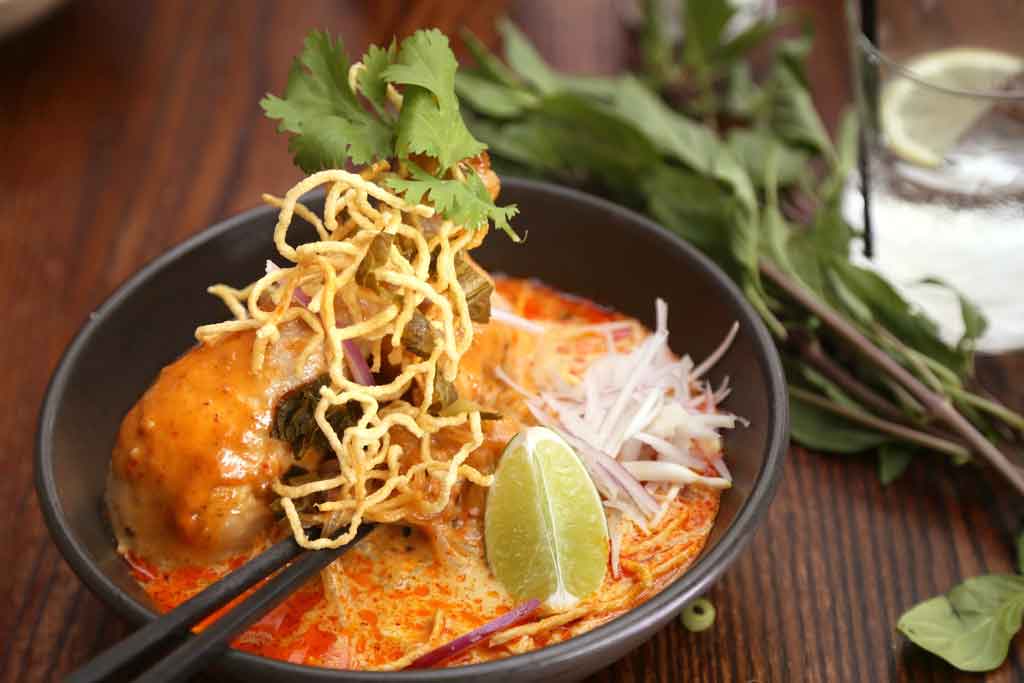
In terms of what to try, northern Thai food is worth seeking out while you’re here. Dishes like khao soi, sai ua (northern Thai sausage) hot pot, and nam prik with fresh vegetables are popular here. You’ll also find all your usual Thai dishes like pad thai, pad ka prao and mango sticky rice.
During the day, cafés are scattered around town and on the outskirts, and they work best as natural breaks between sights rather than destinations in their own right although the Lalitta Café stands out for its fairy-tale setting, but there are also plenty of smaller, quieter cafés like The Breakfast Factory where you can enjoy a coffee without the instagram crowds.
If you’re looking for somewhere special then try Chivit Thamma Da Coffee House – one of Chiang Rai’s best eateries set in a white colonial-style mansion on the riverside. This spot offers a romantic setting right on the Kok River, perfect for a refined dinner or special lunch.
Chiang Rai vs Chiang Mai: Which One Should You Visit?
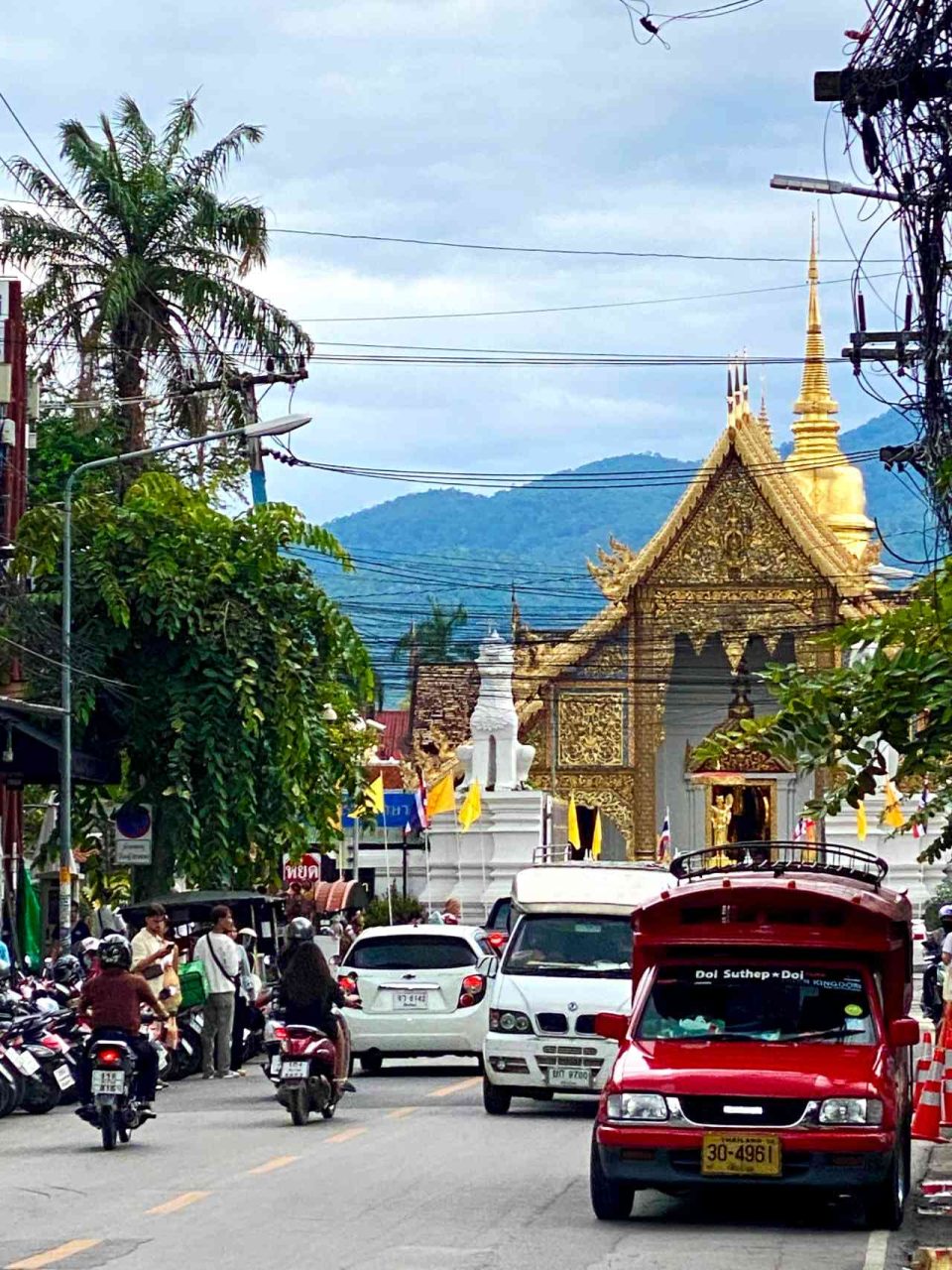
Chiang Rai and Chiang Mai are often lumped together, but they offer very different experiences, and understanding that difference helps set expectations.
Chiang Mai is larger, busier, and more social. It has a well-developed café culture, nightlife, coworking spaces, cooking schools, and a steady flow of tourists, digital nomads and long-term travellers. It’s great if you want variety, convenience, and things happening every night.
Chiang Rai, by contrast, feels much smaller and quieter and works at a slower pace. There’s not so many tourists, evenings are calm, and the focus is much more on seeing the art, temples, and landscapes.
While Chiang Rai is often visited as a day trip from Chiang Mai these tours can feel rushed and tiring. Staying overnight changes the experience completely, instead of rushing between highlights, you are able to avoid the tour buse crowds and have more time for less visited places like sunrise viewpoints, quiet temples, interesting museums and relaxed evenings.
If you’re interested in culture, nature and atmosphere rather than just rushing around ticking off the famous sights then Chiang Rai works far better as a destination in its own right.
Is Chiang Rai Worth Visiting?

If you’re drawn to temples, art, and slower travel, then yes – Chiang Rai is absolutely worth visiting.
What makes Chiang Rai special isn’t the number of attractions, but how distinct, unique and artistic they are. The White Temple, Blue Temple, Black House, and Wat Huay Pla Kang are all different – so you won’t get bored of visiting temples here!
These modern temples are artistic, bold, creative, and innovative interpretations of Thai art and spirituality. They give Chiang Rai a personality that feels very different from anywhere else in the country.
And it’s not all about temples, Chiang Rai is also great if you enjoy history, nature and geography. A Golden Triangle day trip is a must and will help you understand the unique borderlands of northern Thailand.

That said, Chiang Rai isn’t for everyone. If you’re looking for nightlife, shopping, or a packed daily schedule, you may find it too quiet. The appeal here is space, calm, and the ability to slow down without feeling bored.
But if you appreciate art, enjoy visiting temples and exploring nature then Chiang Rai delivers something refreshingly different is quite an underrated place in my opinion.

Chiang Rai is a unique destination that can’t truly be appreciated in a rushed day trip from Chiang Mai. From the striking temples, to the cultural spaces, and adventures into the borderlands that define the region, there is plenty to see and do in Chiang Rai that make it well worth it as a destination is it’s own right.
If you’re travelling through northern Thailand and want a destination that feels calmer than Chiang Mai, Chiang Rai is well worth the time. It’s not louder or bigger — it’s simply different, and for the right kind of traveller, that difference is exactly the point.

Read More Thailand Travel Guides
If you’re planning a trip around Thailand you might find my other blogs and guides useful. Check out

