


Thailand is one of the most popular tourist destinations in the world and it’s no wonder. It’s home to stunning scenery, glittering temples, paradise islands, friendly people and is still more affordable than many places in the world.
While traveling in Thailand is pretty easy, it is a larger and more diverse country than most people realise. From the buzzing streets of Bangkok, to the charming old town of Chiang Mai, and from steamy jungles and national parks to the stunning islands and beaches in the south.
There’s so many beautiful places to visit and things to do that you’ll want to fit in to your itinerary for Thailand which can make planning a trip to Thailand a bit overwhelming, especially if it’s your first time.
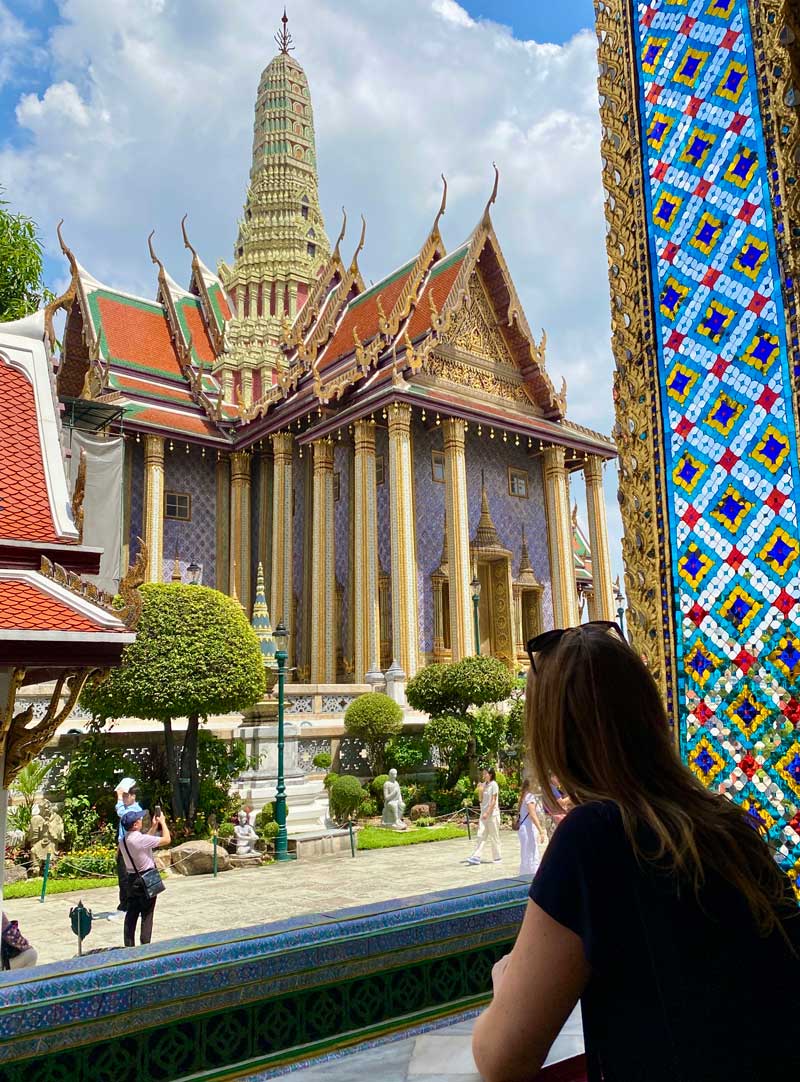
I’ve been traveling and living in Thailand for several years and have been lucky enough to explore this beautiful country from top to bottom.
From my first trips as a wide eyed backpacker back in 2013 to hanging out in Koh Phangan (before the pandemic) and then living Chiang Mai and Phuket as a digital nomad now.
I’ve been able to see more of this amazing country than most, and have so many tips to help you if you’re planning a trip to Thailand for the first time.
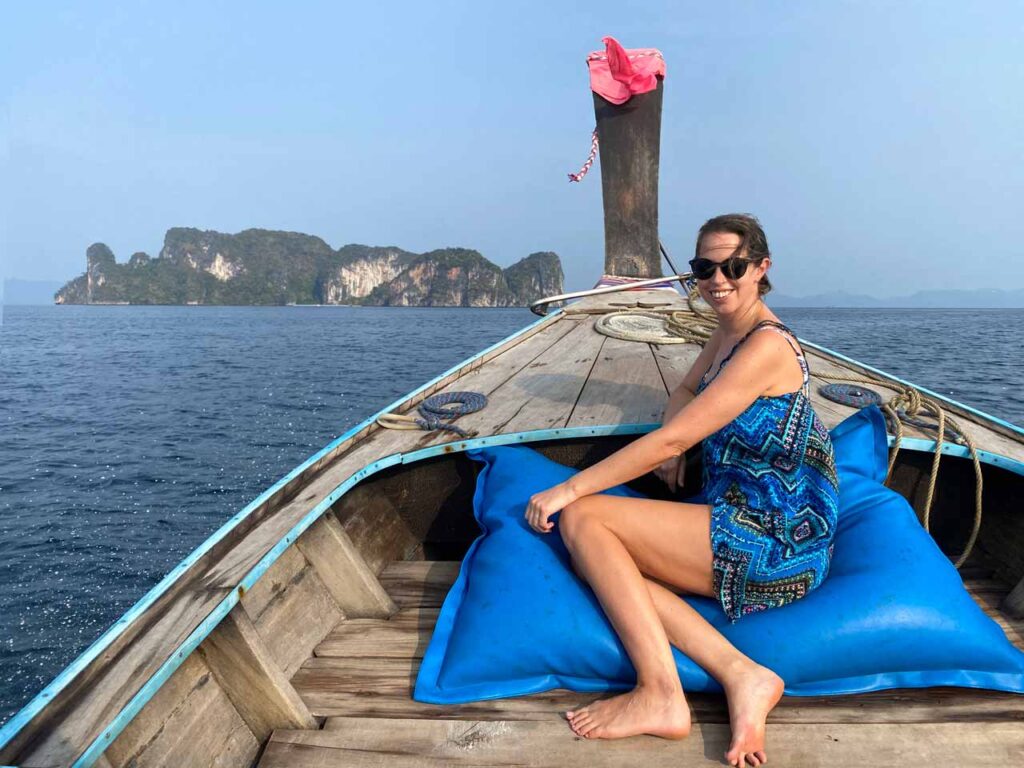
So whether you’re dreaming of white-sand beaches and island hopping, jungle treks, ancient temples, or Bangkok’s best street food, this guide will walk you through everything you need to know — from the best time to visit and where to go to how to get around without the any stress.
Planning a Trip to Thailand – A Step by Step Guide
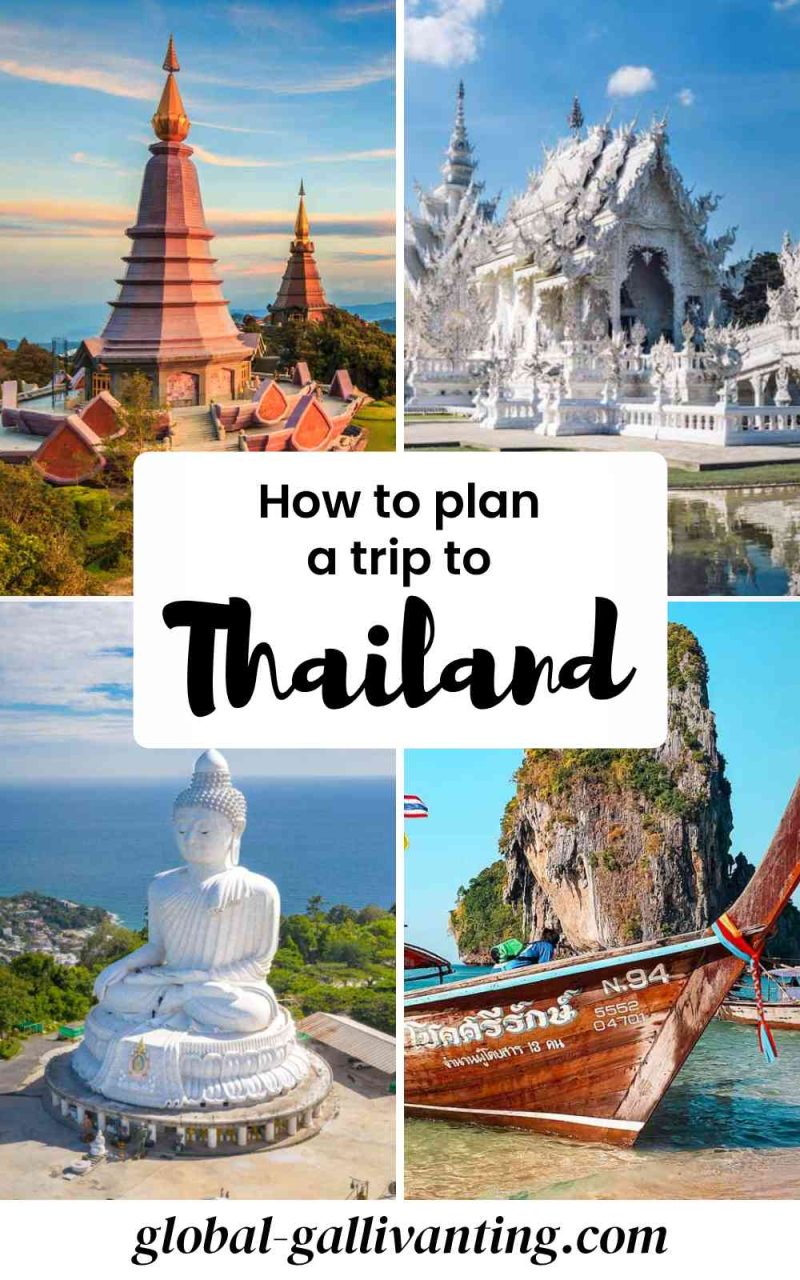
Pin me to read later 🙂
Understanding Thailand’s Regions
Before you book anything, you need to understand the geography, because Thailand is a big country and your experience will vary enormously depending on where you go.
There are so many places to visit in Thailand, but there are three main areas most travellers explore: Bangkok and Central Thailand, Chiang Mai and Northern Thailand and Southern Thailand (the islands and coast).
Bangkok is the beating heart of the country — chaotic, fascinating, and utterly unlike anywhere else on earth. It’s usually your entry point whether you like it or not, and I’d encourage you to spend at least three or four days in Bangkok rather than rushing through.
The north offers a cooler, slower, more culturally rich experience: hill tribes, elephant sanctuaries, ancient temples, and some of the best food you’ll eat anywhere in the country.
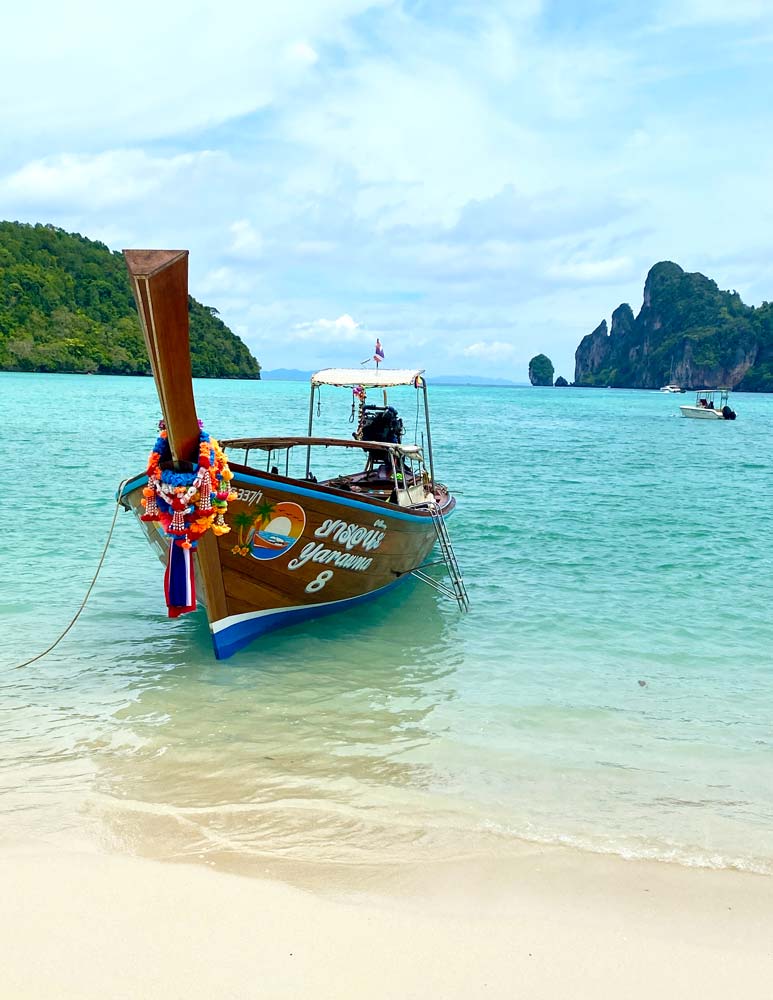
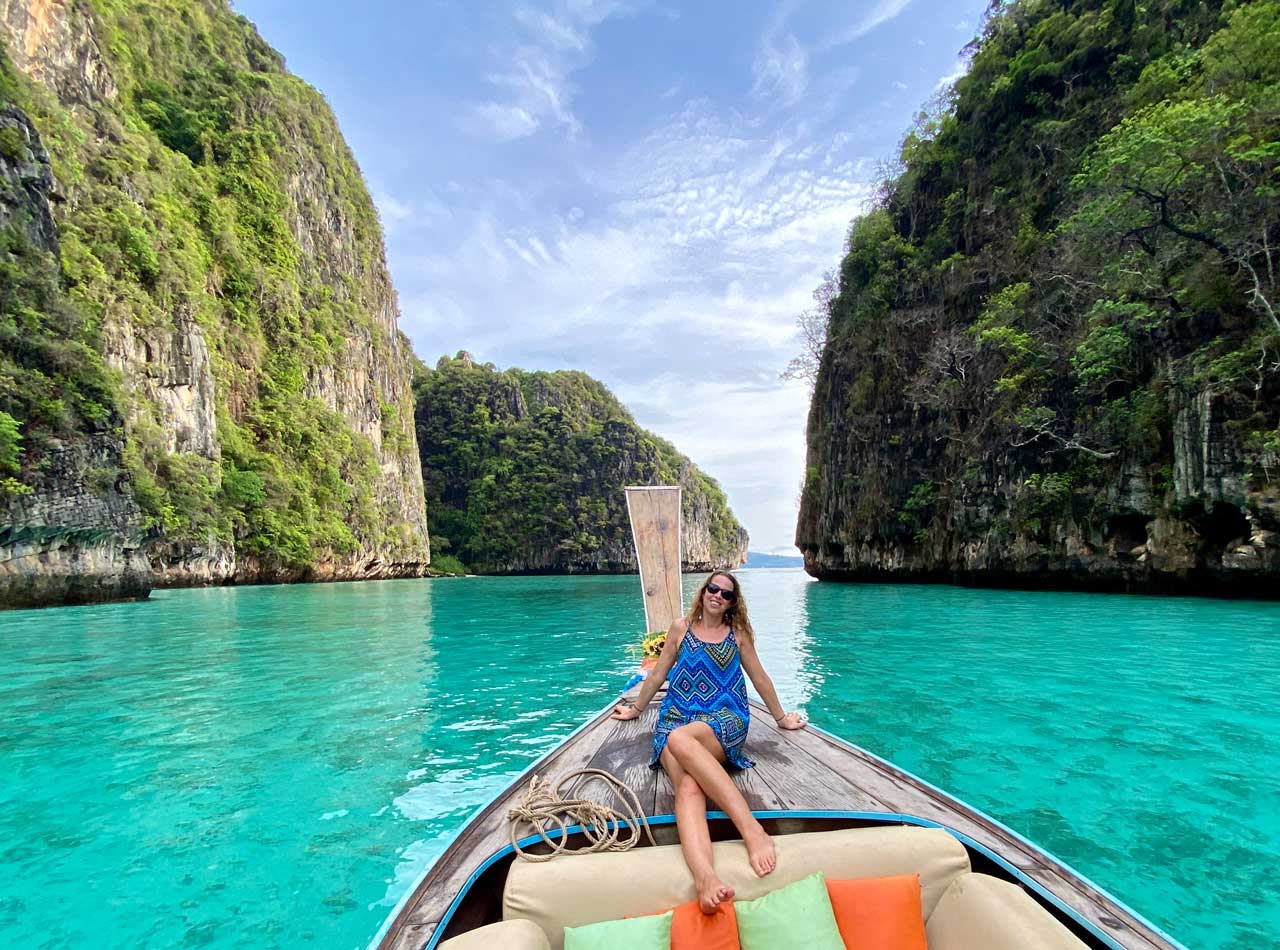
The south is where the postcard beaches are — turquoise water, limestone karsts, coconut palms, longtail boats — but it’s also more touristy and more expensive than the rest of the country.
If you have time, I recommend starting in Bangkok and then exploring both northern Thailand for the culture, history and nature and southern Thailand for some of the best beaches and islands in the world.
There’s a lot to see but if you plan your trip to Thailand well you can see the highlights in only 2 weeks.
Best Time to Visit Thailand
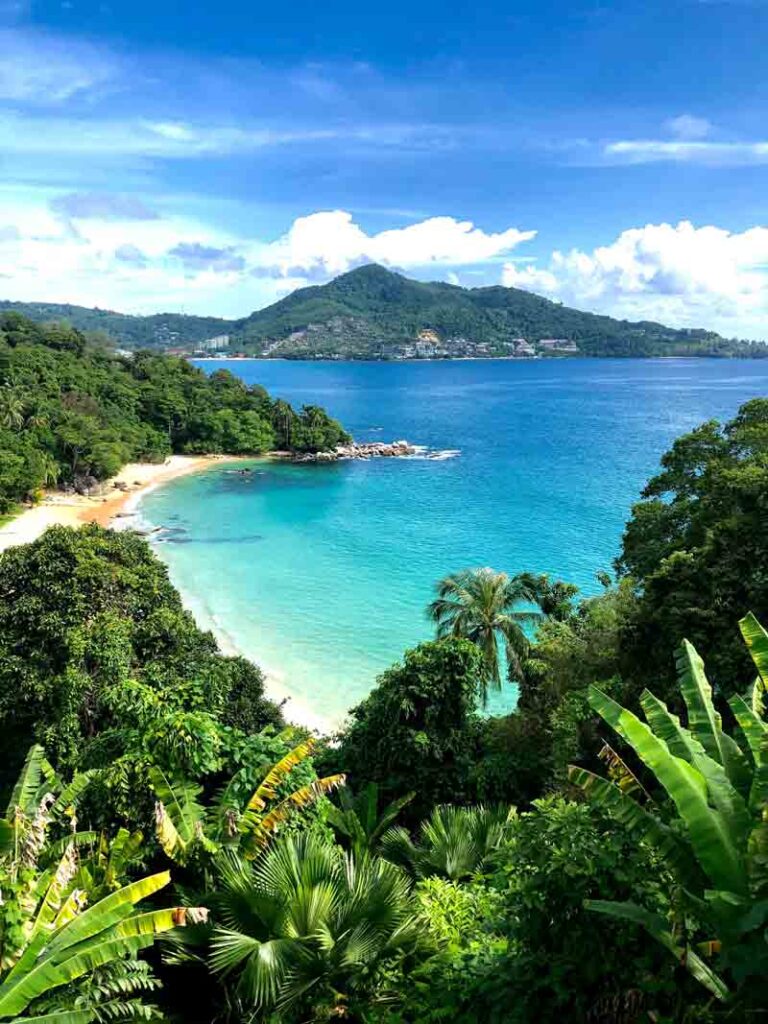
This is probably the most important piece of planning advice I can give you, and it’s one that a lot of people get wrong. Thailand has two broad seasons — dry and wet — but the timing of these varies significantly by region, which catches many travellers off guard.
In general the dry season runs from November to April, and the rainy season from May through October. The dry season is when Thailand is at its most inviting: clear skies, manageable temperatures, and calm seas. If you can only visit once, aim for November to February when the heat is at its least intense and everywhere is at its best. If you plan to travel to Thailand in the rainy season be prepared for high humidity and frequent rain showers but you’ll be rewarded with lower prices and less crowds.
However, if you’re island-bound, pay attention to which coast you’re visiting. The Andaman Sea side — Phuket, Krabi, Koh Phi Phi — is best from December through April, when conditions are perfect. The Gulf of Thailand islands — Koh Samui, Koh Phangan, Koh Tao — tend to be better from late January onwards. The two coasts have different monsoon seasons, which means you can always find a perfect beach day but only when you know where and when to go.
One thing I learned during my time living in Chiang Mai: avoid March and April in the north if you have any respiratory sensitivity. The slash-and-burn agricultural season creates a thick haze over the mountains that can last weeks. It’s genuinely unpleasant, and not enough people talk about it. See this post for more info on the burning season in Thailand.
How Long Should You Go For?
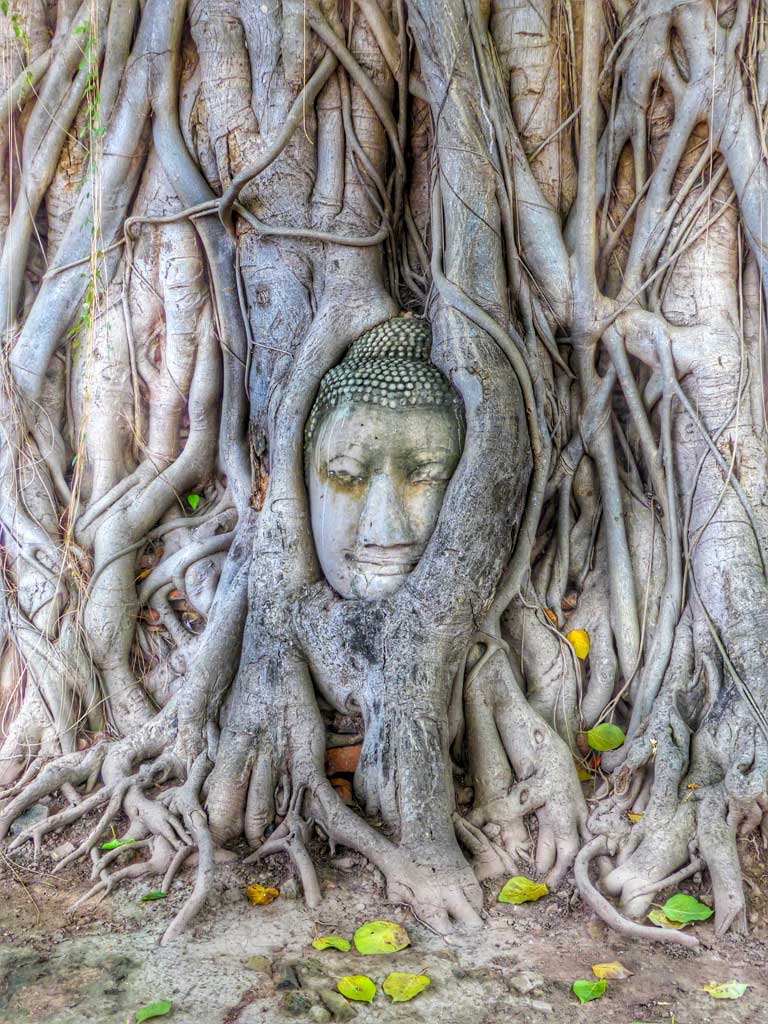
So how long do you need to travel Thailand? Well the honest answer is as long as possible, but I know not everyone has unlimited holiday time so here’s a practical breakdown based on my own adventures and what I’ve seen work for different types of travellers.
7 Days in Thailand: Seven days works if you limit yourself to one or two destinations — say, Bangkok and one island. You’ll be rushed, but it’s doable and worth it.
10 Days in Thailand: Ten days gives you more breathing room, perhaps adding Chiang Mai or a second island stop.
14 Days in Thailand: Two weeks is really the sweet spot for a first trip: you can do Bangkok, the north, and a few days in the south without feeling like you’re constantly on a bus or a plane. Read my 2 weeks in Thailand itinerary for the full route breakdown that I recommend.
21 Days in Thailand: With 3 weeks to spend you can do the classic 2 week loop and either slow it down and spend more time in each place or do a longer island hopping trip visiting the highlights of both coasts.
30 Days in Thailand: A month or more is when Thailand starts to reveal itself properly — you can slow down, get off the tourist trail, learn some Thai phrases, find the local restaurants, and start to feel like you actually know the place. Read my 1 month Thailand backpacking route for more.
If you can, I recommend spending at least 2 weeks in Thailand for your first visit, so that you can get a taste of the different sides of the country. Then plan to come back again and explore each area further.
While it’s important to book hotels and popular tours in the peak season, resist the urge to over-schedule every day. Some of the best days I’ve had in Thailand were the unplanned ones: stumbling across a temple festival, meeting like minded people in a cafe in Pai, or spending the afternoon on a beach that wasn’t in any guidebook. Leave room to get off the tourist trail and allow the country to surprise you.
Visa and Entry Requirements
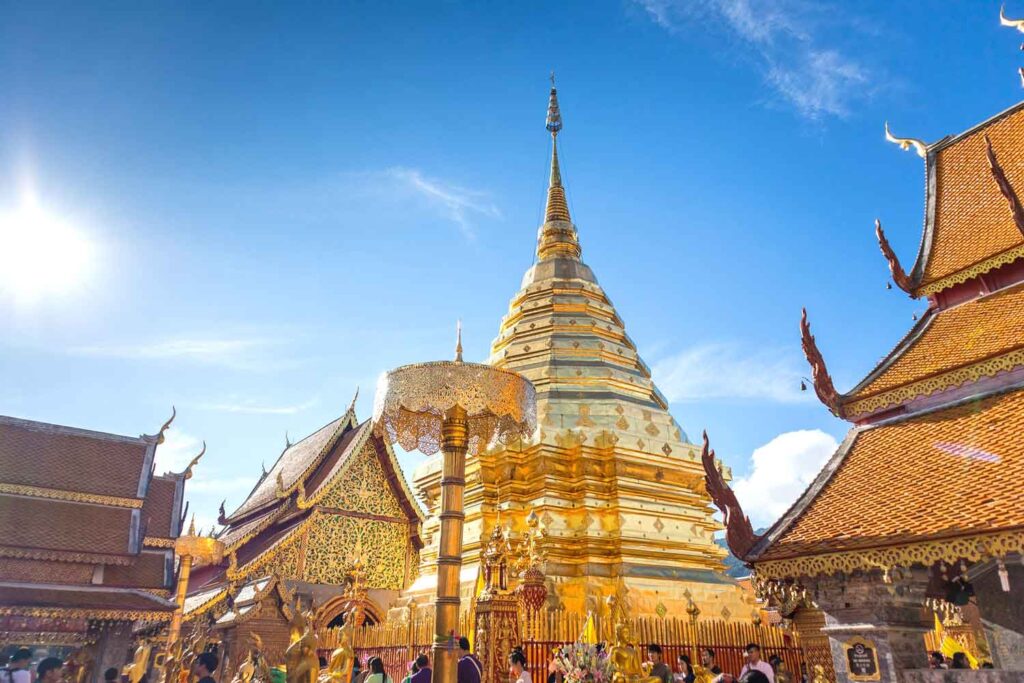
Now for the boring but necessary stuff! The good news is that Thailand makes it relatively easy to visit. Tourists from 93 countries can enter without a visa in advance, with most nationalities receiving a 60-day stamp on arrival. That’s enough time for an amazing trip, and it can be extended for a further 30 days at any immigration office inside the country for a small fee. Make sure your passport has at least six months of validity remaining from your date of entry.
However, there are talks to reduce the visa exemption period from 60 days to 30 days so keep up to date with the latest news on official websites like TAT (Tourism Authority of Thailand)
If you’re planning a longer stay you’ll need to look into either a longer-term visa (available from Thai embassies abroad) or do a ‘border run’, where you cross into a neighbouring country like Laos, Cambodia, or Malaysia and come straight back to reset your stay. Be aware that authorities are cracking down on this and have introduced a new longer term visa called the DTV (Destination Thailand Visa).
The DTV, often called the digital nomad visa, is a 5-year, multiple-entry visa launched in July 2024 for remote workers, digital nomads, freelancers, and those pursuing “soft power” activities like Muay Thai training. It allows stays of up to 180 days per entry but has a 500,000 THB financial requirement and a 10,000 THB fee.
Most embassies process applications through Thailand’s official e-visa portal at thaievisa.go.th though some still accept in-person applications, so check with your specific embassy before applying. Be aware that there are also some websites that charge extra fees for applying.
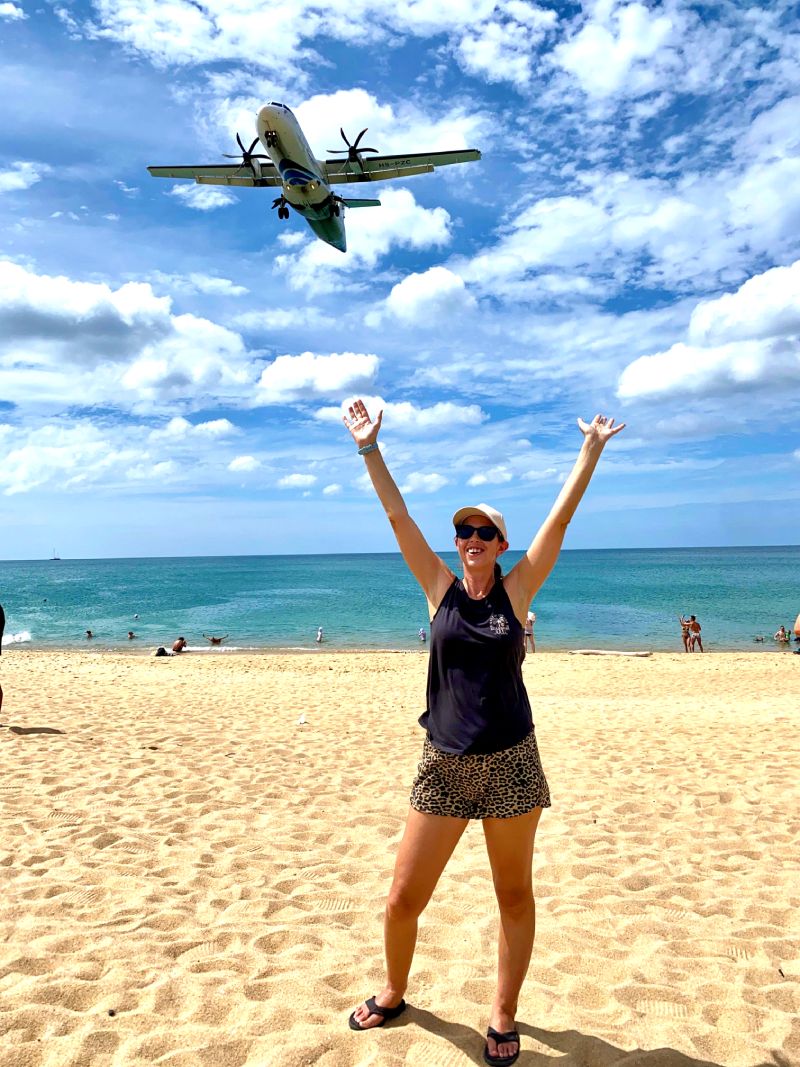
Before you arrive you’ll also need to complete a Thailand Digital Arrival Card (TDAC) before arriving. This online form replaced the old paper TM6 form that used to be handed out on planes, and since May 2025 it’s mandatory for every foreign national entering the country — regardless of visa type or length of stay.
The TDAC is free and straightforward to complete and only takes about five minutes — but you do need to do it in advance. You can do it up to three days before your arrival date and no earlier, so don’t try to do it a week out.
You’ll fill in your passport details, flight information, a brief health declaration and your first accommodation address in Thailand (you only need to provide your first place of stay, not every hotel for the whole trip.) Once submitted, you’ll receive a confirmation by email with a QR code that you can show it to border officers on entry.
There are third-party websites charging fees to submit the TDAC on your behalf but it’s completely free and easy to do so only use the official Thai Immigration Bureau website.
Be aware that the rules do change sometimes so always check current requirements when planning a trip to Thailand.
Getting to Thailand
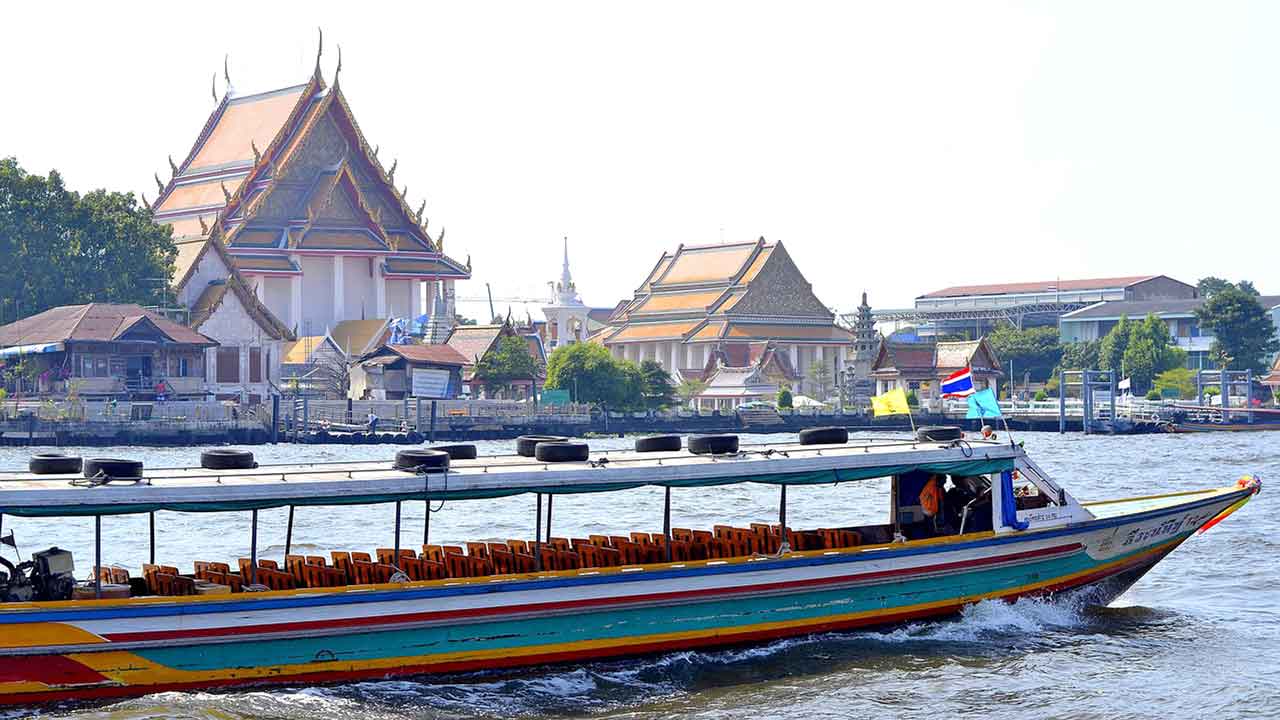
Getting to Thailand is also fairly straightforward with multiple international airports around the country receiving flights from destinations around the world.
Still, Bangkok is your most likely entry point, and the city has two international airports – Suvarnabhumi and Don Mueang.
Suvarnabhumi Airport (BKK) (pronounced roughly ‘su-wan-na-poom’ — yes, it took me a while) handles the long-haul international flights and is the one you’ll almost certainly land at if you’re coming from Europe, North America, or Australia. Don Mueang Airport (DMK) is the budget airline hub, serving low-cost carriers across Southeast Asia and domestic routes.
Phuket Airport (HKT) is also a good global hub with flights coming in from around the world. It’s the best entry point if you’re heading straight to the south. If you’re heading north then Chiang Mai Airport (CNX) has domestic and international connections across the region. But for most first-timers, Bangkok is where your adventure begins.
Flight prices vary enormously depending on where you’re coming from and when you book. From Europe, expect to pay anywhere from £400 to £900 return for a reasonable deal. From the US West Coast, flights are typically 12 to 16 hours via a hub in Asia. Book early, be flexible with your dates, and use Skyscanner and Google Flights to track price trends.
Getting Around Thailand
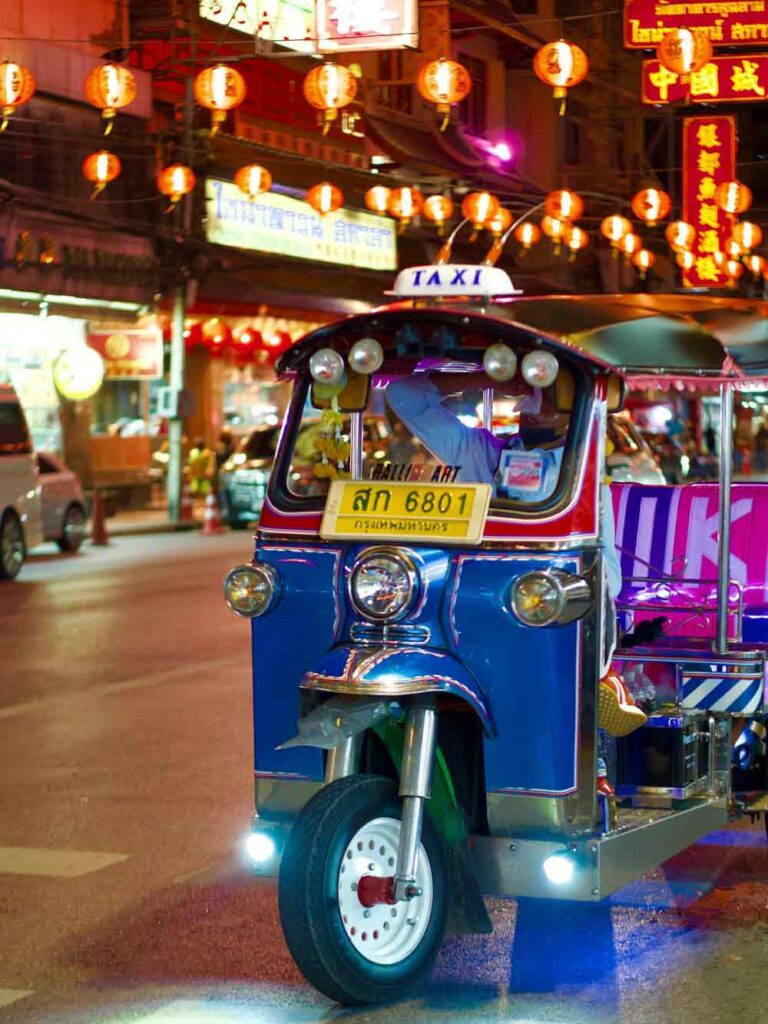
Once you’re in the country, Thailand is easy to get around, there’s good infrastructure, it’s well-connected, and most forms of transport are quite comfortable and very affordable by Western standards.
Between cities and regions, domestic flights are often your best bet for saving time, and they’re cheap enough that it usually makes sense. Bangkok Airways, Thai AirAsia, and Nok Air all offer frequent routes between the major hubs. A flight from Bangkok to Chiang Mai, for instance, takes about an hour and can cost as little as £20-30/ $26 – $40 / €22 – €35 if you book ahead.
That said, don’t dismiss the overnight train. The Bangkok to Chiang Mai night train is a great experience — you board in the evening, fall asleep in a comfortable sleeper berth, and wake up in the north with the mountains coming into view. It’s one of those travel experiences worth doing for the journey itself.
Within cities, download Grab before you arrive. It’s the Southeast Asian equivalent of Uber and will save you from haggling for overpriced tuk tuks. I still enjoy a tuk-tuk for short hops because they’re fun, but for anything more than a kilometre or two, Grab gives you a fixed price, a rated driver, and no drama.
For island hopping in the south, you’ll be using ferries and speedboats. Standard ferries are the safest and most budget-friendly option. Speedboats are faster but can be a bumpy ride in rough seas — I’ve seen plenty of green-faced tourists on rough Andaman crossings who wished they’d taken the slower boat.
In the north, if you’re comfortable on two wheels, a motorbike is transformative. The roads around Chiang Mai are well-maintained and the scenery is spectacular. The Mae Hong Son Loop is one of the great motorcycle journeys in Southeast Asia.
If you are planning on riding a motorbike get an IDP (International Driving Permit) before you leave home, wear a helmet, take it slow on mountain roads. Make sure your travel insurance covers motorbike riding — many policies don’t, so read the fine print. I use Safety Wing which does and you can take out the policy anytime – even if you are already abroad.
Popular bus, train and ferry routes can get fully booked during peak season so it’s worth booking in advance online. I use 12Go Asia as it’s easy and hassle free and I like to know my seat is guaranteed.
Sample Thailand Itineraries
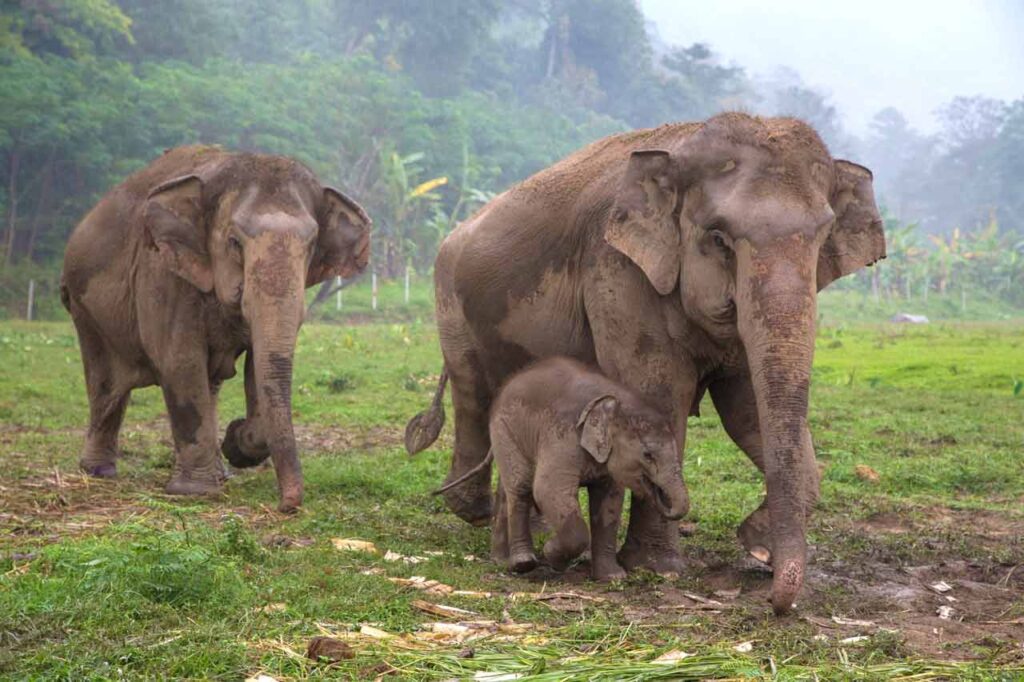
Here are a few starting frameworks based on different trip lengths. Think of these as suggestions rather than rigid schedules — the best Thailand trips have flexibility built in.
The Classic Two Weeks: Spend three to four days in Bangkok (temples, markets, street food, rooftop bars). Fly or take the night train to Chiang Mai (three to four days: temples, elephants, cooking classes, a day trip to Chiang Rai). Then head south to the islands — fly to Phuket, Koh Samui or Krabi and spend the final four to five days between beaches and boat trips. Check out my ideal 2 week Thailand itinerary for more info.
The Beach-Focused Ten Days: Two days in Bangkok (you really should see it), then straight to the south. Split your time between two or three islands — either explore the ultimate Thai island trifecta – Koh Samui, Koh Phangan and Koh Tao or head to the Andamans sea to Phuket, Koh Phi Phi and Krabi. Switch out Phuket for Koh Lanta for a quieter vibe but don’t miss Koh Phi Phi for the stunning scenery. Don’t try to pack in five islands in ten days; you’ll spend most of your time on boats. Check out my guide to island hopping in Thailand which has more info and itineraries.
The Northern Immersion: If beaches aren’t your thing and you want something more culturally rich, spend two weeks in Bangkok and the north. Bangkok (three days), Chiang Mai (five days), and then explore further. Drive the Mae Hong Son loop and hang out in Pai, a small bohemian mountain town that’s easy to love. Then spend a few days in Chiang Rai marvelling at the extraordinary White Temple, Blue Temple, and Black House and exploring the surrounding hill country and Golden Triangle.
Budgeting for a Thailand Trip
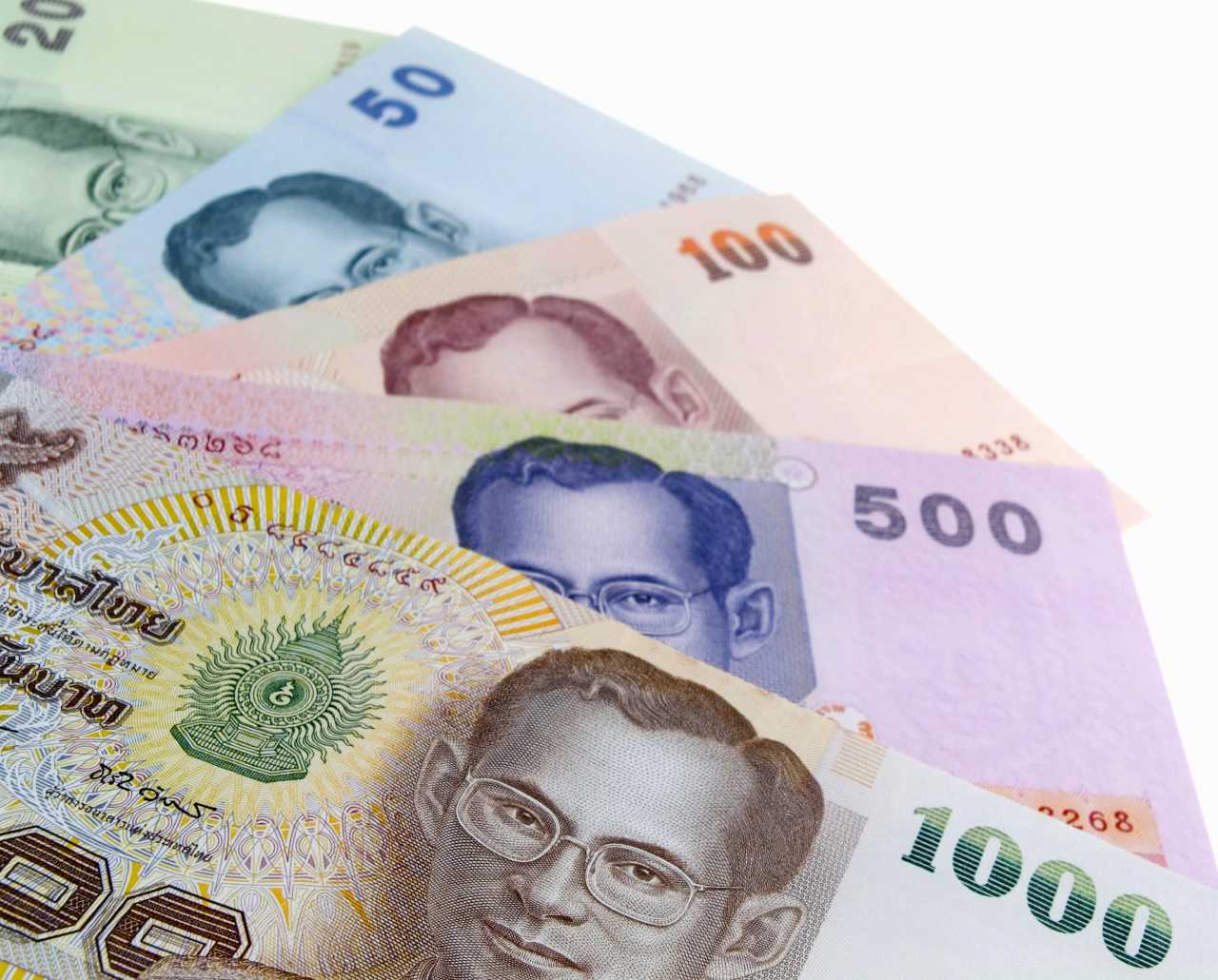
Like everywhere in the world, Thailand has been getting more expensive but it’s still relatively affordable by Western standards and the range is enormous depending on how you travel.
Here’s a realistic breakdown for different budgets and types of traveller:
- Backpackers keeping costs tight — hostels, street food, local buses — can get by on around $28–40 / £23–32 / €26–37 per day outside of peak season.
- Mid-range travellers staying in comfortable guesthouses or boutique hotels and eating at a mix of local restaurants should budget around $80–115 / £65–90 / €75–105 per day.
- If you want proper resort accommodation and a bit of luxury, you’re looking at $170–230 / £135–180 / €155–210 per day.
Exchange rates shift regularly — always check a live converter like XE while you plan your trip to get the most accurate figures.
One thing that surprises most first-time visitors to Thailand is how far your money goes on food. After years of eating in Thailand, I still find myself mildly shocked every time I pay a bill after a delicious meal.
- Street food meals from market stalls typically cost 40–80 baht — roughly $1.25–2.50 / £0.95–1.90 / €1.10–2.15.
- A proper sit-down meal at a good local restaurant rarely exceeds 200–300 baht — about $6–9 / £5–7 / €5.50–8.
- Even a meal at a trendy Bangkok restaurant that would cost £40 or €45 at home will set you back maybe $12–15 / £10–12 / €11–14.
The single biggest expense in any Thailand trip is almost always the flights. Once you’re there, your day-to-day costs will be a fraction of what you’d spend at home so it makes sense to come for as long as you can!
Take a look at my post on how much it costs to backpack Thailand for more info if you’re on a budget.
Where to Stay in Thailand
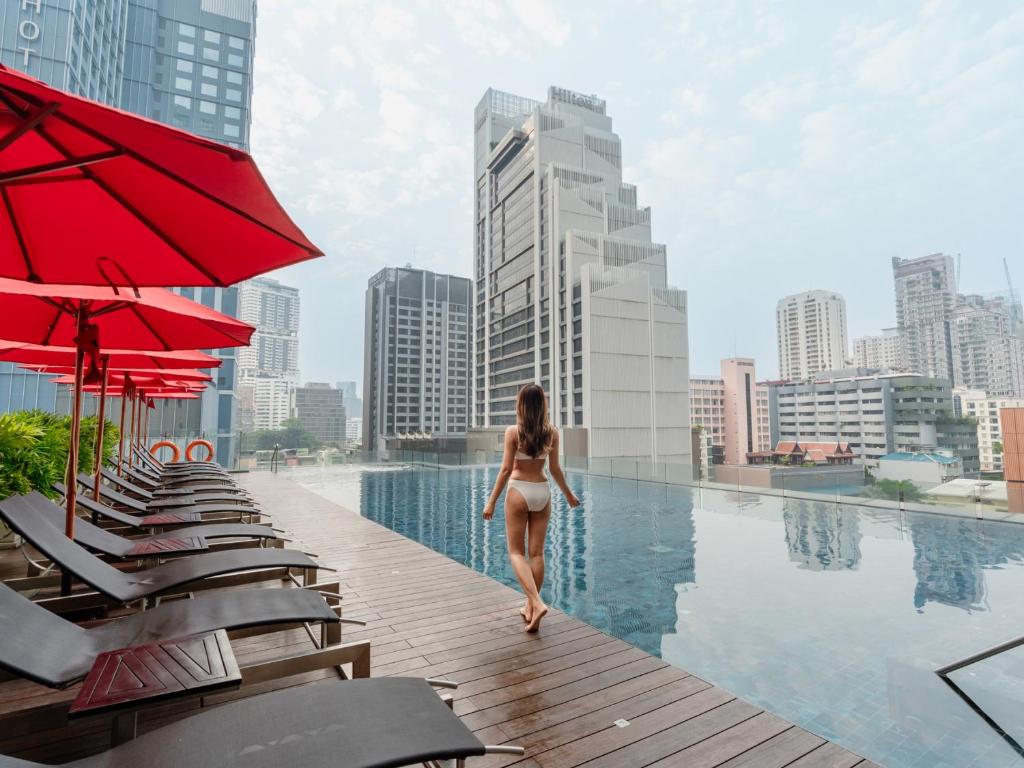
Thailand’s accommodation scene is extraordinary at every price point. You can sleep in a sociable hostel in Chiang Mai for a few dollars a night, or check into one of the world’s great luxury resorts on Koh Samui.
Most people fall somewhere in between and luckily there’s a great range of budget – mid range accommodation in Thailand – at much cheaper prices than you’d expect to pay in the West.
In Bangkok, staying in the Sukhumvit area puts you near the BTS Skytrain and a huge range of restaurants and nightlife, but some streets can be a bit seedy so I don’t recommend it for families.
For a more atmospheric experience, the Rattanakosin area near the old city and the Grand Palace is full of lovely boutique guesthouses. It’s less convenient for getting around but it’s also where the infamous Khao San Road with it legendary nightlife is located which can be a fun experience even if you’re not a backpacker. Check out my full guide on where to stay in Bangkok for more tips.
In Chiang Mai, the old city — the square surrounded by the ancient moat — is the most popular base and deservedly so. You’re walking distance from the night markets, the main temples, and the cute cafes. It’s full of hostels, boutique guesthouses and heritage hotels.
Just outside the old city is the trendy Nimman area which has one of the biggest digital nomad scenes in the world. When I lived there, I rented a small apartment for a fraction of what a hotel would cost, which is always worth considering if you’re staying somewhere for a month or more. Check out my full guide to where to stay in Chiang Mai for more tips.
On the islands, there’s everything from fan cooled bamboo huts to 5 star resorts but prices are higher than the north. If you’re heading to the islands you might find these posts useful:
I recommend booking accommodation in advance during peak season (December to January) for the most popular spots. Shoulder season is more forgiving, and you’ll often find great last-minute deals in the rainy season.
Must-See Destinations in Thailand
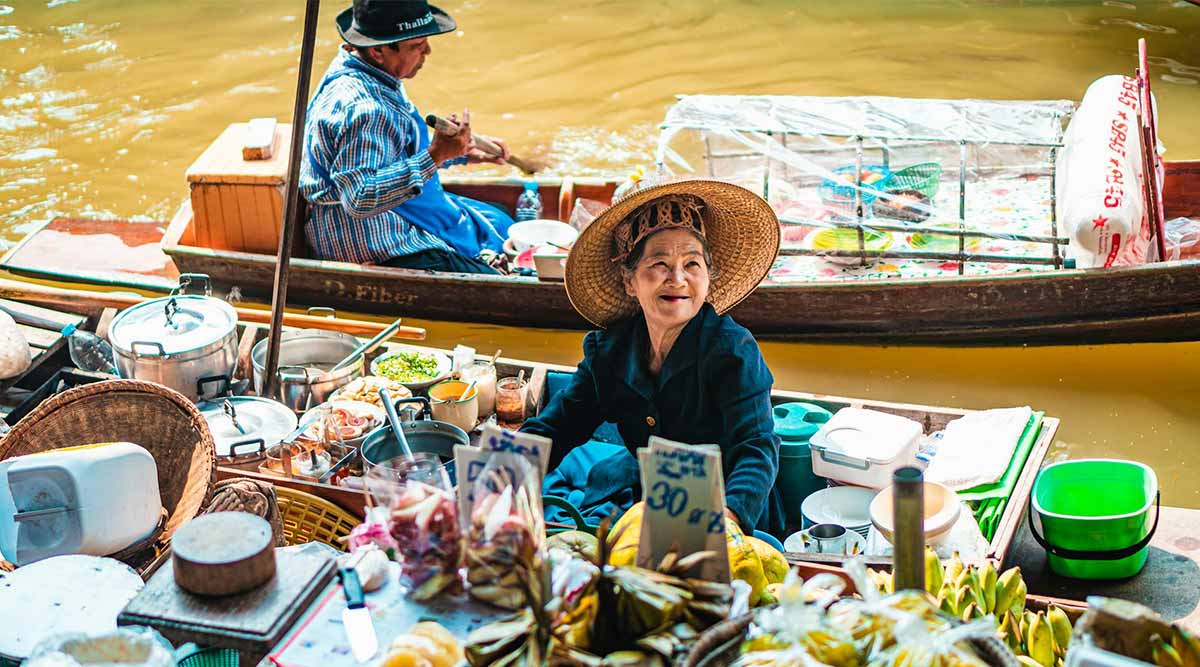
Every Thailand trip is different, and part of the joy is discovering your own version of the country, but there are places that belong on almost every Thailand itinerary.
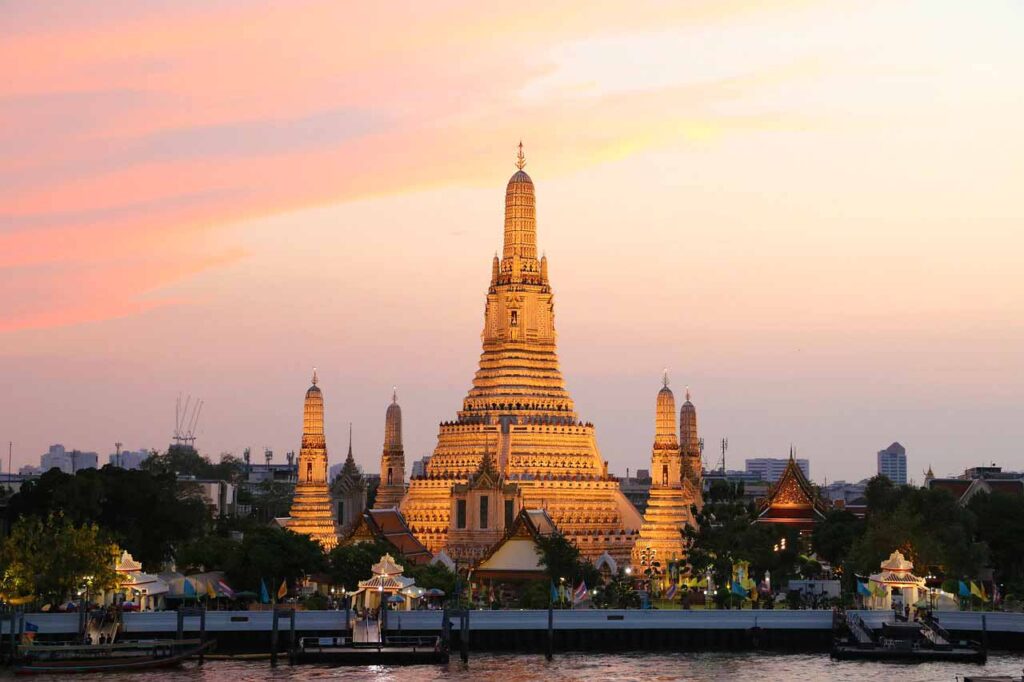
In Bangkok: The Grand Palace complex, Wat Pho (the reclining Buddha, and also home to Thailand’s most respected traditional massage school), Wat Arun (especially beautiful at dusk from across the river), Chatuchak Weekend Market if you’re there on a Saturday or Sunday, and the street food chaos of Chinatown on Yaowarat Road. Also take a day trip to see the floating markets and the ancient city of Ayutthaya just outside the capital.
In the north: Chiang Mai’s old city temples are extraordinary, particularly Wat Chedi Luang and Wat Phra Singh and don’t miss the glittering golden temple atop Doi Suthep on the mountain above the city. Eat Khao Soi and take a Thai cooking class and explore outside the city where there are many adventures to be had from visiting ethical elephant sanctuaries like Elephant Nature Park to exploring the hiking trails and waterfalls at Doi Inthanon – Thailand’s highest peak.
Another place in northern Thailand well worth seeing is Chiang Rai’s White Temple (Wat Rong Khun) it is unlike any other religious site I’ve ever seen: a contemporary masterpiece in blinding white and mirrored glass. Then there’s Pai is a four-hour mountain drive from Chiang Mai and worth every hairpin bend.
In the south: Phuket and Koh Samui are Thailand’s largest and most developed islands offering stunning beaches, world class resorts, vibrant nightlife and family friendly attractions. Great for an easy holiday – if you;re trying to decide between them check out my comparison Phuket or Koh Samui.
If you want to explore more of southern Thailand take a ferry from Koh Samui to Koh Phangan for the Full Moon Party and travel onwards to Koh Tao to learn how to dive; it has some of the best and most affordable dive schools in the world.
In the Andaman Sea, Phuket offers island hopping trips galore, from famous James Bond Island and Koh Phi Phi and Maya Bay where ‘The Beach’ was filmed to tiny islets and hidden sea caves. Don’t miss Railay Beach in Krabi for the iconic scenery and, for a quieter, more local island experience, head to Koh Lanta.
See my pick of the best places to visit in Thailand and the best things to do in Thailand for more.
Food and Drink in Thailand
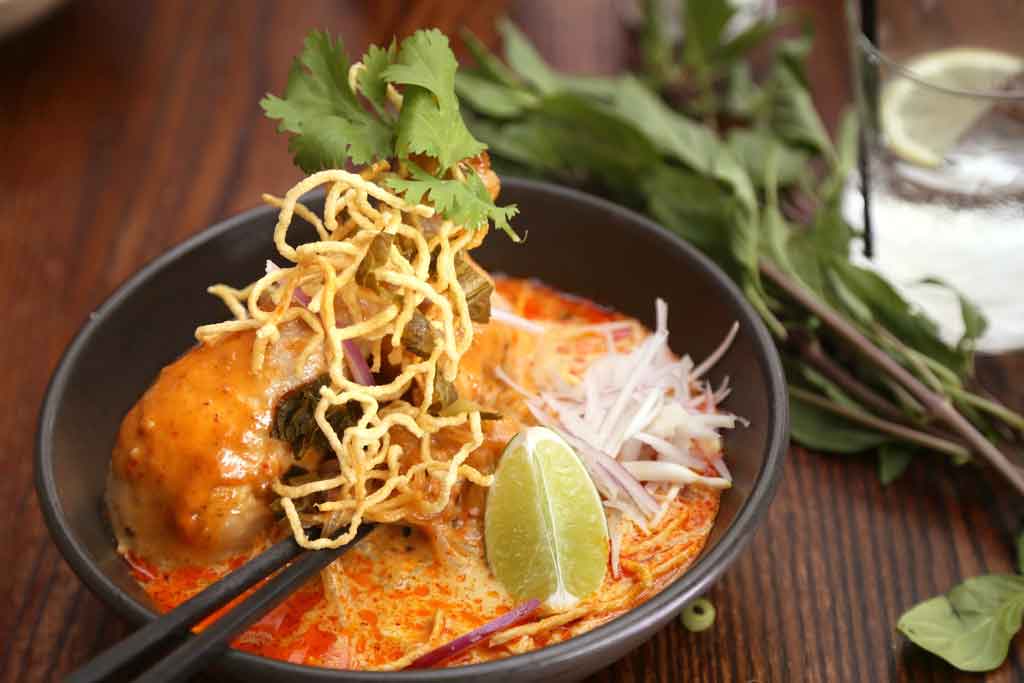
Thai food is one of the greatest cuisines on earth, and eating your way around the country is one of the genuine joys of being here.
Thailand has plenty of delicious food so don’t make the mistake of sticking to tourist-menu pad thai — which, by the way, is rarely what Thais actually eat day-to-day. There’s so much delicious street food so do push yourself toward the street stalls, the markets, and the local shophouse restaurants.
Some things you absolutely must eat: pad kra pao – stir-fried beef with holy basil – the nation’s unofficial national dish is delicious but can be spicy, khao soi (the northern Thai coconut curry noodle soup, something I missed enormously when I left Chiang Mai), som tum (green papaya salad, which varies fascinatingly by region), khao man gai (poached chicken over rice — deceptively simple and deeply good), mango sticky rice for dessert, and fresh grilled fish at any coastal market.
A note on spice: when local places ask how spicy you want your food, be honest about your tolerance. Thai spicy and tourist spicy are very different things, and there’s no shame in saying ‘mai phet’ (not spicy) but if you can do try medium spicy – you’ll eat some of the best food of your life.
Drink-wise, the local Singha and Chang beers are perfectly good and extremely affordable. Fresh fruit smoothies and shakes at market stalls are a daily necessity in the heat. Avoid ice in places that look questionable, but in most tourist areas and restaurants this is no longer the concern it once was.
Health and Safety in Thailand
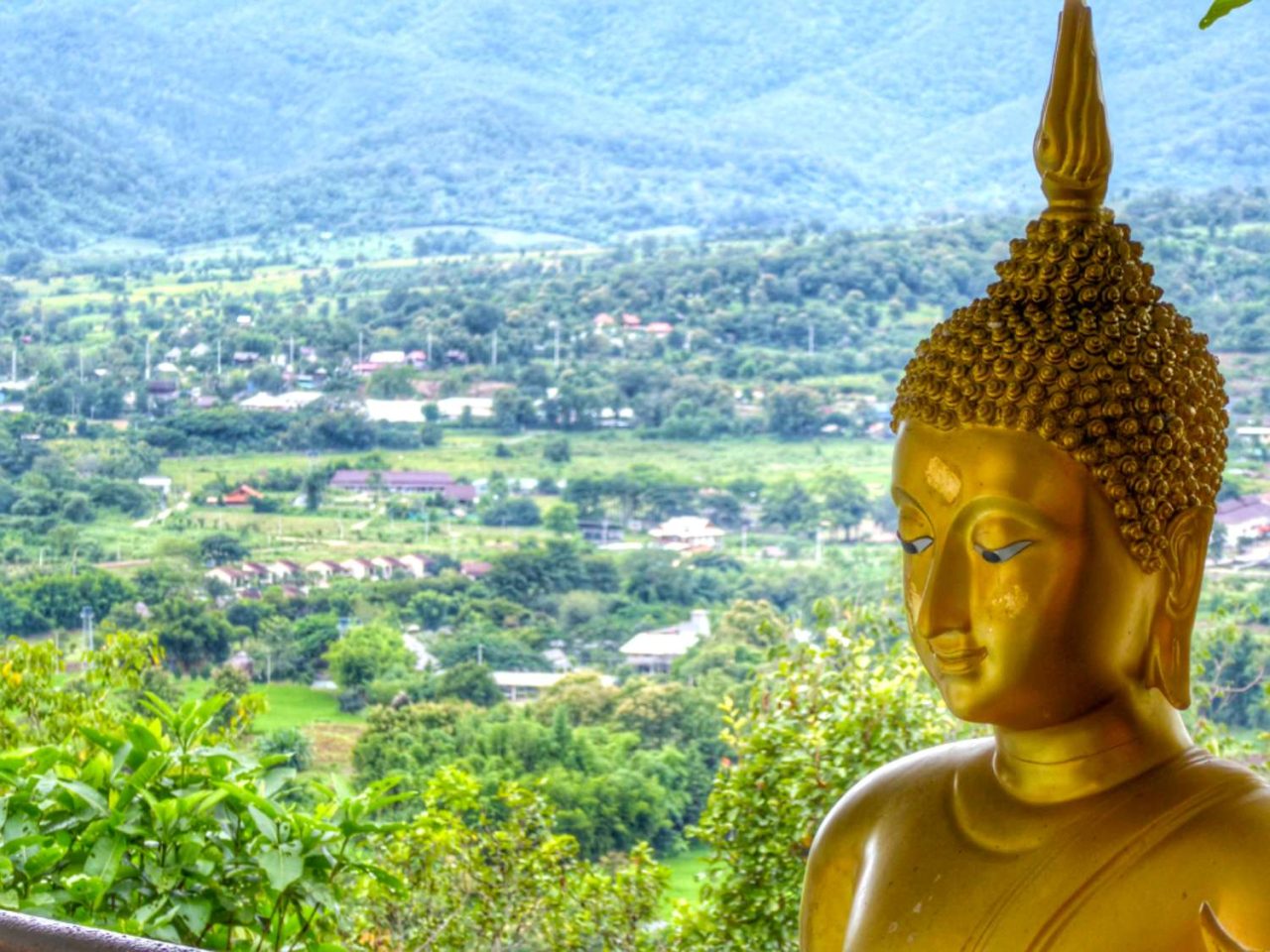
Thailand is one of the safest destinations in Southeast Asia for travellers, I say that as someone who has spent a lot of time there but the stats will back me up. Violent crime against tourists is genuinely rare.
That said, being smart matters. The roads are the real danger. Thailand has some of the highest road fatality rates in the world, and a disproportionate number of tourist deaths involve motorbikes.
Only ride a motorbike in Thailand if you are already experienced – take it slowly, don’t ride at night in unfamiliar areas, and always, always wear a helmet. You’ll also need an international driving permit (IDP) – the police do check in popular destinations. If you plan to ride, make sure your travel insurance covers it. I use Safety Wing which is a travel medical insurance that covers illness and accidents.
Health-wise, dengue fever is present across the country and transmitted by daytime mosquitoes, so use insect repellent religiously, particularly at dawn and dusk. Malaria risk is low in most tourist areas but exists near some borders.
It’s always best to consult a travel health clinic before you go and get advice on vaccinations — at minimum, make sure your hepatitis A and typhoid jabs are current.
On the subject of drugs: Even though Thailand legalised cannabis it is not permitted to smoke in public places, plus penalties for other drugs (including vaping and e cigarettes) are strict so don’t risk it. No party, no experience, no story is worth the risk. Make sure you read up on the current laws and legal status for drugs in Thailand as they can change.
Thai Cultural Tips and Etiquette

Thailand has a deeply respectful culture, and making the effort to understand and observe local customs will genuinely change how people interact with you. Thais are remarkably warm and patient with visitors, but there are a few things that mark you as someone who cares.
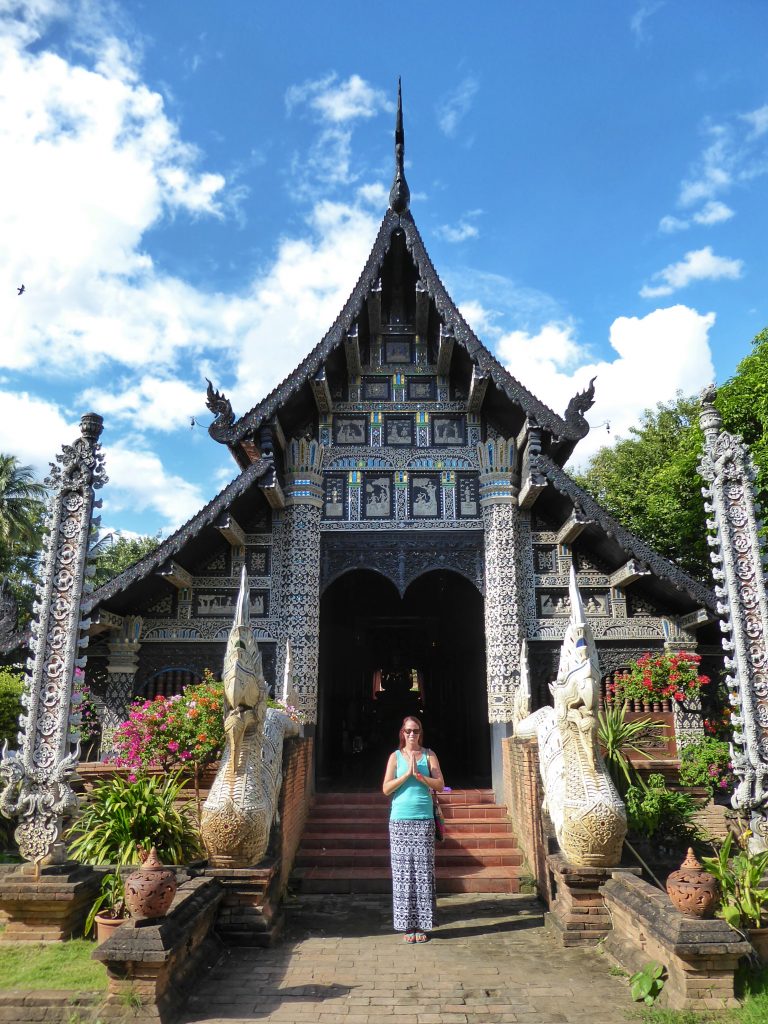
Dress modestly when visiting temples. This means shoulders and knees covered for both men and women — most major temples have fabric wraps available to borrow if you’ve forgotten. Take your shoes off before entering any temple or Thai home.
The monarchy is held in enormous reverence, and public criticism of the royal family is not just socially inappropriate — it’s a criminal offence under lese-majeste laws. Simply don’t go there. Thailand also has serious defamation laws to consider when leaving reviews.
The head is considered sacred and the feet the lowest, both physically and spiritually. Don’t touch anyone on the head, even children. Don’t point your feet at people or at images of the Buddha. These things matter to people here, and respecting them costs you nothing.
A few words of Thai go an extraordinarily long way. ‘Sawasdee krap/ka’ (hello), ‘khob khun krap/ka’ (thank you), and ‘mai phet’ (not spicy) will earn you smiles everywhere. Thais find it genuinely delightful when foreigners make the effort.
Practical Tips For Visiting Thailand
SIM cards: Buy one at the airport the moment you land. AIS and DTAC both offer excellent tourist SIM packages with unlimited data for two to four weeks at reasonable prices. Having data from the first minute saves an enormous amount of hassle. You could also get a esim like Airalo before you travel.
Money: The Thai Baht runs at roughly 44-45 to the pound and about 34-35 to the US dollar. ATMs are everywhere and generally reliable, though they charge a fixed withdrawal fee (currently around 220 baht per transaction) that adds up if you’re making lots of small withdrawals so it’s best to take out larger amounts per transaction. Get a Wise or Revolut card before you go — both work well in Thailand and save you significantly on fees. Many smaller local places are cash only, or charge 3% extra to pay by card, so always carry some Thai baht in cash for smaller purchases.
Power: Thailand uses Type A/B and Type C plugs at 220V. A universal travel adaptor covers you for all sockets you’ll encounter.
Travel insurance: Get it. This sounds obvious, but I’ve met too many people who’ve skipped it and regretted it. Make sure your policy covers motorbike riding if you plan to ride, adventure activities if you plan to dive or trek, and medical evacuation.
So now you know how to plan a trip to Thailand
Planning a trip to Thailand doesn’t have to be overwhelming – do your research on timing, destinations, culture and keep up to date with entry requirements and you should be able to plan a smooth trip to the Land of Smiles that you’ll remember forever.
That first trip will probably hook you completely, and within a year you’ll be planning the next one. If you’re anything like me you’ll be thinking about how to move to Thailand after the 2nd trip!
I’ve been in Thailand for years now, and although some places can be packed with tourists, I still manage to find spots away from the crowds and unique things that surprise me.
The country has more depth to it that most people realise and it takes time to reveal itself — the more you visit, the more you understand how special this country is and how much more it has to offer.
So plan a trip to Thailand carefully – don’t try to go everywhere on the first visit, eat everything that looks good, be respectful, get off the main tourist routes when you can, and talk to people.
Thai people are genuinely warm, curious, and welcoming — some of the best conversations of my travelling life have come from simply being open to them in places that don’t see many visitors.
Thailand rewards the curious and the open-hearted. Respect the locals and the culture, leave room for the unexpected, and let the country do the rest. You won’t regret it and I’m sure you will leave wanting to come back for more like I did.
Read More Thailand Blog Posts:

