


- Make 1–2 homemade cheeses or dips to give your vegan charcuterie board a standout centerpiece.
- Mix up textures and flavors—creamy, crunchy, smoky, sweet—to keep things interesting.
- Style it up: Use an attractive board or tray, add small bowls, and fill gaps with herbs or edible flowers.
Think “vegan charcuterie board” sounds like an oxymoron? Think again. The grazing-board format is a perfect canvas for showing off just how colorful and delicious a plant-based spread can be. Here’s how to assemble an Instagram-ready, drool-worthy vegan charcuterie board that feels abundant, intentional, and effortless.
1. Make at least 1 thing from scratch.
While you can put together a solid vegan charcuterie spread using just store-bought components, adding a homemade cheese and/or dip instantly elevates the experience. Just one or two from-scratch elements shows care and creates a focal point to anchor your board. For inspiration, cookbooks like Breaking Up with Dairy and Miyoko’s Vegan Creamery offer a range of fancy-yet-approachable options.
Some cheese-board-worthy faves from the Forks Over Knives recipe box:
2. Set the stage with a great board.
Choose a board or tray that fits the size of your spread and the number of people you’re serving. For extra style points, go round: This circular JK Adams tray creates a natural visual flow and has a grooved edge for crackers. But a dedicated cheese board isn’t required: A quality wooden cutting board works beautifully, too. We like Sonder LA’s Winsome board, which includes a cracker well on one side.
Don’t forget the hardware: Include one small knife or spreader for each cheese or dip so guests aren’t cross-contaminating flavors. The mini knives in this four-piece Boska set are stainless steel, easy to handle, and dishwasher-safe.
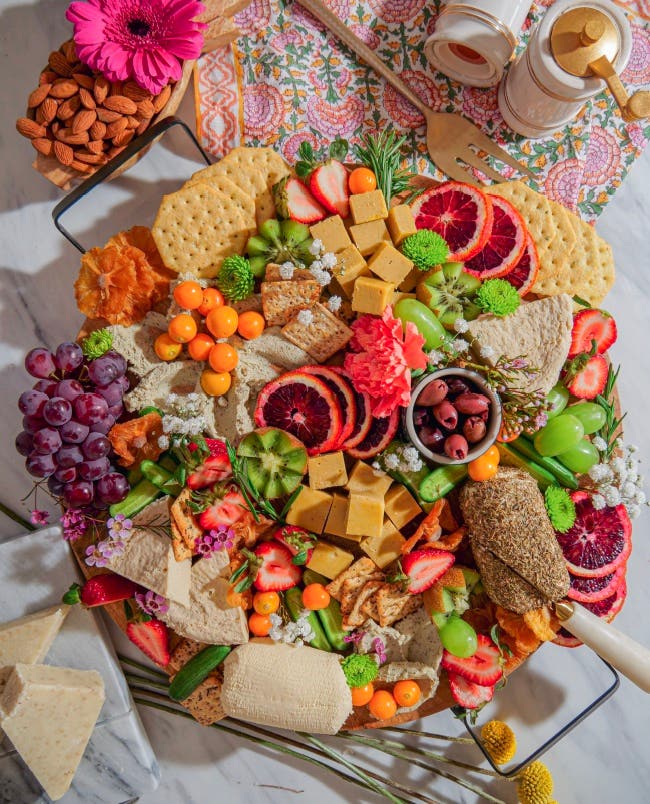
A vibrant vegan charcuterie board by Chef Bailey Ruskus, featuring homemade plant-based cheeses, fresh fruit, olives, crackers, and edible flowers. From Breaking Up with Dairy. Photo reprinted with permission.
3. Variety is key!
“The more [varied ingredients] that you have on there, the better the cheese board’s going to be,” says Chef Bailey Ruskus, author of Breaking Up With Dairy and master of the art of the vegan cheese board. “I’ll make at least three different cheeses, and round it out with gluten-free crackers, toast points, seasonal fruit, dried fruit, mini cucumbers or pickles, nuts, marinated olives in little bowls, etc.”
Plant-based cooking instructor Mary Margaret Chappell suggests using this flavor/texture checklist to ensure your board feels complete.
- CREAMY: sliceable or spreadable vegan cheese. (See recipes.)
- HEARTY: plant-based pâté or a thick dip like hummus or pesto. (See recipes.)
- SMOKY: roasted or grilled vegetables
- CRUNCHY: sliced raw veggies and cherry tomatoes
- NUTTY: raw or roasted nuts and seeds
- SWEET: fresh and/or dried fruit; a few squares of vegan dark chocolate
- TANGY: pickled veggies, grainy mustard, and olives
- BREADY: tender whole grain bread or crispy crackers (Mary’s Gone Crackers, Wasa crispbread, or toasted pita wedges)
4. Follow the ‘Rule of 2.’
“Amounts should be abundant but not overflowing, so each element is easy to serve,” Chappell says. To keep things balanced and prevent waste, she recommends following the rule of two when calculating how much of each item you need per person: two slices of bread, two crackers, two slices of each fruit or veggie per person, and 2 tablespoons (1 ounce) of each cheese and/or spread per person.
5. Arrange with intention.
“Whether you’re arranging foods on a rectangular board or a round tray, place items in a circular pattern around a central focal point,” Chappell says.
Ramekins help corral small items like nuts or olives. Mixing dish shapes adds dimension without clutter.
6. Fill in the gaps.
Ruskus says this is one of the most important parts of creating a truly eye-popping vegan cheese board. “I’m all about filling the gaps,” Ruskus says. “Fill in the blanks with fresh herbs and edible flowers—that will really take it to the next level.” Think rosemary sprigs, thyme, dill, mint, nasturtiums, or whatever complements your flavor profile.
7. Try a theme.
For a little creative challenge, build your board around a specific region, season, or mood.
“You could make a Mediterranean-inspired board that has cherry tomatoes and marinated peppers,” Ruskus says. Other ideas:
- A snacky movie-night board with veggies, dips, air-popped popcorn, and chocolate-drizzled dates
- A winter citrus board with bright fruits and herb-marinated olives
- A brunch board with homemade waffle sticks, fresh berries, spreadable cheeses, and jam

