


If you’re standing in a grocery store aisle overwhelmed by produce items and vitamin C supplements, we can relate. Vitamin C supplements represent a $2 billion industry that markets everything from gummies to drink powders that boost immunity and energy1, and the sheer number of products can quickly start to feel paralyzing.
But does it have to be this complicated? As an antioxidant that offers a multitude of properties that support immune health, vitamin C benefits pretty much everyone. You likely already know you need to be meeting your daily vitamin intake, but you may not be sure how to fit it into your daily routine. So here’s the multi-billion dollar question: “Should I take vitamin C everyday?”
Beyond that, there’s also still the question of how much you should take and how you should take it. Should I take a supplement? Is it better to just consume vitamin C-rich foods and drinks? Let’s dig into the myths surrounding vitamin C, a comparison of vitamin C supplements and vitamin C-rich food items, and the various forms of preparation and consumption for the best vitamin C retention.
The $2 Billion Question: Myths and Marketing in the Industry
The supplement industry may want you to think that you can’t reap the full benefits of vitamin C on your own without a little capsule. But is vitamin C supplementation really necessary for optimal health? As you’ll see as we explore the myths of vitamin C, you may be better off on your own than you think.
Common marketing promises of vitamin C supplements range from preventing the common cold to boosting energy. But not all of these claims are necessarily rooted in the truth. Although vitamin C can and does provide immune support, the claim about common cold prevention isn’t exactly true — it’s more a tactic used to convince consumers to purchase a vitamin C supplement. Let’s take a look at some common vitamin C myths and the truth behind the marketing.
MYTH #1: “Supplements prevent colds”
A study review from 2023 reports that compared to placebo, vitamin C intake of around 1 gram per day significantly decreased the severity of the common cold by 15%2. Although this highlights that vitamin C can help with symptom management, research does not show that vitamin C can prevent colds for the general population3,4.
There is, however, an exception: elite athletes such as marathoners or skiers who are exposed to short bouts of extreme physical stress show potential to reduce their common cold risk by 50% with vitamin C intake5.
Finally, although vitamin C may not prevent colds altogether, regularly taking vitamin C before any cold symptoms begin may shorten the duration of your cold by 8 to 14%6.
MYTH #2: “More vitamin C = stronger immunity”
Okay, so we’ve addressed that although vitamin C can’t necessarily prevent the common cold, it can still make a difference in how you experience a cold. But now you may be wondering, “How much vitamin C should I take daily?”
Although you might assume that the more vitamin C the better, higher doses of vitamin C do not equal stronger immunity. This is because the plasma vitamin C saturation occurs at 200 milligrams (mg) daily7 — taking mega doses of vitamin C will not provide any further benefit.
In fact, the body literally cannot absorb excessive amounts of vitamin C (think 2000 mg daily), and doses this high can actually cause negative side effects like diarrhea, nausea, and stomach cramps4,8. In rare cases, excessive doses of vitamin C can even cause kidney stones or negatively impact the health of those with kidney disorders, iron overload disorder, or hereditary hemochromatosis4.
MYTH #3: “Vitamin C supplements are just as good as food”
Because of the brightly colored labels and curated claims, you may think that vitamin C supplements are more effective than your average glass of orange juice. But the truth is that when it comes to the battle of vitamin C supplements vs. food, there’s no reason why you can’t get all your vitamin C needs from nourishing meals and snacks.
Here’s where the chips fall when you compare supplements to vitamin C-rich foods.
Bioavailability
Experts report that the bioavailability of vitamin C in supplements and foods is basically equivalent9,10. The key difference is that when you consume vitamin C-rich foods, your intake of vitamin C is typically much lower than a single dose of a vitamin C supplement. The smaller dose means your body is able to absorb it much more efficiently.
A 2025 study review reports that vitamin C-rich food intake ranges between 30 and 180 mg/day, with absorption efficiency ranging from 70 to 90%11. This number declines to below 50% when intake exceeds 1 g/day, which is a typical dietary supplement dose. The excess vitamin C simply gets excreted through urine, so there’s really no need to overdo it.
Whole Food Matrix Advantage
One unexpected advantage of getting your vitamins from food rather than supplements has to do with the whole food matrix. What this means is that by consuming vitamin C and antioxidant components like bio flavonoids via food, you’re also consuming dietary fiber and other cofactors found in the fruits and vegetables rich in vitamin C. This can help further enhance bioavailability of a variety of nutrients, essentially unlocking this critical vitamin to help your body better absorb and make use of it10,12.
So although you can certainly get a higher dose of vitamin C through a dietary supplement, vitamin C-rich foods take the win when it comes to the full package.
The Verdict
Based on the breakdown of these myths, it’s not only sufficient for you to get your vitamin C from food — it may be the preferred way to do it. However, that doesn’t necessarily mean that you should throw away those supplements you just invested in.
Vitamin C dietary supplements may still be appropriate for people with vitamin C deficiencies, as a higher dose would be warranted to bring a person up to healthy vitamin C serum levels. Vitamin C dietary supplements will have an enhanced bioavailability when the body is in a depletion state, so there are cases where they may provide legitimate support11. And there’s nothing wrong with reaching for a supplement when you know you’ve failed to meet your needs for the day — but you should use them as a back-up, rather than an excuse to not eat well-rounded meals.
For most people though, vitamin C from food sources will provide the most overall health benefits. If you’re looking for guidance on how to get vitamin C naturally, check out our article on food sources of vitamin C.
Vitamin C Cost Analysis of Food vs. Supplements
Based on the daily recommended intake of vitamin C for women (75 mg per day), let’s look at the cost analysis comparing a vitamin C dietary supplement to hitting intake needs from vitamin C-rich foods13,14,15,16.
- Supplements: $0.05 or more/day = Assuming intake of isolated ascorbic acid tablets at a 75 mg vitamin C serving.
- Food (based on data from January 2026): Around $0.30-$1.00/day = By consuming inexpensive vitamin C-rich foods like oranges, you may be able to reach your daily needs with just a single fruit.
Based on pure daily cost analysis, vitamin C supplements may be cheaper than fruit. However, you should also consider that vitamin C-rich foods provide additional nutrients like antioxidants, potassium, fiber, and more — not to mention the fact that you likely already eat many vitamin C-rich foods without realizing it.
How Cooking Destroys Vitamin C
Okay, so we can agree that it’s possible to hit all your vitamin C needs through food. But it’s also not just about what you eat — it’s also about how you eat it.
A Heat-Sensitive Nutrient
Something to keep in mind when it comes to consuming vitamin C-rich foods is that exposure to heat destroys vitamin C. To preserve your vitamins as much as possible and retain vitamin C content in your food, cooking methods should limit heat exposure.
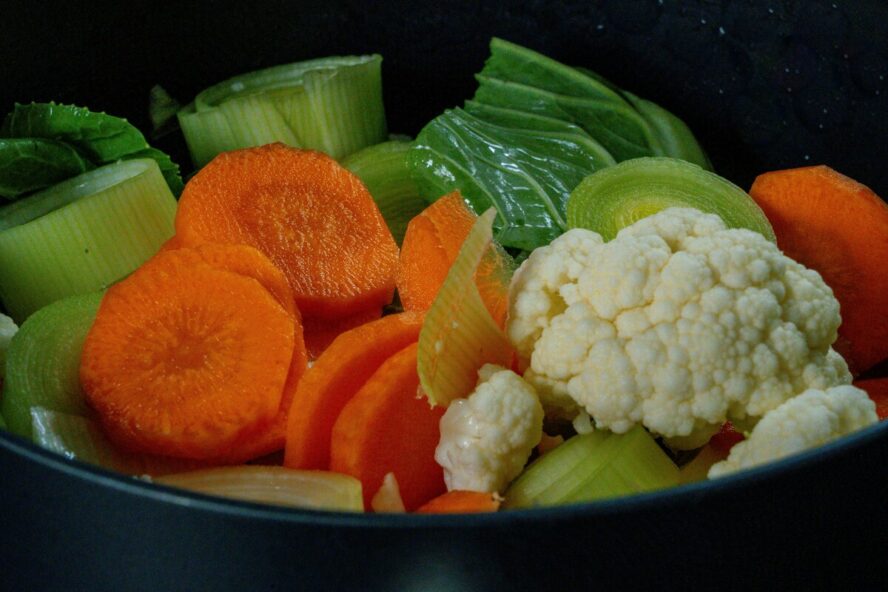
For example, experts suggest you avoid boiling because vitamin C is a water-soluble vitamin4. This means it will leach into any cooking liquid, and is therefore lost during methods that require the food to be soaked in water (unless the person consumes the liquid along with the item being cooked)4,8.
A 2019 study review shows that boiling can cause up to around 50-94% loss of vitamin C in vegetables like potatoes when boiled and reheated or held in a hot pan before serving17. A 2020 study shows that tomato juice heated at temperatures between 158 and 194 degrees Fahrenheit had significant vitamin C loss, with higher temperatures causing more loss18.
Cooking Methods Ranked
Since some vitamin C-rich produce like potatoes and broccoli are cooked in a variety of dishes, it’s good to know the best way to cook them without losing too much vitamin C. Here are our rankings for cooking methods from best to worst in terms of vitamin C retention19,20,21:
- BEST: Steaming or raw. The absolute best way to retain vitamin C in your fruit and vegetables is to not cook them at all — raw prep retains 100% of vitamin C. However, steaming vitamin C-rich produce falls pretty close to eating raw produce, retaining almost all of the vitamin C.
- BETTER: Microwaving or stir-frying. When you want a cooking method that’s fast but still retains most of your vitamin C, stir-frying or microwaving for a short period is the way to go. These methods only cause roughly 15-25% loss of vitamin C, so you’ll still get the majority of your produce’s vitamin content.
- WORST: Boiling. Boiling vitamin C-rich produce will leach the most nutrition, at around an average of a 50-90% loss.
The Cookware Secret
Some cookware is designed for higher temperatures than others — so it’s no surprise that different materials can cause more vitamin C loss. For example, cast iron and aluminum cooking pans retained just 61-72% of vitamin C from the produce tested, as compared to 85-94% retention with stainless steel and titanium cookware22.
To maximize your vitamin C intake, avoid cooking with raw cast iron, carbon steel, unlined copper, and aluminum cookware. These types of cookware do not inherently destroy vitamin C, but they do retain more heat than other cookware materials. Ultimately, this means you expose your vitamin C-rich foods to more oxygen, heat, and moisture that can oxidize the vitamin.
Instead of the above cookware options, stick to pans that will expose your food to less heat, like stainless steel, ceramic, and enameled cast iron22,23. Glass cookware is also a great option to provide a neutral surface for preparing vitamin C-rich foods24.
When Supplements Actually Make Sense
Most people can enjoy optimal immune protection simply from incorporating vitamin C-rich produce into their diet. But there are some groups of people that may benefit from consuming a vitamin C supplement for extra support. Let’s take a look at individuals that are at greater risk of vitamin C deficiency due to either increased oxidative stress exposure, nutrient absorption issues, or reduced nutrient intake13.

Increased exposure to oxidative stress
Nutrient absorption issues
- Those with malabsorption conditions like Crohn’s disease or celiac disease
- People who have had intestinal surgery or a history of bariatric surgery
Reduced nutrient intake
The Bottom Line
Ultimately, if you’re still asking yourself “do I need vitamin C supplements?”, the answer is: it depends. For most people, whole food items containing vitamin C are the most beneficial source of vitamin C. If you’re not an extreme athlete, smoker, or otherwise at risk of deficiency, you’re likely better off focusing on eating a rainbow of antioxidants from fruits and vegetables for the most effective and nutrient-dense immune protection.
Sources:
- https://www.fortunebusinessinsights.com/vitamin-c-market-110676
- https://pmc.ncbi.nlm.nih.gov/articles/PMC10712193/
- https://pmc.ncbi.nlm.nih.gov/articles/PMC7166744/
- https://www.health.harvard.edu/nutrition/myths-and-truths-about-vitamin-c
- https://www.cochrane.org/evidence/CD000980_vitamin-c-preventing-and-treating-common-cold
- https://pubmed.ncbi.nlm.nih.gov/23440782/
- https://www.cambridge.org/core/journals/proceedings-of-the-nutrition-society/article/what-is-the-optimal-intake-of-vitamin-c/2E5F1A5B1A64266EF996A59B4776839E
- https://nutritionsource.hsph.harvard.edu/vitamin-c/
- https://lpi.oregonstate.edu/mic/vitamins/vitamin-C/supplemental-forms
- https://pmc.ncbi.nlm.nih.gov/articles/PMC7393990/
- https://pmc.ncbi.nlm.nih.gov/articles/PMC12608462/
- https://www.tandfonline.com/doi/10.1080/10408398.2023.2232880?url_ver=Z39.88-2003&rfr_id=ori:rid:crossref.org&rfr_dat=cr_pub%20%200pubmed
- https://ods.od.nih.gov/factsheets/VitaminC-HealthProfessional/#h4
- https://businessanalytiq.com/procurementanalytics/index/ascorbic-acid-vitamin-c-price-index/
- https://www.selinawamucii.com/insights/prices/united-states-of-america/citrus-fruits/
- https://pubmed.ncbi.nlm.nih.gov/31706353/
- https://academic.oup.com/ijfst/article/54/1/291/7805488
- https://academic.oup.com/ijfst/article/55/1/201/7805618
- https://agriculture.institute/food-fundamentals-fv/thermal-processing-storage-nutrients-food-quality
- https://pmc.ncbi.nlm.nih.gov/articles/PMC6049644/
- https://pmc.ncbi.nlm.nih.gov/articles/PMC2722699/
- https://pmc.ncbi.nlm.nih.gov/articles/PMC8249525
- https://academic.oup.com/ijfst/article/54/1/291/7805488
- https://pubmed.ncbi.nlm.nih.gov/37330033/


