



Over the past couple of years, microplastics have been on everyone’s lips… literally. Researchers have found microplastics in bottled water and a number of popular American beers, in the plants we eat, and even in our tap water. But then in mid-January, The Guardian published an exposé questioning the supposed prevalence of the tiny plastic particles1. The article cast doubt over a number of studies, posing one important question: Were microplastics really as omnipresent as the science seemed to suggest?
We even covered one of the highest-profile studies here at Organic Authority, discussing the concerning research that suggested a significant amount of microplastics had made their way into human brains. The study claimed that the average human brain contained enough microplastics to make up a plastic spoon. Now, over a year after that study was published, it has come under direct fire.
“The brain microplastic paper is a joke,” said Dr Dušan Materić at the Helmholtz Centre for Environmental Research in Germany. According to the exposé article, this study and eight others have been “thrown into doubt.” Another analysis went as far as to knock the number of problematic studies up to 18.
So how did so many scientists (allegedly) get things so wrong with regards to microplastics — and what’s the truth? We’re so glad you asked.
What’s the Issue With the Studies?
First thing’s first: No one is alleging that the over-reporting of microplastic contamination is in any way underhanded. The Guardian reported “no suggestion of malpractice,” and Andrea De Vizcaya Ruiz, PhD, Professor of Environmental & Occupational Health at UC Irvine Joe C. Wen School of Population & Public Health, is quick to support the ways in which journalists reported the early results.
“I would not describe earlier media coverage as ‘scare-mongering,’” says Dr De Vizcaya Ruiz, “and I think asking questions and holding an open discussion is always valuable.” If anything, the issue is rooted in the novelty of the findings, scientists overeager to report their results, and an innate side effect of the scientific methods used to identify the microplastic particles, leading to a slew of false positives.
False Positives and Scientific Errors
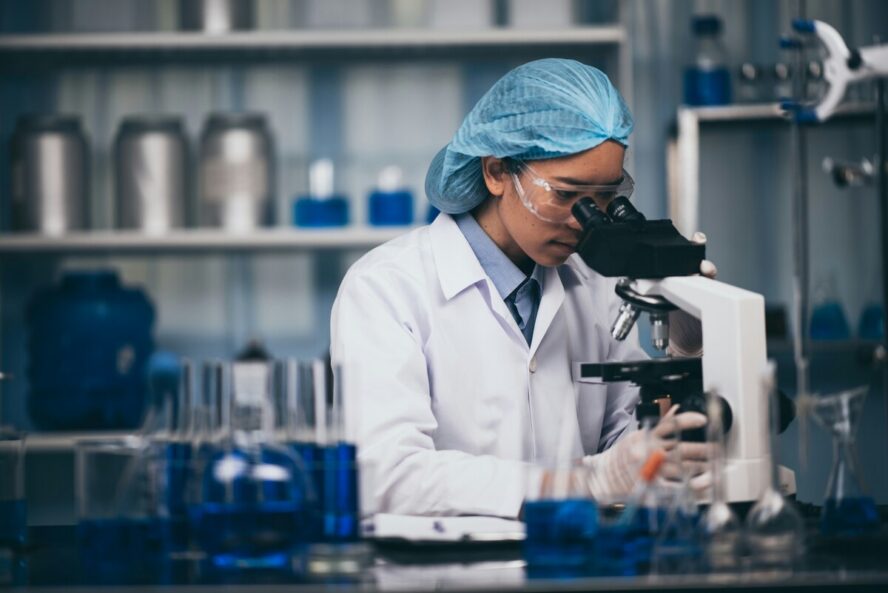
To analyze samples, many of the studies (including the now infamous brain study) relied on pyrolysis gas chromatography-mass spectrometry. This method can lead researchers to mistake certain substances for plastic, including some that are naturally present in the human body.
“Fat is known to make false-positives for polyethylene,” said Materić, who notes that the brain is approximately 60% fat and the liver about 5%. “That is why there are [approximately] 10 times more ‘plastics’ in the brain.”
Materić believes that more than half of the papers reporting on microplastics in human tissues may have had similar problems. And according to Chris DeArmitt, PhD FRSC FIMMM Cchem, Founder & President of the Plastics Research Council, this isn’t the only issue plaguing some of the microplastics research.
“I have shown for many years that a large proportion of microplastic studies are not valid because they made elementary scientific mistakes,” he says. “Since then, the European Food Safety Agency and other scientists around the world have published reports and studies agreeing with me.”
He notes that a large proportion — perhaps over 80% — of these studies’ results are invalidated in whole or in part due to methodological problems. These problems include studying a special lab-made plastic particle type unlike those found in the real world, or neglecting to compare the effects of microplastics to those of other particles, like cellulose or clay.
“Sometimes a study will use the word ‘accumulation’ when they actually found particles but without evidence that they accumulated,” he adds.
How Insufficient Quality Control May Have Led to Bad Conclusions
Dr. Frederic Béen, assistant professor in Vrije Universiteit Amsterdam’s Chemistry for Environment & Health research group, cites other deviations from “very standard” laboratory practices in “quite a lot of papers.” In his criticism of a study in which scientists claimed to identify 10,000 nanoplastic particles per litre of bottled water, Materić argues that insufficient quality control and failure to account for contamination could have skewed the results2.
Due to these errors, DeArmitt alleges that the worries regarding microplastics are completely unfounded. “The lifetime consumption of microplastic is <0.01g and they pass right through us without any evidence of accumulation,” he says, citing a class action legal case whereby plastic fibers were implanted in the body.
“They were attacked and destroyed by the body, just like it would destroy a splinter of wood or other foreign object,” he says. “The body has natural defense systems to remove and destroy any such particles, so they do not accumulate.”
Dr. Cassandra Rauert, an environmental chemist at the University of Queensland, echoes these concerns, noting that many of the reported concentrations of plastic particles in the body are “completely unrealistic.” According to Rauert, it’s “not biologically plausible” for particles between 3 and 30 micrometres in mass to enter the bloodstream.
“It’s really the nano-size plastic particles that can cross biological barriers and that we are expecting inside humans,” she says. “But the current instruments we have cannot detect nano-size particles.”
The Truth About Microplastics
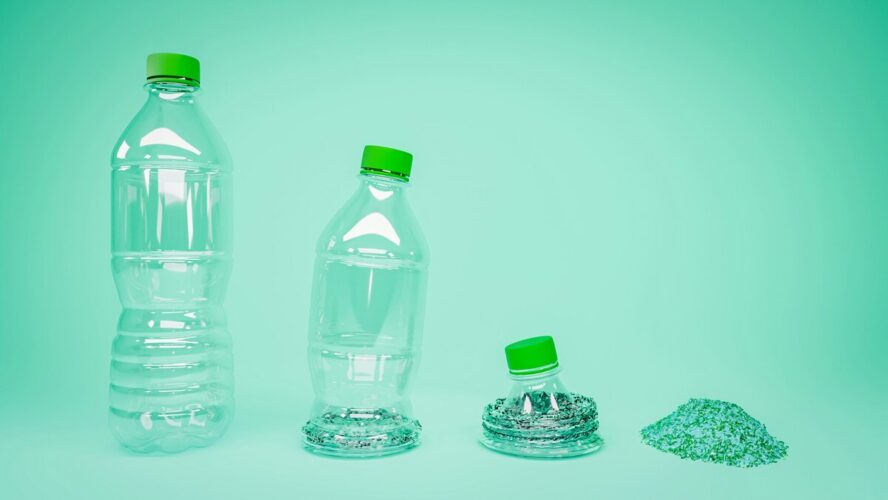
Microplastics are a relatively new discovery, with their first published mention in 20043. Nanoplastics, defined as measuring just 1 μm (1 micrometer, or 1000 nm), are an even more recent scientific focus. The issue at this juncture, then, is that the science is just too new to be conclusive.
“In general, we simply find ourselves in an early period of trying to understand the potential human health impacts of MNPs, and there is no recipe book for how to do this,” Professor Matthew Campen, senior author of the brain study, told The Guardian. “We have acknowledged the numerous opportunities for improvement and refinement and are trying to spend our finite resources in generating better assays and data, rather than continually engaging in a dialogue.”
Ruiz, too, acknowledges that “the scientific community is well aware of the limitations, including contamination controls, nanoscale characterization, and quantification thresholds, as well as analytical interference.” Above all, she cautions against invalidating all of the data that has surfaced.
“The presence of microplastics and nanoplastics in human tissues has been reported using multiple independent analytical methods,” she says, “and it is important to recognize that when several different characterization techniques point in the same direction, it is difficult to dismiss the findings as artifacts.”
Continued research, she says, is essential. “Media coverage sometimes moves faster than mechanistic certainty, which is common in emerging environmental health topics,” she says. “The balanced approach, in my view, is neither dismissal nor alarmism.”
Regardless, Concerns About Plastic Are Valid

No matter the human health implications, plastic remains a global worry. “Plastic production has increased dramatically, waste is widespread, and exposure to plastics occurs through ingestion, inhalation, and likely other pathways,” says Ruiz. “The concern is not invented; it reflects the scale of environmental contamination.”
It’s for this reason that many have begun touting the benefits of bioplastics, which are which are produced from renewable biomass sources like natural polymers like cornstarch or gluten and crucially do not rely on fossil fuel. Time will tell us whether microplastics truly constitute cause for alarm from a human health standpoint, according to Ruiz.
“It is a fact that we are exposed to plastics of different shapes, sizes, and forms every day,” she says. “And in the scientific community, we are working to understand the health impacts.”
Sources:
- https://www.theguardian.com/environment/2026/jan/13/microplastics-human-body-doubt
- https://www.pnas.org/doi/10.1073/pnas.2300582121
- https://www.science.org/doi/10.1126/science.adl2746


