


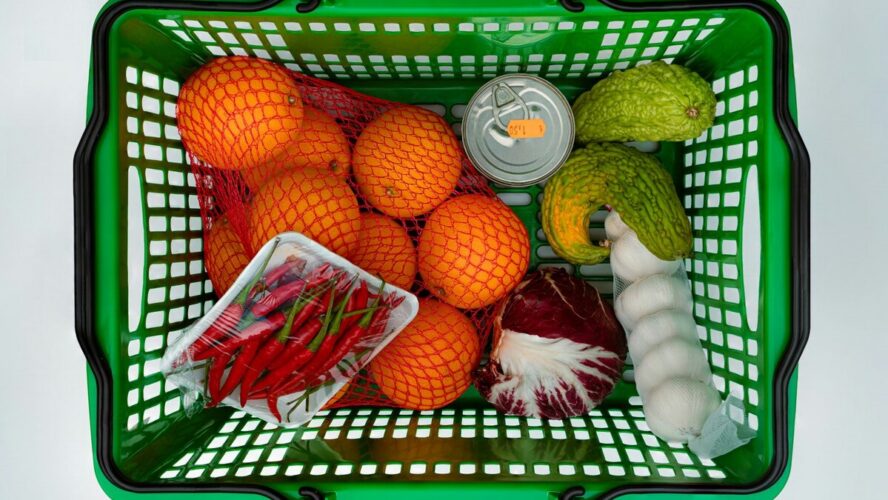
The ongoing war in the Middle East has devastating consequences on everything from geopolitics to civilian life — some obvious, and some more unexpected. Around the world, the impact of the conflict is inflating the cost of airline tickets, the prices at the gas pump, and even grocery bills.
“The oil shortage impacts everything,” explains Jillian Hishaw, an agricultural attorney at Hishaw Law LLC and founder of the farming non-profit 30,000 Acres. She draws a direct link between the conflict and the skyrocketing prices of everything from the gas needed to transport foods to the plastic containers in which to put them.
“Wax boxes went from 85 cents last year to $3.25,” she says. “A 25-pound tomato cardboard box was around a dollar — now it’s over $3.00. Watermelon bins used to be $40; now they are $100.”
An Unexpected Effect of the Crisis
The link between the crisis and increased prices for gas and plastic, which is derived from petroleum, is clear. But the war has also directly led to a shortage in one specific — and crucial — behind-the-scenes element needed to secure food for the global population: fertilizer. And the timing, according to Hishaw, couldn’t be worse.
“The challenge is that farmers cannot afford to plant this spring,” she says. “If they do plant, they are planting late, resulting in a lower yield to harvest and sell. Limited crops mean higher prices to cover the increased input costs for producing the same crop that was cheaper last year.”
Why Do We Need Fertilizer from the Middle East?
In an ever-more globalized world, international conflicts inevitably disrupt supply chains. It’s something we all saw clearly, for example, during the pandemic — or even at the outset of the conflict in Ukraine, when access to everything from bread to mustard was jeopardized due to shortages of raw ingredients typically sourced from “the breadbasket of Europe.”
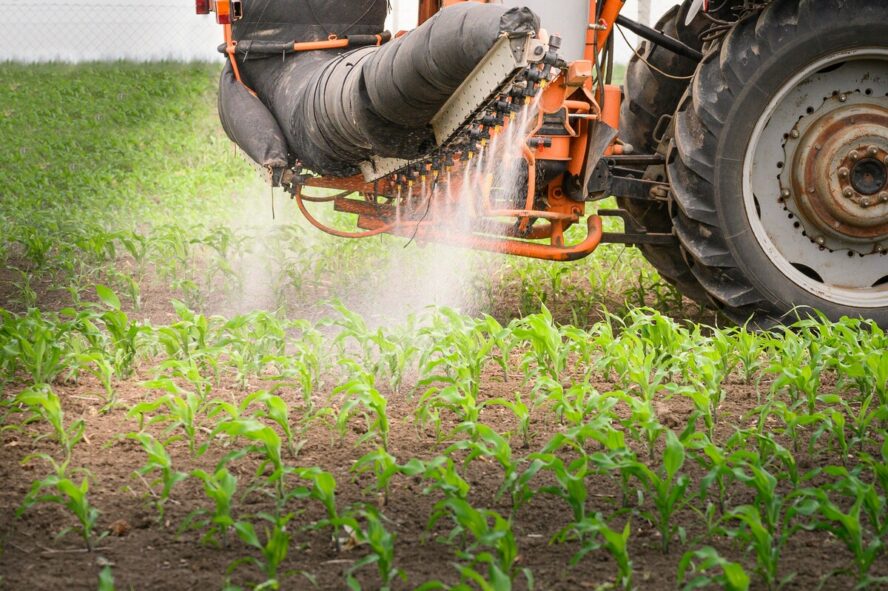
The impact of the conflict in the Middle East is a bit less direct, but could prove even more devastating, seeing as the Persian Gulf is a key source of the world’s fertilizers. Together, Iran, Saudi Arabia, Qatar, the UAE, and Bahrain supply more than a third of the world’s urea and nearly a quarter of the world’s ammonia, both of which are fertilizers that supply essential nitrogen to the soil.
What Are Nitrogen-Based Fertilizers?
Nitrogen is crucial for stimulating plant growth. While the compound forms naturally in soil, farmers have long relied on synthetic nitrogen fertilizers such as urea and ammonia to stimulate plant growth and increase the potential for yield. In the face of a growing global population, this is a crucial boost needed to help feed our planet.
But over the past few weeks, prices for nitrogen-based fertilizers have skyrocketed. The New York Times reports that in Egypt, urea climbed 37 percent to $665 per ton1, and Hishaw has noticed the cost of fertilizer doubling from between $400 and $500 a ton last year to between $700 and $1,000 today.
For the moment, price hikes are linked less to halted production and more to access. While QatarEnergy halted production earlier this month after strikes from Iranian drones and missiles, The New York Times reports that most factories in the Gulf are continuing to produce fertilizers. But for the moment, they remain stockpiled in the region due to the closure of the Strait of Hormuz, by which they are typically exported.
It’s worth noting that the Middle East is not our only source of nitrogen fertilizers. Chinese factories also produce these products, but last year, the Chinese government imposed restrictions on the export of fertilizer with the goal of protecting its own farmers from exactly this sort of situation. And since President Trump’s tariffs kept farmers from stocking up on fertilizers in advance of the conflict, the situation is all the more dire for farmers in the Northern Hemisphere.
How Will This Impact Food Access?
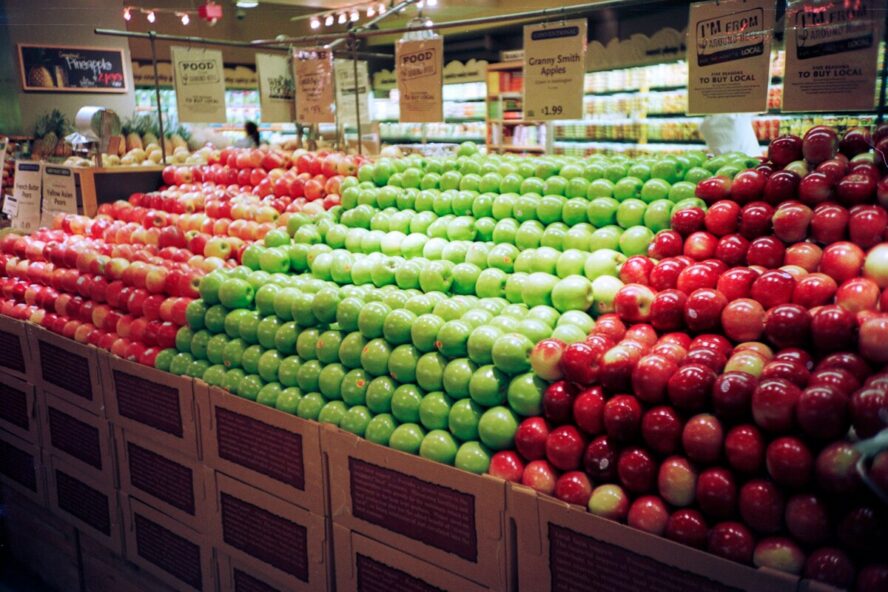
For Hishaw, these price hikes are most likely to impact access to produce in the coming months, and consumers will feel the pinch. “Livestock ranchers can use chicken manure as fertilizer to produce feed for their herds,” she explains. “But produce farmers are fuel dependent.”
She recommends stocking up on canned goods and alternate sources of protein like peanut butter, beans, and canned tuna. “This will allow you to stretch your dollar a little further.” Sourcing locally may also help reduce the cost of food, at least initially. But as time goes on, she explains, “supplies will become even more limited and expensive.”
Looking Towards a Long-Term Solution
Long-term, this issue should inspire us to reconsider our reliance on synthetic fertilizers in farming. It’s an effort that would benefit us in more ways than one. After all, overuse of synthetic fertilizers leads to higher emissions of nitrous oxide, a gas that’s 300 times more powerful than carbon dioxide and can lead to algal blooms and water pollution, according to the International Institute for Sustainable Development2.
As a result, organic farms may be the least likely to be affected by the fertilizer shortage, as they already eschew these products. Instead, they rely on natural sources of nitrogen like compost or manure. Experts call now, more than ever, for diversifying crops and nourishing soils with locally available nutrients.
“More sustainable production is the long-term switch we need,” Raj Patel, a political economist and expert in sustainable food at the University of Texas at Austin, told The New York Times. Frankly, there’s perhaps no clearer recommendation than that.
Sources:
- https://www.nytimes.com/2026/03/07/business/middle-east-war-fertilizer-supplies.html
- https://www.iisd.org/articles/analysis/tackling-hunger-nitrogen-fertilizers


