


Overwhelmed by the demands of caregiving, Quette dialed 911 when she found her teenage son downstairs in their kitchen struggling to breathe.
He had rolled his wheelchair to the oven to keep himself warm as he tried to regulate his temperature, she recalled, and was drenched in sweat from an apparent infection.
In that moment, Quette knew that she and her son’s grandmother could no longer meet his medical needs on their own at their Illinois home just outside St. Louis. He had become paralyzed when he was shot in 2023, and, despite their efforts, they struggled to take care of him. But she never imagined that her quick call for help that day would turn into a months-long hospital stay for her son — even after he was well enough to be discharged.
She said their family had been begging hospitals for a home health aide to help care for his wounds, only to be accused of neglect. “They were like, ‘Well, y’all almost killed him,’” she recalled officials telling her. KFF Health News agreed to use only her nickname to protect the safety of her son.
“I had to give up. I just couldn’t take care of him anymore,” Quette said. “It was just a lot on me. It was something that I was not ready for.”
Once his immediate medical needs were addressed, her son didn’t leave the hospital. His grandmother, who was his legal guardian, had died and the teen ultimately became a ward of the state. He continued living inside a St. Louis children’s hospital for what’s commonly called a “social stay.” Also referred to as hospital boarding or delayed discharge, the practice of keeping children in hospitals “beyond medical necessity” has become a persistent problem — flummoxing officials in Missouri, Illinois, Minnesota, Georgia, and beyond — when there’s no safe place to care for the child.
Finding homes for foster kids is difficult across the country. They have spent nights in casino hotels in Nevada and offices in Georgia and Maryland. This problem even has a name: “hoteling.” But add medical needs to the mix, and hospitals become the holding station for some kids.
Many children stuck in this limbo have mental health or behavioral issues, while some have chronic physical conditions or disabilities for which they need technology, equipment, or other assistance.
“It’s definitely a national problem,” said Elaine Lin, a pediatrician at Boston Children’s Hospital and the chair of the American Academy of Pediatrics’ Section on Home Care. “Every state has different options in terms of where kids can go post-acute care. But in general, there’s many of our kids with medical complexity who just don’t have access to the appropriate home nursing to bring them home safely.”
It’s gotten so bad that Missouri lawmakers have repeatedly introduced bills to try to significantly reduce the number of hospital boarding days each year and eventually end the practice altogether.

Quette said her son was housed in a private hospital room while he waited for the state to find a place for him elsewhere. Other children spend weeks, months, and, in extreme cases, years in acute care hospitals while grown-ups scramble to find them safe places to go, according to Lynn Rasnick, a nurse and vice president at the Missouri Hospital Association. She said some children sleep on emergency room stretchers. They sit in windowless rooms. They miss school. And they’re exposed to all the trauma that comes through the hospital on any given day.
To keep young boarders safe, some hospitals hire “sitters” for kids with no place to go, while other institutions have passed along chaperoning duties to hospital workers.
But all that comes at a cost beyond the toll it takes on kids and families. When a child no longer needs hospital-level care, insurers don’t have to pay for their stay. Some hospitals eat the cost. Others ask the state for reimbursement if the child who is waiting for placement is in state custody.
According to the Missouri Hospital Association, the state’s Department of Social Services reimbursed $16.3 million to 19 hospitals for 9,943 boarding days last year — more than $1,600 a night. But association spokesperson Dave Dillon said that’s a substantial undercount of the problem and that hospitals often aren’t reimbursed for housing children.
One study found that boarding a child with a complex medical condition in Minnesota cost about $3,932 a day in 2017. And a 2023 Minnesota Hospital Association survey of about 100 hospitals estimated the unpaid costs of “unnecessary” patient stays for adults and kids at $487 million for 195,000 days of care.
Lin, the Boston-based pediatrician, said a shortage of home healthcare workers forces some families to keep their children in the hospital, even though they’re well enough to go home.
State Medicaid programs face new pressure from federal cuts in congressional Republicans’ One Big Beautiful Bill Act. Medicaid, which provides healthcare coverage for those with low incomes or disabilities, is expected to lose nearly $1 trillion in federal funding by 2034, so some states are already threatening to scale back optional home-care programs.
Quette, a single mom who once worked as a paid caregiver and now works as a custodian, said her family repeatedly asked hospitals for a home health aide but was told her son’s insurance wouldn’t cover it. Her son’s paternal grandmother, who had helped raise him, was in a wheelchair herself at that point. Quette’s son needed his bandages changed regularly, and she had to turn him around in his bed every four hours.
“I had to wake up out of my sleep to rotate him,” Quette said. “And I couldn’t do it. I was oversleeping.”
Parents across the country face similar challenges. Last year, Georgia officials said 500 children had been “relinquished” by their parents and turned over to the state’s Division of Family & Children Services due to complex behavioral or psychiatric needs.
In Colorado, a hospital worker emailed a state representative for help after an autistic 13-year-old boy spent weeks at UCHealth Longs Peak Hospital in Longmont. After his father left him there, officials told hospital workers that it would take months to find a safe place for the boy to go.
Last fiscal year, the Illinois Department of Children and Family Services logged 304 cases of youth in psychiatric hospitals beyond medical necessity, according to an annual report released by the state. About 43% of those cases were among patients ages 13 to 16.
This year, Missouri state Sen. Jamie Burger, a Republican, introduced a bill that would require his state to move faster and pay for care when a child is stuck in a hospital. Similar bills died in committee last year and the year before. This year, Burger’s bill remained stuck in committee when the legislative session ended May 15.
According to a fiscal note attached to the bill, paying for hospital boarding could cost more than $148 million a year in a state that already plans to tap its reserves to fund its upcoming $50.7 billion budget.
Over 18 months, the Mercy hospital system, one of the largest in Missouri, logged 2,687 boarding days, testified Patty Morrow, a Mercy vice president, in a March hearing on the bill. That included adults who also were stuck without a safe place to go.
“That was never really ever the intended purpose of a hospital,” Morrow told KFF Health News. “The current state cannot be the ongoing solution.”
The bill requires the juvenile court system to ensure that children are placed in “an appropriate setting,” which would entail involvement of social workers and other public servants.
Rasnick, with the Missouri Hospital Association, also spelled out the issue during the hearing. “You can’t just discharge a 9-year-old into the street,” she told lawmakers.
Quette’s son is still in state custody but no longer hospitalized. Illinois officials declined to let the teen share his story with KFF Health News.
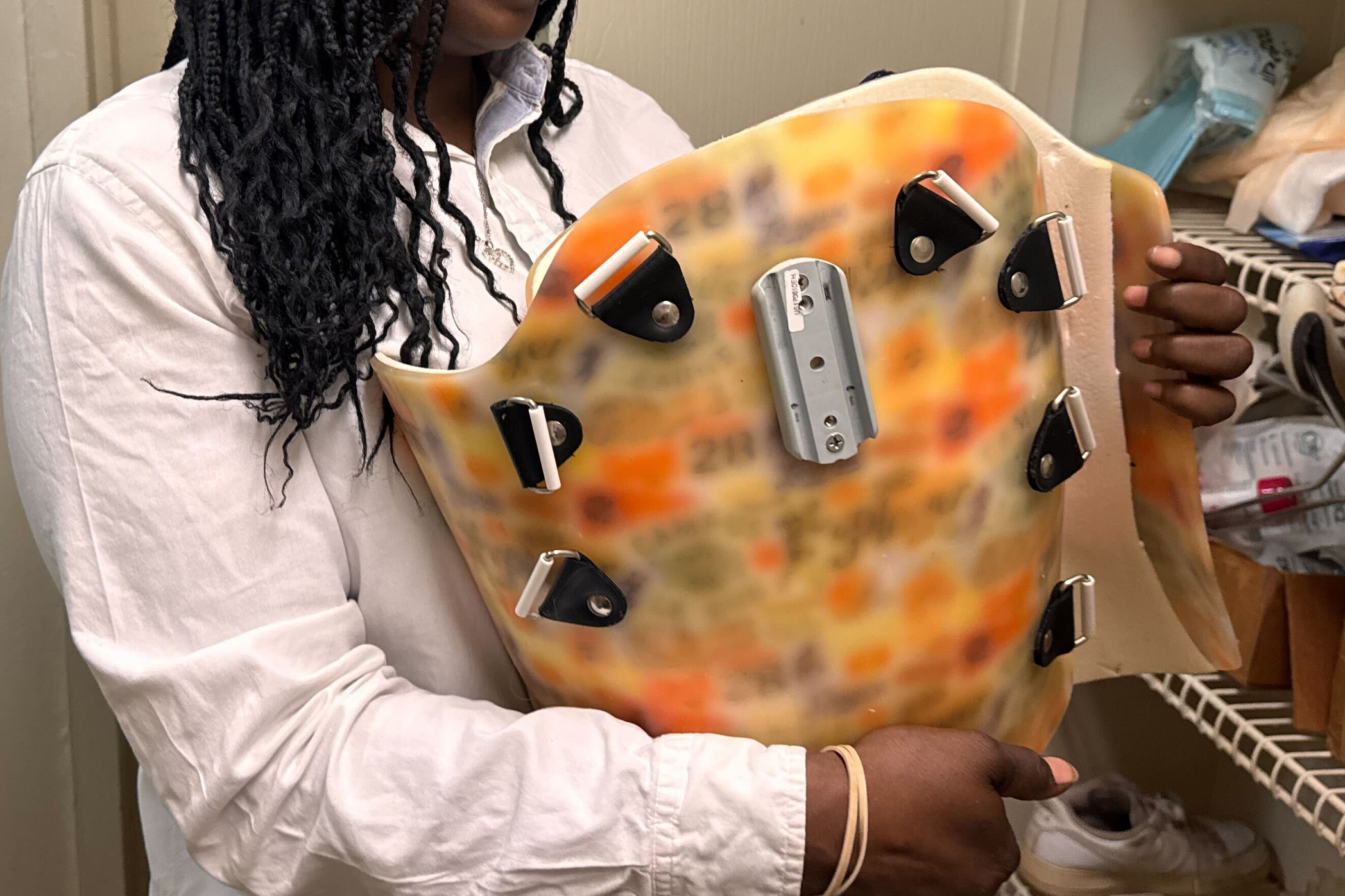
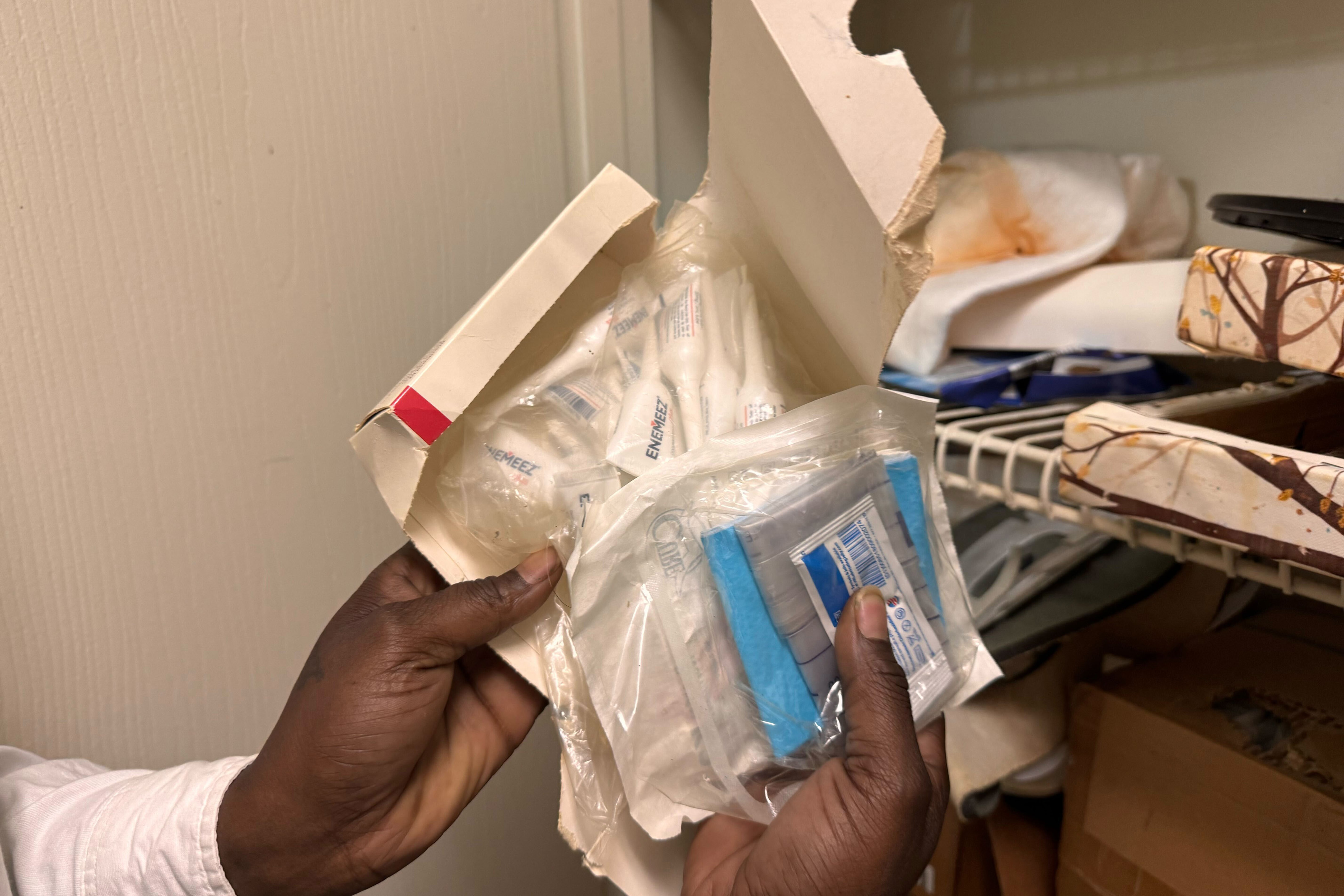
His mother said she is still holding on to his brace, bandages, ointment, and other medical supplies in her home. “That’s all I have,” Quette said. “That’s the stuff I will never give away.”
This piece was supported by a grant from the Association of Health Care Journalists, with funding from The Joyce Foundation.

