


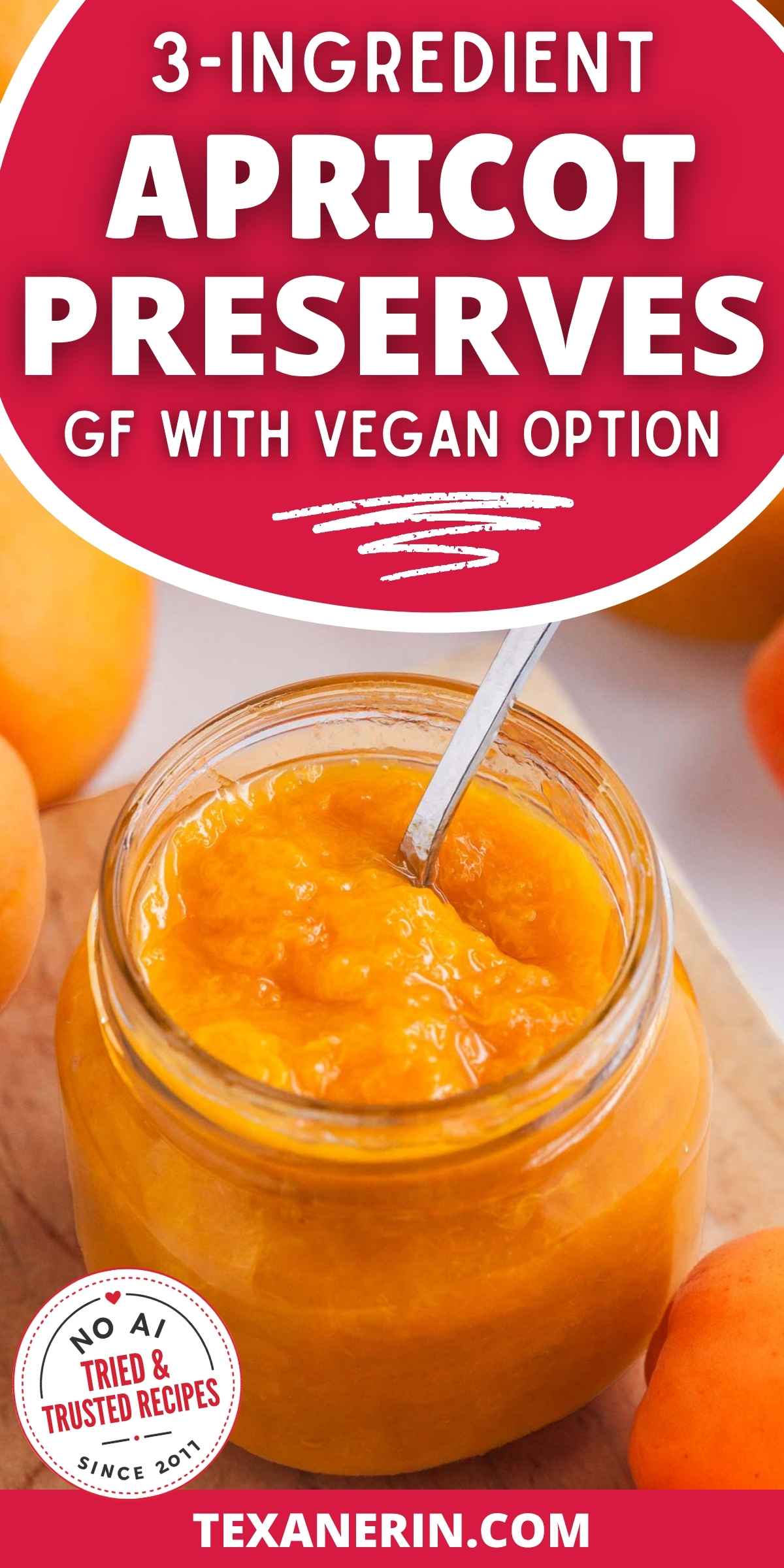
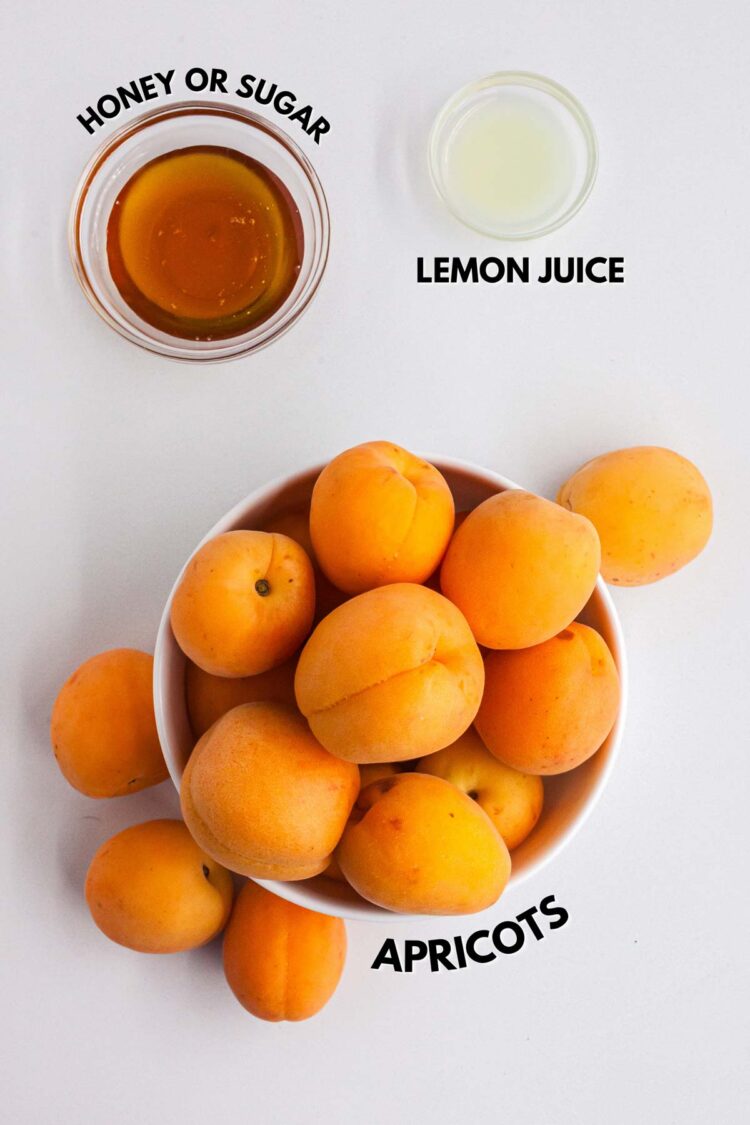
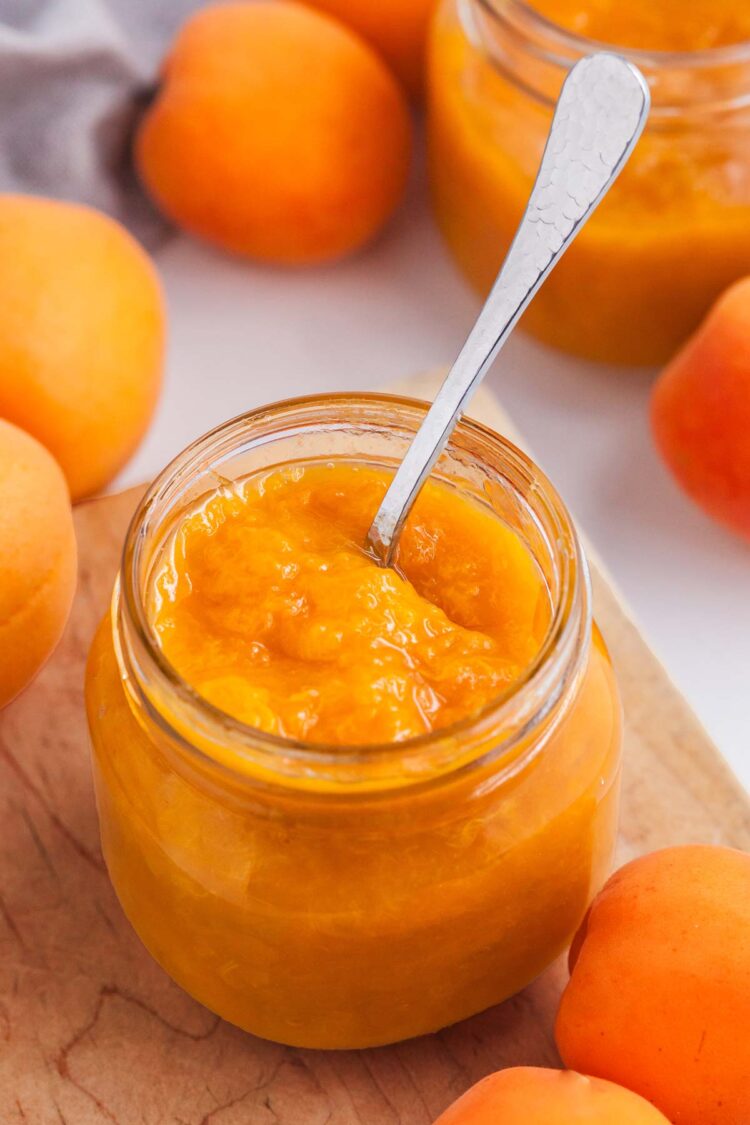
These apricot preserves are made with apricots, honey and lemon juice, with no pectin needed. They have a concentrated apricot flavor and are only as sweet as your fruit requires.
When your husband comes home with 4 pounds of apricots that only he will eat (because I weirdly don’t like raw apricots)? Time for preserves!
This is my favorite thing to make with apricots. You just put them, unpeeled, in a saucepan with honey or sugar and lemon juice, let them cook until thickened, and you’re done. It’s about as easy as preserving fruit gets.
Just one warning, though. If your apricots don’t really taste like anything, neither will the preserves. The sweetener will of course help, but it won’t magically create apricot flavor. I’ve had some pretty terrible apricots in the past, so I’m just saying.
Ingredients
Please scroll down for the full recipe.
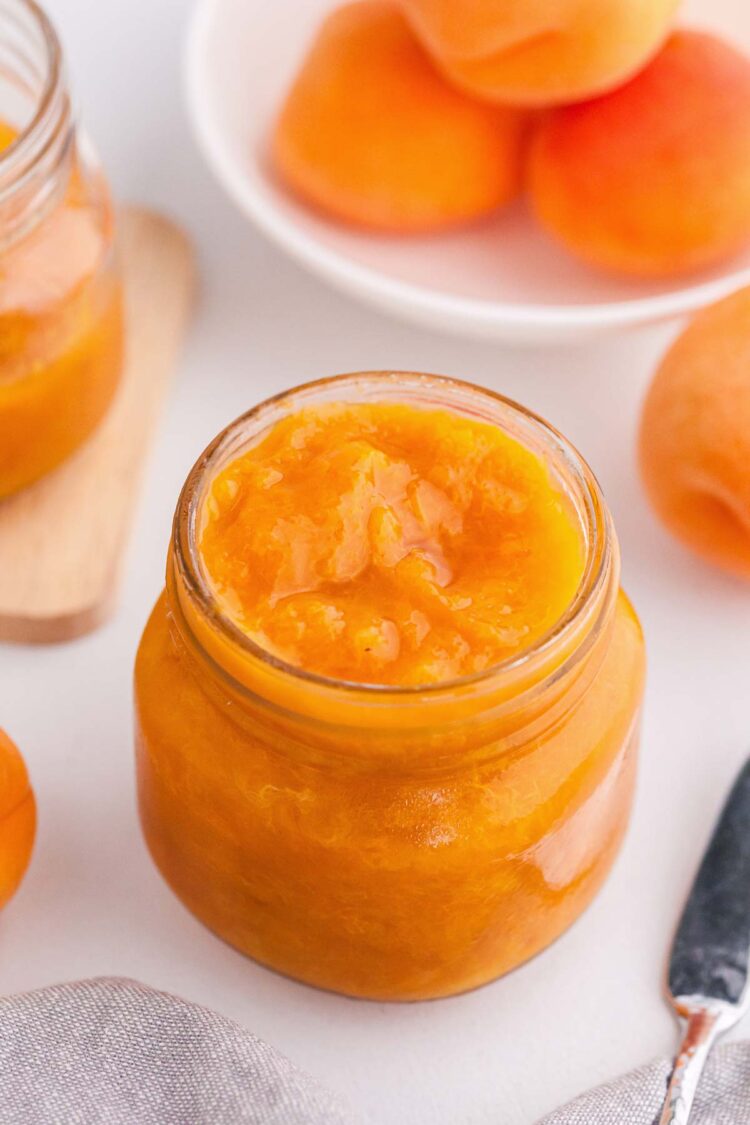
- Apricots – use ripe, flavorful apricots. You don’t need to peel them because the skins break down completely during cooking.
- Honey – 3 tablespoons is enough if your apricots are very sweet, but you may want more if they’re tart or bland. Add it to taste once the fruit has started breaking down.
- Lemon juice – helps the natural pectin work so the preserves thicken properly. It also adds acidity, which helps the preserves keep better. You won’t taste lemon in the finished preserves.
How to Make Apricot Preserves
Place a small plate in the freezer before you start cooking. You’ll use it later to test whether the preserves are ready.
Wash and pat the apricots dry. Remove the pits and quarter the apricots.
Add the apricots, honey and lemon juice to a medium or large saucepan. Cook over medium-high heat, stirring occasionally, until the fruit has broken down and the mixture has thickened. For me, this took about 25–30 minutes, but your cooking time may be quite different depending on the apricots and the size of your saucepan.
Once the apricots have broken down, taste the preserves carefully. If your apricots aren’t very sweet, add more honey to taste.
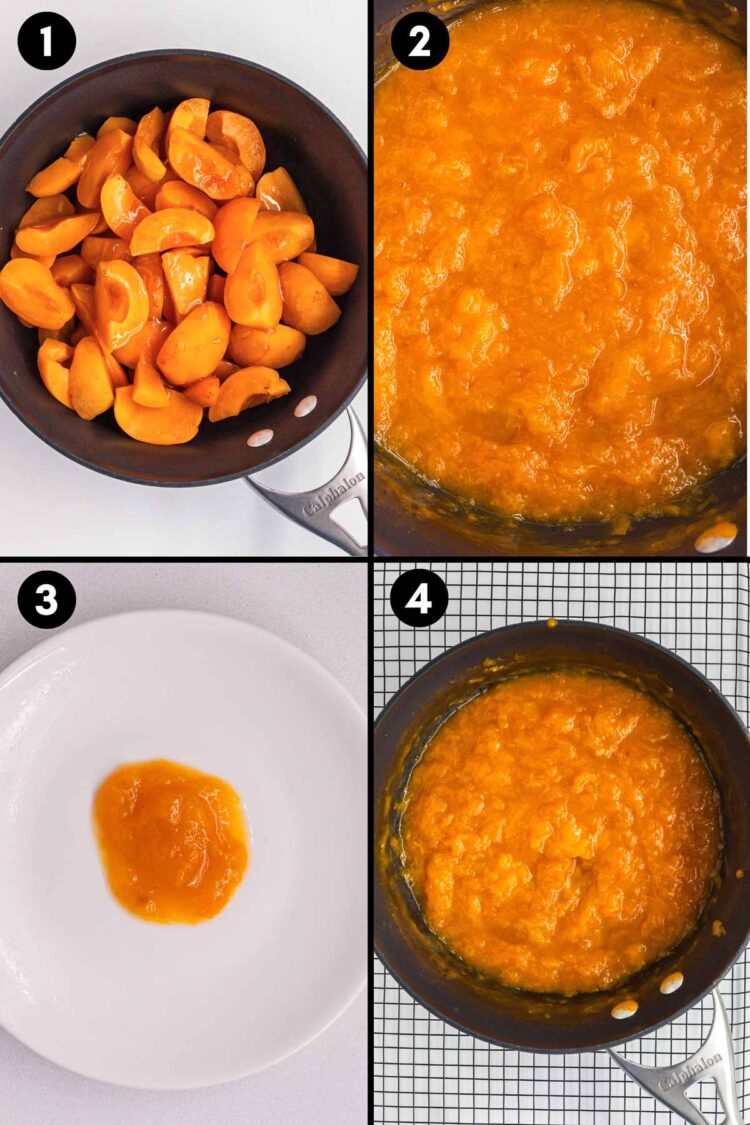
When you think the preserves are ready, spoon a small amount onto the cold plate. Let it sit for about a minute, then push it with your finger. If it wrinkles and holds its shape, it’s ready. If it still looks runny, continue cooking and test again.
Remove the saucepan from the heat and place it on a wire rack. Let the preserves cool completely, which will take about 2 hours. Then refrigerate for at least 4 hours before using.
Why you don’t need pectin
Apricots naturally contain pectin, so you don’t need to add commercial pectin to make these preserves thicken. Cooking the fruit down concentrates the natural pectin while also removing enough water to give the preserves their spreadable consistency.
The lemon juice provides the acidity that helps the pectin gel properly. That’s also why the lemon juice is important even though you won’t taste lemon in the finished preserves.
Keep in mind that the preserves will continue to thicken as they cool and chill. They shouldn’t be as thick in the saucepan as you want them to be when they’re cold.
- Taste before adding more honey – apricots can vary dramatically in sweetness. If yours are exceptionally sweet, 3 tablespoons may be plenty.
- Use a larger saucepan if you have one – more surface area allows the water to evaporate more quickly, which can shorten the cooking time.
- Don’t rely on the cooking time alone – the preserves can take noticeably longer or shorter depending on how juicy your apricots are and how wide your saucepan is. Use the cold-plate test to decide when they’re ready.
- Don’t cook them until they’re as thick as you want them – the preserves will thicken considerably as they cool and then chill. They should still look somewhat softer in the saucepan than you want them to be when cold.
How to Use Apricot Preserves
They’re especially good spread on toast, layered with yogurt and granola, or used as a filling or topping for desserts.
My Peach Tartlets use apricot jam as a glaze for the fresh peaches, and these preserves would also be great spooned over this Cheesecake Tart or served alongside slices of cheesecake.
I think they’d also be great swirled into this Honey Ice Cream or French Vanilla Ice Cream.
How to Store
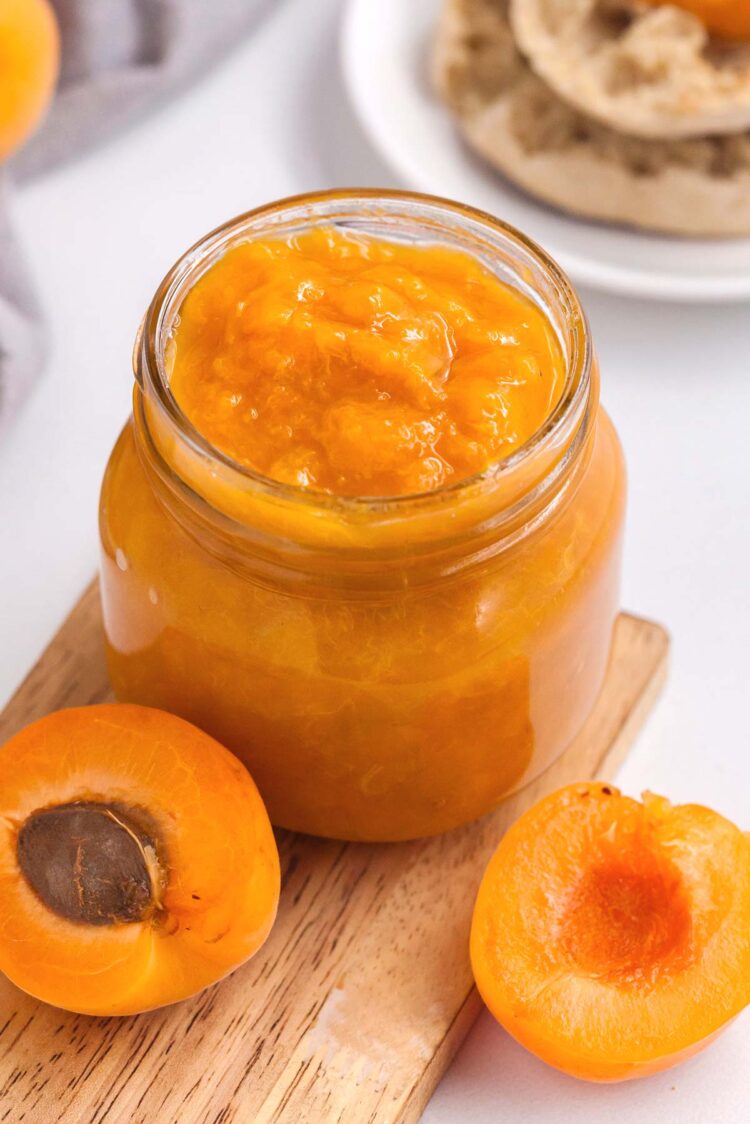
Transfer the cooled preserves to a clean jar or container and refrigerate.
I recommend using them within about 1 week. For longer storage, freeze the preserves instead. Leave a little room at the top of the container if you’re freezing them because they will expand.
More Jams and Preserves
All of these recipes are made without commercial pectin, relying instead on the fruit’s natural pectin and cooking time to achieve the right consistency. They’re all small-batch recipes, too, so you don’t have to worry about canning.
3-ingredient Apricot Jam
Servings 24
These easy apricot preserves are made with fresh apricots, honey and lemon juice. No pectin is needed, and you can adjust the honey to suit the sweetness of your fruit.
Prevent your screen from going dark
-
Place a small plate in the freezer before you start cooking.
-
Wash and pat the apricots dry. Remove the pits and quarter the apricots.
-
Combine the apricots, honey and lemon juice in a medium or large saucepan. Cook over medium-high heat, stirring occasionally, until the apricots have broken down and the mixture has thickened. This took me about 25–30 minutes, but the cooking time will vary depending on your apricots and saucepan.
24 ounces (680 grams) apricots, 3 tablespoons (60 grams) honey or granulated sugar, 1 tablespoon lemon juice
-
Once the apricots have broken down, taste the preserves carefully and add more honey or sugar if needed. The amount of sweetener you’ll need depends on the sweetness of your apricots. Mine were exceptionally sweet, so 3 tablespoons was enough.
-
When you think the preserves are ready, drop a small spoonful onto the frozen plate. Let it sit for about a minute, then push it with your finger. If it wrinkles and holds its shape, the preserves are ready. If not, continue cooking and test again.
-
Remove the saucepan from the heat and place it on a wire rack. Let the preserves cool completely, about 2 hours.
-
Store in the refrigerator for about 1 week. For longer storage, freeze the preserves.
- The final yield can vary depending on how long you cook the preserves and how much water your apricots contain. I always get around about 1 1/2 cups of preserves.
- The nutrition information provided is calculated as a courtesy and is only an estimate. I am not a licensed nutritionist or dietitian. For the most accurate nutritional data, consult a professional or use your preferred calculator.
Serving: 1 tablespoonCalories: 22kcalCarbohydrates: 5gProtein: 0.4gFat: 0.1gSaturated Fat: 0.01gPolyunsaturated Fat: 0.02gMonounsaturated Fat: 0.05gSodium: 0.4mgPotassium: 75mgFiber: 1gSugar: 5gVitamin A: 546IUVitamin C: 3mgCalcium: 4mgIron: 0.1mgNet Carbs: 4

