


This post may contain affilliate links. It means that if you buy something through one of these links, we might get a small commission at no extra cost to you. Affiliate commission helps us keep this travel blog running.
We had a transatlantic flight booked when Mila was three months old. UK to Mexico City, over ten hours, so she could meet José’s family. And before you ask — yes, we knew what we were signing up for. No, we didn’t feel ready. Yes, we did it anyway.
Before the big one, we did a test run to Alicante (you can read about that here). It taught us a lot. But nothing quite prepares you for the real thing. So here’s the honest version of what flying long-haul with a three-month-old on British Airways was actually like — what worked, what didn’t, and what I’d do differently.
Can You Fly Long-Haul with a 3-Month-Old?
Yes — and honestly, three months is one of the better ages to do it. They’re not mobile. They can’t run off, they can’t demand things, they can’t negotiate. They sleep a lot (in theory). You’re essentially doing what you do at home — feeding, holding, managing naps — just at 35,000 feet with slightly less legroom.
It’s tiring. It is not chaos. And if you’re sitting there wondering whether to just wait until they’re older — don’t. The three-to-six month window is genuinely one of the easier phases to travel with a baby, and most parents I’ve spoken to say the same thing.
How to Book a British Airways Bassinet (And Why You Must)
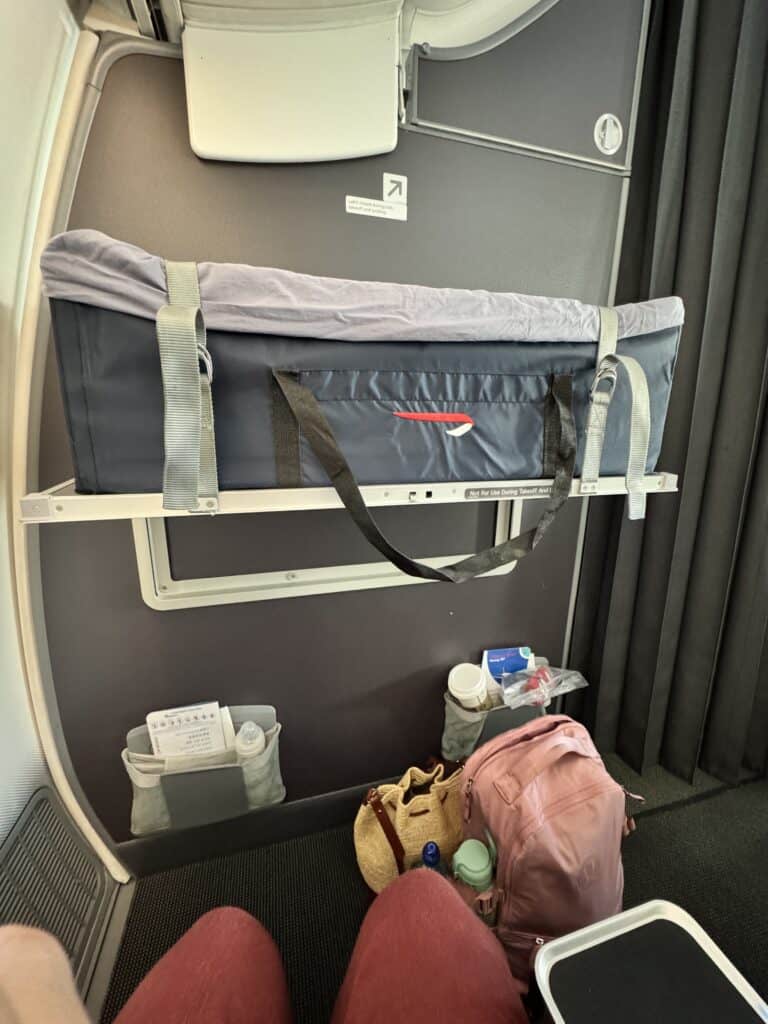
If you do one thing before this flight, make it this. Call British Airways directly to request a bassinet seat — don’t leave it to chance at check-in, don’t assume it’ll be fine.
A few things worth knowing:
- There are weight and height limits — most airline bassinets cap at around 10kg, so the window is shorter than you’d think
- At three months, Mila was perfect for it; by eleven months on a later trip, she no longer qualified
- Bassinet seats are bulkhead rows only, so you’ll also have more floor space, which helps enormously
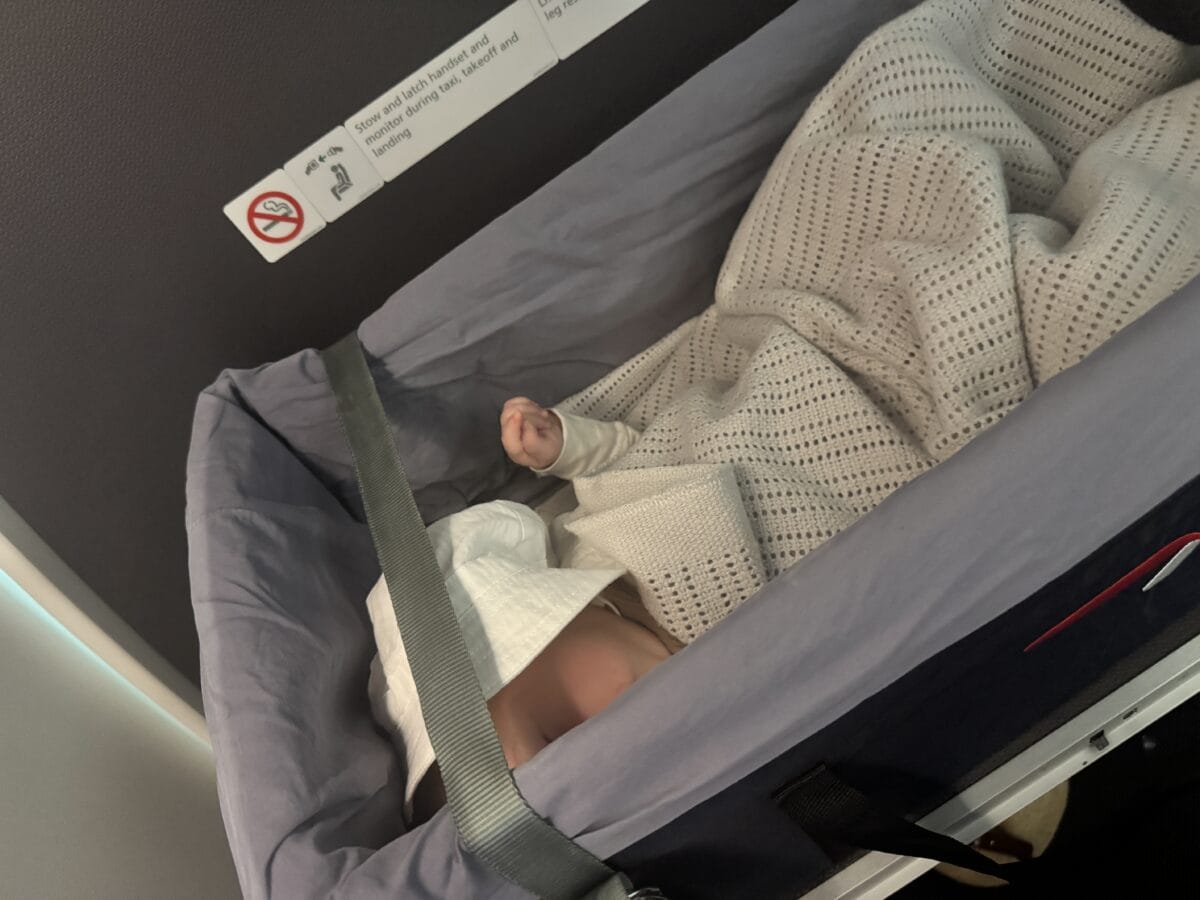
- It’s not glamorous — it’s essentially a small plastic box attached to the wall — but being able to put her down and have two free hands at 3am somewhere over the Atlantic was, genuinely, everything
If you’re considering waiting until your baby is a bit older before attempting long-haul, you might actually be waiting yourself out of the one phase where the bassinet is available. Something nobody tells you.
Is Premium Economy Worth It with a Baby?
We booked premium economy, not because we’re extravagant but because we were anxious and it felt like a sensible insurance policy.
What it actually gave us:
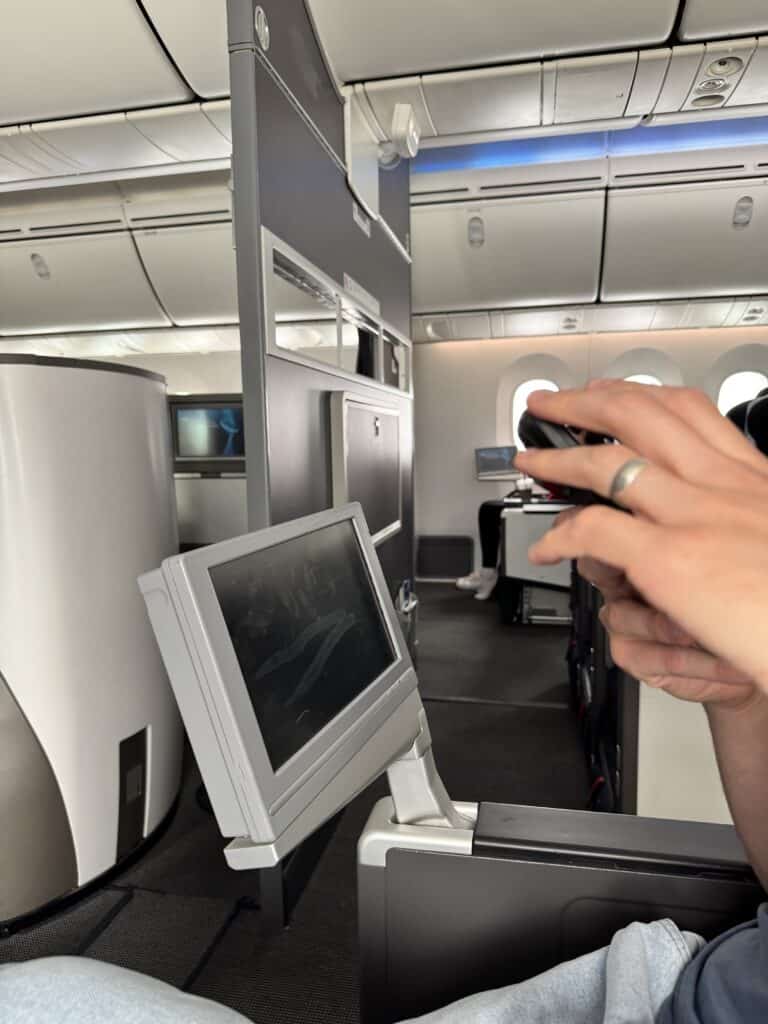
- A 2-3-2 seat layout rather than the standard 3-4-3, so marginally less cramped
- Slightly more privacy, which matters more than you’d think when you’re wrestling with feeding or a nappy change mid-flight
- We were surrounded by other parents who’d clearly had exactly the same idea, which was oddly reassuring
Would economy have been fine? Probably. Did the extra space help? Genuinely yes. It’s a personal call, but if budget allows and the anxiety is real, I don’t regret it.
Takeoff and Landing with a Baby: The Ear Pressure Problem
Everyone warns you about this, and they’re right to. The pressure changes during ascent and descent can be really uncomfortable for babies — their Eustachian tubes are much smaller than ours.
The fix is simple: get them swallowing. Have one of these ready for both takeoff and landing:
- A fresh bottle
- A breastfeed
- A dummy
We never boarded without something specifically prepared for this moment. Both takeoff and landing were completely fine. It’s one of those things that sounds complicated and isn’t, as long as you plan for it.
The Milk Situation (More Stressful Than Expected)
This is what caught me most off guard, and I want to be upfront about it because I don’t see it mentioned much.
Mila was very particular about milk temperature. Not mildly particular — properly particular, in the way that only a three-month-old who can’t articulate anything can be. That meant formula wasn’t a simple swap-in. What ended up working:
- Board early
- Pump on the plane before takeoff
- Have a fresh, warm bottle ready for ascent
Unglamorous? Absolutely. Effective? Yes. I’d do the same again.
If you’re formula feeding, this entire section is genuinely easier. At Heathrow you can get boiling water from the cafés airside, mix it with cooler water, and have a bottle ready with far less performance. I will not pretend I wasn’t envious.
What to Pack for a Long-Haul Flight with a Baby (And What to Leave Behind)
We massively overpacked. I cannot stress this enough. We prepared for every conceivable scenario and arrived looking like we were emigrating.
What you actually need in your carry-on:
- Feeding essentials — bottles, milk, whatever your system is
- 5-6 full outfit changes (Mila had reflux; we used most of them)
- Nappy bag essentials (here’s my favourite nappy bag that looks gorgeous!)
- One simple distraction — a high-contrast book was genuinely all she needed at three months
What you don’t need:
- Multiple toys — she needed one thing, not a curated selection
- Baby ear defenders — Mila hated them, cried the moment they went on, was immediately fine when they came off. Not all babies tolerate things on their ears, and at this age they honestly don’t need them
The thing that actually makes long-haul stressful with a baby isn’t the baby. It’s trying to manage the baby and the bags and the bottles and the fifteen just-in-case items you’re now deeply regretting. Put everything non-essential in checked luggage. Keep the carry-on ruthlessly simple.
What the Flight Was Actually Like
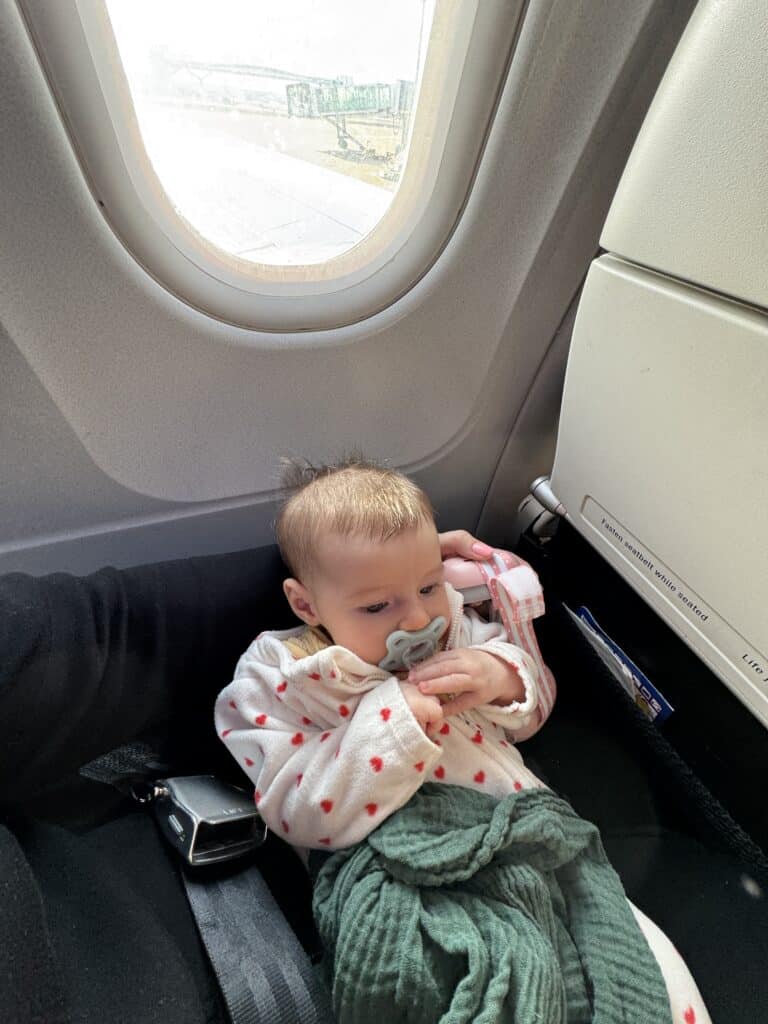
Our outbound was a daytime flight. Mila slept for a couple of hours, woke up, fed, went back to sleep. Repeat. It was manageable — not relaxing, I won’t lie to you — but genuinely not a disaster.
The return was a night flight. Completely different story. We fed her, she was asleep within half an hour, and she slept almost the entire way home.
Night flights with a baby: the honest verdict. They are easier during the flight itself. The catch is you land in the morning, your baby is fully rested and absolutely ready to face the day, and you have not slept properly. So it’s a trade-off — but one I’d make again.
Frequently Asked Questions
Can you fly long-haul with a 3-month-old? Yes. Three months is actually one of the easier ages — they’re not mobile, they sleep a lot, and they still qualify for a bassinet on most airlines. The main thing to sort in advance is the bassinet seat and your feeding plan.
How do I book a bassinet on British Airways? Call British Airways directly before your flight and request a bulkhead bassinet seat. Don’t rely on doing this at the airport — availability is limited and it makes a significant difference to the experience.
What do I need for a long-haul flight with a 3-month-old? Keep it simple: feeding essentials, multiple outfit changes, one simple toy or distraction, and something ready for takeoff and landing to help with ear pressure (bottle, breastfeed, or dummy). Everything else can go in the hold.
Is it better to fly day or night with a baby? Night flights tend to result in longer stretches of sleep during the flight itself. The downside is landing exhausted while your baby is wide awake. Daytime flights are more manageable but involve more active settling. Both work — it depends on your baby’s patterns.
What age is easiest to fly with a baby? Most parents — and most evidence — points to the three-to-six month window as one of the easiest. They’re calm, they sleep, they stay where you put them. It gets more challenging once they’re mobile.
Flying long-haul with a three-month-old on British Airways was not the nightmare I’d convinced myself it would be. Book the bassinet, have your feeding plan sorted, pack half of what you think you need, and don’t spend the weeks beforehand catastrophising.
You’ll be fine. Tired, almost certainly. But fine.
We flew to Mexico City as our first long-haul trip with Mila — if you want to know how that went, that post is coming soon.

