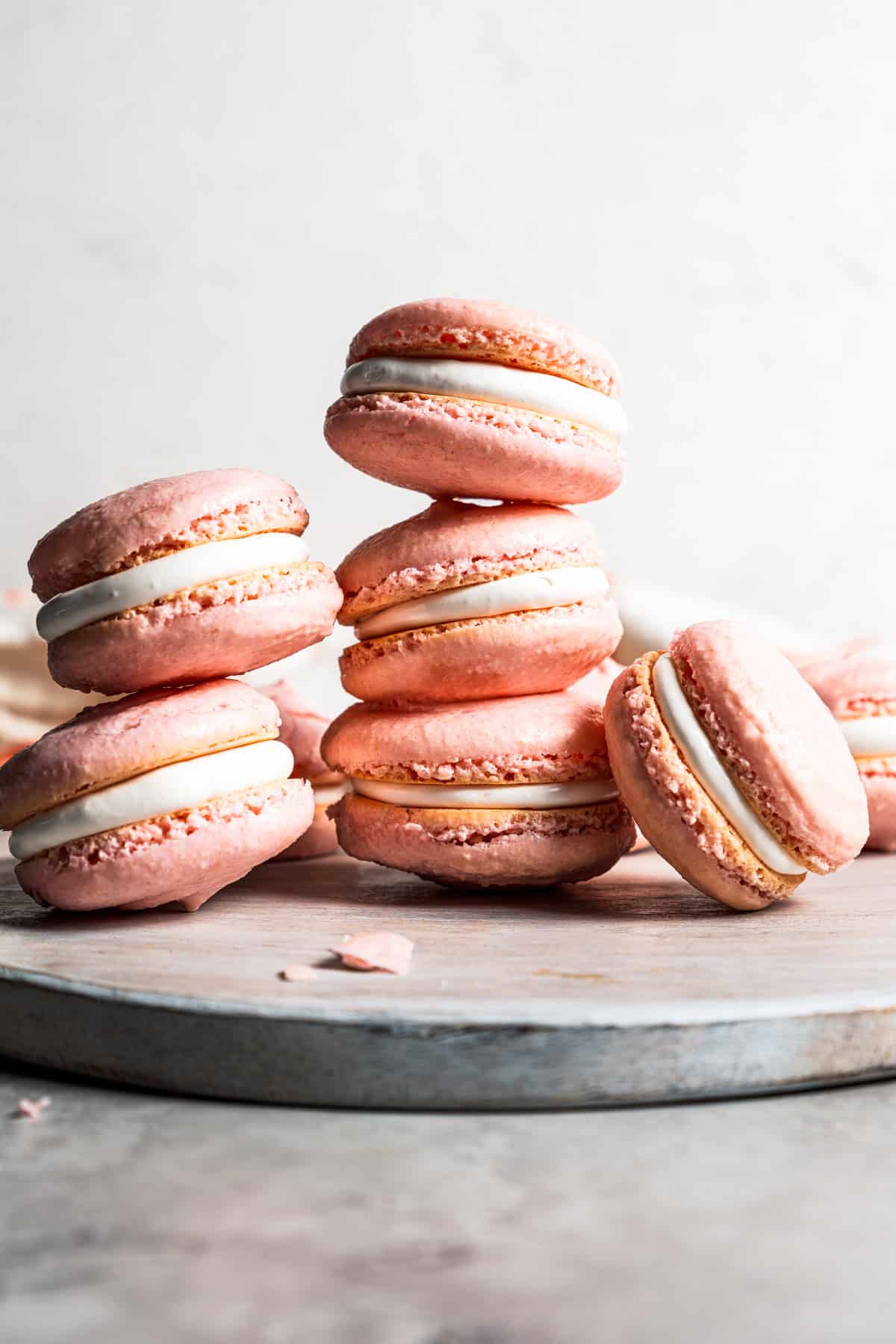



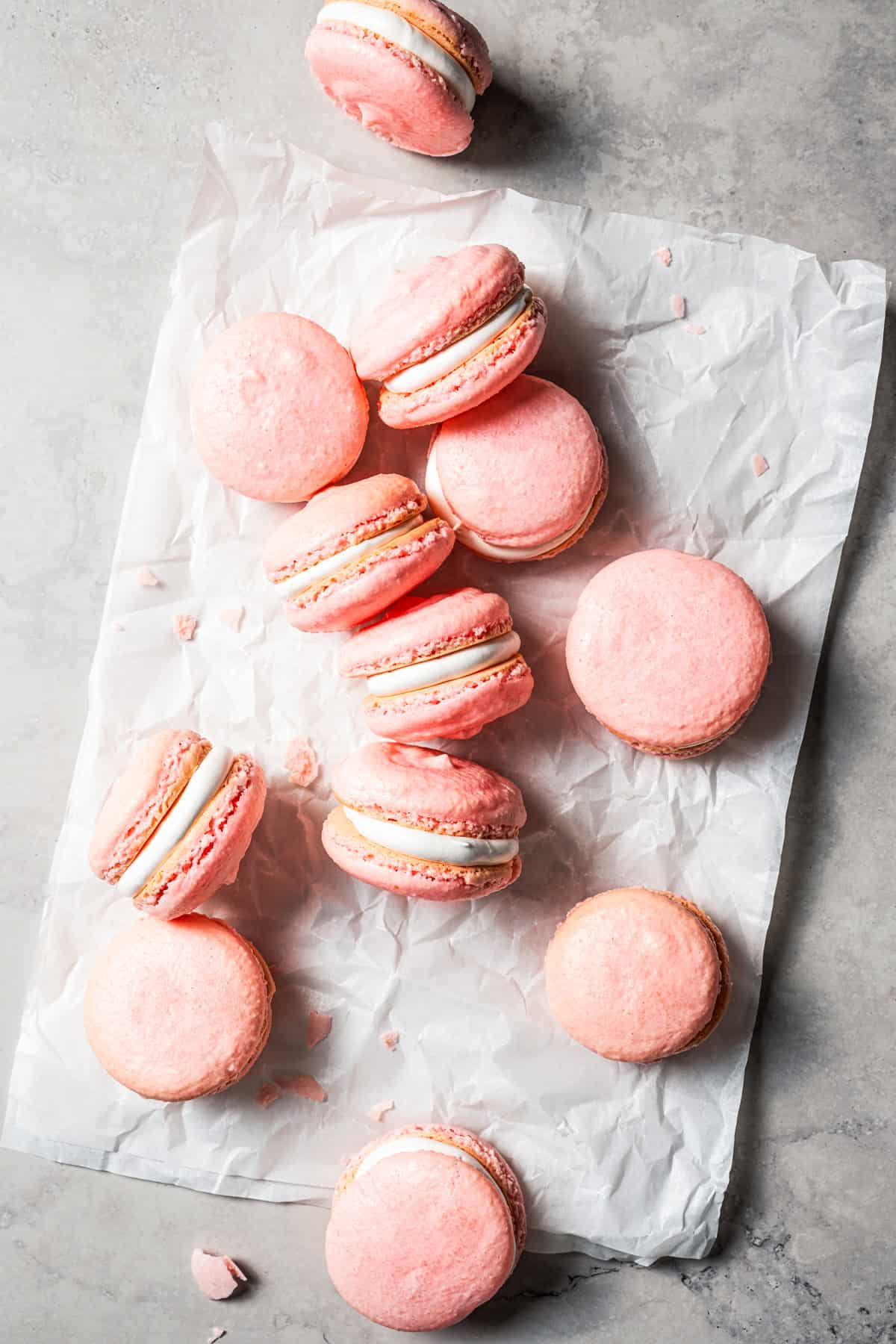
Have you ever made French macarons? These delicate meringue-based sandwich cookies will sweep you away to a Parisian bakery. I’ll show you how to make perfect macarons with marshmallow frosting, in just about any flavor and color, with this easy step-by-step recipe!
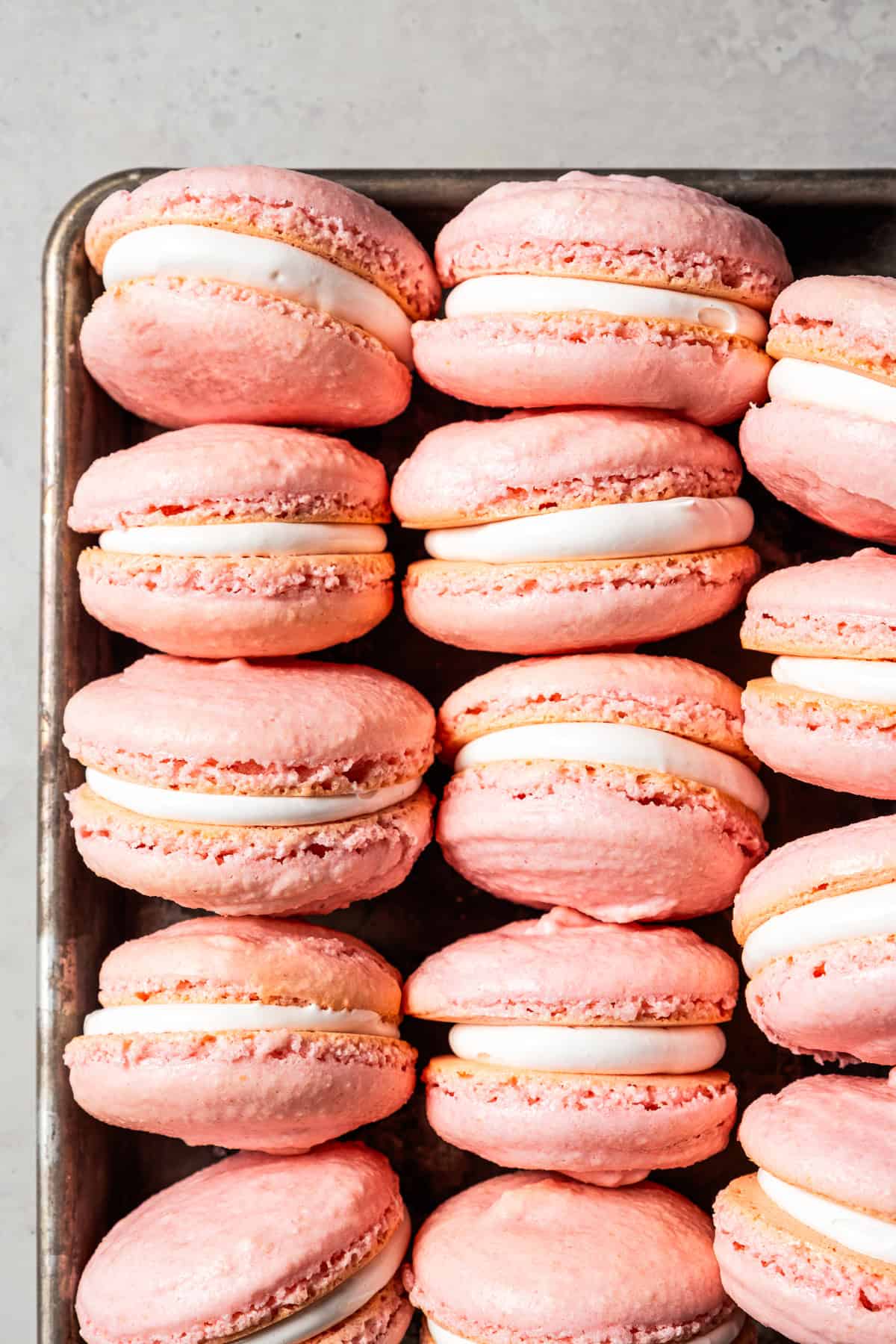
Perfect French Macarons
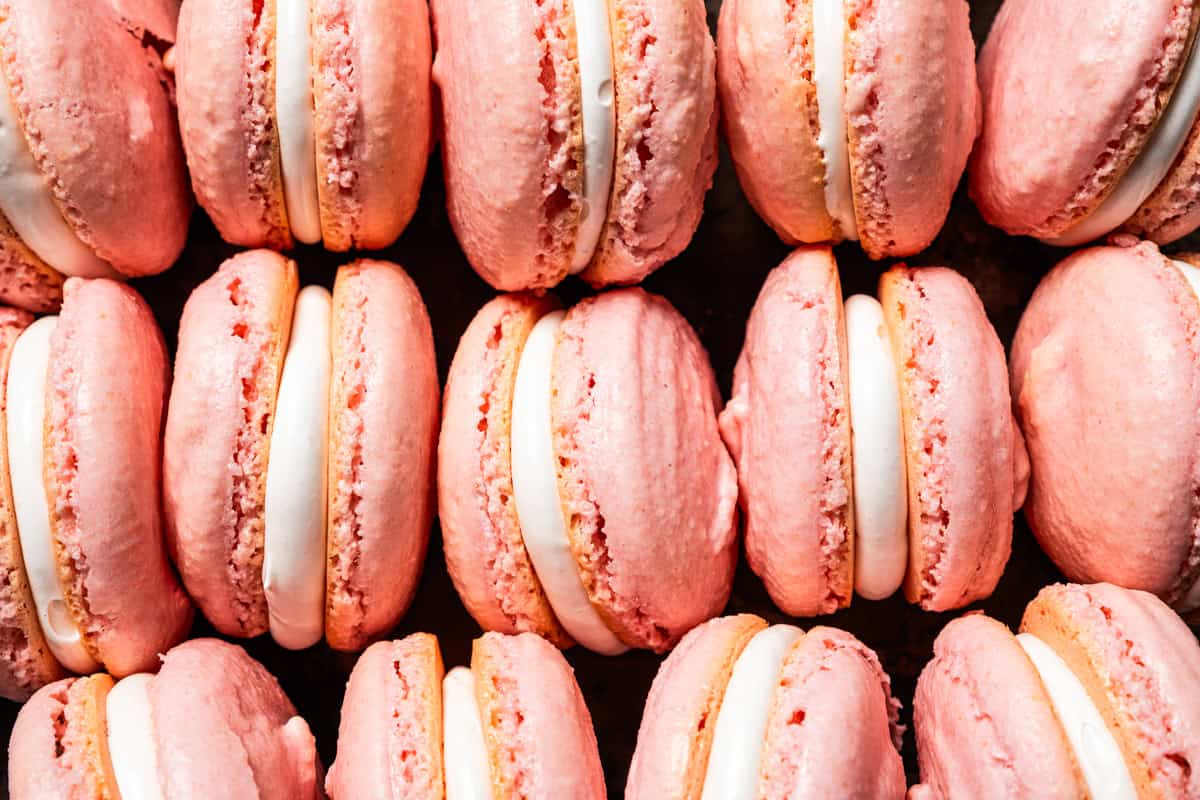
After tasting French macarons in Paris, I always dreamt of making these pretty little cookies at home. My first attempts started years ago, and I’ve been perfecting my macarons recipe ever since! Made with egg white meringue, powdered sugar, and almond flour, French macarons are all about their delicate texture and ruffled “feet”, filled with a delicious frosting.
I usually fill mine with ganache or buttercream, but this time I filled them with glossy marshmallow meringue frosting instead. Though if buttercream is more your vibe, definitely try my lemon macarons recipe.
I’m going to walk you through my homemade version of this traditional French sandwich cookie, including tools, beginner-friendly techniques, and flavor options. Let’s get started!


What Is a Macaron?
Macarons (pronounced “mack-ah-rohn”) are dainty French meringue sandwich cookies made with almond flour. Not to be confused with coconut macaroons (pronounced “mack-ah-ROON”), which are more of a rustic drop cookie made from shredded coconut.
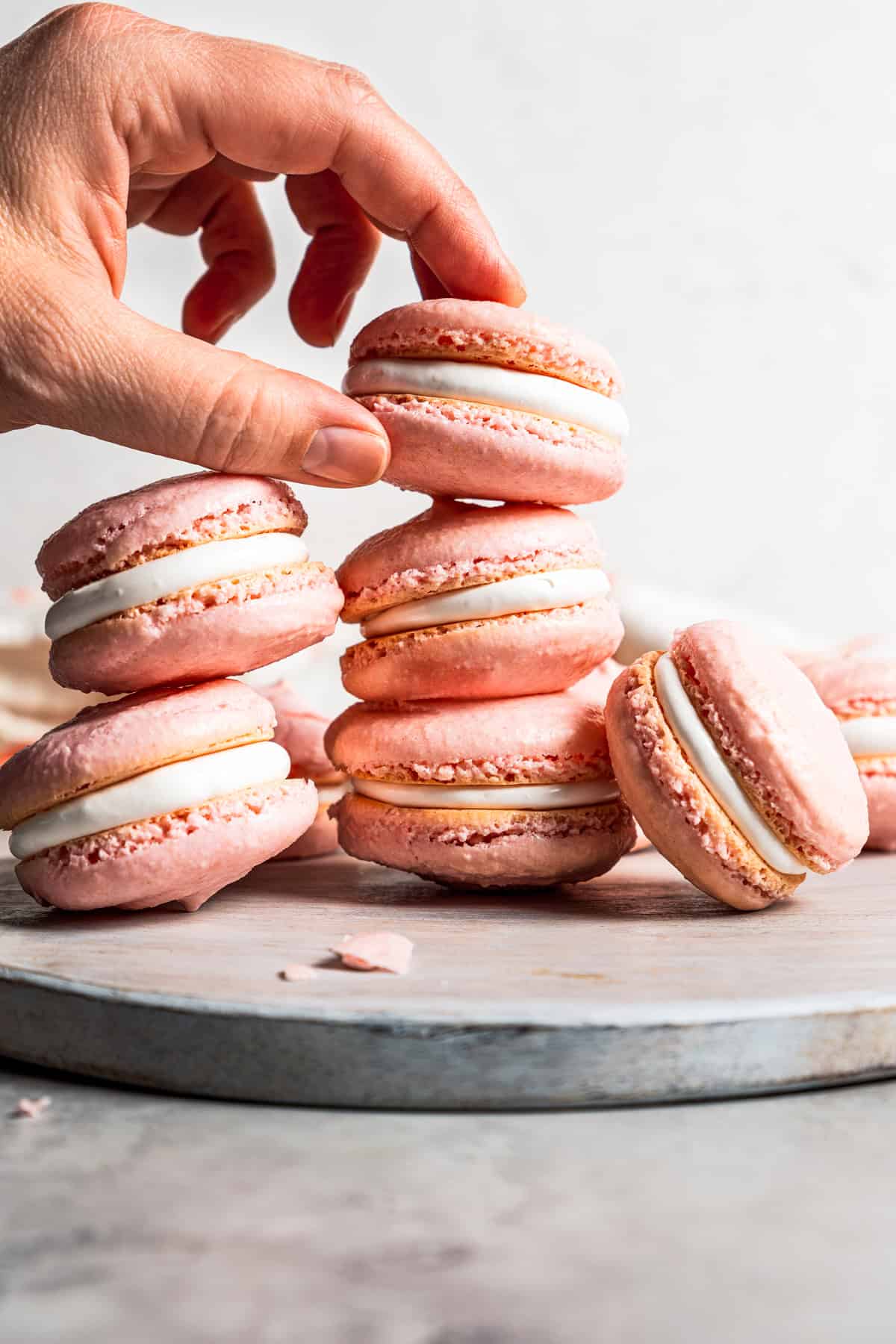
Ingredients in French Macarons
The beauty of French macarons is that they only need 4 ingredients to make the shells. Here’s a look at the key ingredients I use to make the macaron batter and frosting in this recipe. You’ll find the complete list and amounts in the printable recipe card below.
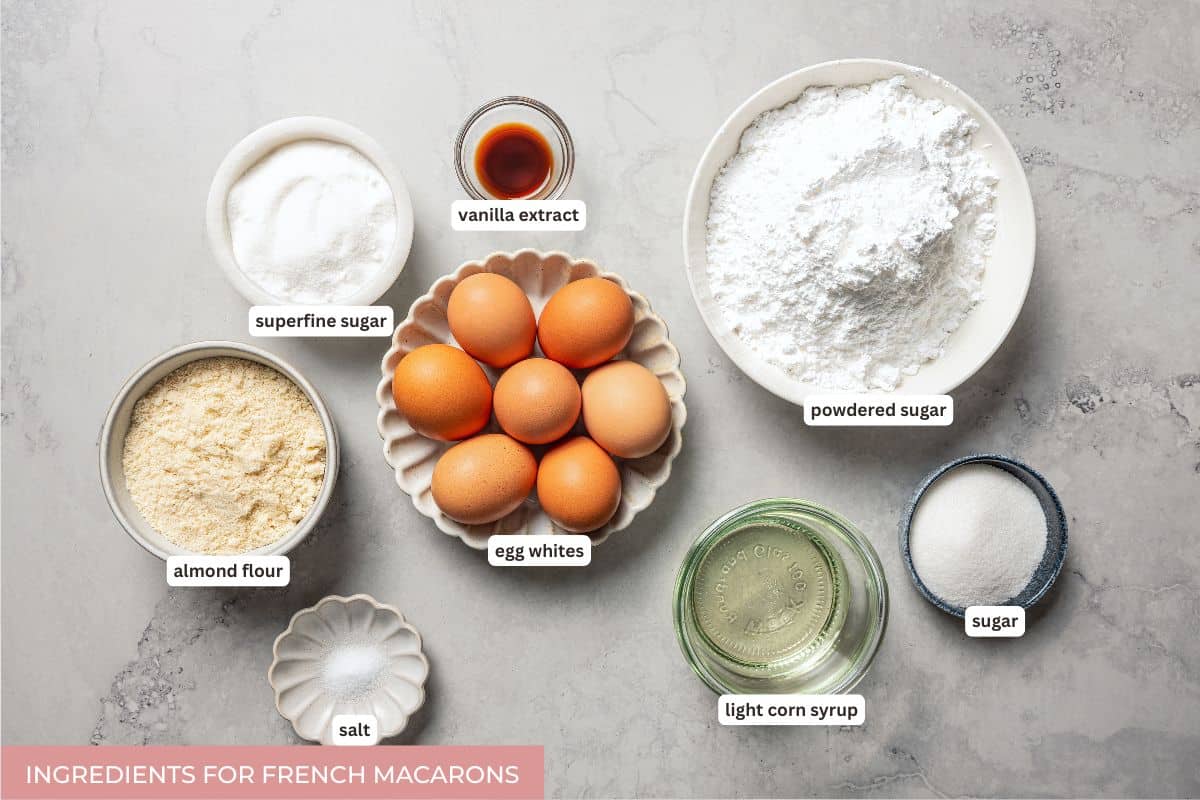
- Egg Whites – At room temperature. Use fresh egg whites, not liquid egg whites in a carton. It’s very important that NO egg yolks get into the egg whites used for meringue. Any fat from the egg yolks will prevent the whites from forming stiff peaks.
- Superfine Sugar – Also called caster sugar or baker’s sugar. If you can’t find it, you can easily make superfine sugar from regular granulated sugar. Add the granulated sugar to a food processor. Pulse it on high for 10-30 seconds, until it has a fine, sand-like texture. It shouldn’t be as fine as powdered sugar.
- Almond Flour – Ultra-fine, blanched almond flour is what gives traditional French macaron shells their smoothness, structure, and subtle flavor. Avoid almond meal or regular all-purpose flour. Your macarons may end up dense and chalky instead of light and delicate.
- Powdered Sugar – Also called confectioner’s sugar. It’s more powdery than superfine sugar (and if you blend granulated sugar for too long, you’ll end up with powdered sugar).
Marshmallow Frosting
- Extra Egg Whites – Separate these just as you did for the shells.
- Sugar – Granulated sugar, plus a pinch of salt.
- Corn Syrup – I use light corn syrup. It gives the marshmallow meringue a glossy finish.
- Vanilla – Now, this is where you can get creative! Use pure vanilla, or try a blend of vanilla extract and lemon, orange, or almond extract.
Separating Egg Whites for Macarons
Separating the egg whites from the yolks is a crucial step in making macarons from scratch. I use my egg separator, but if you don’t have one, these are my quick tips:
- Separate the cold eggs. Egg yolks are easiest to separate from the egg whites when they’re cold. Let the whites come to room temperature afterward.
- Use your hands. It sounds a little messy, but honestly, before I bought my egg separator, I would gently pass the eggs between my (clean) hands and let the whites slide through my fingers into a bowl before placing the leftover yolks aside. Slimy, but effective!
- Separate the eggs into a separate bowl. I always set out one bowl to break the eggs over, and a second to collect my egg whites. Separate an egg into the first bowl before transferring the whites to the next. This way, if the yolk breaks while separating the egg, I can start over with only one new egg instead of ruining the whole batch of egg whites!
Before you dive into making these homemade French macarons, gather the following essential tools:
- Kitchen Scale – French macarons are all about accuracy. Even the slightest over- or under-measurement can impact the finished results! For this reason, I HIGHLY recommend using a digital kitchen scale to weigh out your ingredients. You can still make this recipe without one, but it’s riskier.
- Metal (or Glass) Bowls – Meringue is far easier to whip in a metal or glass bowl than in a plastic one. The key here is ensuring that your bowls are squeaky clean. This way, no grease or residue can get into the egg whites and ruin the meringue. I’ll often wipe down my bowls with a bit of white vinegar beforehand.
- Egg Separator – An egg separator is not essential for this recipe, but it makes separating the eggs that much easier.
- Fine Mesh Sieve – For sifting the almond flour and powdered sugar. This removes any lumps, ensuring a smooth macaron batter.
- Mixer – I use a stand mixer to whip the egg whites and make the macaron frosting, but you can use an electric hand mixer or a whisk, too.
- Piping Bags and Tips – You’ll need a piping bag with a ⅜-inch round tip to pipe the meringue for the shells, and the same tip to pipe the frosting into the macarons after baking.
- Macarons Baking Mats or Parchment Paper – To line the baking sheet and prevent the macarons from sticking.
Expert Tips and Troubleshooting for French Macarons
- Do not overmix the batter. Overmixing the macaron batter can lead to several issues, including cracked or hollow macarons and missing ruffled “feet”. Mix just until combined, and then leave the batter alone.
- Pop any air bubbles. If you notice small air bubbles in the macaron batter after you’ve piped the shells onto the baking sheet, you can use a toothpick to carefully pop them before letting the batter rest.
- Let the shells dry out before baking. Once you pipe the macaron shells, let them rest on the baking sheet for 30 minutes to 1 hour before baking, until they’re dry on top. Don’t leave them out for too long after that, though, or the meringue will deflate.
- Get to know your oven. I bake my macarons at 315ºF for 15 minutes. Not all ovens bake equally or evenly, and you may need to adjust the temperature and baking time to find a sweet spot. Most French macarons bake in the 300ºF-325ºF range.
- Cool the macarons completely. Assemble the macarons only when they are completely cooled. Otherwise, the filling melts.
- Macarons taste best after 24 hours. Once all your macarons are assembled, place them in an airtight container in a cool, dry location and let them rest for 24 hours before eating.
Pin this now to find it later
For the Marshmallow Frosting
Make the Macarons
-
Prep. Line three baking sheets with parchment paper (or baking mats) and set aside.
-
Make the meringue. Place the egg whites in your mixer’s bowl and mix until frothy. Gradually add in the superfine sugar and continue beating until the mixture is glossy and forms stiff peaks.
-
Add color (optional). At this point, you may want to add in a few drops of food color and mix just until combined. Use any color you like. Set aside.
-
Sift the dry ingredients. Sift together the almond flour and powdered sugar into a large mixing bowl. With a large spoon or whisk, mix well to incorporate the almond flour and sugar.
-
Mix the batter. Using a rubber spatula, gently fold in ¼ of the meringue into the almond mixture. Continue folding in the remaining meringue until completely incorporated.
-
Pipe the macaron shells. Fit a piping bag with a ⅜-inch round tip and fill it with the macaron mixture. Pipe the batter into small rounds onto the prepared baking sheets. Set aside and let them dry at room temperature for 1 hour.
-
Bake. Preheat the oven to 315ºF. Slide the baking sheet into the preheated oven and bake the macarons for 12 to 15 minutes; the cookies are done when they no longer jiggle when you touch the tops. Rotate the baking sheet after 6 minutes for even baking.
-
Cool. Remove the macarons from the oven. Do not remove them from the baking sheets; place the sheets on a cooling rack and let the macarons cool completely.
Make the Filling
-
Make another batch of meringue. In a small mixing bowl, beat the egg whites and salt. Gradually add in the sugar, and continue beating until soft peaks form.
-
Add the corn syrup. Microwave the corn syrup on high for 1½ to 2 minutes, or until boiling. Then, slowly stream the corn syrup into the egg whites, beating until the mixture is stiff and glossy. Add the vanilla and beat until thoroughly combined.
-
Pipe the filling. After the macarons have completely cooled, turn half of the caps on their backs. Pipe about ½ teaspoon of the filling onto each bottom shell. Close the macarons with another cap.
-
Rest. Once all of your macarons are assembled, put them in an airtight container in the refrigerator and let them rest for 24 hours before serving.
- Do not overmix. Overmixing will make the cookies crack. Mix just until combined and then leave it alone.
- Allow the shells to dry. Once you pipe out the cookies, let them dry for one hour before baking.
- Don’t overbake. Check the macarons at the earliest suggested baking time, and don’t overbake.
- Let them fully cool. Assemble the macarons when they are completely cooled.
- Rest before serving. Macarons taste best after 24 hours. Once all of your macarons are assembled, put them in an airtight container, place them in a cool place (or in the fridge), and let them rest for 24 hours.
Serving: 1macaron | Calories: 192kcal | Carbohydrates: 35g | Protein: 4g | Fat: 5g | Saturated Fat: 0.4g | Sodium: 61mg | Potassium: 20mg | Fiber: 1g | Sugar: 33g | Calcium: 26mg | Iron: 0.4mg
Nutritional info is an estimate and provided as courtesy. Values may vary according to the ingredients and tools used. Please use your preferred nutritional calculator for more detailed info.
Step-By-Step: How to Make French Macarons
The goal with my macaron recipe has always been to keep it as streamlined as possible. If you’ve made macarons using the French method before, you may notice that the “essential” macaronage step (deflating the batter) is missing from the steps below. I know. Sacrebleu! But don’t worry. I promise, follow these steps as written, and your homemade French macarons will still turn out perfect. Yes, even without it!
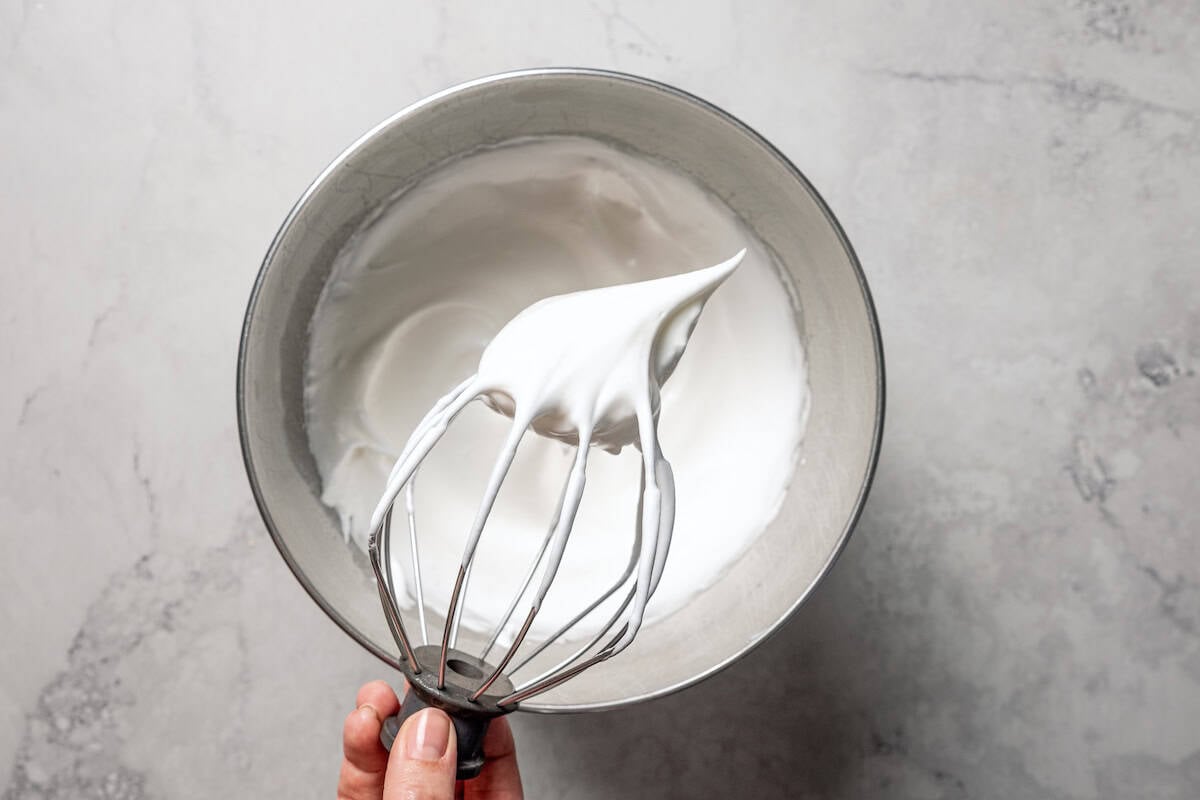
- Make the meringue. Begin by whipping the egg whites in a clean bowl until they’re light and frothy. Next, gradually add the superfine sugar, beating until you have stiff, glossy peaks. If you’d like to color your macarons, now’s the time to mix in a few drops of food dye.
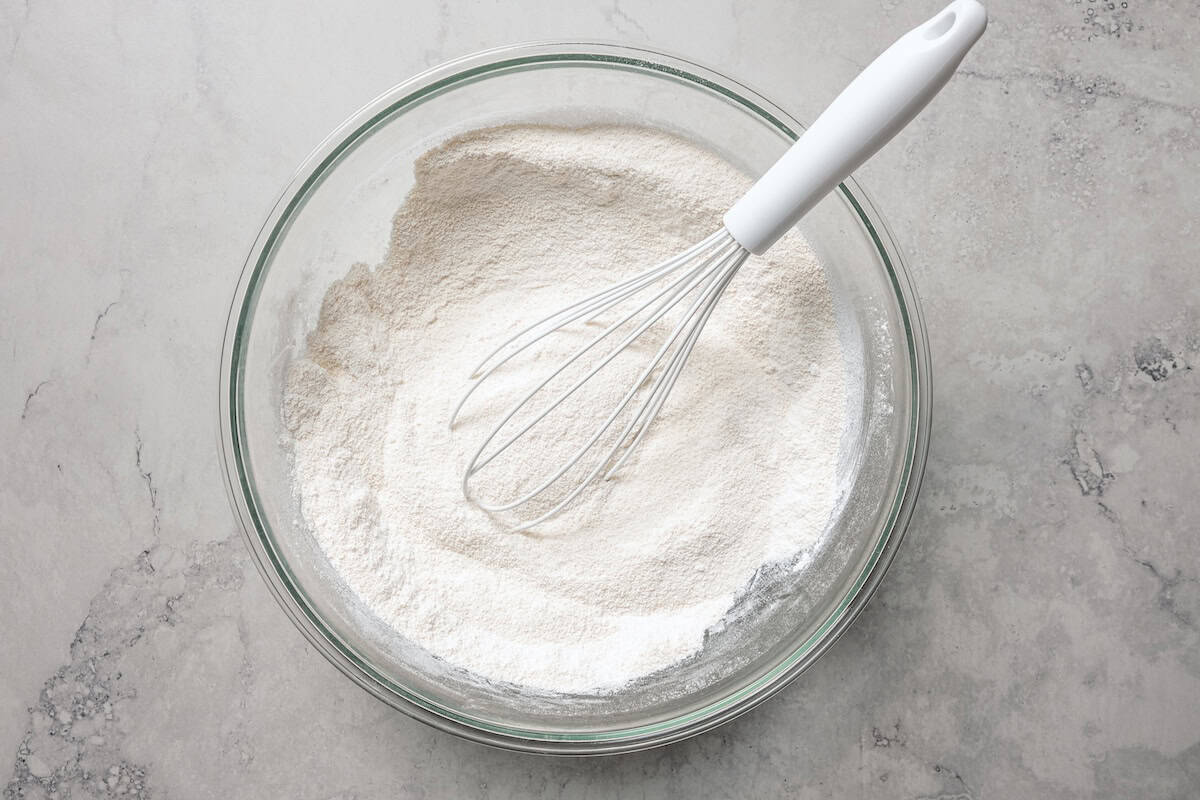
- Sift the flour and sugar. Use a fine mesh sieve to sift the almond flour and powdered sugar into a large bowl. Stir them together to combine.
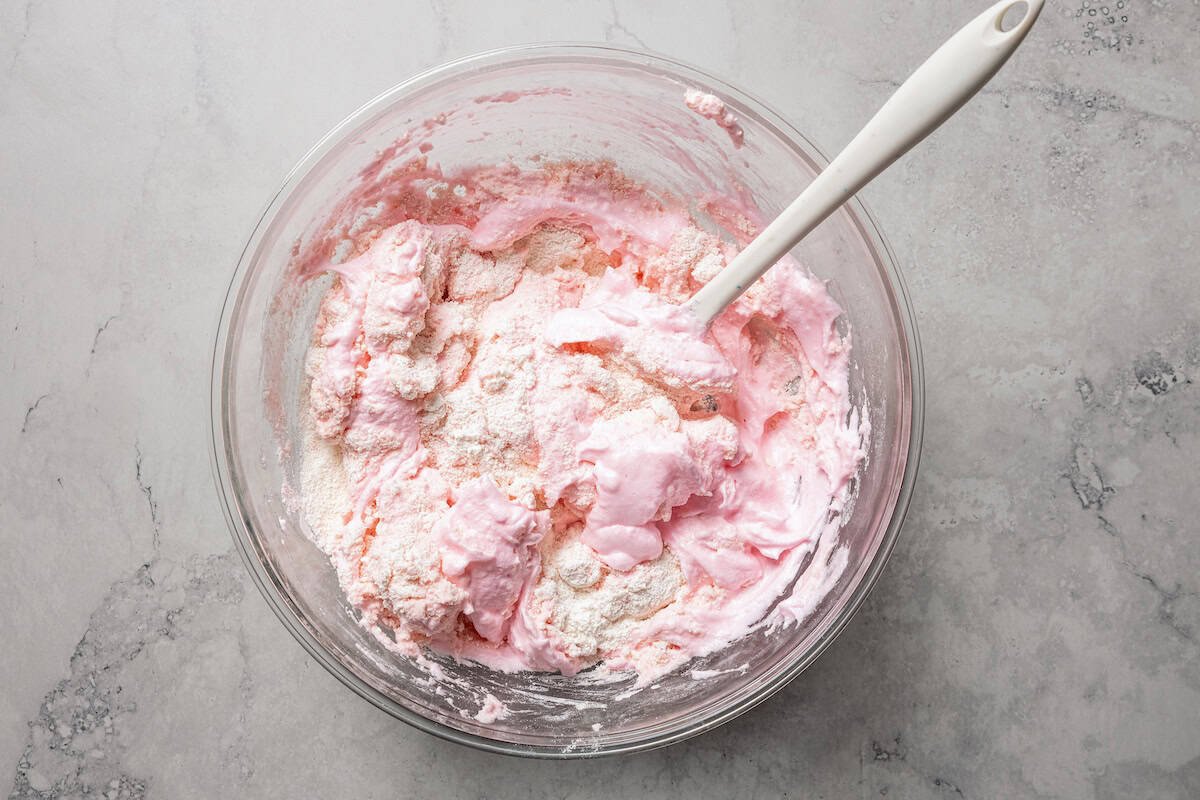
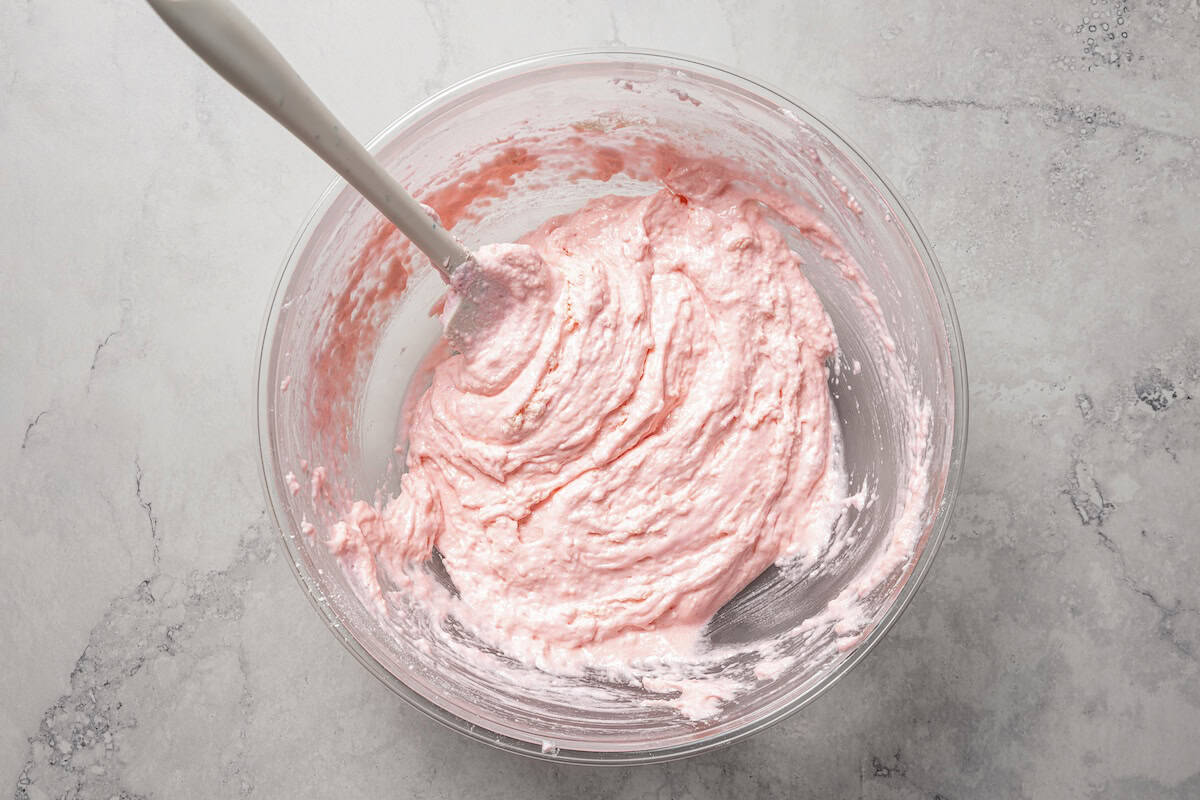
- Mix the batter. Gently fold about ¼ of the meringue, and continue with the remaining meringue until you have a smooth, shiny batter. I’ve found that by gradually folding in the dry ingredients this way, I can actually skip the macaronage step that’s traditionally used to deflate and smooth out the batter in French macaron recipes.
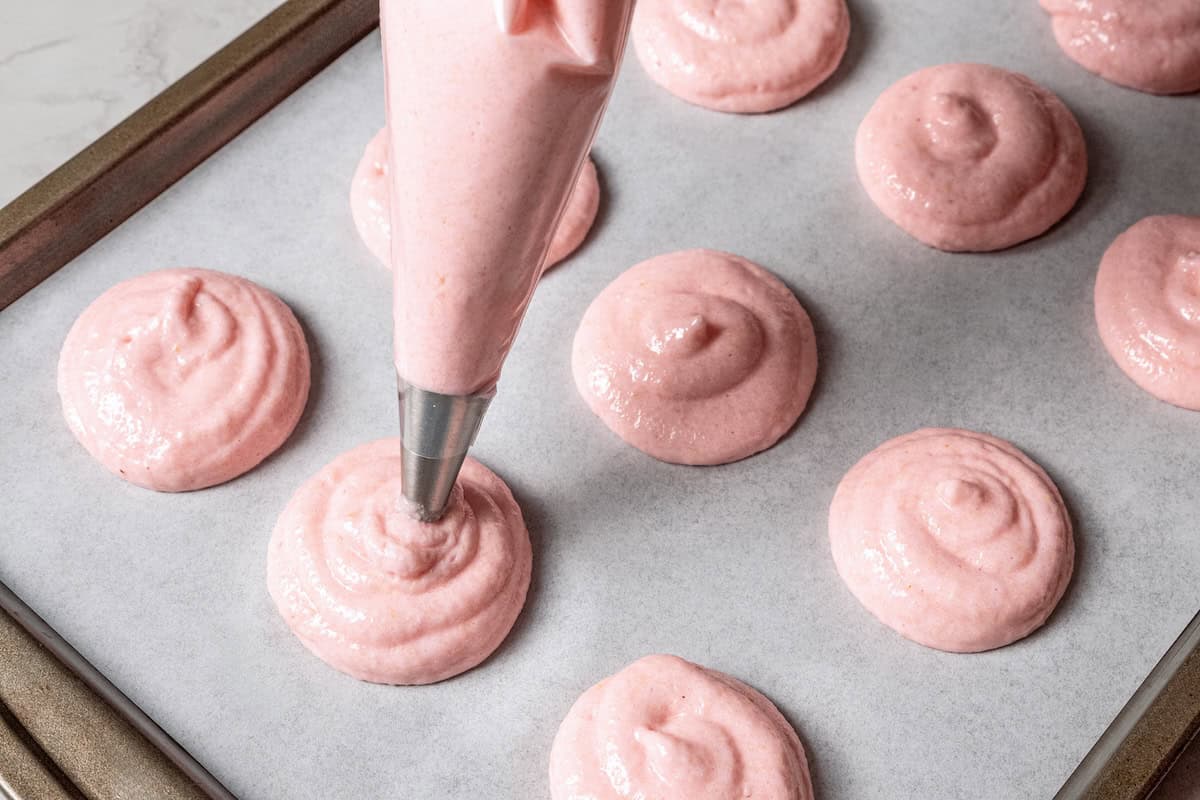
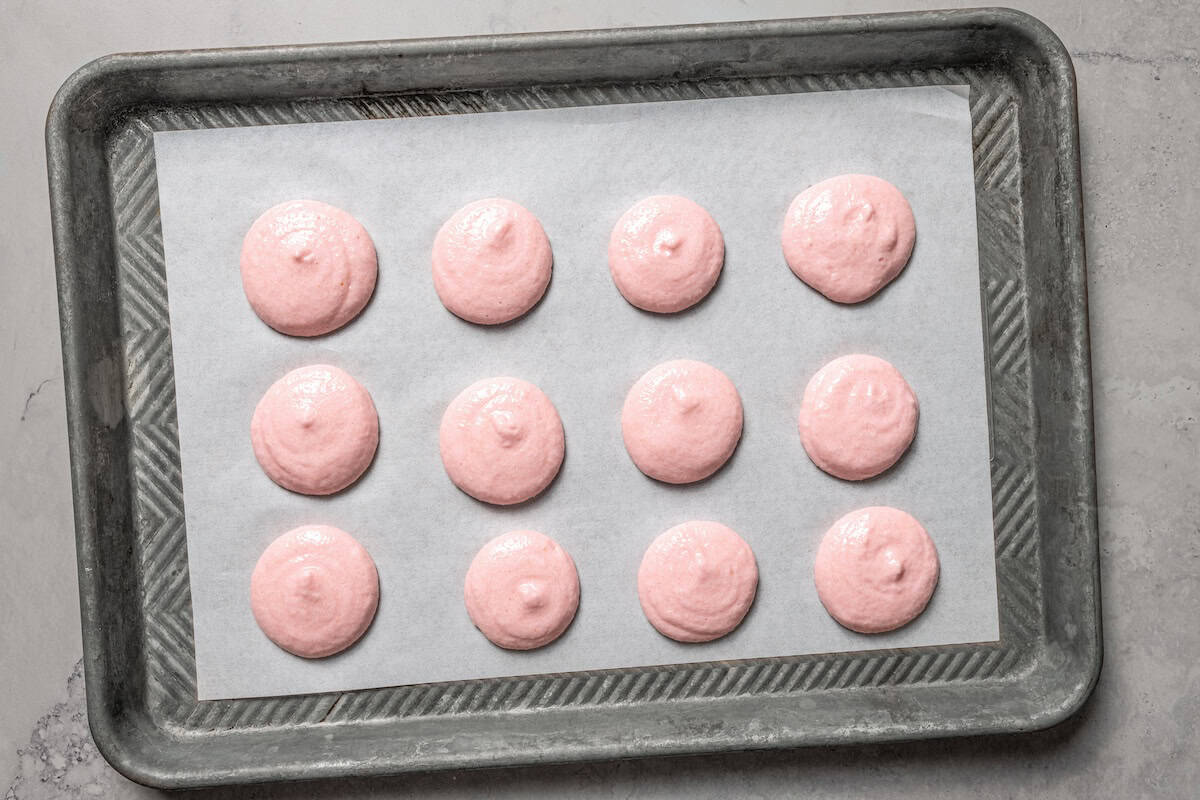
- Pipe the macaron shells. Using a piping bag fitted with a ⅜-inch open round tip, pipe the macaron batter into small rounds across three lined baking sheets.
- Dry the shells. Afterward, let the shells rest and dry at room temperature for about 1 hour, or until the tops are no longer tacky. Resting the batter is crucial in macaron recipes. It helps the outside firm up and form a skin, so the macarons rise while they bake, creating their signature ruffled edges. If you skip this step, your macarons will overspread.
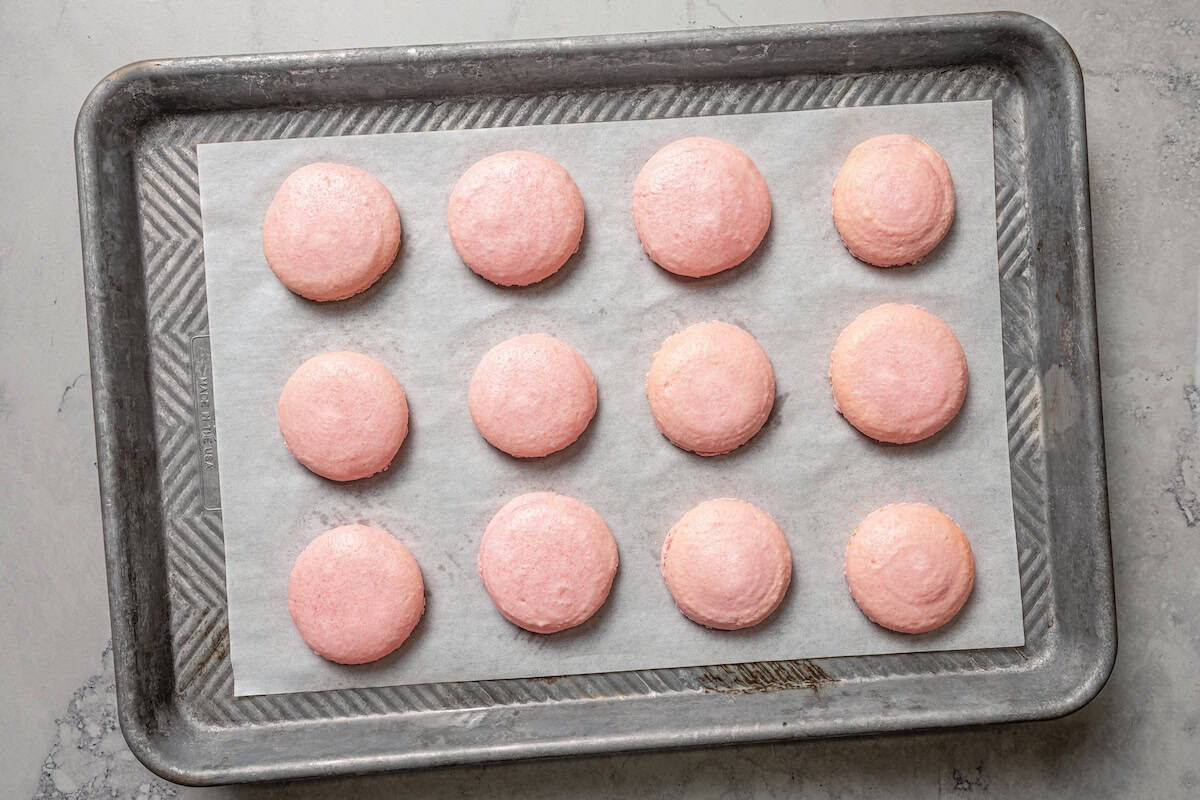
- Bake. Lastly, when you’re ready to bake, bake the macaron shells in a 315ºF oven for 12-15 minutes, rotating the baking sheet halfway through. Macarons are done baking when you can gently touch the tops, and they no longer jiggle.
- Cool. After baking, let the macarons cool completely on the baking sheet before you add the filling.
Assembly
Once cooled, the French macaron shells are ready to fill. I fill mine with homemade marshmallow frosting, which comes together a lot like the meringue for the macarons themselves. You can also fill these with vanilla buttercream or any of the suggestions I include below.
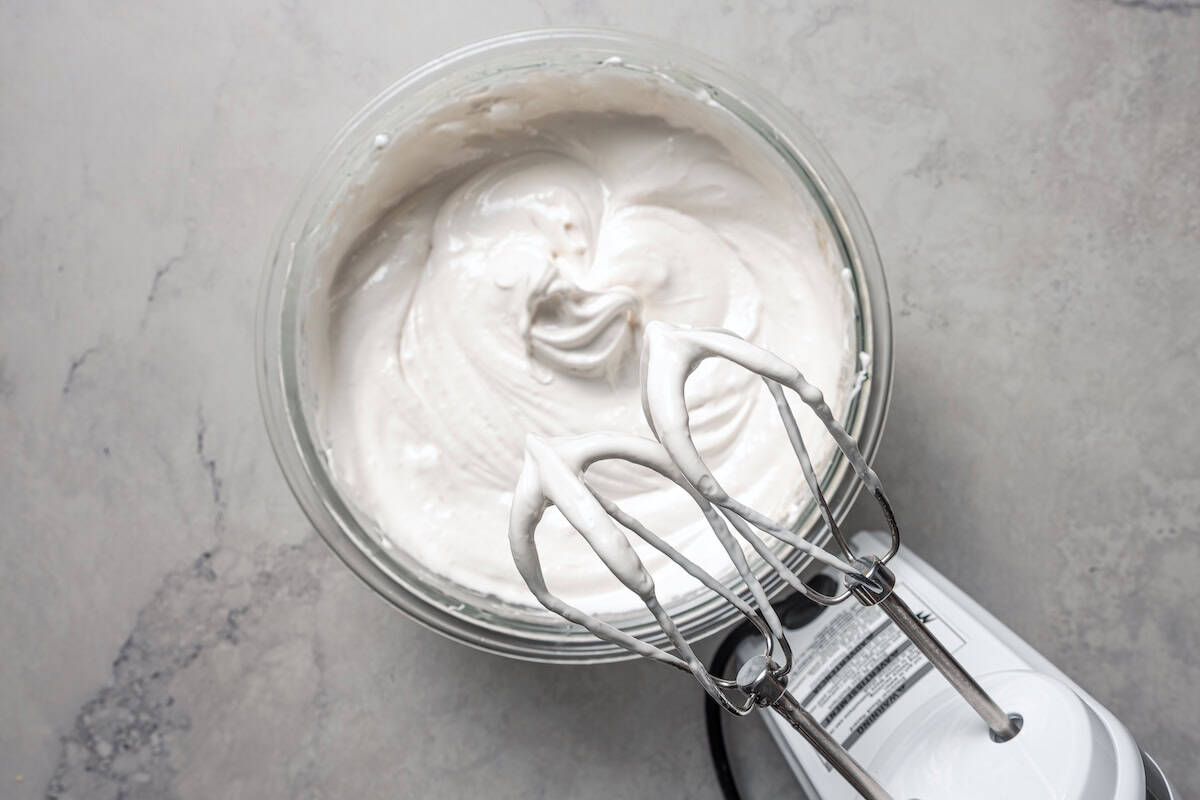
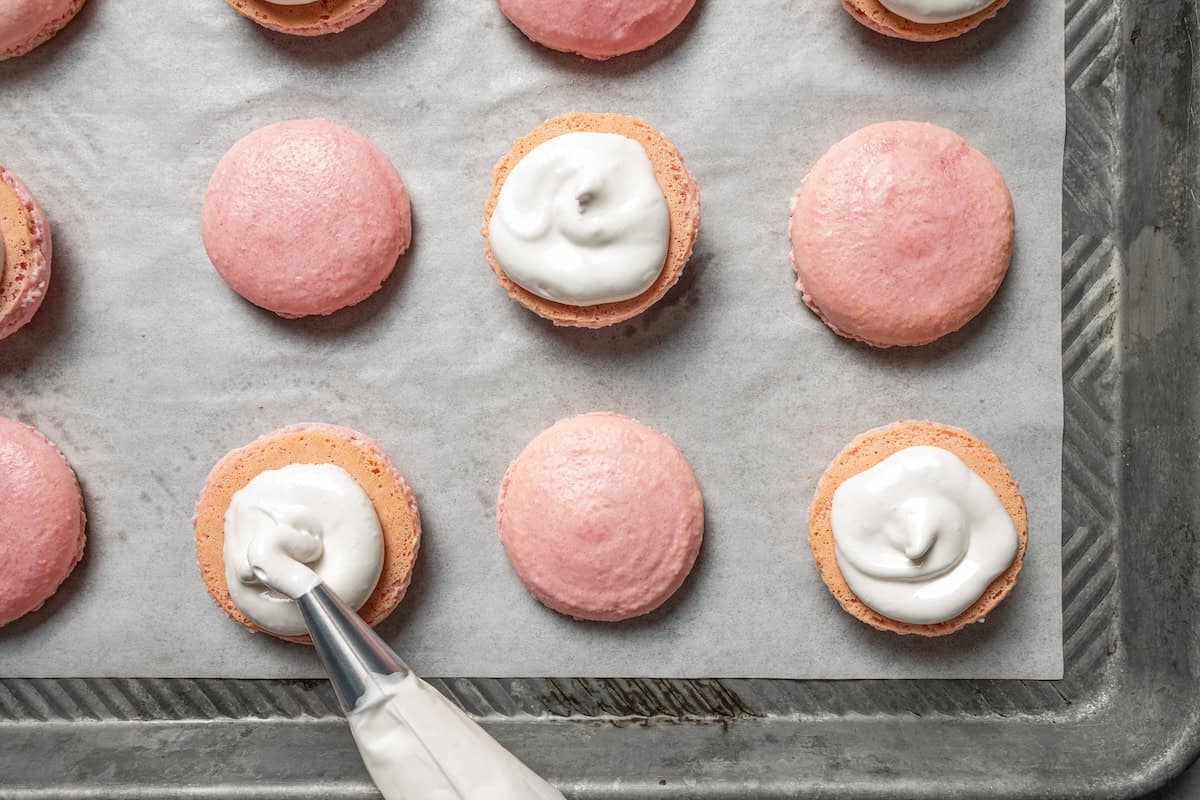
- Make the marshmallow frosting. Beat egg whites with salt, then gradually mix in sugar until soft peaks form. Heat the corn syrup in the microwave, and then stream it into the meringue while mixing to form stiff peaks. Lastly, mix in the vanilla.
- Fill the macarons. Pipe about ½ teaspoon of frosting onto the underside of half the macarons, or you can spread the frosting with a knife. Afterward, sandwich the macarons together using the other halves.
- Chill. Place the assembled macarons in an airtight container in the fridge. It’s best if they rest for at least 24 hours before serving.
Flavor Variations
- Fill them with buttercream. Swap the marshmallow frosting with vanilla buttercream or your preferred frosting.
- Make chocolate macarons. Fill the macarons with chocolate ganache or make my chocolate raspberry macarons.
- Jams and preserves. Try a version filled with strawberry jam or lemon curd.
- Add a little color. I’ve added a touch of pink food coloring in the macaron shells pictured here. If you’d like to color your macarons, use oil-based gel food dye (not water-based), and add a little at a time until you reach your desired color.
- Flavoring extracts. To flavor the shells, add a few drops of flavoring extract, like vanilla, lemon, orange, peppermint, etc., at the same time that you add any food coloring to the meringue.