


Last Updated on May 6, 2026 by Carrie Korem, FNTP
There is a lot of confusion about iodine and the thyroid, especially when it comes to thyroid disease. Many people have heard that all iodine is dangerous, or that it can cause thyroid disease symptoms to worsen. But what’s the real story? Let’s take a closer look at the facts.
The Benefits of Iodine
Iodine is present in every organ and tissue in the body. It’s not only necessary for proper thyroid hormone production, but it’s also needed for fetal development, the health of the salivary glands, proper immune system function, hormone balance, healthy breast tissue, and the prostate, ovaries and skin.
Iodine contains antibacterial, anti-parasitic, antiviral, and anticancer properties. It can be helpful to treat breast diseases, fatigue, goiter, fibrocystic breasts, thyroid disorders, and hypertension, just to name a few.
It’s also an essential component of the thyroid hormones, T3 and T4, and is necessary for normal thyroid function.
A meta-analysis of studies on iodine in China concluded that the level of iodine nutrition plays a crucial role in the intellectual development of children.
A study published in the Lancet concluded that iodine deficiency during pregnancy adversely affects children’s mental development.
This study showed that iodine can be useful to treat fibrocystic breast tissue.
Iodine deficiency is recognized as the most common cause of preventable brain damage in the world.
This is really just the tip of the iceberg when it comes to why the body needs iodine. But, as you can see, it’s incredibly important!
Iodine and the Thyroid
The thyroid needs iodine and tyrosine to make thyroid hormones. Without iodine, you cannot make thyroid hormones.
Iodine deficiency can cause or contribute to hypothyroidism, goiter, cysts and nodules. Studies have also shown that iodine deficiency can contribute to hyperthyroidism, when the hyperthyroidism is caused by toxic nodules or goiter.
How Much Iodine Do I Need Each Day?
While the RDA is 200mcg, most thyroid experts believe this is too low. Many medical doctors who specialize in thyroid health such as Guy Abraham, M.D., and David Brownstein, M.D. recommend amounts anywhere between 12.5 – 37.5 mg daily.
In my practice, I’ve seen doses closer to 600mcg – 6mg daily can be well tolerated, but it’s important to remember that we are all biochemically individual, so what works for one person doesn’t necessarily work for another.
If you feel you need supplementation, I always recommend consulting with a practitioner who is well-versed in nutrition to help you figure out the best dosage for your body.
What are Symptoms of Too Much Iodine
An indication that you’ve taken too much iodine is heart palpitations and/or feeling like you have way too much energy. If this happens, it’s a good idea to stop taking iodine and talk to your practitioner.
Iodine is excreted through the urine, so increasing your fluids can be helpful.
How Does Someone Become Deficient in Iodine?
If there isn’t enough iodine in the diet, then deficiency can follow. Swimming, bathing or drinking chlorinated and/or fluoridated water or a high consumption of bakery products (breads, pastas, etc. ) that contain bromide can cause iodine deficiency. And, vegan and vegetarian diets can sometimes result in iodine deficiency.
Best Food Sources of Iodine
The body does not make iodine, so it’s essential to include it as part of your diet. Here’s a list of iodine-rich foods:
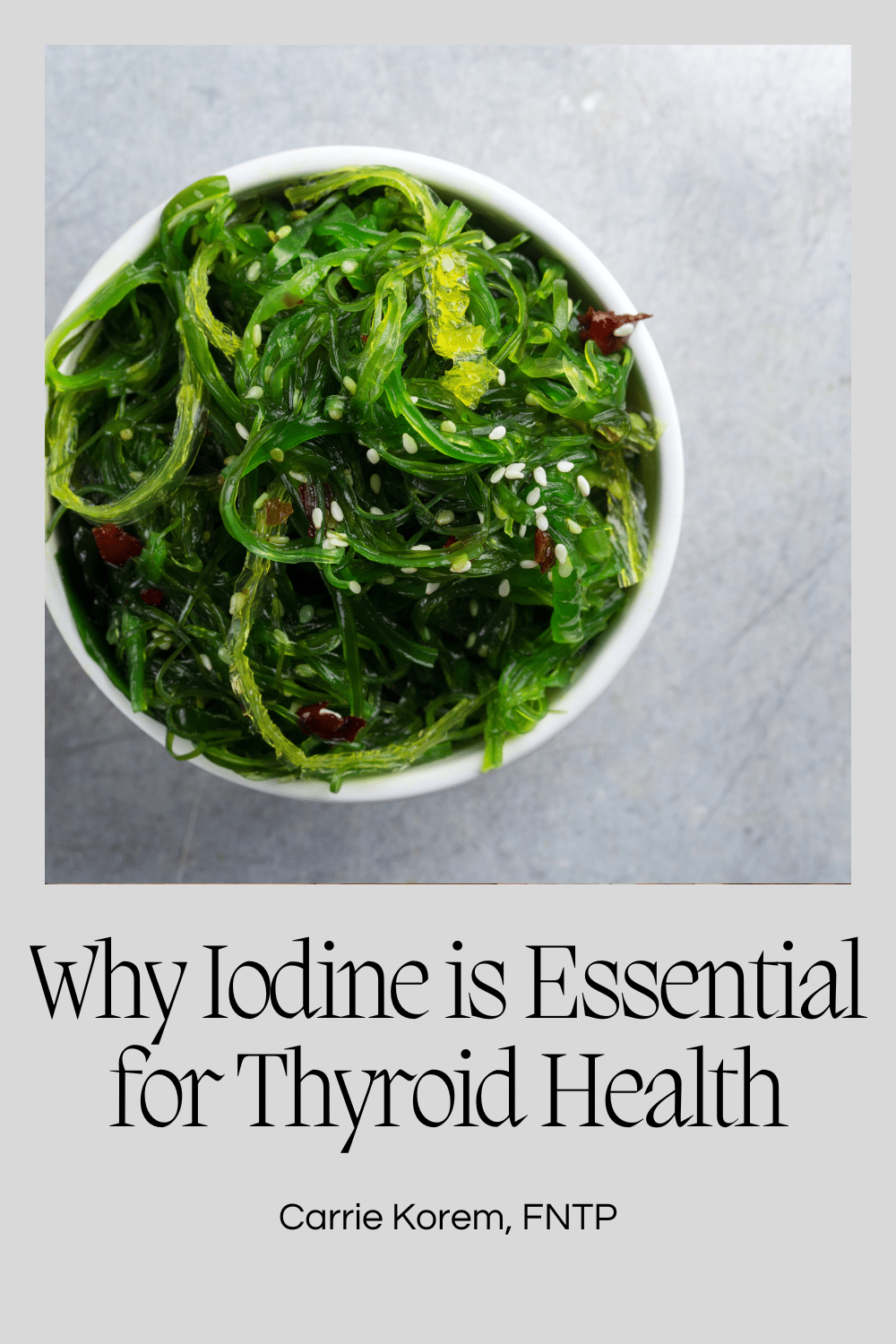
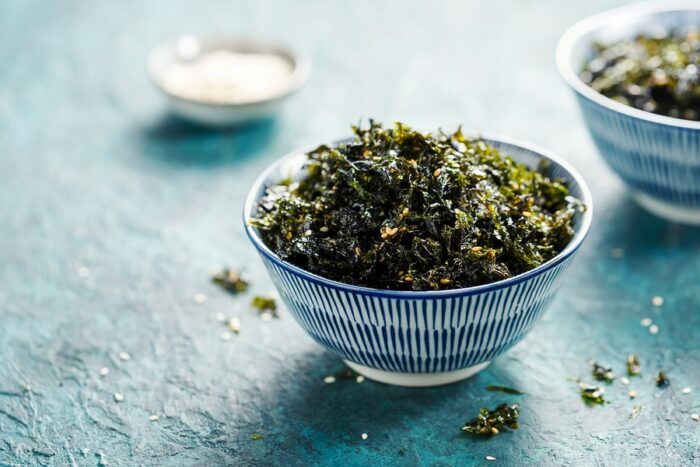
- Sea vegetables, such as kelp, dulse, nori and wakame
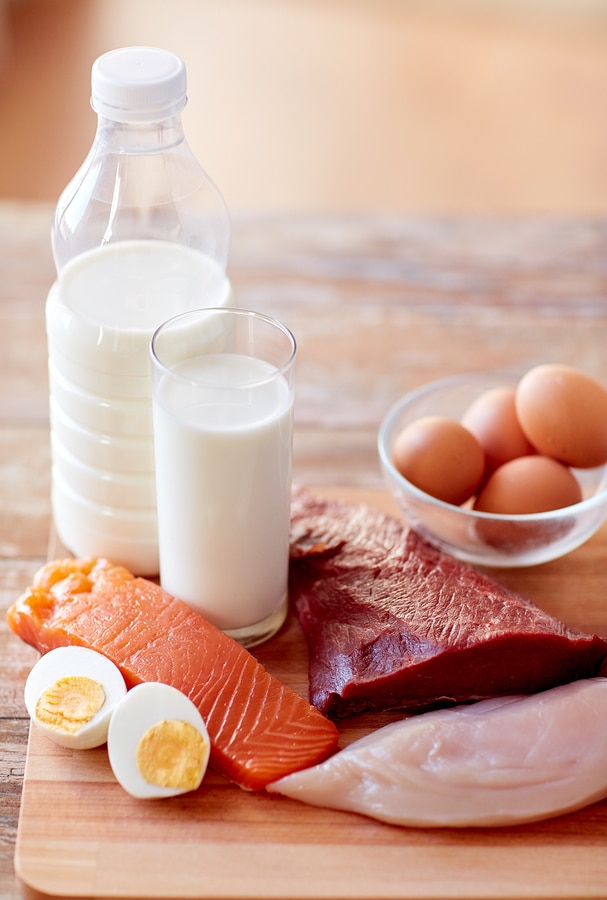
- Wild seafood
- Unprocessed, organic dairy, such as raw milk, raw cream, cultured yogurt, etc.
- Pastured/organic eggs
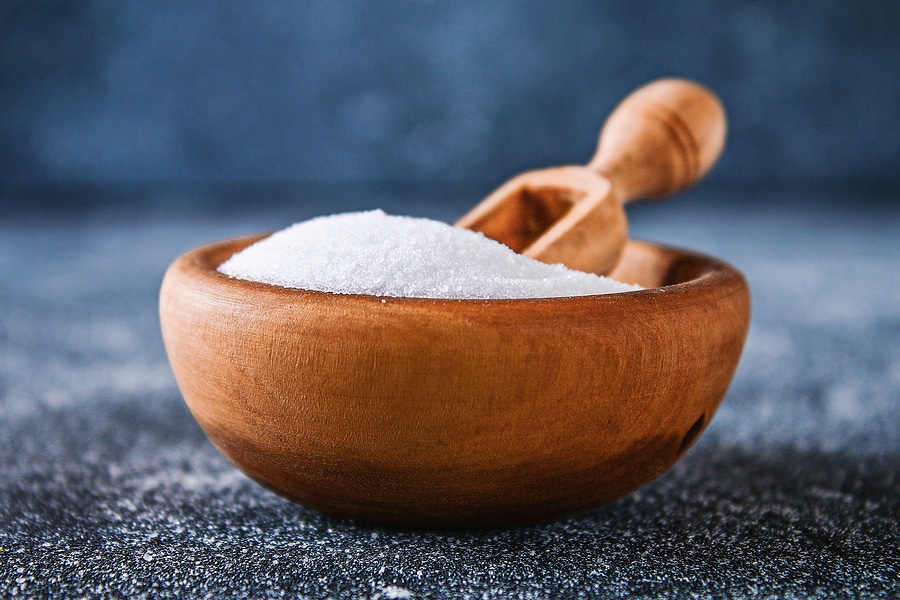
Is Iodized Salt a Good Source of Iodine?
“Not only is iodized salt a poor source of iodine, but we have been conditioned to avoid salt by the media and by mainstream medicine. Presently, less than half of U.S. households use salt. As a result, iodine levels have fallen by more than 50% over the last 40 years as reported by the National Health and Nutrition Examination Survey from the Centers for Disease Control. This is a recipe for making a whole population of U.S. citizens iodine-deficient. That is exactly what has happened in the United States and many other western countries.” Dr. Brownstein
Iodized salt is a processed food that has been bleached, stripped of its many natural minerals, and had anti-caking agents added (commonly dextrose) that come from GMO corn.
I recommend using Celtic Sea salt daily as it contains over 80 different minerals including naturally-occurring iodine.
Iodine and Hypothyroidism
If you don’t have enough iodine in the body, you cannot make enough thyroid hormones, in particular T4, which can lead to hypothyroidism.
Additionally, iodine plays a significant role in the liver’s ability to convert FT4 to the active thyroid hormone FT3. When the body under-converts FT4 to FT3, this can also lead to hypothroidism.
Iodine and Hashimoto’s Disease
Hashimoto’s is an immune system issue that can affect the thyroid. There are many different root causes for this such as a viral infection, a bacterial infection, an overabundance of stress, heavy metals in the body, liver congestion, toxins, nutrient deficiencies, etc.
Even when one has Hashimoto’s, they still need iodine to make thyroid hormones, and they also need it for other tissues of the body, as discussed above.
However, there are some who say they don’t feel well when eating iodine-rich foods. In this case, usually this person has high levels of fT4, which indicates they are in a hyperthyroid state, or they have indications of a congested liver.
In either of these situations, when you add iodine to the mix, the metabolic rate speeds up and/or the thyroid gland tries to push out various toxins. This can create die-off reactions and make them feel very sick, because their body is being pushed harder than it can handle.
In this case, it’s best to keep iodine-rich foods at a minimum while you work on the root causes of the elevated thyroid hormones or liver congestion. After the thyroid isn’t in a hyper state and/or the liver has been properly supported, clients can often re-introduce iodine-rich foods or even iodine supplementation and feel great.
If hyperthyroidism has been ruled out for you, then here are some things to try alongside a nutrient-dense diet:
- Use a castor oil pack over the liver for 3-4 weeks. Then, try adding a bit of kelp powder or sea vegetable powder to your diet and see how you feel. I also recommend keeping a close eye on your labs to see if things are headed in the right direction.
- Along with the castor oil packs, we like to use specific Gemmotherapy remedies such as Rosmarinus or Juniperus that gently drain the liver. Rosa Canina will often be used to specifically support the thyroid gland.
When the castor oil packs and drainage remedies are used together, our clients feel better and are usually able to then add iodine-rich foods back into the diet and take an iodine supplement if needed.
It’s good to keep in mind that we are all biochemically individual, so iodine won’t work for every single person, but in general, adverse effects from iodine are rare when it’s used appropriately.
Iodine and Hyperthyroidism
If you have elevated fT4 or fT3, then you should talk to your nutritionist about the right amount of iodine that your body needs. As I mentioned above, we need iodine for more than just thyroid hormone production, but if you are make too much thyroid hormone, then eating too much iodine can possibly create further hyperthyroid issues.
In general, it’s usually ok to eat foods that contain iodine such as pastured eggs, raw cheese, butter, and some wild seafood, but you’d want to avoid eating large amounts of seaweed or other foods that contain a very high amount of iodine in them. I have a reference chart below so you can see the various amounts of iodine in different foods.
In our practice, we’ve found that if we steps to help the client move out of the hyper state and balance fT4 and fT3, then if they had been having issues with iodine-rich foods in the past, we are able to add them back and then add supplementation if necessary.
It’s also important to mention again that studies have also shown that iodine deficiency can contribute to hyperthyroidism, when the hyperthyroidism is caused by toxic nodules or goiter. So, if the root cause of your hyperthyroidism is a goiter or nodules, then working on the root causes of either of those issues can then help move the body out of a hyperthyroid state.
Here’s a list of the amount of iodine in various foods for reference (according to the NIH):
Seaweed, nori, dried, 10g or 2 tablespoons 232 mcg
Cod, 3 ounces 158 mcg
Plain yogurt, 1 cup 116 mcg
Oysters, 3 ounces 93 mcg
Milk ~85 mcg (this various according to the season)
Egg 26 mcg
Cheese, 1 ounce 14 mcg
Liver 14 mcg
Shrimp, 3 ounces 13 mcg
Tuna, 3 ounces 7 mcg
As as you can see in this study, the amount of iodine in milk, fish, and eggs varies upon the geographical location. So, the numbers above are approximate.
I always recommend talking to your practitioner before taking any kind of supplementation.
Iodine and Goiter
Thyroid enlargement, or goiter, is one of the earliest and most visible signs of iodine deficiency.
When iodine intake is insufficient, the thyroid tries to “trap” more iodine and so will enlarge to do this. A common solution to goiter is iodine supplementation. It’s always best to consult with a practitioner who’s extensively trained in nutrition to figure out the proper dosage.
On a side note, castor oil packs over the thyroid combined with iodine supplementation can be very helpful for those with goiter.
Iodine and Thyroid Cysts or Thyroid Nodules
Iodine deficiency can cause thyroid nodules, so increasing your intake of iodine-rich foods or taking an iodine supplement can be helpful to reduce them.
While thyroid cysts aren’t often caused by iodine deficiency, we’ve seen in our practice that clients with thyroid cysts often see positive results when they include an iodine supplement along with the protocol their doctor has prescribed.
Last year, one of my clients had a thyroid cyst, so she took an iodine supplement and diligently used castor oil packs over her thyroid for several months. She was elated when her doctor did an ultrasound and told her the cysts had shrunk significantly.
What is the best iodine supplement for the thyroid
Prolamine Iodine or Iodomere – are two of my favorites. Iodomere contains 200mcg of iodine per tablet, and Prolamine Iodine contains 600mcg.
Thyroid Complex – This supplement contains Bladderwrack, Ashwagandha and Bacopa to support healthy thyroid function. It can also help assist the body in achieving normal basal metabolism through supporting healthy thyroid function.
Iodine Sufficiency Testing
If you’d like to get tested to see if you’re deficient in iodine, there are two options:
- A simple iodine patch test is a simple and easy way to test.
- Many labs offer a 24-hour collection test. I recommend asking your practitioner if that’s a good fit for you.
Note: The purpose of this post is to give an overview of iodine and thyroid health from a holistic perspective. This information is not intended to take the place of your doctor’s advice.

