


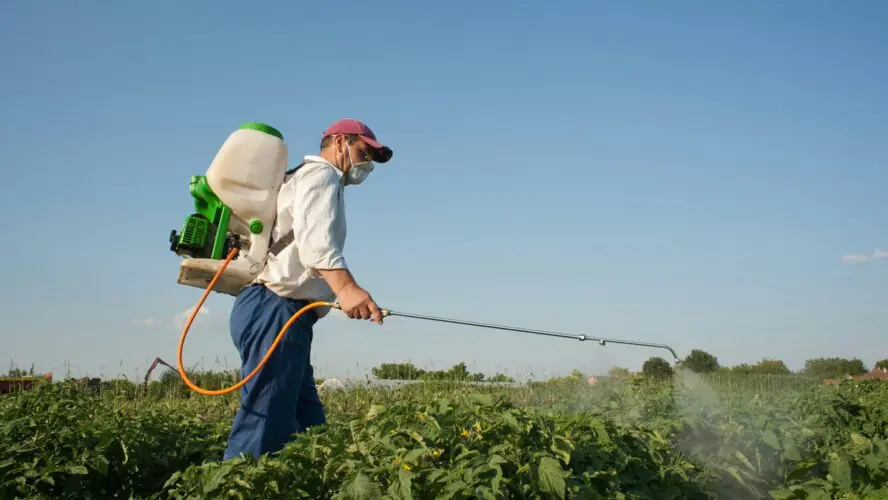
For decades, the most common argument in favor of continuing to spray American cropland with toxic pesticides hasn’t been a denial of their toxicity; it’s been the claim that exposure in low doses isn’t harmful enough to warrant banning them. But a new study has just debunked this, showing that several common agricultural chemicals — including the ubiquitous herbicide glyphosate — can cause genetic damage to human cells, even at very low levels of exposure.
Evidence of the Toxicity of Common Pesticides
In the new study, which was published in Annals of Global Health, researchers tested ten pesticides of concern, prioritized based on previous European Union research on more than 200 different pesticides1. The results were upsetting, if not shocking. They found that 80% of the chemicals tested could damage or alter human DNA. To make matters worse, every single one of the eight (out of ten) pesticides that showed toxicity are registered for use in the United States.
For some of the substances, including cyprodinil and deltamethrin, this was the first evidence of potential cell damage. In the case of glyphosate toxicity specifically, cell damage was perceptible even at extremely low doses, suggesting that there is nearly no safe level of human exposure to the widely used herbicide.

“Low-dose testing in toxicology is fundamental,” said senior author Daniele Mandrioli, a researcher and secretary general at Collegium Ramazzini. “Often effects of low doses are underestimated simply because they are not studied.”
What Is Glyphosate, and Why Is It Always in the News?
Glyphosate is a weedkiller most frequently marketed by Bayer (formerly Monsanto) as Roundup. It has been deemed a “probable human carcinogen” by the World Health Organization2. As of June 2026, there were roughly 65,000 active lawsuits in the United States regarding the product’s potential for harm3.
Glyphosate has been in the news pretty regularly as of late. Bayer recently won an appeal in the Supreme Court following a Missouri court’s verdict in favor of John Durnell, a gardener who sued the company in 2019 for not warning him about the dangers of glyphosate. He alleged the glyphosate exposure caused him to develop non-Hodgkin’s lymphoma, and a jury originally awarded Durnell $1.25 million in damages. However, more recently, the case was overturned in the Supreme Court, which ruled that states do not have the power to impose labeling regulations on products that supersede federal law. Farm Progress reports that this decision could dismiss thousands of pending lawsuits against Bayer.
Sources:
- https://annalsofglobalhealth.org/articles/10.5334/aogh.5345
- https://www.iarc.who.int/featured-news/media-centre-iarc-news-glyphosate/
- https://www.reuters.com/sustainability/boards-policy-regulation/what-does-bayers-us-supreme-court-case-mean-thousands-roundup-lawsuits-2026-06-25/