


Sucralose is one of the most popular artificial sweeteners in the world. And as more people make an effort to eat less sugar, it’s only natural that artificial sweeteners come into the equation. But as we try to remove sugar from our diets, could we be introducing something else negative in the mix?
When looking at the most searched terms involving ‘sucralose’, the question ‘is sucralose bad for me’ sits high on the list. So, what’s the answer? We’ll deep dive into recent research on possible health effects of sucralose, what foods contain sucralose, and how other alternative sweeteners like stevia stack up. These will help you decide which sweetener option (if any!) fits best with your lifestyle and health goals.
What Is Sucralose, Exactly?
Beyond being the artificial sweetener in the yellow packets, what is sucralose? Sucralose is a chlorinated form of sucrose, or table sugar, that is 600 times sweeter than sugar1. It contains zero calories, and this is likely because it passes through the body largely unmetabolized.
So, is sucralose the same as sugar? Although the process of making sucralose starts with sucrose, manufacturers replace the three hydroxyl groups on sucrose with chlorine atoms2. It’s this structure, which isn’t broken down in the body, that helps humans consume it safely.
Why Some People Think Sucralose Is Bad for You
After seeing post after post digging into the potentially negative effects of sucralose, it’s no wonder people are asking, “Why is sucralose bad for you?”
Some of these fears center around cancer worries, while others stem from gut health concerns — and some are just plain fearmongering around claims online that sucralose is a chemical (spoiler alert: so is sugar, and even water). But are these valid reasons to avoid sucralose, and what does the evidence actually say?
An Acceptable Daily Intake of Sucralose
Before we dig into the possible health risks of sucralose, it’s helpful to understand what experts deem a safe amount of sucralose to consume.
After reviewing more than a hundred safety studies, the Food & Drug Administration (FDA) has deemed sucralose a safe food additive. It sets the acceptable daily intake (ADI) of sucralose at 5 milligrams per kilogram (mg/kg) of body weight per day3. Meanwhile, the European Food Safety Authority also deems sucralose safe as an additive, but sets their ADI at a higher 15 mg/kg of body weight4,5.
To picture what this looks like, let’s calculate how many packets of certain sucralose sweeteners you could consume daily to reach the ADI. Note that as we do these calculations, we have to factor in the fact that brands like Splenda aren’t pure sucralose — they’re packaged with a large amount of fillers, which we need to account for in the numbers. The FDA’s chart does the math for an adult weight of 132 lbs (60 kg):
- Daily threshold: 5 mg/kg × 60 kg = 300 mg sucralose/day
- Sucralose per packet: since sucralose is ~600× as sweet as sugar, and each packet claims to replace 8g of sugar sweetness, this would equate to roughly 8000mg ÷ 600 ≈ 13.3 mg of sucralose per packet
- Packets to reach ADI: 300 mg ÷ 13.3 mg ≈ 22.5 packets
We also wanted to do the math for the weight of an average American — here’s a chart showing how many packets you can consume to meet the FDA ADI and EFSA ADI for both weights6,7:
| Weight | Packets you can consume to hit FDA ADI | Packets you can consume to hit EFSA ADI |
| FDA example of 132 lbs. (60kg) | 22 (22.5) packets | 67 (67.67) packets |
| Average American adult 185.4 lbs. (84.1 kg) | 31 (31.62) packets | 94 (94.85) packets |
As you can see, regardless of whether we go off the FDA or the EFSA numbers, we’re talking about a pretty substantial number of sweetener packets before you start to hit unsafe levels. But does the research on health risks associated with sucralose back that up?
Research on the Health Effects of Sucralose
The concerns around sucralose haven’t materialized out of thin air — let’s cover possible health risks associated with this sweetener.
Gut Bacteria and Glycemic Response
A 2022 landmark study on artificial sweeteners and gut health in the journal Cell shows that non-nutritive sweeteners (NNS), including sucralose, can alter gut microbiome composition and glucose tolerance in some individuals8.
For two weeks, each study participant had six packets of artificial sweetener per day, spread out over 3 meals. Each packet had 5 grams of glucose as a bulking agent, just like what you would find in commercial sweetener products. The control group had just 6 packets of just glucose each day to isolate the effects of the artificial sweetener.
Study results show that those who got saccharin or sucralose had significant impairment of their glycemic response, and both their stool and oral microbiome had alterations. Blood markers like blood pressure, insulin, HbA1C, GLP-1, CRP (an inflammation marker), and liver enzymes did not show significant impact. Therefore, the study concluded that your blood glucose levels may rise and gut bacteria can change after you consume around 25% of the FDA ADI of sucralose.
A more recent study done in 2025 looks at the effects of consuming 30% of the FDA ADI of sucralose on healthy, lean individuals for 30 days9. Results show that compared to those in the placebo control group, those who had sucralose had a 20.3% decrease in insulin sensitivity. Glucose, insulin, GLP-1, and pro-inflammatory markers increased, while there was a reduction in gut bacteria diversity.
Another 2025 study, this one lasting about 12 weeks, found that those who replaced table sugar in their coffee or tea with sucralose saw changes in their gut bacteria community structure after 12 weeks10. However, these changes were only seen in those with type 2 diabetes, not those who were simply overweight or obese.
Overall, while the studies did observe some patterns, more research needs to be done to see more clearly how sucralose affects the gut in certain groups of individuals.
Sucralose and Cancer Risk
Due to an older study done on rodents in 2016, many people think sucralose causes cancer11. However, this study caused backlash regarding the validity of the results, and for good reason. Experts said that the study12:
- Had no dose–response relationship between the exposure to sucralose and “effects” reported in the study
- Failed to meet the standard criteria for a cause–effect relationship between intake of sucralose and the development of tumors
- Had a treatment design length up to the natural death of animals, which makes it hard to tell which tumors were a result of treatment and which were a result of the natural increase in tumor incidence with age
More recent studies show that although sucralose may impact the effectiveness of cancer treatments because of its impact on gut bacteria, it does not directly cause cancer13. Therefore, as long as you are not undergoing treatment for cancer, healthy individuals are safe to consume sucralose in levels at or below the ADI14.
Does Sucralose Affect Blood Sugar or Weight?
As we’ve discussed, regular intake of sucralose may impact gut bacteria, which could indirectly affect your glycemic response, or how your body handles sugar. However, it’s a bit of a coin toss — a 2025 study review looking at sucralose and insulin response shows that half of the people who received sucralose had a significant insulin response, while the other half saw no significant impact15.
If you’re part of roughly half of the population that has a significant insulin response, sucralose has the potential to work against weight loss goals. A spike in insulin could nudge your body toward storing energy as fat, or even trigger cravings and overeating — effects which would undermine a strategy to cut calories by swapping sugar for an NNS.
On a positive note, a 2025 study review on non-nutritive sweeteners (NNS) on body weight did show positive weight outcomes. When replacing table sugar with NNS, it often led to weight loss, especially in normal-weight participants who received the intervention for less than 18 weeks and in those with diabetes16.
Therefore, sucralose may have an impact on blood sugar, but not in everyone, and it is likely dose-dependent and dependent on your baseline health status. Those with obesity, insulin resistance, prediabetes, and diabetes are especially vulnerable to such metabolic responses from consuming sucralose (although studies still can’t definitively say sucralose causes issues in these groups)17,18.
Finally, despite a number of studies sending mixed messages, the World Health Organization (WHO) issued a clear-cut statement in 2023. In it, the organization advised people not to use NNS to control body weight in the long-term. Instead, it urged people to consider other ways to reduce sugar intake altogether, like consuming unsweetened beverages and leaning into foods with naturally-occurring sugars like fruit19.
Is Splenda® the Same as Sucralose?
When it comes to actually consuming sucralose, you’re most likely to find it in Splenda form. Generic versions of Splenda all look the same in their yellow packets — but inside, they actually contain more than just sucralose. Sucralose is a high-intensity sweetener, and it makes up only roughly 1% of Splenda. The other 99% is dextrose and maltodextrin fillers to bulk it up20.
Because of this, there’s another factor to consider in the question “Is Splenda bad for you?” Sucralose itself is not absorbed in the body, but the dextrose and maltodextrin in Splenda® can have a glycemic impact in high enough doses21. And although sucralose can cause some imbalance in the gut by suppressing good bacteria, it’s actually the fillers in products like Splenda® that feed the surrounding “bad” bacteria and cause gut issues22.
While sucralose on its own is safe in moderation, it’s often not found in that form. Because sucralose is typically sold with fillers, you should consume Splenda® and other similar commercial artificial sweeteners in moderation.
The One Caveat to Consider: Heat

Sucralose can break down at high baking temperatures (above ~248°F/120°C for extended periods), potentially forming chlorinated byproducts23,24. But a 2026 study reports that sucralose is safe for use in manufacturing processes that involve heat25.
The key is only using sucralose in moderation when baking. And you may want to do this anyway, since some cooking experts suggest that NNS have limitations in baking like26,27:
- Producing dry baked goods
- Creating cookies that don’t spread
- Causing rubbery cakes
- Lacking the ability to brown or caramelize
If you do choose to bake with sucralose, try choosing a blend of low-calorie sweetener with table sugar. If you choose to use sucralose outside of a blend product, limit its use to replacing no more than 50% of the sugar in your baking recipe to help maintain a decent texture, volume, and moisture28.
Tips for Sucralose Consumption, By Population
Ultimately, it’s clear from the available studies that the way you approach sucralose should be dependent on your health status and priorities.
- For those managing diabetes or blood sugar: Consume teas and drinks with no sweeteners or naturally low-sugar foods and drinks whenever possible, and use sucralose or other NNS only now and then to preserve gut health.
- For people trying to lose weight: Consuming products with NNS like sucralose instead of table sugar may be helpful in moderation to reduce total calorie intake.
- For people with IBS or sensitive guts: Consume NNS in small amounts to support gut health and consult with your digestive specialist for guidance on intake limits.
- For people who are pregnant or nursing: Consult with your doctor about consuming NNS like sucralose during pregnancy, especially if you’re at risk for gestational diabetes.
- For people who bake at home: If you choose to use sucralose in baking to reduce calories and sugar in your recipes, purchase 50/50 blends to help maintain decent texture, moisture, and volume of your baked goods.
Sweetener Alternatives, Ranked
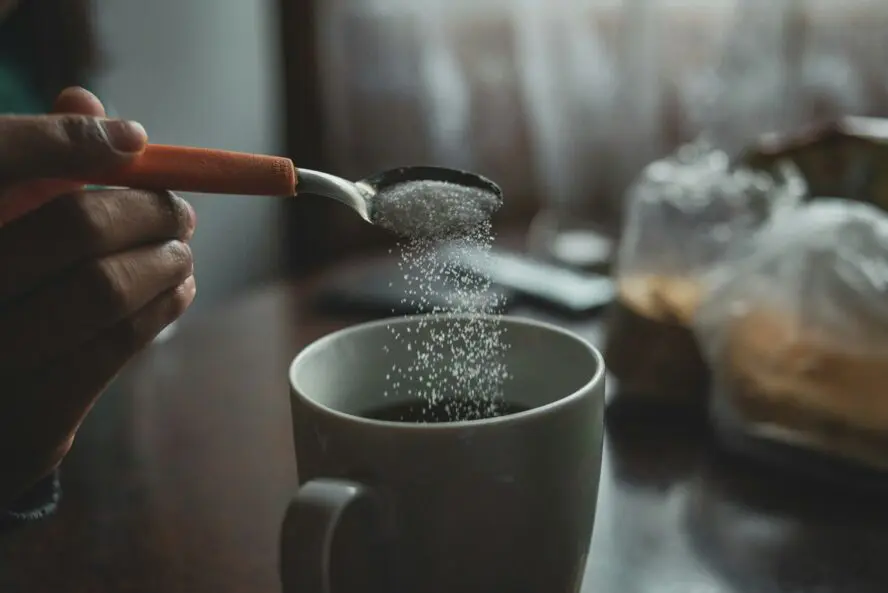
If you’re still not sure about using sucralose in your daily diet, here’s a rundown of some other sweetener alternatives you could try.
- Stevia: Stevia is made from the leaf of the Stevia rebaudiana plant29. When it comes to sucralose vs. stevia, stevia is generally thought of as more “clean” due to its natural origins and minimal processing. Initial studies also show that stevia has no significant effect on gut health or glycemic or insulin response, although more studies need to be done. Finally, it may come with a slightly bitter taste depending on what type of stevia you choose — most stevia you buy in the store is stevia reb A, which is more bitter than stevia reb D.
- Aspartame: Sucralose vs. aspartame is a battle that would be more commonly recognized as Splenda vs. Equal. Aspartame is 200 times sweeter than sugar, but it has a fairly artificial aftertaste. It has a low heat stability, so it’s not ideal for baking30. Research also shows that aspartame may have negative effects on brain health, as well as gut microbes and the intestinal barrier31,32. Aspartame is not a “clean label” sweetener due to its complex processing method33.
- Allulose: This simple sugar has minimal glycemic impact and studies show it can weaken the glycemic response after eating34. It can be an effective way to help support weight management, and as a bonus it tastes very similar to table sugar35.
- Monk fruit: This antioxidant-rich sweetener has minimal impact on blood glucose levels and provides anti-inflammatory properties, which makes its bitter taste a little easier to swallow36,37.
- Sugar alcohols: These partially-absorbed sweeteners can aid in weight loss and blood sugar regulation. They’re also versatile and already appear in many sugar-free food products38. But be careful not to eat too much of them since they can cause GI distress in some people, especially when eaten in excess (over 20-30 grams daily)39. If you have a sensitive gut, research shows that erythritol is the most well-tolerated of the sugar alcohols40.
The Bottom Line
For most healthy adults, having sucralose within normal serving sizes now and then isn’t something to fear. In moderation, it can actually help you manage your weight. However, it’s not for everyone — those with diabetes or at risk for insulin resistance, for example, may be more at risk for the glycemic response side effects that sucralose may cause with regular intake over time.
The key is to choose a sucralose product with minimal fillers so you can enjoy the potential benefits of sucralose without any unnecessary additives.
Sucralose isn’t inherently bad for you. The concerns surrounding sucralose center on gut microbiome shifts seen in recent human studies, older high-dose rodent cancer data, and the fillers in tabletop packets. The sucralose molecule itself hasn’t been conclusively tied to negative effects when consumed in typical amounts.
Human evidence doesn’t support sucralose causing cancer. The concern around sucralose and cancer stems mainly from high-dose rodent studies whose relevance to typical human consumption has been disputed by regulatory bodies.
Yes, Splenda® is technically the same as sucralose, but with one important distinction: It’s a brand-name product that includes sucralose plus bulking agents like dextrose and maltodextrin. These fillers carry their own minor caloric and glycemic footprint.
No. In typical amounts, sucralose carries fewer known metabolic risks than added sugar, but “better than sugar” isn’t the same as “risk-free,” especially for gut health.
Regulatory bodies classify sucralose as safe within the ADI, but many dietitians recommend minimizing all non-nutritive sweeteners during pregnancy out of caution given limited long-term data.
Sucralose cannot directly cause weight gain since it’s calorie-free. However, emerging research on sweeteners as well as on appetite and glucose response suggest it may not support weight management in the black-and-white way people assume.
Headaches and GI upset like bloating and gas are the most frequently reported side effects of consuming sucralose, generally reported by people consuming it in large amounts or who are sensitive to sugar alcohols or fillers in the product.
Diet sodas, sugar-free gum, protein powders and bars, and reduced-calorie condiments are the most common sources of sucralose.
Note: When making any lifestyle or health changes, consult your primary care physician. The views expressed in this article are the views of the author and do not necessarily represent the views of Organic Authority, Inc.
Sources:
- https://pmc.ncbi.nlm.nih.gov/articles/PMC12905097/
- https://ific.org/insights/everything-you-need-to-know-about-sucralose/
- https://www.fda.gov/food/food-additives-petitions/aspartame-and-other-sweeteners-food
- https://www.efsa.europa.eu/en/news/efsa-finds-sucralose-safe-when-used-currently-authorised-cannot-confirm-safety-extending-its
- https://www.efsa.europa.eu/en/plain-language-summary/re-evaluation-sucralose-e-955-food-additive
- https://www.cdc.gov/nchs/fastats/body-measurements.htm
- https://nutritionsource.hsph.harvard.edu/healthy-drinks/artificial-sweeteners/
- https://linkinghub.elsevier.com/retrieve/pii/S0092-8674(22)00919-9
- https://www.clinicalnutritionespen.com/article/S2405-4577(25)02915-8/abstract
- https://pmc.ncbi.nlm.nih.gov/articles/PMC12731820/
- https://pmc.ncbi.nlm.nih.gov/articles/PMC4894270/
- https://www.sweeteners.org/scientific_studies/statement-on-the-validity-of-the-conclusions-of-a-mouse-carcinogenicity-study-on-sucralose-e-955-performed-by-the-ramazzini-institute/
- https://pmc.ncbi.nlm.nih.gov/articles/PMC12580791/
- https://www.cancer.gov/about-cancer/causes-prevention/risk/diet/artificial-sweeteners-fact-sheet
- https://pubmed.ncbi.nlm.nih.gov/41352271/
- https://link.springer.com/article/10.1007/s40618-025-02654-w
- https://jamanetwork.com/journals/jamanetworkopen/fullarticle/2784545
- https://www.endocrine.org/news-and-advocacy/news-room/2018/consuming-lowcalorie-sweeteners-may-predispose-overweight-individuals-to-diabetes
- https://www.who.int/news/item/15-05-2023-who-advises-not-to-use-non-sugar-sweeteners-for-weight-control-in-newly-released-guideline
- https://pmc.ncbi.nlm.nih.gov/articles/PMC11250074/
- https://pmc.ncbi.nlm.nih.gov/articles/PMC11250074/
- https://pubmed.ncbi.nlm.nih.gov/41156503/
- https://pmc.ncbi.nlm.nih.gov/articles/PMC10971371/
- https://www.bfr.bund.de/en/notification/sucralose-heating-above-120c-can-produce-substances-that-are-harmful-to-health/
- https://journals.sagepub.com/doi/10.1177/23978473211019490
- https://www.kingarthurbaking.com/blog/2020/01/27/sugar-alternatives-for-baking
- https://pmc.ncbi.nlm.nih.gov/articles/PMC6722834/
- https://fieldreport.caes.uga.edu/publications/C1323-10/cooking-and-baking-with-sugar-substitutes/
- https://pmc.ncbi.nlm.nih.gov/articles/PMC13305536/
- https://pmc.ncbi.nlm.nih.gov/articles/PMC13096792/
- https://academic.oup.com/nutritionreviews/article-abstract/84/5/1026/8185007?redirectedFrom=fulltext
- https://pmc.ncbi.nlm.nih.gov/articles/PMC12954558/
- https://www.sciencedirect.com/topics/medicine-and-dentistry/aspartame
- https://pmc.ncbi.nlm.nih.gov/articles/PMC11585728/
- https://www.sciencedirect.com/science/article/pii/S0002916526001231?via%3Dihub
- https://pmc.ncbi.nlm.nih.gov/articles/PMC12073669/
- https://jcdr.net/article_abstract.asp?issn=0973-709x&year=2026&month=March&volume=20&issue=3&page=92&id=23084
- https://academic.oup.com/ijfst/article/61/1/vvag012/8440984
- https://www.sciencedirect.com/science/article/pii/S0092867424000667
- https://pmc.ncbi.nlm.nih.gov/articles/PMC9824470/