


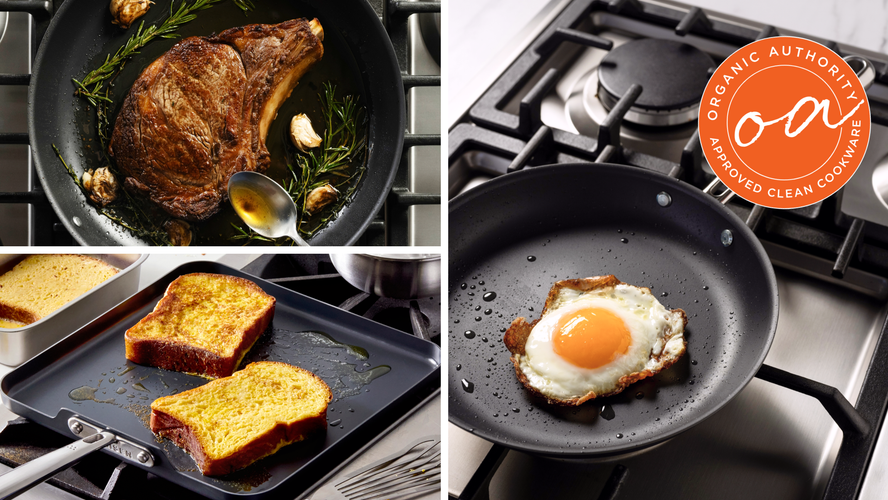
Misen’s Carbon Nonstick is positioned as a clean alternative to coated nonstick cookware options — the key benefit being that it will last forever and never degrade. Is it true? Well, while it definitely meets our definition of non-toxic cookware and is made without PFAS chemicals, we had to put its durability to the test.
This Misen Carbon Nonstick review takes a closer look at the brand’s claims and explores whether it really offers a solution to the problems it aims to solve. I tested the 12” Deeper Carbon Nonstick Frying Pan + Glass Lid, 8” Carbon Nonstick + Glass Lid, and finally the 11” Carbon Nonstick Square Griddle. Here’s how it went!
TL;DR: Misen Carbon Nonstick Offers the Best of Both Worlds
- Misen Carbon Nonstick frying pans offer a non-toxic alternative to traditional nonstick cookware, achieving slick nonstick performance without relying on a coating
- The 8’’ and 12’’ pans were great for both high-heat sears and delicate items like eggs, and the 11’’ square griddle is ideal for cooking multiple items at once
- While the nonstick performance is impressive right out of the box, it does require some simple steps to maintain and improve the nonstick surface over time
- Verdict: Although the price is on the premium side, the durability, included lids, metal utensil compatibility, and non-toxic nonstick make these pans a smart and worthwhile investment
Save 10% with code OA10 to get an exclusive 10% off sitewide.
Where Traditional Nonstick Cookware Fails
Traditional nonstick cookware is a dream for home cooks. It offers the easy cleanup and convenience of a slick surface, saving home cooks time in the kitchen. But that convenience also comes with some serious downsides.
All nonstick cookware — whether it’s ceramic-coated or traditional PFAS or PTFE-coated — has a short shelf life and eventually has to be replaced. And if it’s not cared for almost perfectly, that coating can wear down faster than that slow-cooked stew that you fussed over for days. A few washes in a hot dishwasher and a handful of scrapes with metal utensils by the family member who refuses to use a wooden or silicone spatula, and that coating turns to dust in no time.
Why Carbon Steel?
I love carbon steel cookware, and I’ve been cooking with it for years. It’s lighter than cast iron, but it has enough heft to sear proteins and veg over high heat, plus finish it in the oven without worry of a skillet degrading or warping.
Carbon steel isn’t just oven safe, it’s also grill safe and nearly indestructible — you can even take it camping! So when I got the opportunity to test and review Misen’s Carbon Nonstick, I jumped at the chance.
What Gives Misen Carbon Nonstick Its Nonstick Qualities?
Misen’s Carbon Nonstick skillets aren’t your normal PFAS or ceramic-coated nonstick, or even your typical carbon steel pans. There’s no coating that gets sprayed on to eventually flake, chip, and fail, requiring replacement in a few years.
And unlike traditional carbon nonstick cookware, these pans come with a smooth nitrided surface that’s finished (wiped) with a thin layer of corn oil that makes it slick right out of the box. It doesn’t need the initial seasoning that’s typical of carbon steel cookware, which means less work for you and me.
What Is Nitriding?
Nitriding is a process by which metal is heated in a nitrogen-rich environment that creates a harder, more durable surface that’s both nonstick and resistant to rust and corrosion.
Save 10% with code OA10 to get an exclusive 10% off sitewide.
How Is Misen’s Carbon Nonstick Different from Traditional Carbon Steel?
Misen’s Carbon Nonstick is not the same as traditional carbon steel cookware. It’s literally made differently.
It features three layers of metal and an aluminum core, which makes it lighter and more maneuverable around the kitchen. It also helps the pan heat and cool more quickly. The two outer layers are nitrided carbon steel, which is rare.
The nitriding process doesn’t just help create the nonstick surface, it makes the pan more durable and helps prevent rust. That means if you forget and leave your pan in a soapy, sudsy soak, you don’t have to worry about it rusting (I can speak from experience, that’s a big deal!).
Is It Preseasoned?
Technically, no. However, the nitriding process does the same or a similar job as the seasoning process.
Do You Have to Season It?
Misen says you don’t have to continue to season the surface, but they do recommend that you condition the pan — which I personally feel is basically the same thing. In my opinion, making sure you maintain and build that layer of oil that binds to the pan (in other words, the seasoning) is critical for the upkeep of the pan’s slick nonstick surface. Here are the two steps you need to keep in mind.
Maintaining Misen Carbon Nonstick’s Surface in Three Easy Steps
No matter what a brand may promise, you may also notice that complaints arise about a pan’s nonstick capabilities fading over time. When it comes to Misen Carbon Nonstick, I genuinely believe any complaints are purely because people haven’t followed three critical steps. If you make sure to follow the below steps, your pans should only get more nonstick over time.
- Cook with high heat oils to maintain the seasoning. Cooking with high heat oils (grapeseed, canola, avocado) aids with a self-seasoning process called polymerization. When a fat is heated in the pan, it chemically bonds to the metal, creating a nonstick surface that gets more slick as you use it.
- Season the pan. You can also go one step further for even better results. After you’re done cooking and you’ve cleaned and dried the pan over a burner for a minute or two, add a thin layer of high heat oil to the pan and wipe it down with a cloth until you have a very thin layer of oil left in the pan. Heat the pan over medium high heat until it starts to change color and darken. Let the pan cool and repeat as desired.
- Preheat the pan properly. Sooo many people miss this step, and it’s absolutely critical! This is the key to making any pan nonstick (including stainless steel without a seasoning, so this really works!!).
Start by pulling your protein or veg out of the refrigerator and bringing it to room temperature. This helps your food cook more evenly and makes it less likely to bind to your pan’s surface. Then preheat your pan over medium heat, making sure it’s completely heated through (no short cuts, or it really will ruin your whole nonstick experience!). Once your pan is heated, add your fat or oil and heat it — this is another must if you don’t want your food to stick. When your oil starts shimmering, you’re ready to add your room temperature protein or veg and cook away.
Save 10% with code OA10 to get an exclusive 10% off sitewide.
How Misen Carbon Nonstick Performed in My Kitchen
The 12” and 8” Frying Pans, Tested
Both of these pans performed really well straight out of the box. The 8” is ideal for morning eggs and omelets, and both the 8’’ and the 12’’ are great for searing proteins like chicken breast on the stovetop and finishing in the oven. The included glass lids also really come in handy — I always reach for them when I want to add a little steam to a dish while still keeping an eye on it. They’re perfect for finishing my French scrambled eggs, making it easy to keep them soft without the risk of overcooking.
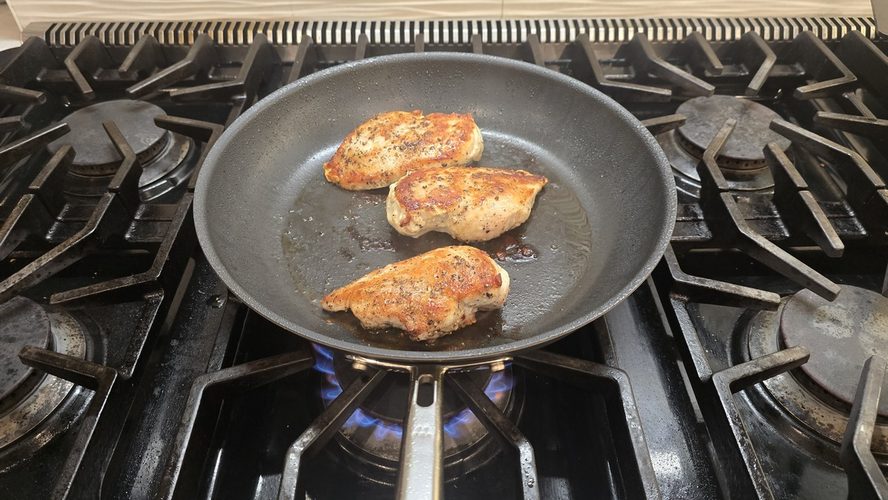
I used the 8’’ pan to sear a chicken breast on the stovetop over high heat (which traditional nonstick can’t do!) and it cooked to a nice golden brown. I then finished the dish in the oven at 400°F with the lid on. The result was a juicy, seriously tender chicken breast with some delicious au jus left in the pan for a beautiful pan sauce.
I also cooked an acidic meatball dish in the 12” pan, which you’re technically not supposed to do because the acid can wear down the polymerized oil layer. I took the risk and did it anyway, and surprisingly, the nonstick finish held up well! I’d still recommend taking the brand’s advice to build up the seasoning for the first 30 days (follow the steps above!), but it’s good to know that one acidic dish won’t throw off your whole nonstick maintenance plan.
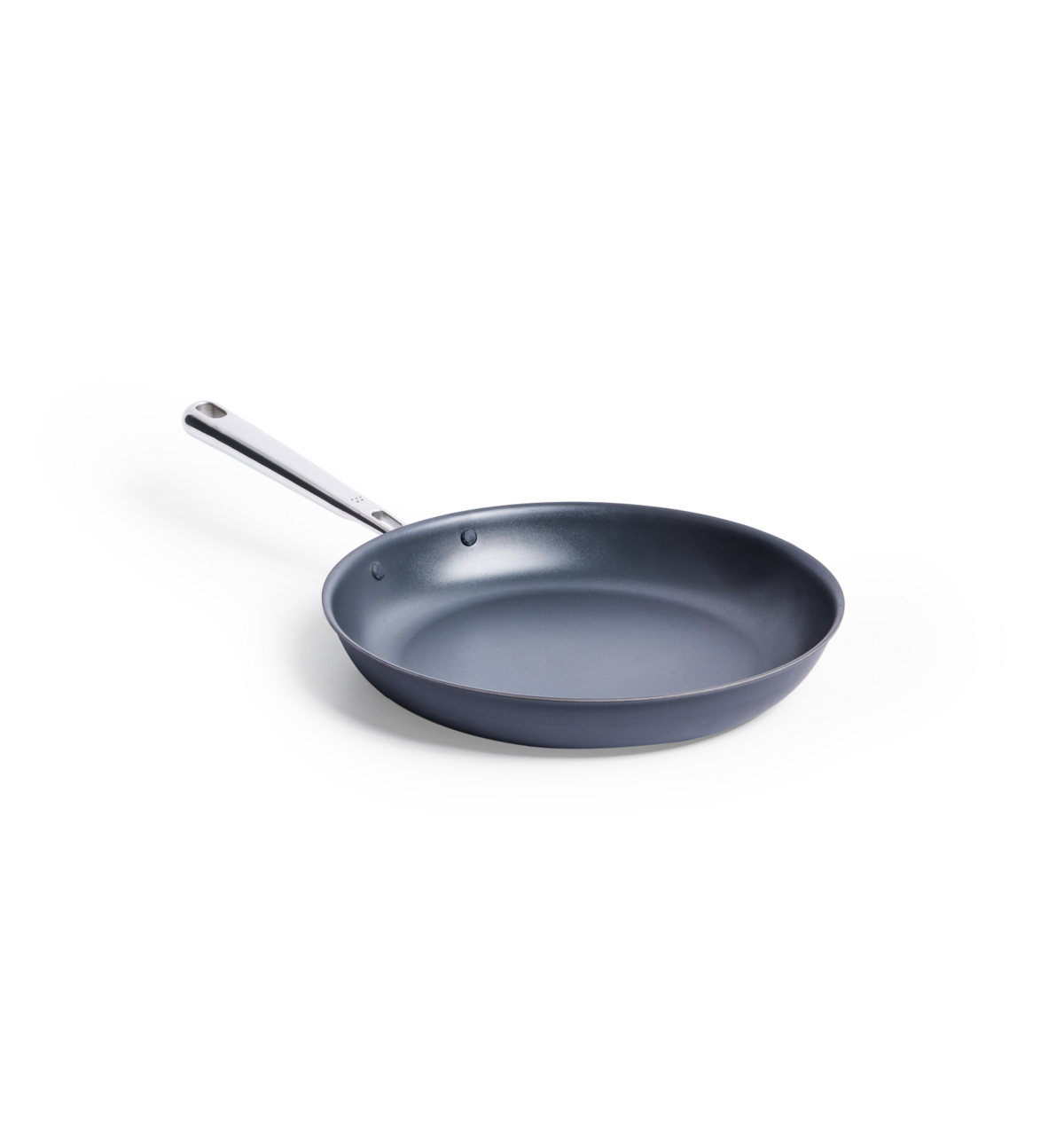
8” Frying Pan Specs
- Total Length: 15.25 in. / Handle Length: 6.75 in.
- Diameter: 8.5 in. / Cooking Surface Diameter: 7 in.
- Height: 1.34 in.
- Weight: 1.70 lb
- Thickness: 2.5 mm base, 2.1 mm wall
- Oven safe up to 1100°F
- Compatible with all stovetops, including induction
- Glass Lid: 8.7 in. D x 2.3 in. H / 1.15 lb (Oven safe up to 450°F)
Price: $134 (or $109 with no lid)
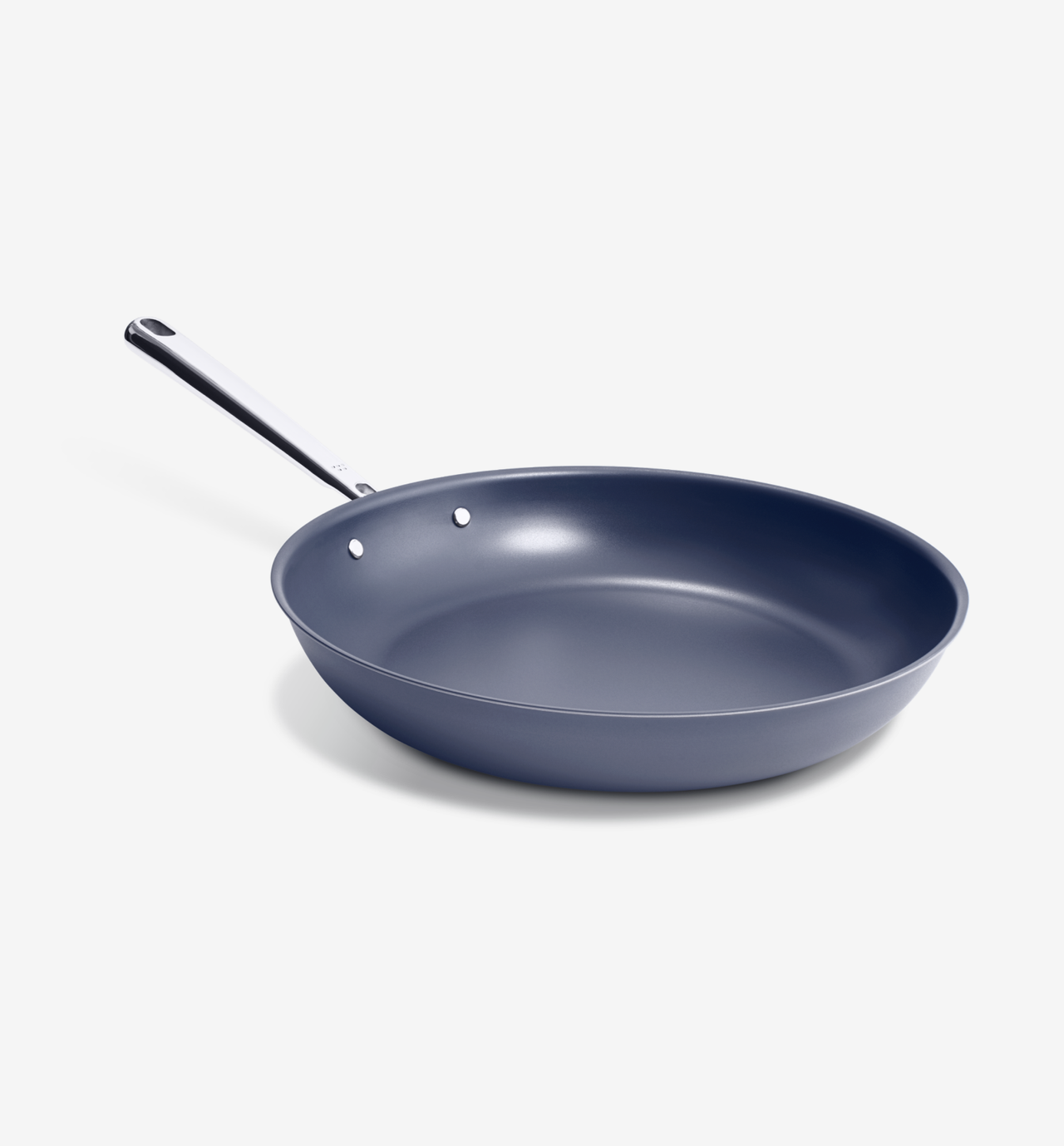
12” Frying Pan Specs
- Total Length: 21.25 in. / Handle Length: 9 in.
- Diameter: 12.4 in. / Cooking Surface Diameter: 10 in.
- Height: 1.75 in.
- Weight: 3.1 lb
- Thickness: 2.5 mm base, 2.1 mm wall
- Oven safe up to 1100°F
- Compatible with all stovetops, including induction
- Glass Lid: 12.4 in. D x 2.5 in. H / 2 lb (Oven safe up to 450°F)
Price: $174 (or $139 with no lid)
The 11” Square Griddle Pan
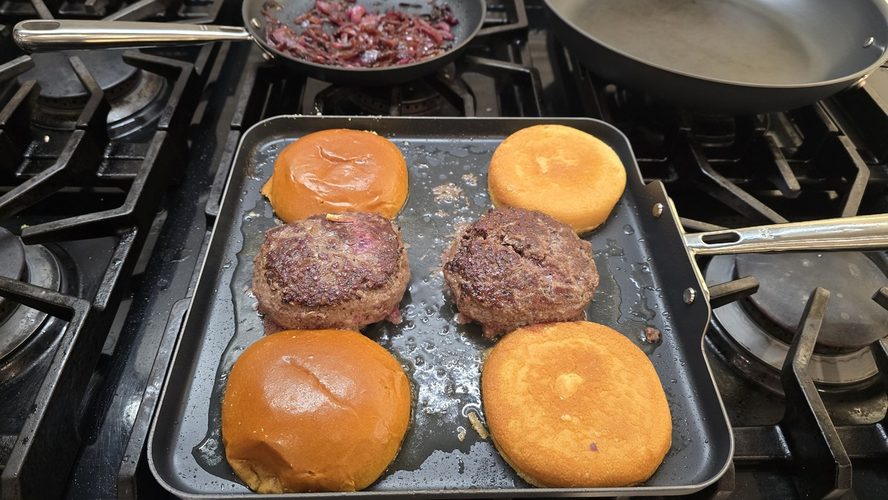
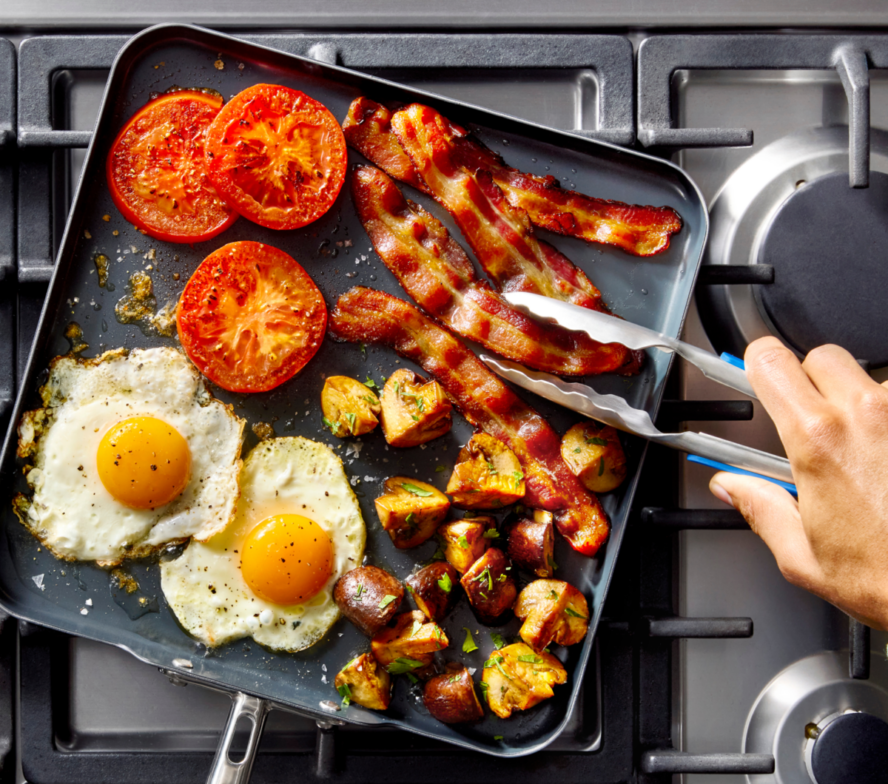
I love griddles. Why? They have a wide, flat surface that makes it easy to cook multiple food items at the same time. They’re great for anything from burgers to smashed potatoes, grilled veg, grilled paninis, or even classic grilled cheeses. They’re even big enough to accommodate all your breakfast items at once, with room for eggs, bacon, sausage, and even pancakes.
Beyond being super functional, the right griddle can reduce the number of pans you use and simplify cleanup. The 11” nonstick did not disappoint. Its shallow walls and wide, flat surface made it easy to cook multiple items at once. My only complaint is that I need a screen to help minimize mess when I’m cooking things like burgers or breakfast sausage, which tend to spatter when cooked over high heat.
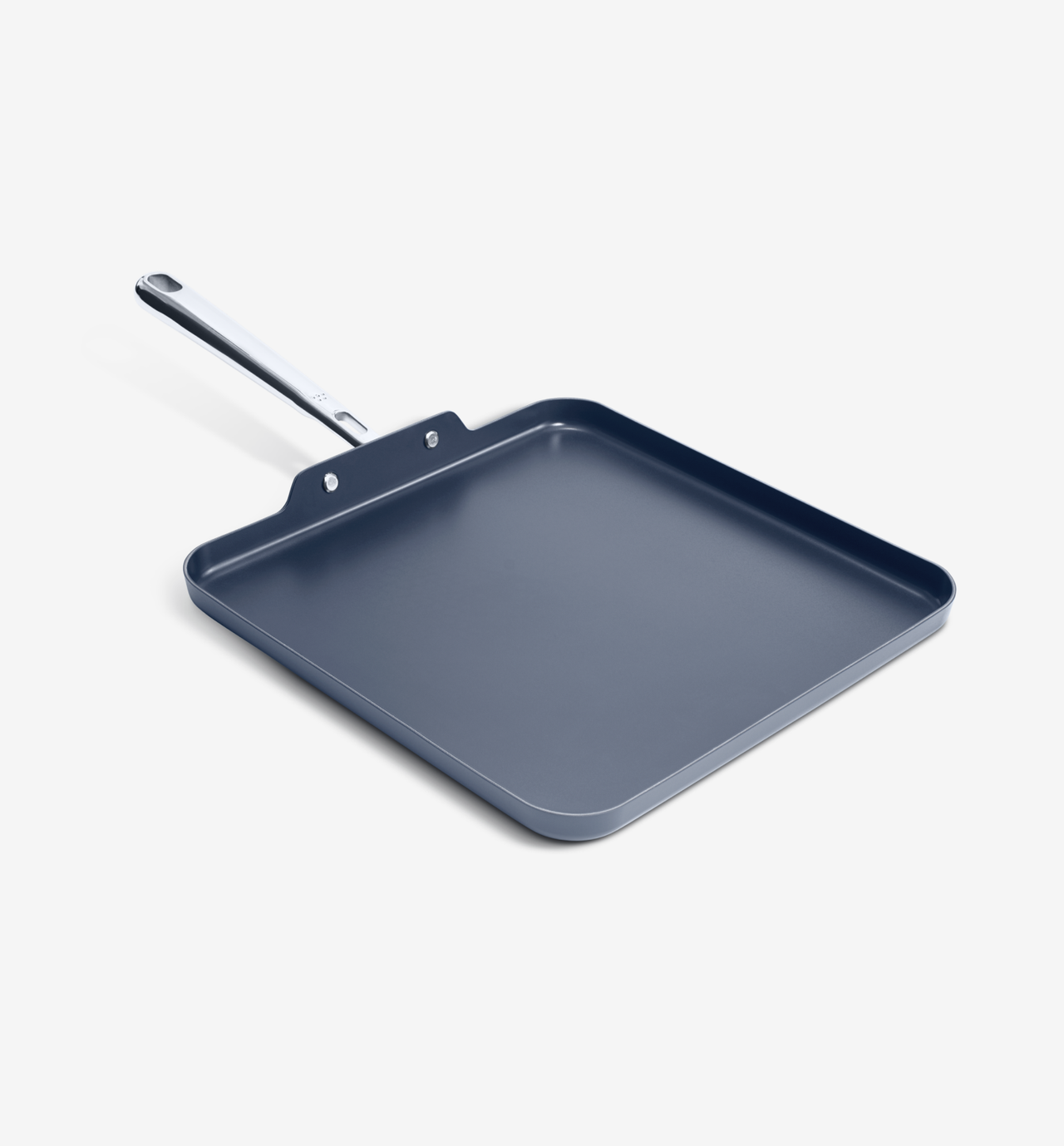
11” Griddle Pan Specs
- Total Length: 19.4 in. / Handle Length: 8 in.
- Diameter: 11 in. / Cooking Surface Diameter: 10.75 in.
- Total Height: 2.59 in.
- Weight: 2.72 lb
- Thickness: 2.1 mm
- Oven safe up to 1100°F
- Compatible with all stovetops, including induction
Price: $139
Use and Care
One of my favorite features of Misen Carbon Nonstick is that I can use metal utensils. I never have to worry about grabbing the wrong tool and ruining the coating, because there’s no synthetic or ceramic coating to ruin. I can safely use my metal tongs or thin metal spatula to flip my burgers or smashed potatoes.
Cleaning the pans was also super easy. The brand recommends hand washing and I agree, avoiding the heat of the dish washer helps your pans last longer. That said, the nonstick surface means hand washing isn’t a hassle, and the lids are fine to throw in the dishwasher without any risk of warping.
Criteria Breakdown
- Safety: 5/5; no synthetic or ceramic coating
- Nonstick Performance: 4/5; relies on execution of two key steps
- Heat & Searing Performance: 5/5; safe for high heat, oven safe up to 1100 ℉
- Compatibility: 5/5; works on all cooktops
- Weight & Handling: 5/5, easy to handle and lighter than other carbon steel
- Care & Durability: 4/5; seasoning requires maintenance
- Value: 4.5/5; price is on the premium side, but Misen’s pans typically include a lid
The Misen Carbon Nonstick pans boast an impressive average of 4.9 stars across nearly 2,000 reviews on the Misen website at the time of this review. Customers praise the pans’ even heating and durable carbon steel construction, and they appreciate that the nonstick surface doesn’t rely on toxic coatings. Some people note that the pans need occasional seasoning to maintain performance, but overall they find this a reliable, long-lasting alternative to traditional nonstick cookware.
“Love this pan! Works better than coated nonstick pans this one replaced.” – Harry T., verified buyer
“I was expecting a carbon steel pan with something like an anodize or patina to it, I was not expecting this thing to be slicker than any cheap Teflon pan I’ve ever used! This pan sears and builds fond like stainless, but fully releases. This is rapidly becoming a favorite in my collection, and at a price point where I can absolutely see myself buying every size. Do yourself a favor and buy one!” – Zachary W., verified buyer
Frequently Asked Questions
Yes, Misen Carbon Nonstick is a safe option, especially when compared to traditional nonstick (which relies on a PFAS coating for its nonstick capabilities). Although all cookware is generally safe when used properly, the fact that these Misen pans are made without PFAS makes them a healthier option in our book.
Issues with sticking are usually due to a lack of proper preheating or a failure to follow the steps for maintaining the nonstick surface. If you don’t take these measures, your pan will eventually end up sticking.
The 8” frying pan is excellent for small dishes like eggs and omelets. The 12’’ frying pan and 11’’ square griddle pan are ideal for larger families and large dishes.
Yes, all of the Misen Carbon Nonstick pieces are compatible with induction stovetops.
No, Misen recommends washing by hand.
Misen Carbon Nonstick has a nonstick nitrided surface that makes it more durable and slick right out of the box. It also has an aluminum core that makes the pan lighter. Traditional carbon steel is heavier, and it does not have a nonstick surface. You also have to season it right away, otherwise it will rust.
Is Misen Carbon Nonstick Right for You?
If you love the convenience of nonstick cookware but don’t want to replace it every few years, and don’t mind seasoning it to build up and maintain its nonstick surface, Misen Carbon Nonstick could be for you! With a little extra effort, you’ll get pans that can last a lifetime.