


This post may contain affilliate links. It means that if you buy something through one of these links, we might get a small commission at no extra cost to you. Affiliate commission helps us keep this travel blog running.
This is our exact 5 day Tuscany road trip itinerary including some of the most stunning locations (San Gimignano, Siena and Volterra) — five days, three hotels at three wildly different price points, four hill towns, and roughly 400 photos of a €10,000 sofa. I’ve left all the honest bits in, including the €600 tasting menu that wasn’t worth it and the drive where our 15-month-old was sick four times before we’d even reached the first hotel.
We flew Saturday morning and came back Wednesday evening, which gave us five full-ish days on the ground. If you’re doing this without a small child or a little baby, you can run this route almost exactly as written and have a brilliant time. If you are bringing a toddler, read the last section first — I’d do a few things differently.
The 5-day Tuscany itinerary at a glance
- Day 1: Land at Pisa, pick up the car, drive to an Agriturismo near San Gimignano
- Day 2: Morning in San Gimignano, drive to Siena, check into Certosa di Maggiano, evening in Siena
- Day 3: Monteriggioni, then on to Castello di Casole
- Day 4: Full day on the estate
- Day 5: Check out, Volterra, drive to Pisa for an evening flight
Useful links for this itinerary:
Pisa or Florence?
We flew into Pisa because the flights were simply easier from London. Honestly, Florence would cut a bit of driving time to some of these locations and might be marginally more convenient for this route — but if Pisa works better for you, the itinerary runs perfectly well from there. That’s the whole answer; don’t overthink it.
Day 1: Pisa to San Gimignano
The drive from Pisa should take about an hour and a half. It took us two and a half, because Mila — 15 months at the time — discovered car sickness on the winding roads and we had to keep stopping. She’d slept through the flight, we fed her after landing, then put her straight in the car seat. She was sick four times. We went through nearly every item of clothing we’d packed within easy reach. It was, to put it mildly, a stressful start.
More on that later. Let’s talk about the good bit.
The Agriturismo near San Gimignano
We got in around evening to Il Casolare di Bucciano about ten minutes’ drive from San Gimignano. We booked it purely on location and reviews — it had exceptional ratings on Expedia and it broke the journey towards Siena nicely, which meant the longest driving stretch was behind us.
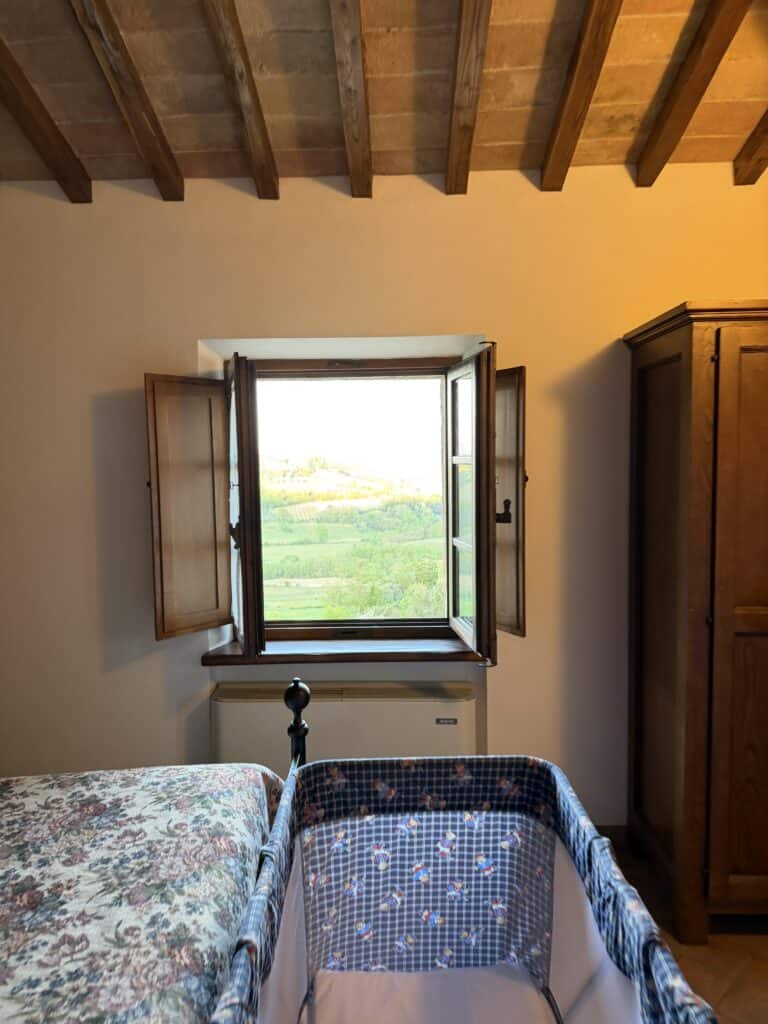
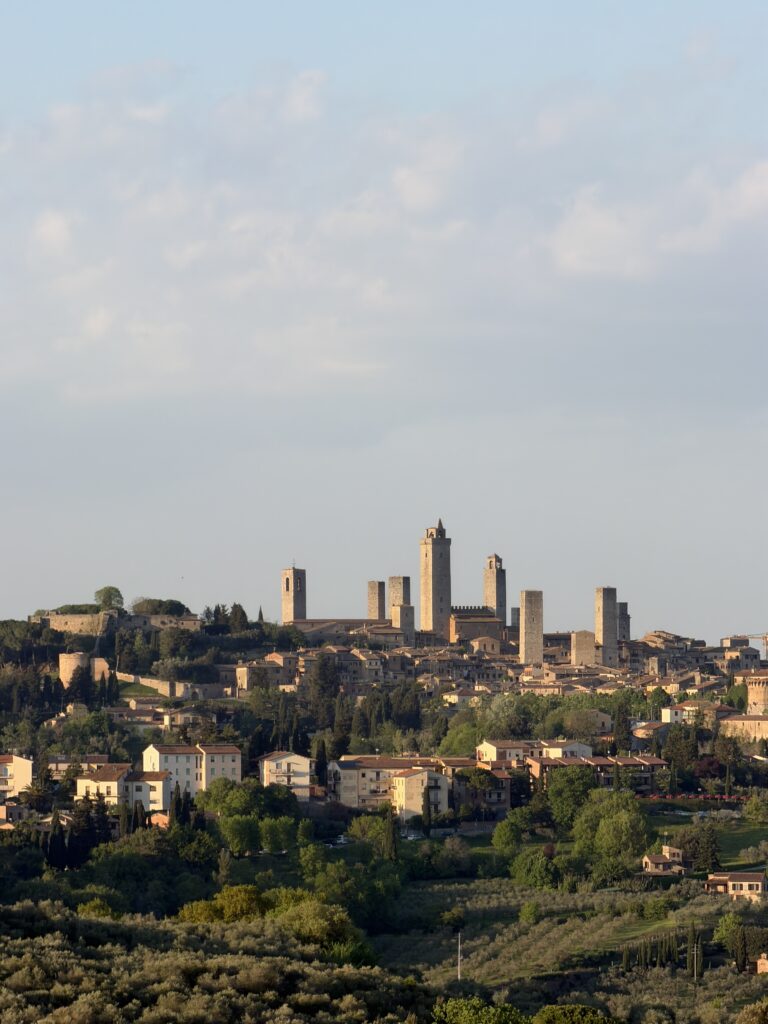
What we didn’t know is that the property has the most stunning views of San Gimignano’s skyline — from the grounds and even from our bedroom window. Genuinely the best views of the entire trip.
A few honest notes:
- The room was much better than the photos. The Expedia pictures made it look dark and a bit dilapidated; in reality it had been freshly painted. The furniture wasn’t designer, but it was sturdy and well cared for.
- It’s on the top floor (the second floor) with no lift, and we had heavy luggage. If you’re booking ahead, ask for something lower.
- It’s small. Fine for one night with a cot, but Mila gets bored in tiny rooms — there’s no space to toddle about. There are bigger family rooms and, because the whole place is affordable, they’re not much more. Worth the upgrade if you’re staying longer.
Dinner at the agriturismo
If four or more guests request it, the family cooks a three or four course dinner — home-cooked, simple, local village dishes from local ingredients. It was delicious, and everyone else in the reviews says the same.
One expectation-setter, because the internet lies about this: it is not a long communal table in a Tuscan garden. It’s the same small room where breakfast is served, with separate tables, and they bring you whatever they’ve cooked. There’s no menu to choose from, though they ask in advance about allergies and dietary requirements.
Dinner ran long and we had to rush the end of it so Mila could go to sleep. And here’s the downside of a small countryside room: once she was down, there was nowhere to go and nothing to explore, because it was dark. Not much anyone can do about that — it’s simply what staying in the countryside is.
Breakfast the next morning was lovely and very traditionally Italian: cornetti, cakes, jams, spreads, toast. Italian breakfast is notoriously sweet, so if you’re an eggs person, adjust your hopes.
Day 2: San Gimignano, then Siena
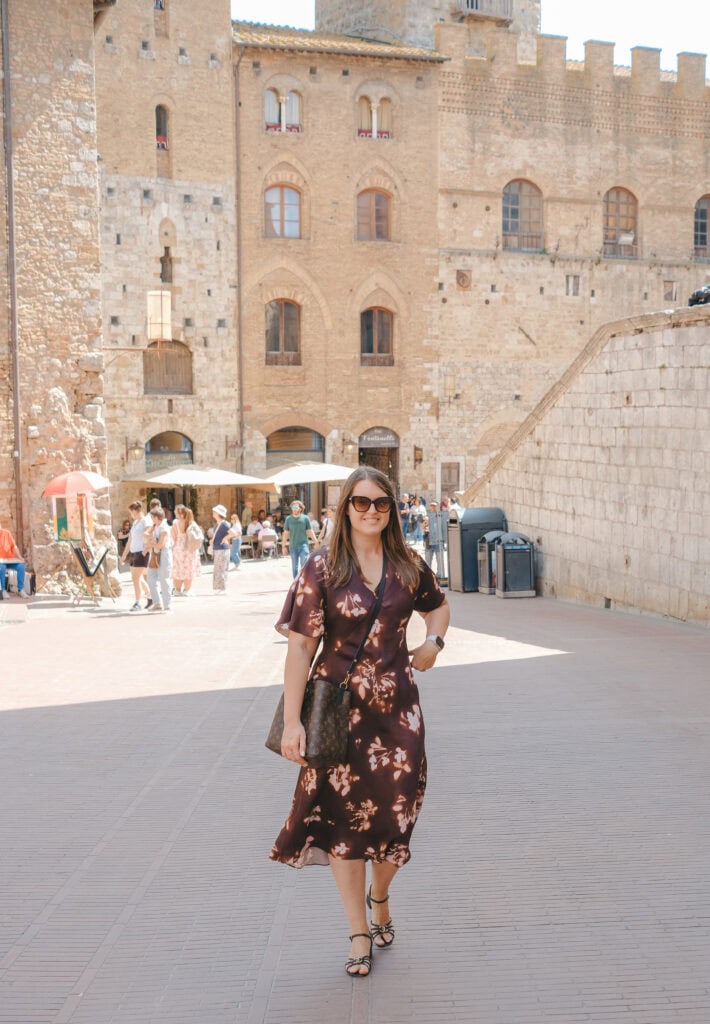
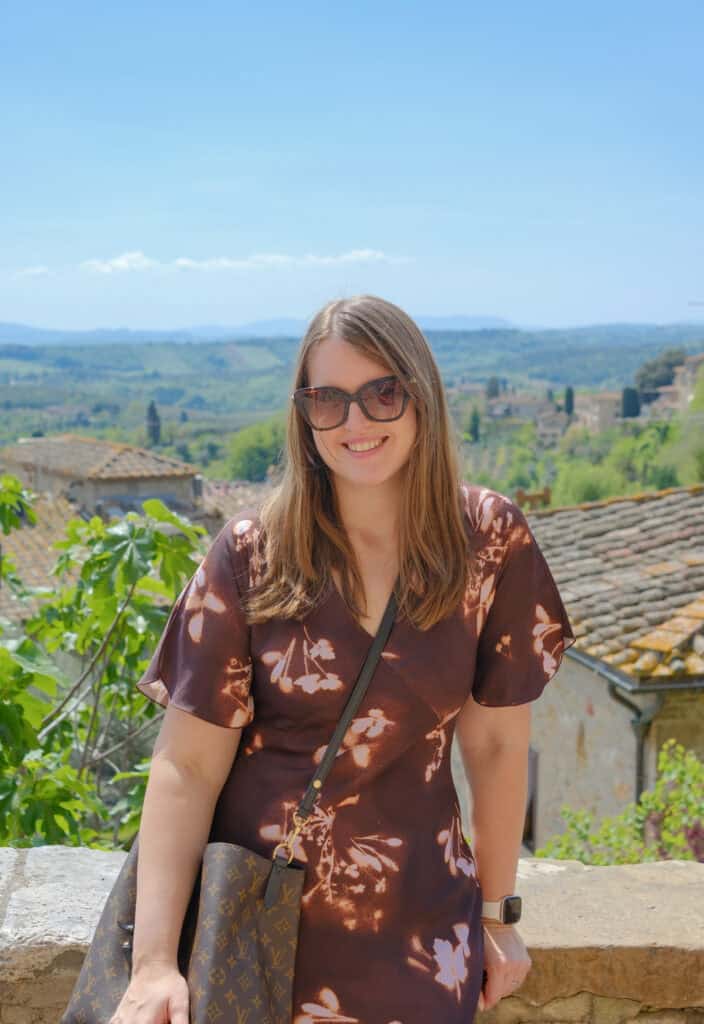
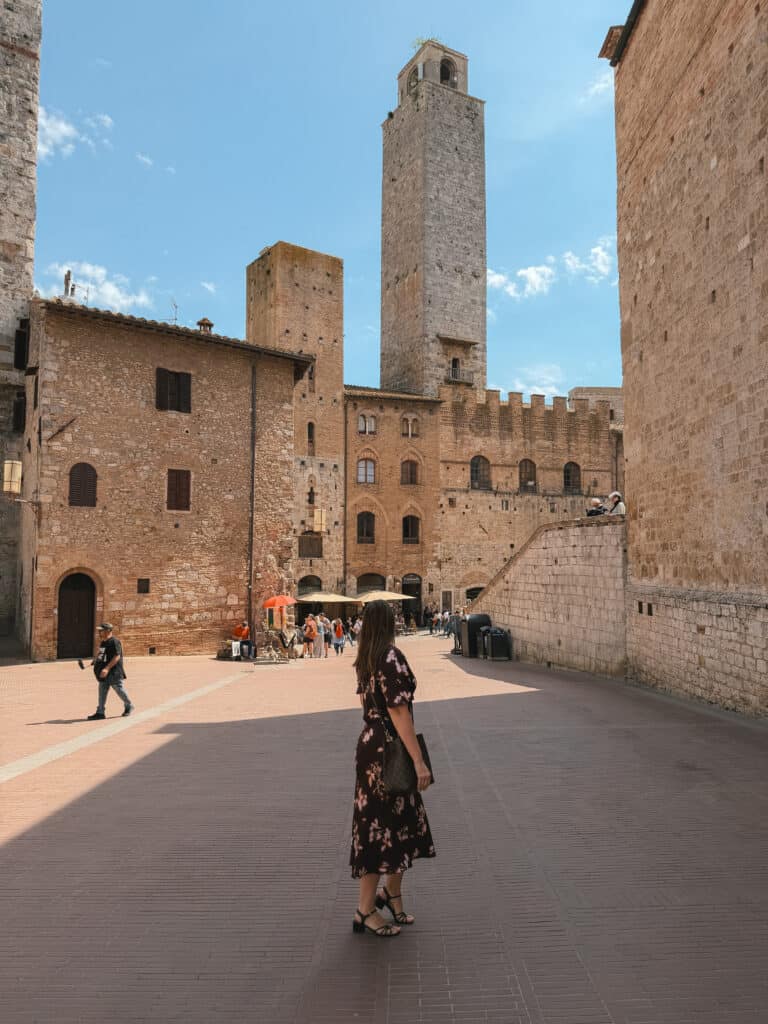
San Gimignano is one of the most iconic villages in Tuscany — comfortably top ten for the whole region (a list that includes Florence and Pisa), and probably top three or four for villages in all of Italy. It was founded by the Etruscans in the 1st century BC and it’s a UNESCO World Heritage Site, which is precisely why it’s so busy.
And it is busy. The village sits behind city walls, and the moment you walk in you’re in a shopping alley: tourist clothing, leather shops, souvenirs, delis selling expensive wine and olive oil that no local would ever buy. Restaurants on every corner, tour groups following little flags, a dedicated coach park. Plenty of Italian groups too, so there’s a lot of domestic tourism, not just international.
Here’s my honest read: nobody seems to actually live in San Gimignano. It’s a place people come to shop and then leave. Compare it with Volterra later in this itinerary, where you see schoolchildren and postmen and normal life, and San Gimignano starts to feel a bit like a set. That’s not necessarily bad — just know what you’re getting.
What’s good:
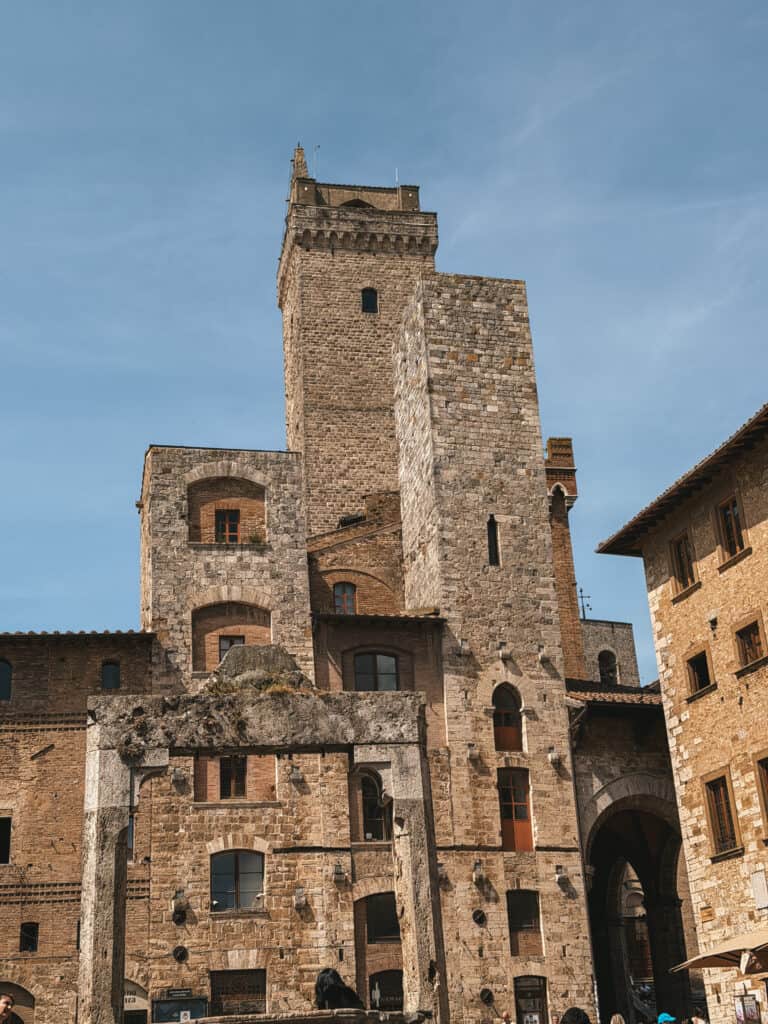
- The skyline. Fourteen medieval towers on top of a hill, visible from miles away. It really is one of the most recognisable skylines in Italy.
- The main square, where a lot of families park their pushchairs and let their toddlers run around. Mila loved it and made some small Italian friends.
- The gelateria on the main square always has a long queue, and it’s worth it. They even gave Mila a little frozen yoghurt.
- Beautiful viewpoints all around, thanks to the hilltop fortress and walls.
- Lovely baby clothes shops, if that’s of interest.
- No stairs. There’s a noticeable incline, so you go up and down, but you can avoid steps entirely with a pushchair.
You can climb the tallest tower for the views — we couldn’t with a toddler, so we were fairly limited in what we could do.
San Gimignano to Siena
The drive was longer than we expected: 45 to 50 minutes, plus a couple of car-sickness stops.
Certosa di Maggiano — a converted monastery just outside Siena
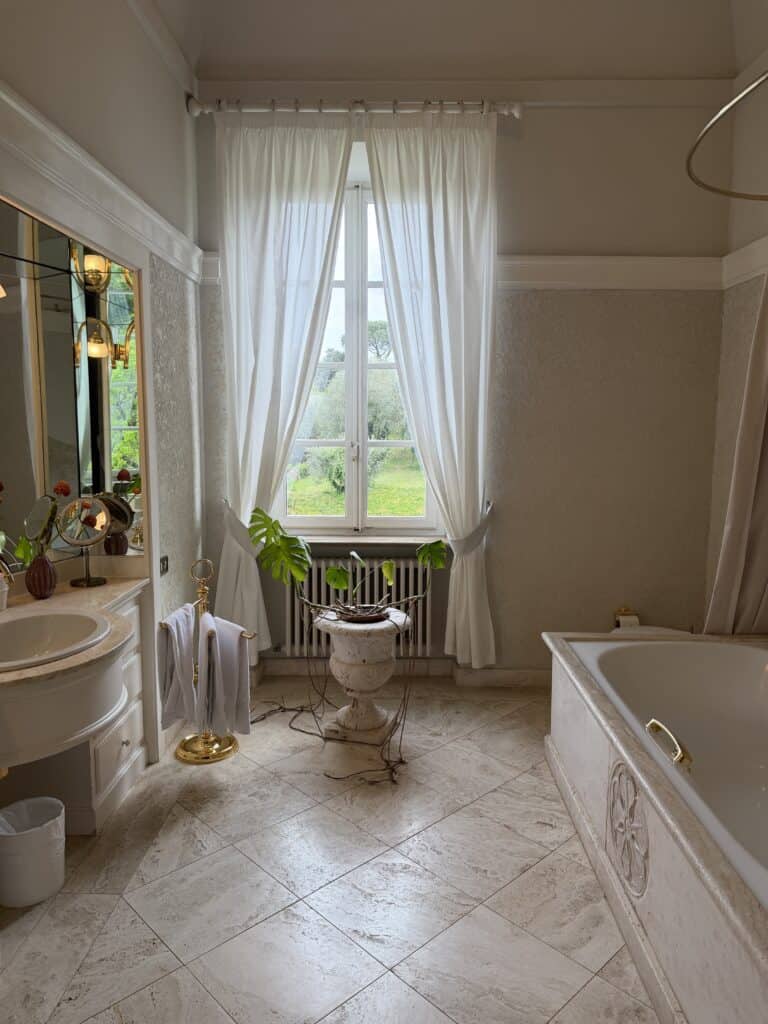
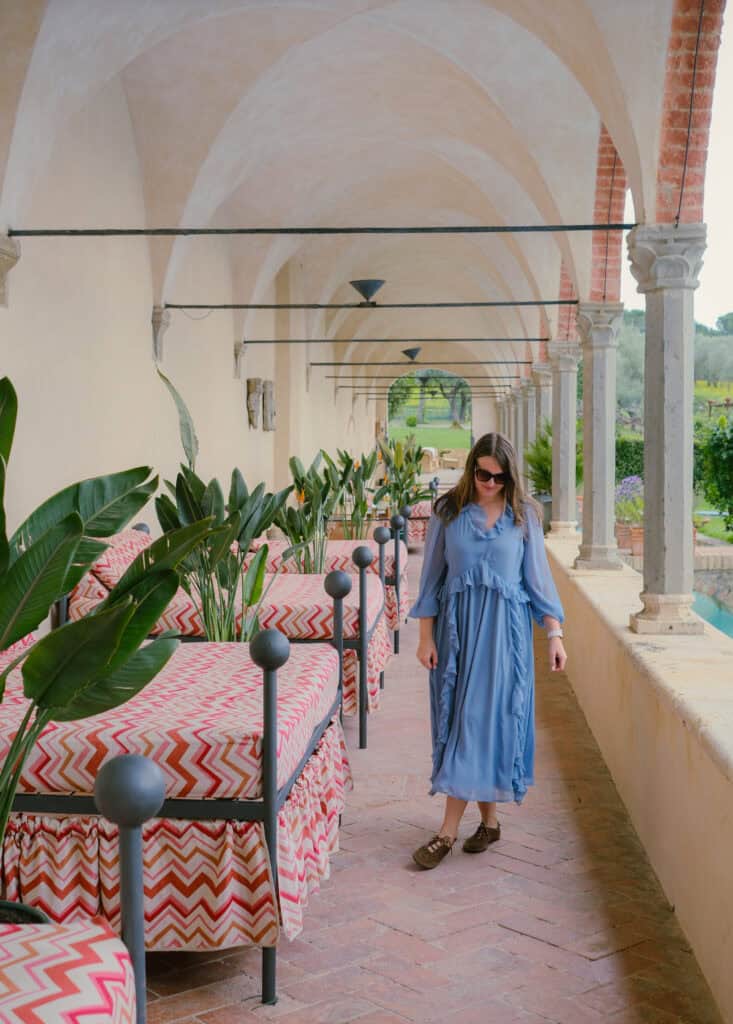
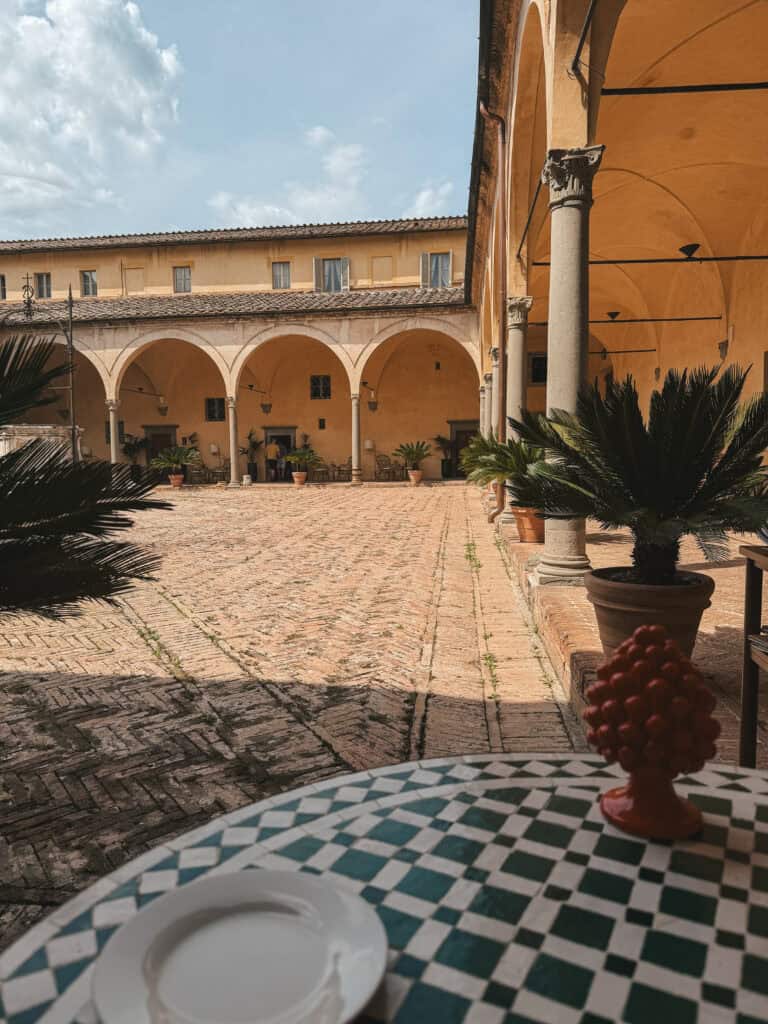
This was my favourite hotel of the trip, which I did not expect given it was the mid-priced one. It’s a converted monastery, family-owned, fewer than twenty rooms, so it feels genuinely private. The service was immaculate and personal in a way the far more expensive hotel later in the trip simply wasn’t.
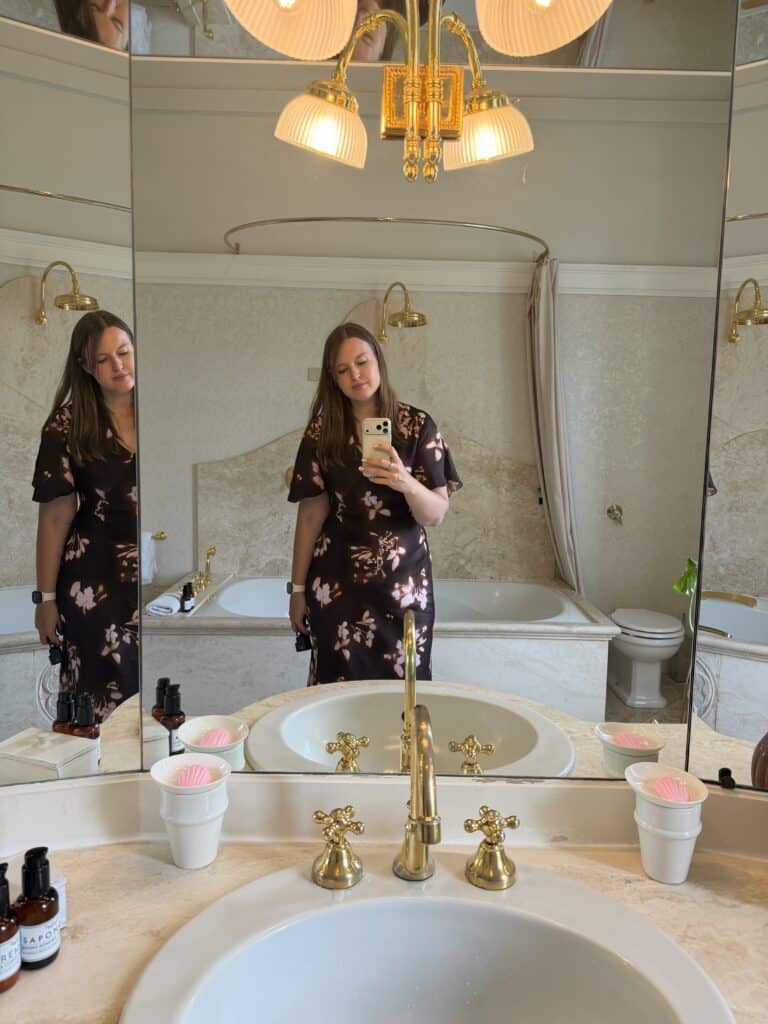
The room was small but felt generous, with textile wallpaper and one of the most beautiful bathrooms I’ve ever seen.
On the food. We had lunch there and the spaghetti carbonara (€26) is, to this day, the best carbonara I’ve eaten in my life. Jose’s ravioli were excellent, if teeny — five miniature ravioli for twenty-something euros. The drinks were the letdown: cocktails around €20–25, and an €18 spritz that tasted watery and disappointing.
Breakfast is included, served in a stunning room with a working fireplace, and it was very good — though I’d hoped for slightly better ingredients given everything else. The nicest touch: they’d already set up a high chair for Mila because they knew a baby was staying. We hadn’t asked.
There’s a large pool, which I believe is heated. We only managed half an hour by it before Mila needed to sleep.
An evening in Siena
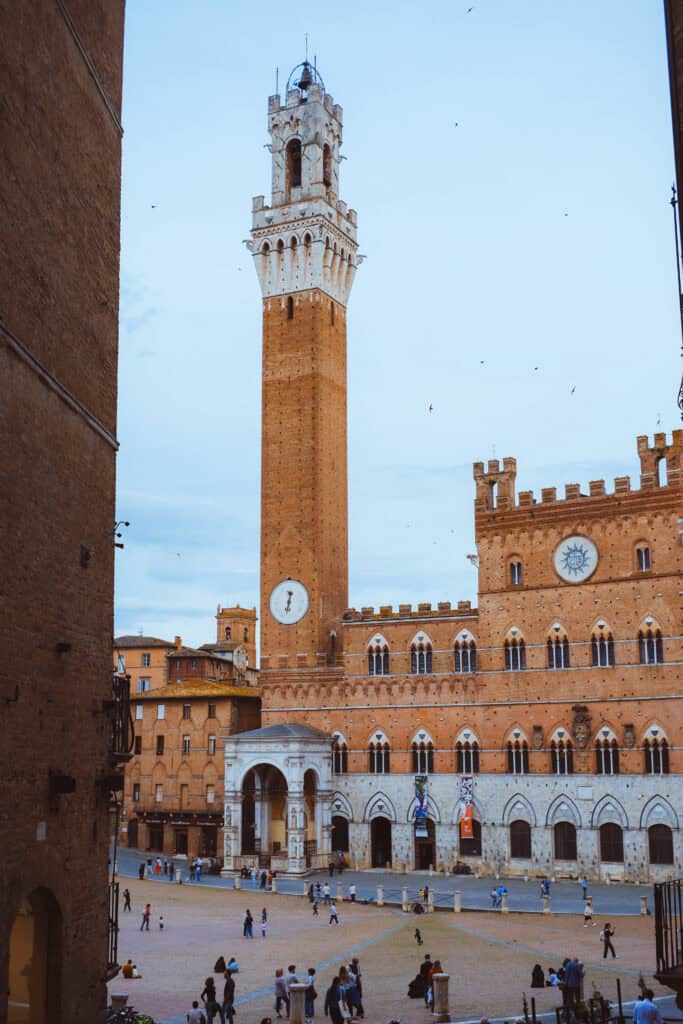
Siena is about 45 minutes’ walk from the hotel, but there’s no walkable path, so you have to drive — which takes 15 minutes, because you effectively have to loop the entire city on countryside roads and come in from the other side. Siena is a ZTL, so you can’t drive inside unless you’re a resident. You park at the edge and walk. It does mean the centre is blissfully tourist-car-free.
Siena is one of the most impressive cities in Italy. The pink-toned Duomo is a little reminiscent of Milan’s, but the real showpiece is Piazza del Campo — a paved oval square ringed with cafés, restaurants, tall towers and a slight slope. It’s a UNESCO site, and it’s where the Palio, the intense bareback horse race, is held twice a year in July and August. Standing in it, I found that genuinely hard to believe — it doesn’t look nearly as big as it does on television. I’d imagine the city is overwhelming during those dates.
We arrived in the evening, so most museums were shut, but we did find a lovely courtyard with a fresco of Romulus and Remus — the wolf-raised brothers who, by legend, connect Rome to Siena’s own founding.
Practical notes: shops were still open at 6 and 7pm, but restaurants mostly don’t open until 6:30 or 7. We arrived at seven without a booking, and the place we ended up in was already oversubscribed and stressed. They squeezed us in for an hour. I wasn’t impressed, so I won’t name it — do slightly more research than we did and you’ll eat much better. We finished around 8:30–9pm.
Day 3: Monteriggioni, then Castello di Casole
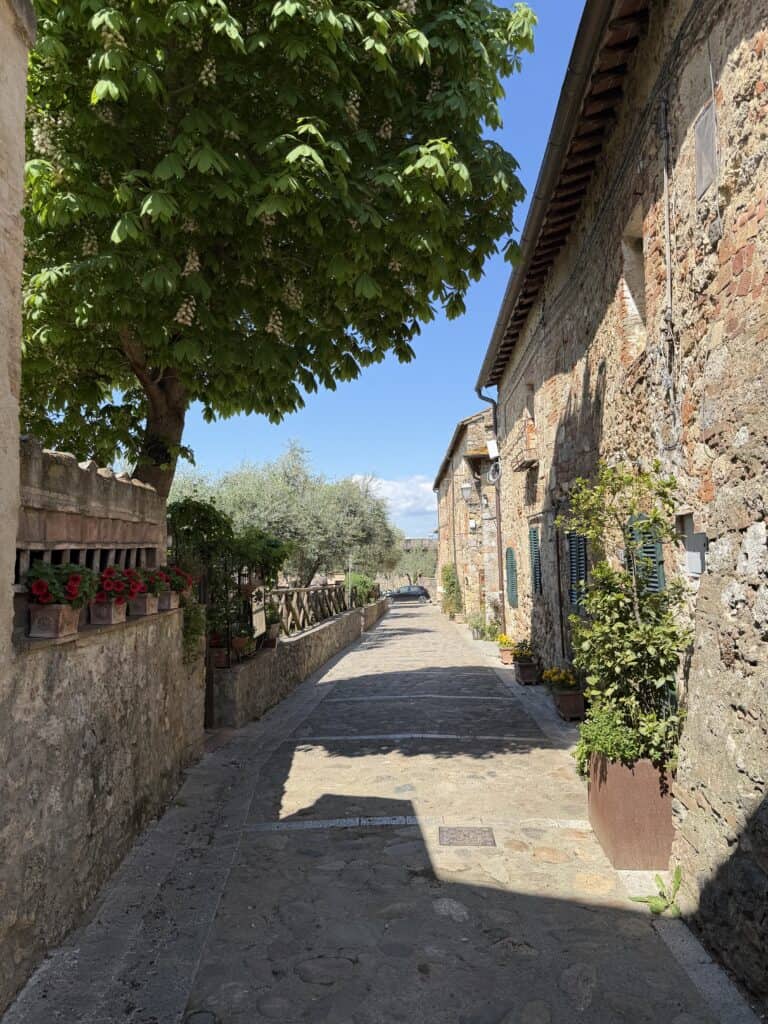
Our next hotel was in the middle of nowhere and we had two nights there, so we didn’t want to arrive early and be stuck. We stopped halfway at Monteriggioni instead, and it turned out to be one of my favourite bits of the trip.
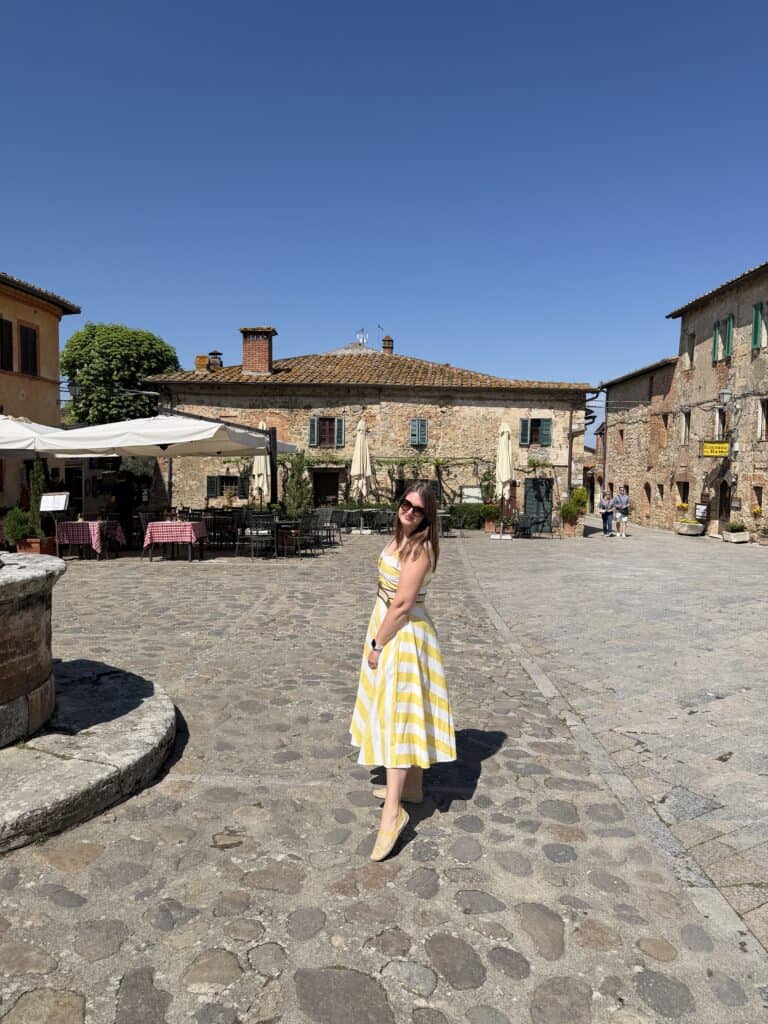
Imagine San Gimignano fifty times smaller: a little walled fortress on a hill, everything inside the walls. Parking is at the bottom, and although there’s a climb, there’s a ramp — we got up with the pushchair with no issues at all.
Up top there are a handful of souvenir shops, a few genuinely nice authentic restaurants, and three or four wine shops offering tastings (some for a fee, some free). The concentration of wine shops per building is higher than anywhere I’ve seen outside France.
We ended up spending about three hours there, mostly circling the same streets so Mila would fall asleep — which meant we saw every single street, and tried wine at every shop that offered it. Once she went down, we sat on the main square at for a charcuterie board and a couple of glasses of wine. Perfect afternoon.
Then it was about 20 minutes to the hotel, with one or two stops for the usual reason.
Days 3–4: Castello di Casole, A Belmond Hotel — an honest review
Right. This is the expensive one — around €1,400 a night — and I have complicated feelings.
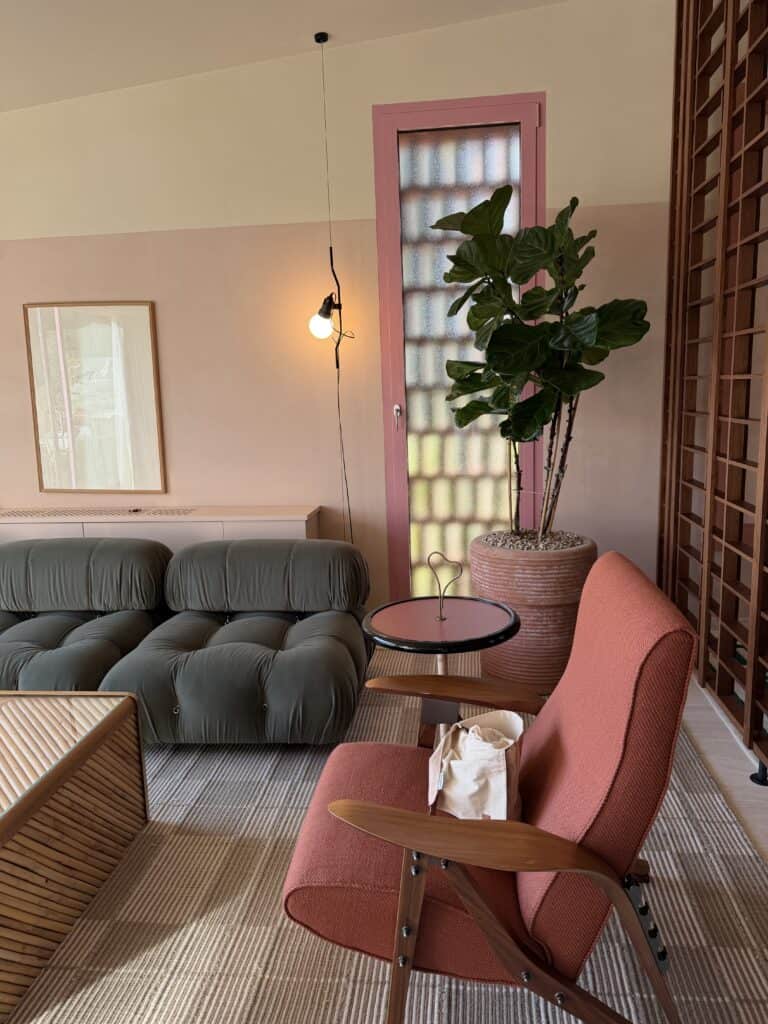
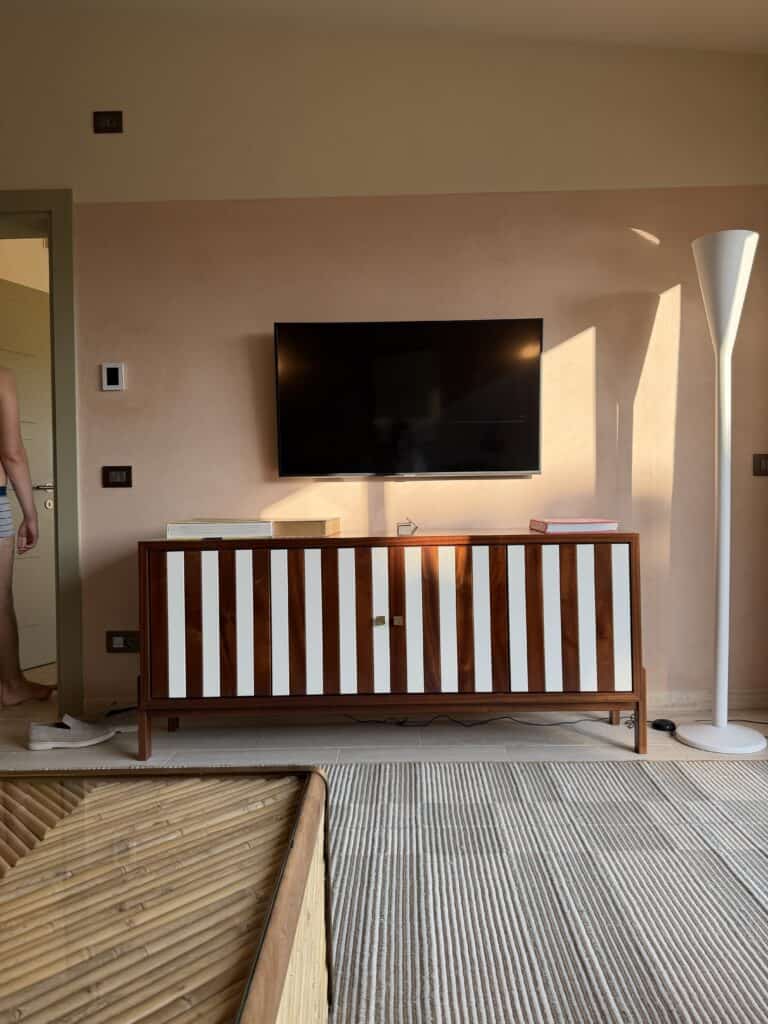
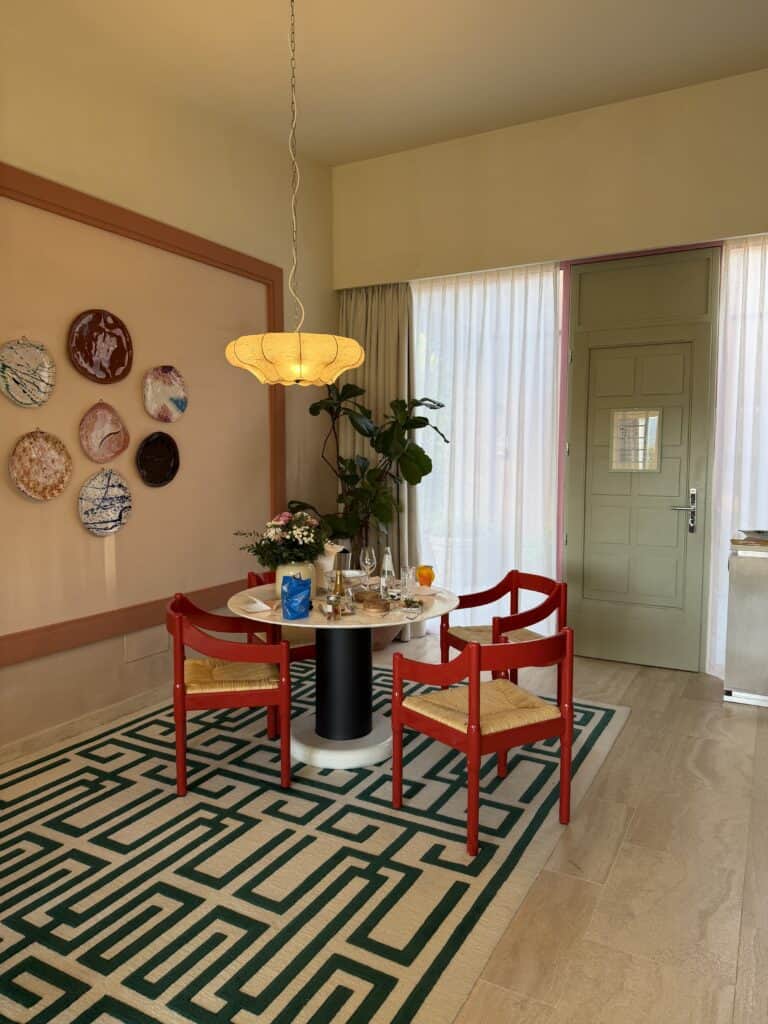
We had a suite about five minutes’ walk from the main building, and it was the most beautiful hotel room I have ever stayed in. Retro Italian design, a proper living room with a kitchen, a gorgeous bathroom, a generously sized bedroom, and an enormous private terrace looking over the Tuscan hills with no neighbours in sight. Every furniture piece was stunning — mid-century Italian, either genuine auction pieces or faithful recreations. We looked a few up online: the sofa alone was €10,000. I took an absurd number of photos for design inspiration, knowing full well I’ll never source anything like it.
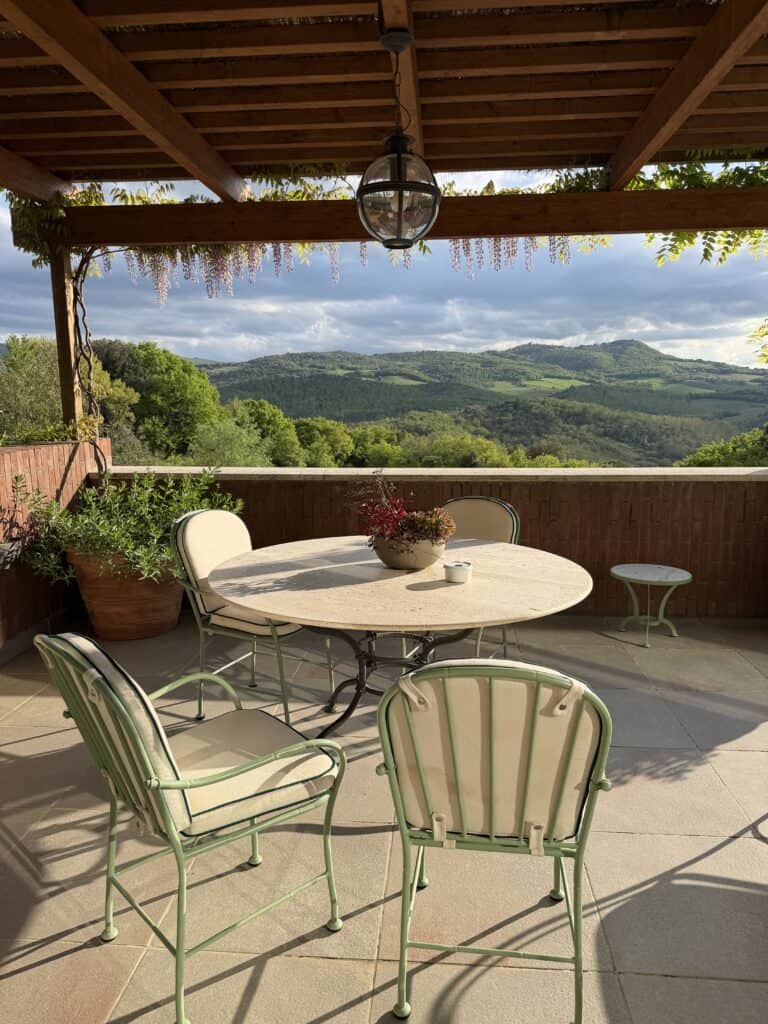
But the location is a real problem with a baby
- The quickest route to the main building and pool is an uphill gravel road, which was tricky with a toddler who wasn’t walking confidently yet. We carried her most of the time.
- A pushchair is not an option for the suites. If you need pram access, you have to stay near the main building.
- If you’re walking to dinner in heels, expect gravel. There’s a buggy service, but you’ll still cross some of it.
The service and food didn’t match the price
We’ve stayed at other Belmond properties before: Reid’s Palace in Madeira and the Copacabana Palace in Rio, and the service at both was superb. This didn’t feel the same at all. Staff were perfectly polite and would help if you approached the desk — but nobody checked in on you, nobody asked how you were doing, and there was no sense of anyone going above and beyond. After the warmth of a family-owned hotel two nights earlier, it was a noticeable step down.
The restaurants were worse:
- On two occasions we were brought the wrong items.
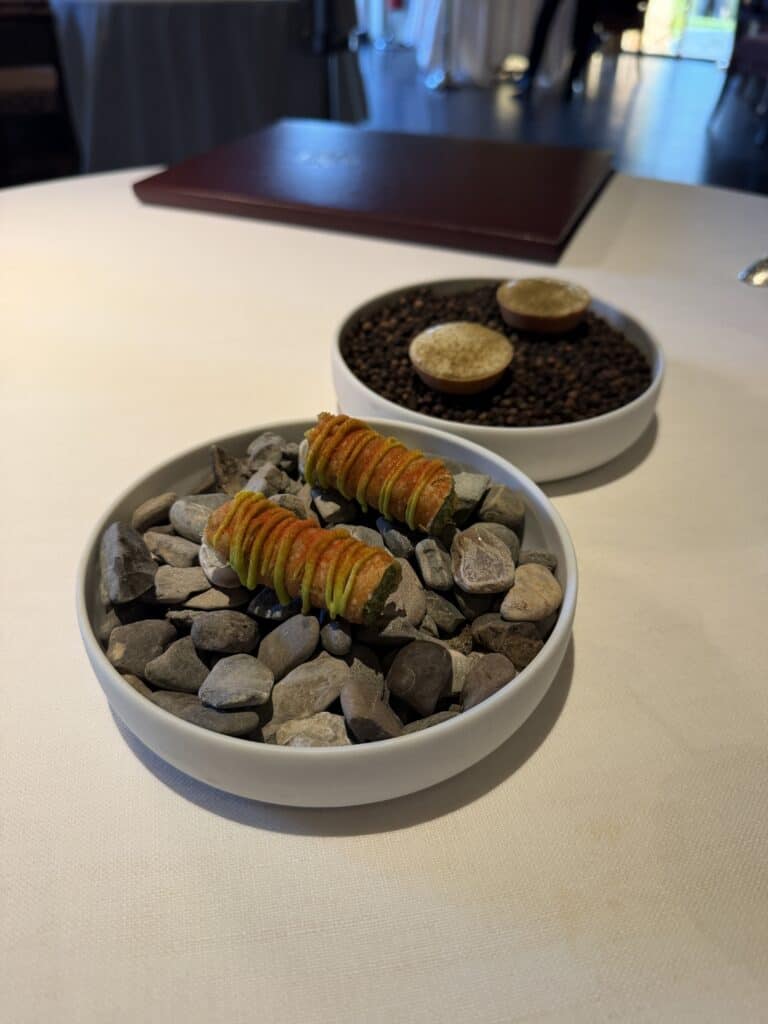
- We hired a babysitter (lovely, and very expensive) and did the fine dining tasting menu. Over €600, and it wasn’t good. Half the dishes weren’t even nice.
- Lunch is sandwiches, and a club sandwich is €40–45. It’s enormous — you could share it — but no one orders one sandwich between two, and it isn’t made with anything special.
I wouldn’t go back. It’s a gorgeous property with an extraordinary room, and I still preferred Certosa di Maggiano.
What we actually did there
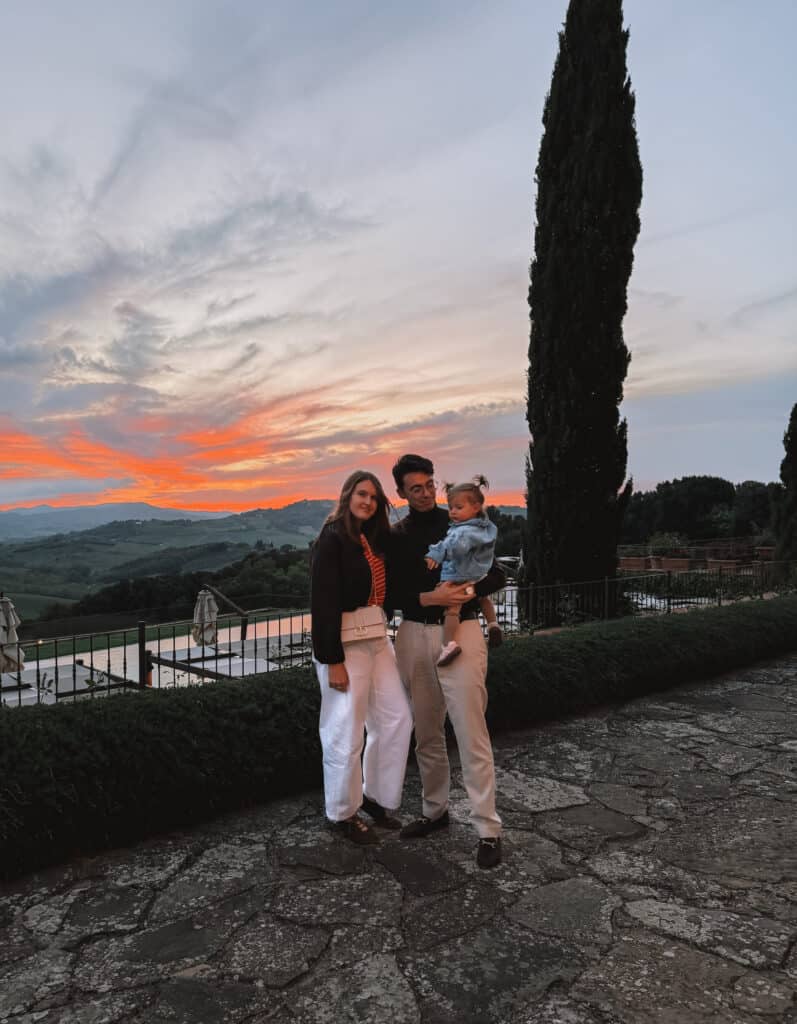
We arrived at 4pm on the first day, swam, had dinner. The next day the April weather wasn’t great in the morning, Mila’s nap schedule was odd, and by the time we could leave at 2pm the farmhouse we’d wanted to visit was closing at 2:45. So we stayed by the pool, explored the grounds, ate at the hotel, and had the tasting menu at seven. On checkout morning we left around eleven.
If you’re paying that much, the estate is arguably the point — but go in knowing you’ll spend a lot of time on it.
Day 5: Volterra, then back to Pisa
Volterra is about 40–45 minutes from Castello di Casole. It took us an hour and twenty with two stops.
Like Siena, it’s behind city walls and closed to non-resident cars — but the car park outside is much closer to the centre, because Volterra is far smaller.
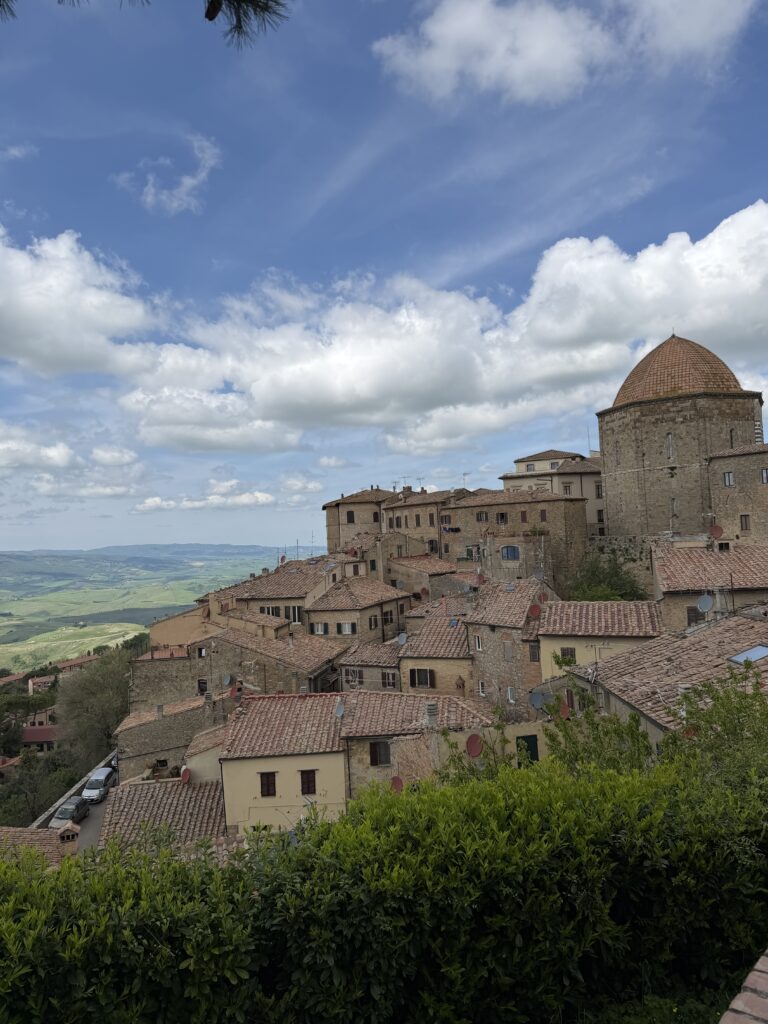
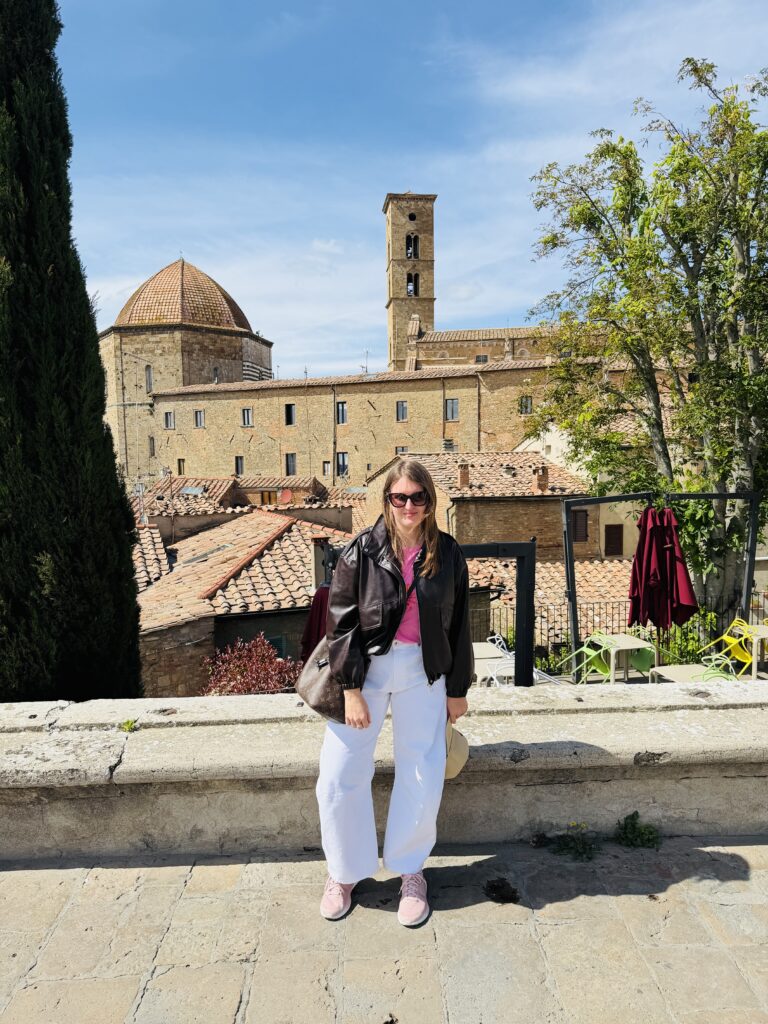
And unlike San Gimignano, Volterra is a town where people actually live. We were there on a weekday and saw schoolchildren heading out, police doing their rounds, postmen delivering parcels, people buying groceries and chatting to the shopkeepers. Small-town life happening in front of you. Because of that it’s less polished — some parts are genuinely a bit ruined — which I found more interesting, not less.
My honest take: it’s more impressive from outside the walls than inside. It sits on a hill, and the best view of Volterra is the one you get approaching it. That said, I have friends who say it’s their favourite place in all of Italy, so please don’t let me set your expectations too low.
What we did: walked every street (about ten times over, again, to get a toddler to nap — she managed an hour in the pram), bought edible souvenirs from the delis, picked up olive oil, and found a wine shop selling tiny-batch local wines I’ve not seen anywhere else. We opened them at home and they were excellent. A real pity you can’t buy them elsewhere.
There are far fewer restaurants than in San Gimignano — maybe five or six to choose from, with more sandwich places than proper restaurants, and several don’t open for weekday lunch. We had a late lunch at Il Sacco Fiorentino, one of the quieter ones.
Getting back to Pisa
We left Volterra around 3pm, stopped at a supermarket on the way, dropped the rental car and made our 7–8pm flight comfortably. Not a stressful ending, which after this particular trip felt like a gift.
Would I do this Tuscany itinerary again?
If you’re travelling without children, or with older kids, or with a baby young enough not to get carsick — yes, absolutely, run this route as written. The positives massively outweigh the negatives.
The thing I got wrong was the driving. I simply didn’t expect Mila to be that sick. Almost all of these roads are winding countryside routes through hills, with constant roundabouts once you near the towns, and even if you drive gently, locals get impatient and start honking, so you end up speeding up and slowing down. It’s a bad combination for a small child who gets carsick. She’s twenty months now and much better in the car, so with hindsight I’d have waited, taken bigger roads, or built a briefer itinerary with fewer transfers.
The other honest caveat: this route has no activities designed for children. It’s hill towns, wine, food and hotels. Mila enjoyed running around the squares, but that’s incidental, not the itinerary doing any work for her.
FAQ: 5 days in Tuscany
Is 5 days enough for Tuscany? It’s enough for a proper taste of the Siena side of Tuscany — three or four hill towns and a couple of good hotels, as in this itinerary. It’s not enough to add Florence, the coast or Val d’Orcia as well without it feeling rushed.
Should I fly into Pisa or Florence for a Tuscany road trip? Either works. Florence trims a little driving time for this particular route; Pisa is often cheaper and easier from the UK, and the itinerary runs fine from there.
Do you need a car for a Tuscany itinerary? For this route, yes. The towns are small and spread out, and public transport between them is slow. Just budget more driving time than Google Maps suggests.
Can you drive into Siena, Volterra or San Gimignano? No — Siena and Volterra are ZTL zones closed to non-residents, and San Gimignano’s old town is behind walls. You park outside and walk in. Volterra’s car park is the most convenient of the three.
Is Tuscany good for a toddler? The towns themselves are manageable — squares to run around, ramps rather than stairs in Monteriggioni and San Gimignano. The driving is the hard part. If your child gets carsick, plan fewer and shorter transfers.
Which Tuscany hotel was worth the money? Certosa di Maggiano at around €450 a night, without hesitation. The €1,400-a-night Belmond had the more beautiful room, but the service and food didn’t justify the difference.
If you’ve got any questions, message me on Instagram — I’m @lizatripsget.
You might also like:
- 3 days in Northern Italy: Lake Garda & the Dolomites itinerary
- Relaxing weekend in Tuscany: staying at Renaissance Il Ciocco
- 4 days in Ischia — the best food in Italy I’ve ever had
- 5 days in Sardinia
- 7 days in Sicily — the itinerary

