


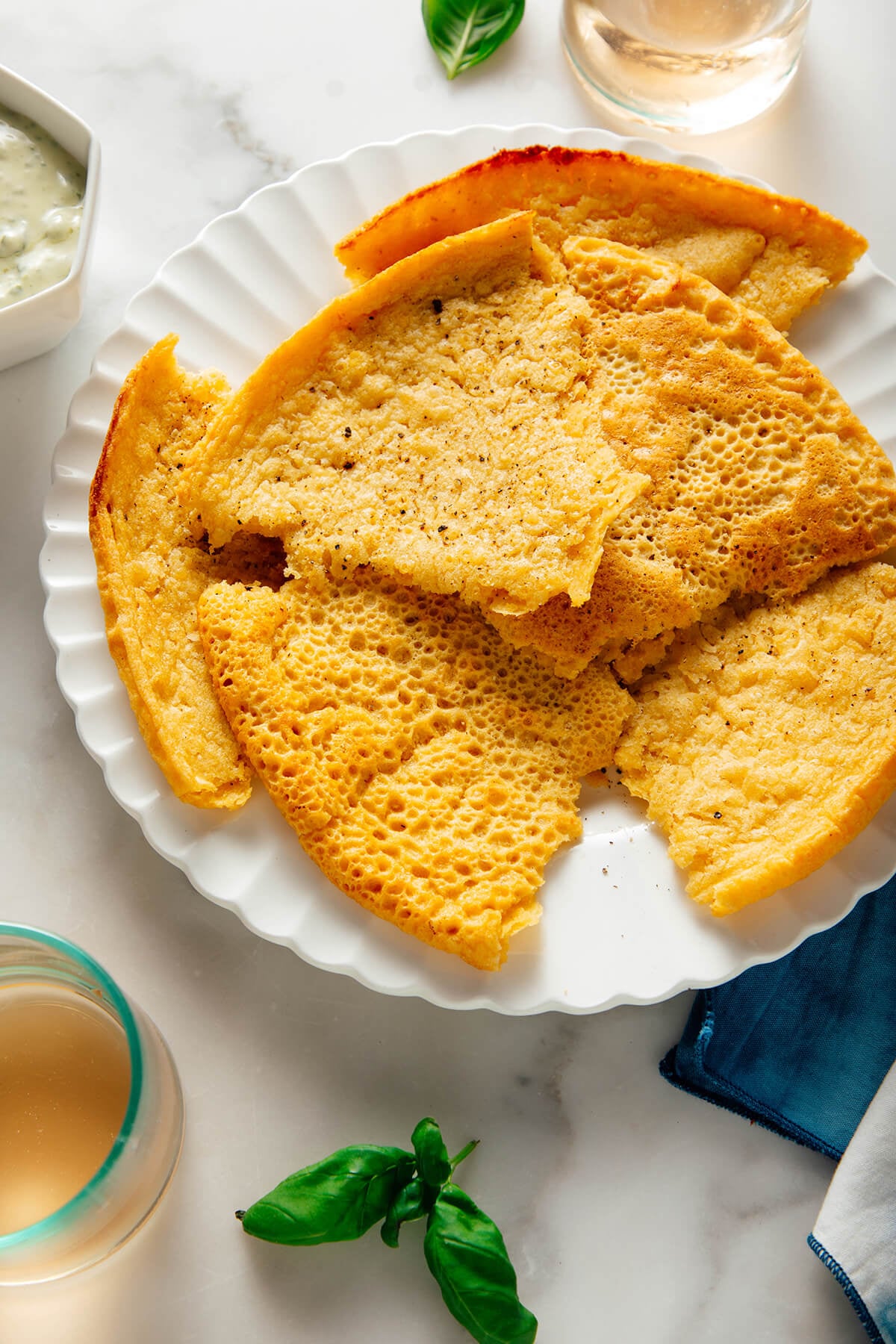
Are you familiar with socca? If not, please let me introduce you! It’s basically a rich, savory and salted chickpea flour pancake cooked in piping hot olive oil. The edges are crispy and chewy, the insides are flaky and tender, and the bottom is lacy and golden. It is just so good. You’ll have to try it.
Socca is a street food popular in Nice, France, with origins dating back centuries (it’s closely related to Italian farinata). I had the chance to try the real deal on our honeymoon, and I’m obsessed with this homemade version.
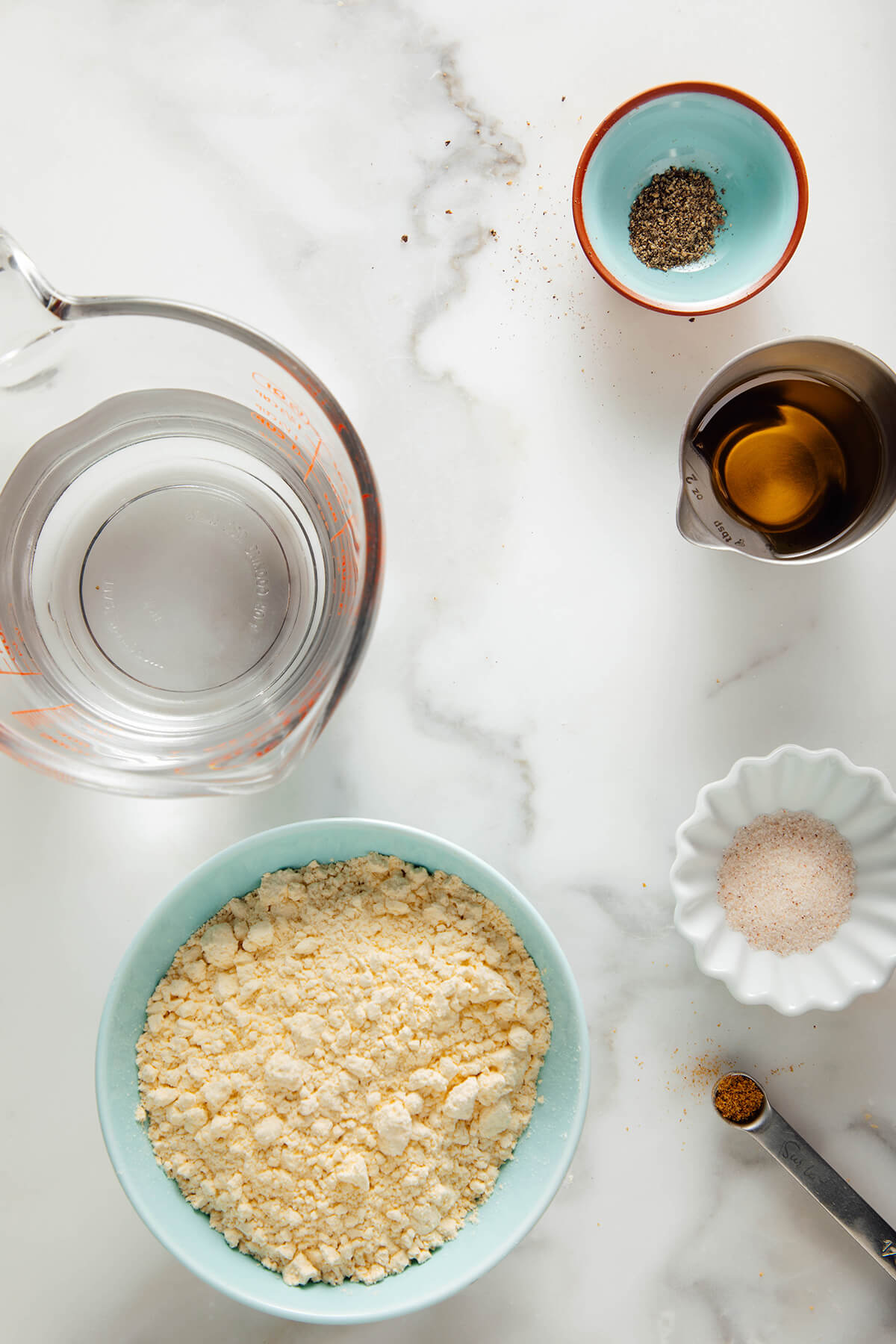
To make socca, you’ll need a bag of chickpea flour (I like to use Bob’s Red Mill, which is available in well-stocked grocery stores). You probably have the remaining ingredients already—olive oil, water, salt, pepper and cumin. That’s it! You’ll find step-by-step photos and a brief cooking video below, followed by the recipe.
3 Reasons to Make This Socca Recipe
1) You don’t need any special equipment.
In Nice, socca is cooked in huge pans in special wood-burning ovens. At home, I’ve found great success with my cast iron skillets. If you don’t have cast iron skillets, you can use stainless steel instead—just bake it closer to the maximum time range provided to achieve proper browning. Don’t use non-stick pans—they’re not designed for high heat.
The recipe below yields one 12-inch socca, about 1/4-inch thick, with crisp edges and a lightly custardy interior. It’s perfect for snacking or serving as a pizza base. The downside is that a 12-inch cast iron skillet is heavy, and you’ll need to manage it carefully while it’s piping hot.
Or, you can bake two batches in a 10-inch skillet by splitting the batter in half. They end up thinner and crisper this way, which is lovely. If you want to use the socca as flatbread to make a wrap, you’ll want to bake it in two batches. You’ll find instructions in the recipe notes.
2) You can make it right away.
Traditionally, socca is mixed in big batches, so the batter rests until it can be cooked on demand. Many recipes follow suit and suggest letting the batter rest for an hour or longer before cooking.
To my surprise and delight, my socca turned out better without a rest. The texture is nicer and flakier when I mix the batter while the oven preheats! You can whip up socca with pantry ingredients any time.
3) It’s healthy and special-diet friendly.
Socca is made with wholesome chickpea flour, so it’s more nutritious than wheat flour-based flatbreads. It offers healthy amounts of protein, monounsaturated fat and complex carbs, including fiber. If you’re curious, click the “nutrition information” label underneath the recipe for a full breakdown.
Socca is both gluten-free and vegan, which is a tough combination to strike! It’s an appetizer or snack that everyone can enjoy.
Watch How to Make Socca
How to Serve Socca
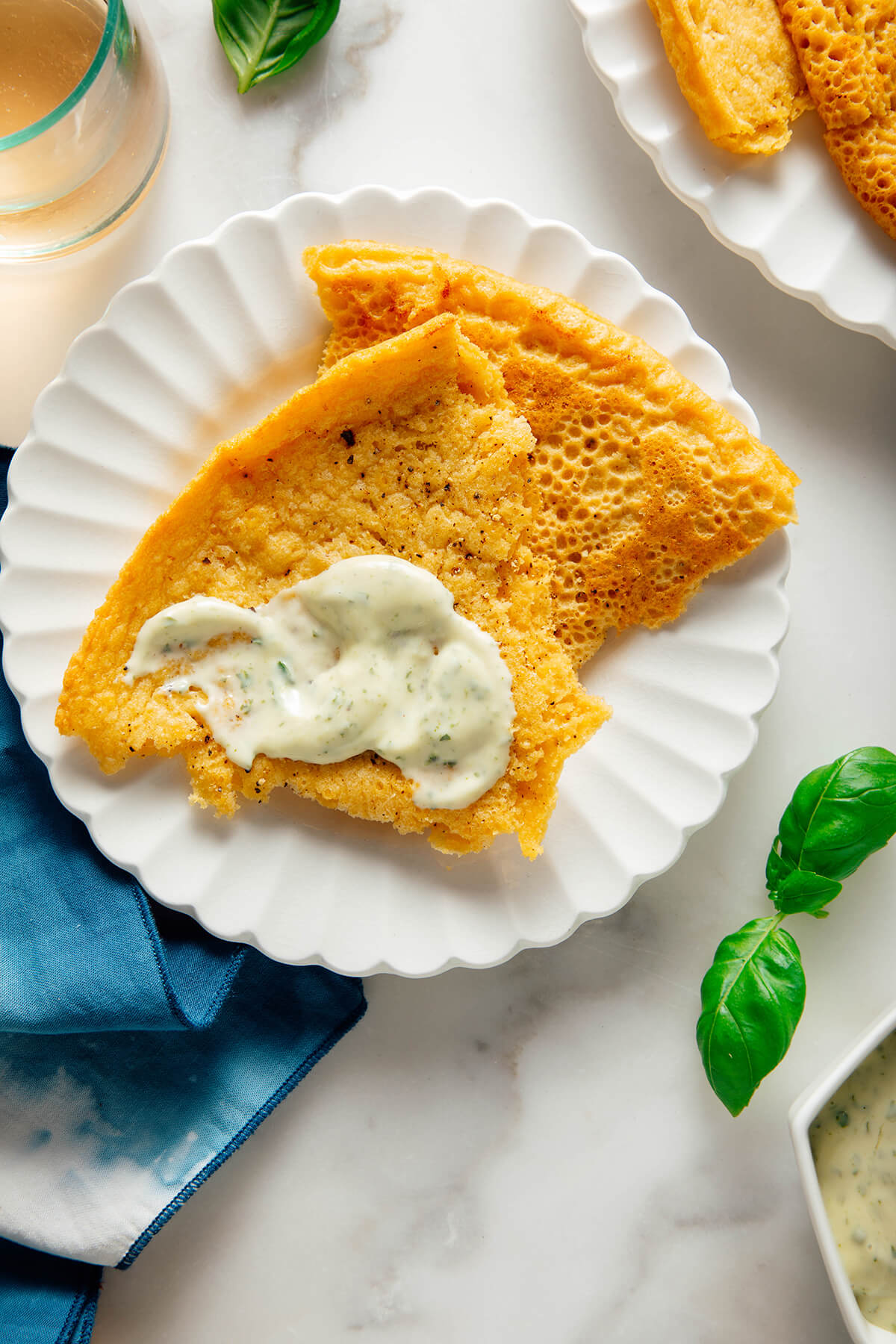
Tear off a piece and enjoy warm socca on its own, with extra freshly-ground black pepper or without. Pretend you’re summering in the South of France and serve it with a glass of chilled rosé.
You can also dunk it into a flavorful dip, like the creamy basil mayo that you see in my photos—it tastes like a summertime aioli. Learn how to make it in my recipe notes. Or it would be nice with Green Goddess Tahini Dip, which is vegan. If you love olives, try serving it with tapenade as well.
Serve it as a messy wrap. Start with creamy cheese like ricotta, feta or goat cheese, or keep it vegan by adding tahini sauce. Add chopped fresh veggies like tomatoes and cucumbers, or roasted veggies like eggplant or cauliflower. Sun-dried tomatoes, olives or a scattering of fresh basil would be nice accents. Check out Pinch of Yum’s socca with whipped feta and tomato salad—it’s so good.
You can also turn it into a fantastic pizza. Socca makes a nice, crisp crust that’s healthier than flour-based crusts. Top it with basil pesto, mozzarella and any of the options listed above.
Recipe Tip
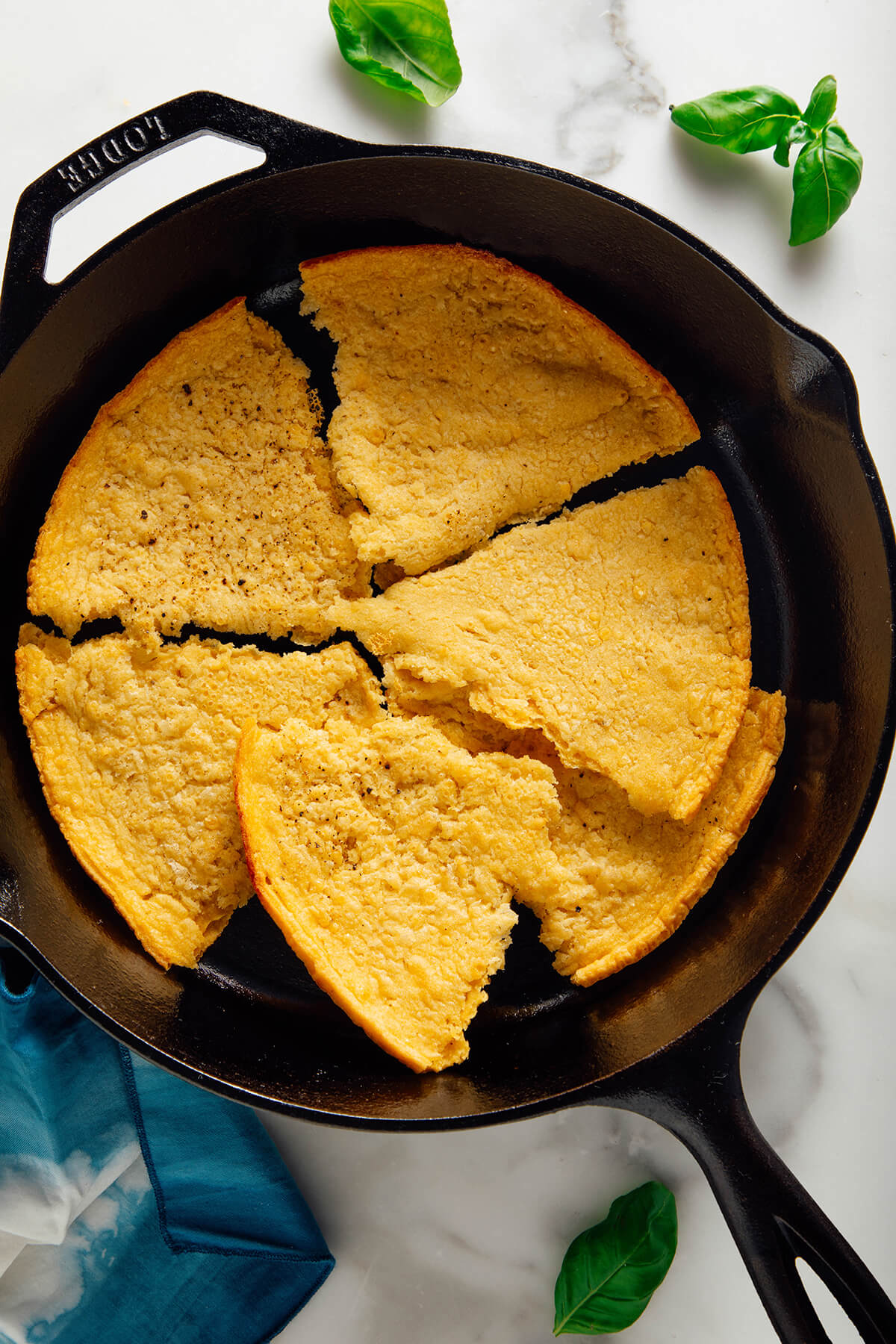
To check for doneness, use a spatula to gently lift up the socca (this should be easy) and peek at the underside. It will be a lacy, golden brown color when it’s done. Check out the piece of socca shown below with the air bubbles—that’s what you’re looking for. If in doubt, bake it another minute or two.
Socca
This homemade socca turns out beautifully golden, crisp and chewy, with no waiting time required. Recipe yields one 12-inch flatbread or two thinner 10-inch flatbreads (see note).
- Place a large, 12-inch* cast iron or stainless steel skillet on the middle rack in the oven. Preheat the oven to 475 degrees Fahrenheit.
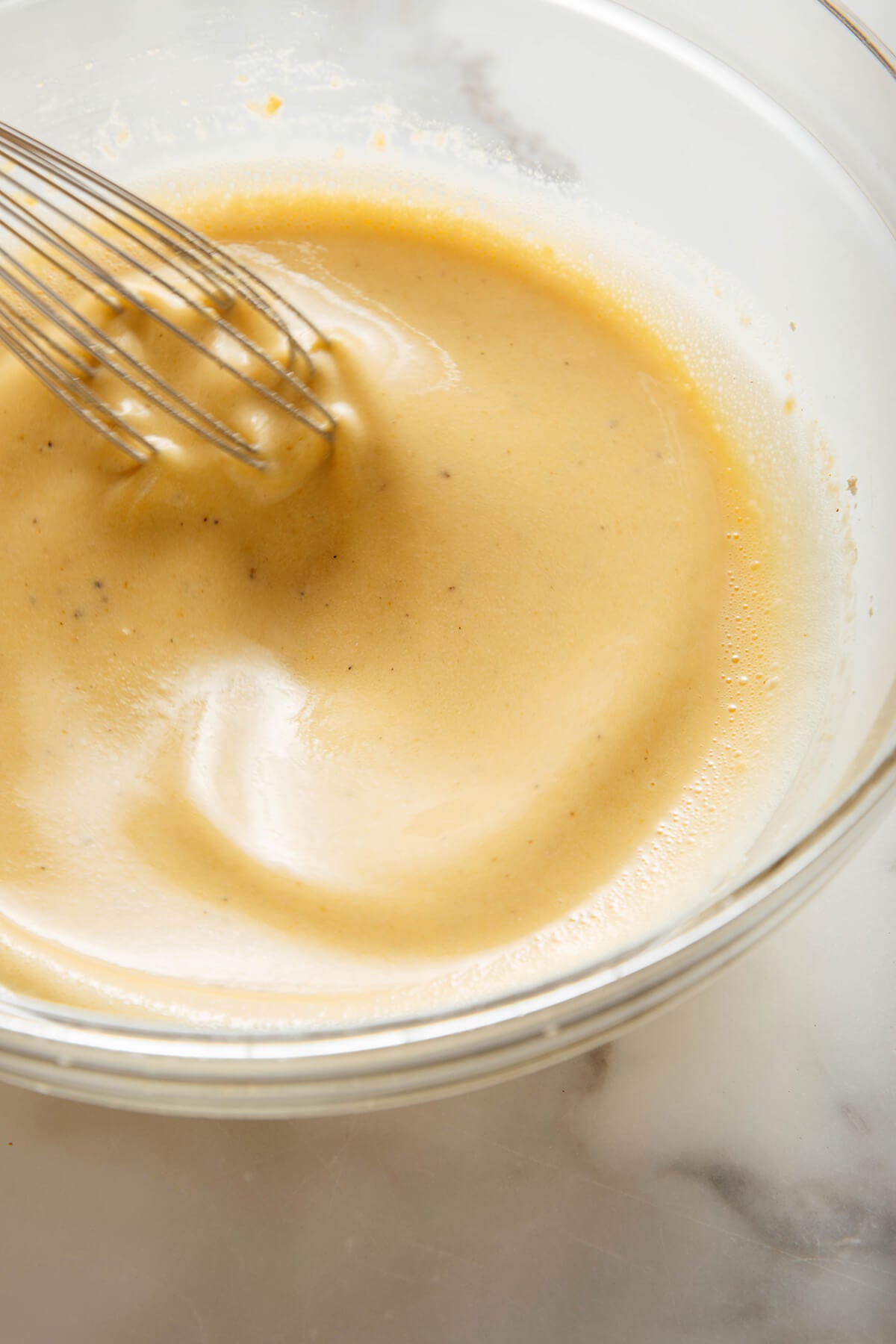
- While the oven preheats, make the batter. In a bowl, whisk together the chickpea flour, water, 2 tablespoons of the olive oil, salt, pepper and cumin. Set it aside until the oven is ready.
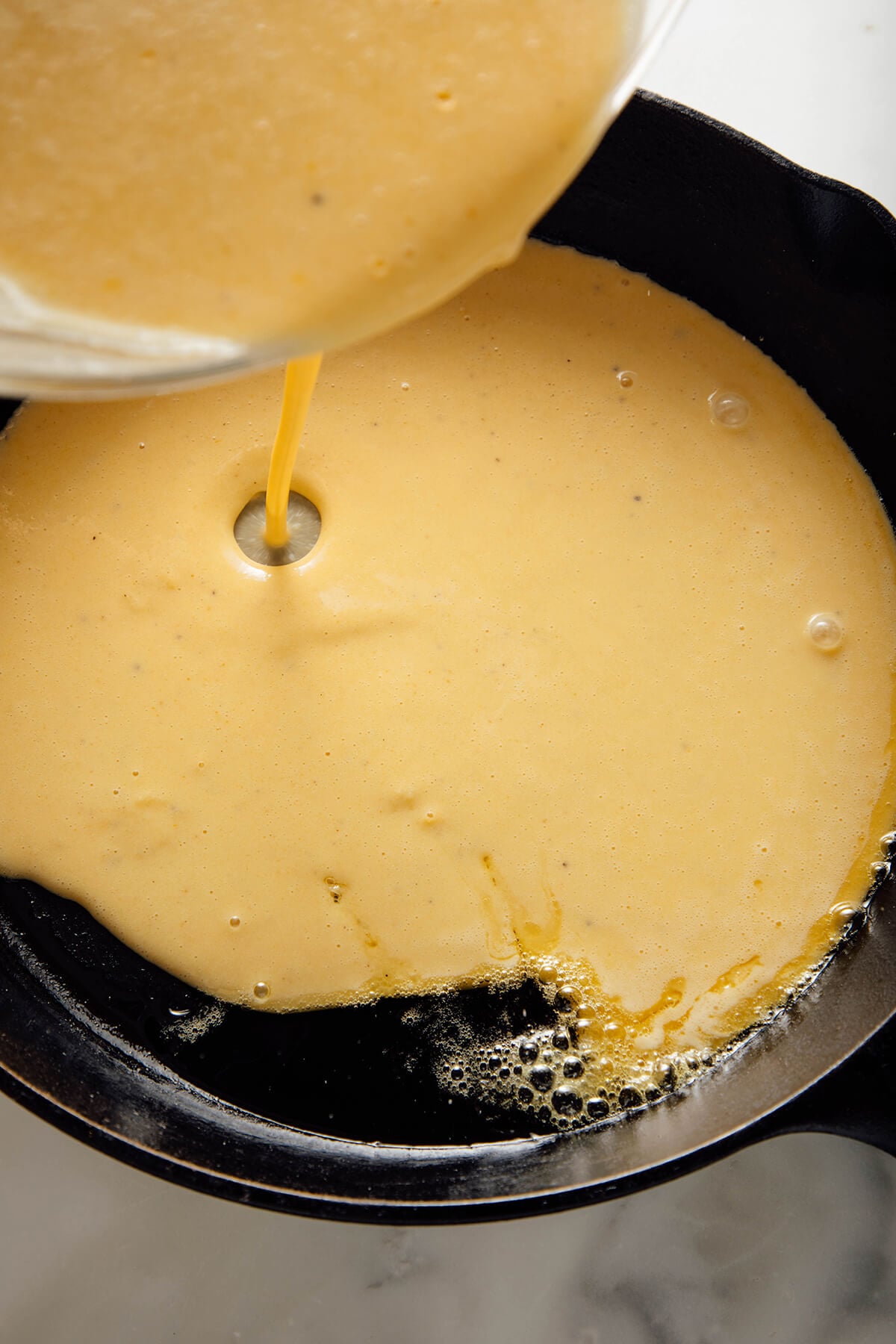
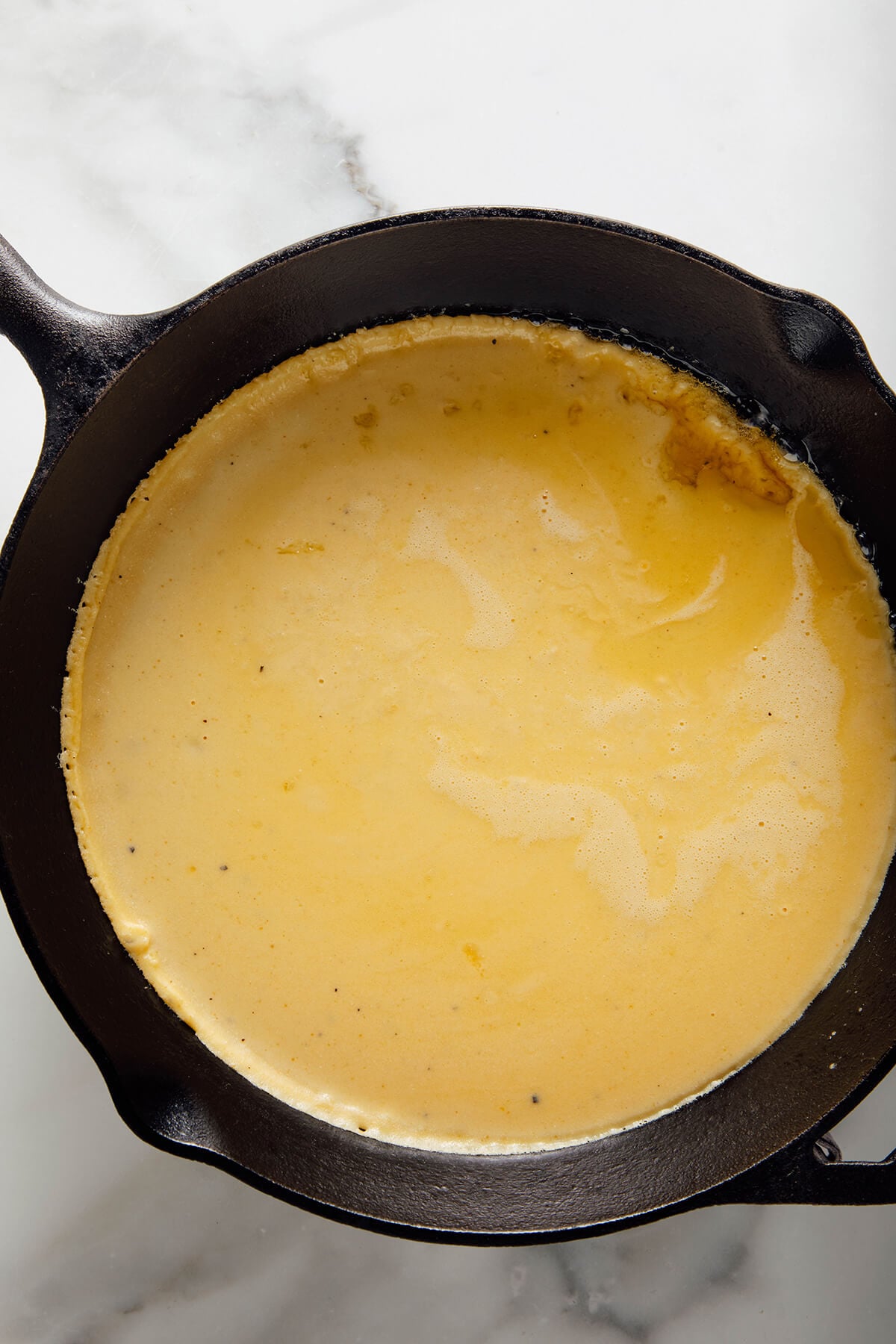
- Carefully remove the hot skillet from the oven (wear oven mitts!). Pour the remaining tablespoon oil into the skillet, and swirl the pan to distribute it evenly. Pour in all of the batter, then return the skillet to the oven.
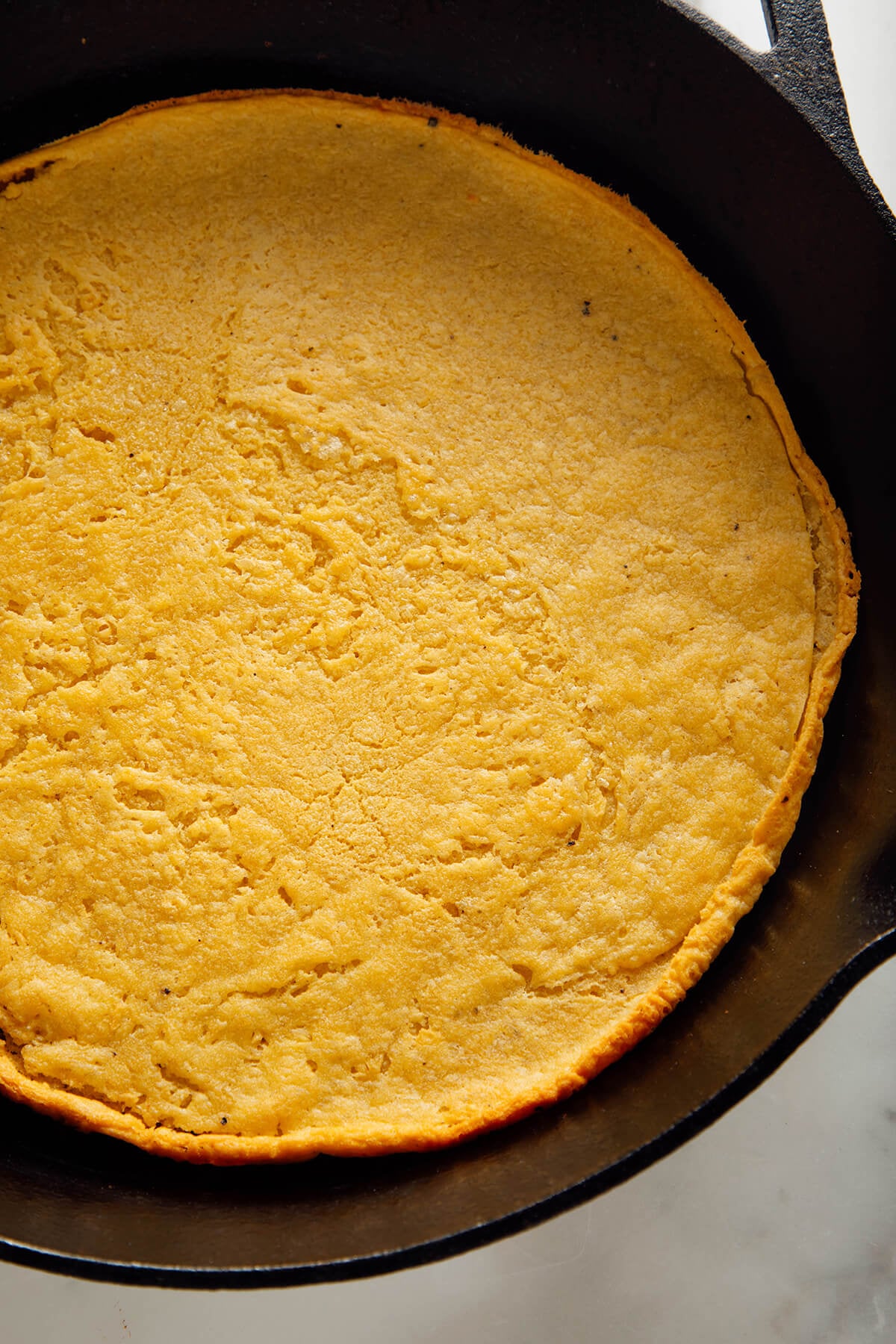
- Bake for 17 to 19 minutes, until the edges are toasted and pulling away from the skillet, and the underside is golden and lacy brown. Serve the socca warm or at room temperature. Leftovers keep well in the refrigerator for up to 5 days or in the freezer for several months.
Notes
Recipe created with trial and error, with reference to David Leibovitz, The Daring Gourmet, and Pinch of Yum.
Medium skillet option: If you prefer smaller soccas or only have a 10-inch skillet, you can divide the batter in half and cook it in two batches. Use ½ tablespoon olive oil in the skillet for each batch, and bake for 12 to 15 minutes.
Creamy basil sauce: To make the herbed sauce shown in my photos, cut 1 medium clove garlic into several pieces and finely chop it in a food processor. Add 1 cup mayonnaise, 1 cup lightly packed fresh basil leaves, a scant ½ teaspoon fine salt, and plenty of freshly ground black pepper. Process until smooth.
Nutrition
The information shown is an estimate provided by an online nutrition calculator. It should not be considered a substitute for a professional nutritionist’s advice. See our full nutrition disclosure here.

