


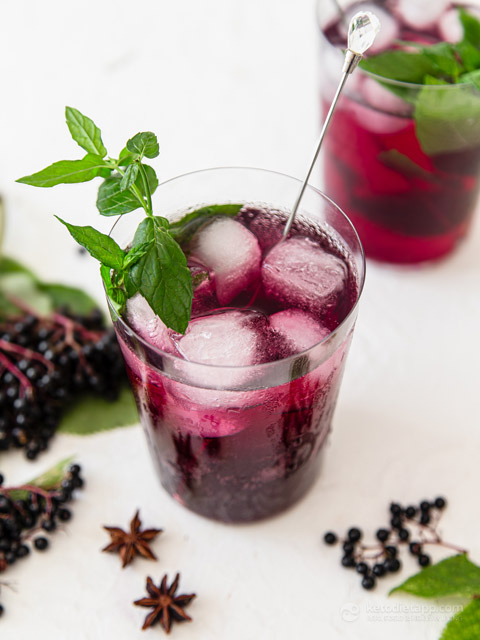
This homemade sugar-free elderberry cordial is fruity, slightly tart and sweet without any added sugar. I make it with fresh elderberries, lemon juice and allulose, plus cinnamon, star anise and cloves.
The basic ratios for elderberry syrup are pretty simple, so you’ll see similar amounts of berries and sweetener in a lot of recipes. What I changed after seeing this this BBC Good Food recipe was the spices. I hadn’t used cinnamon, cloves or star anise in elderberry cordial before, but now I honestly wouldn’t make it without them. You only need a little, so it doesn’t taste heavily spiced — it just makes the flavor much better.
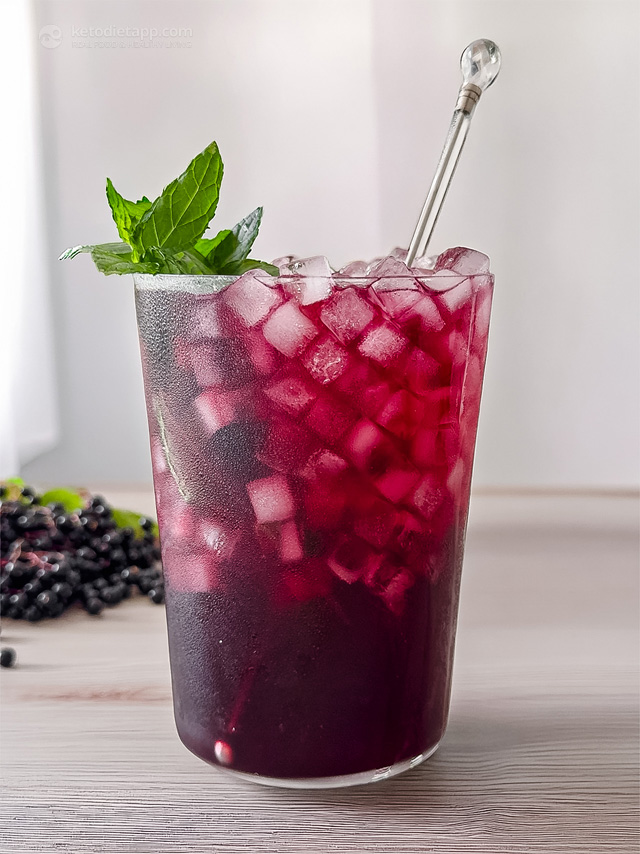
Serve it with still or sparkling water, add some to hot water or tea, or use it anywhere you’d normally use elderberry syrup.
Fresh or Frozen Elderberries?
Fresh elderberries are a late-summer and early-fall fruit. In the UK they’re usually ripe from around August into September or October, depending on the weather and location. There are still some around here in Essex in early October. The season varies in the US too, but generally falls somewhere between late summer and early fall.
If you’re making this later in the year, frozen elderberries work just as well. They’re also a great option if you picked more fresh berries than you could use at once.
Choose fully ripe berries that are deep purple-black. Avoid green or underripe berries and remove the leaves and larger stems before cooking.
Tip: If you’re working with freshly picked elderberries, try freezing the clusters first. The berries are often much easier to remove from the stems once frozen.
A Quick Safety Note
Elderberries shouldn’t be eaten raw. Raw elderberries and their juice contain naturally occurring compounds that can cause nausea, vomiting and stomach upset.
The leaves and stems shouldn’t be eaten either, so remove as much of them as you can and always cook the berries before using them.
What You’ll Need
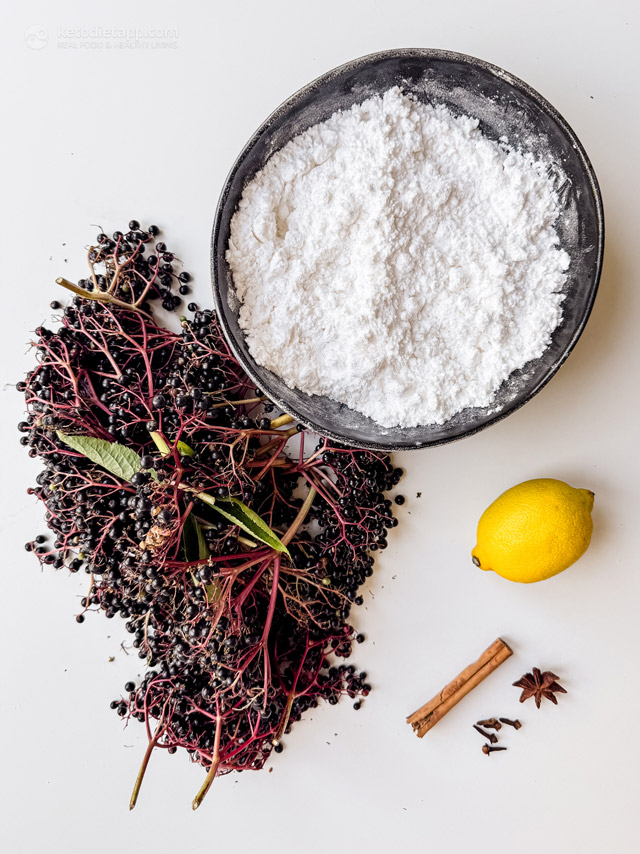
You only need a few ingredients for this cordial:
- Elderberries: Fresh or frozen both work. Use fully ripe, dark purple-black berries.
- Allulose: This works really well here because it dissolves easily and doesn’t have the strong cooling effect you can get with erythritol-based sweeteners. I used powdered allulose in mine but it isn’t necessary.
- Lemon juice: This helps balance the sweetness and stops the cordial tasting flat.
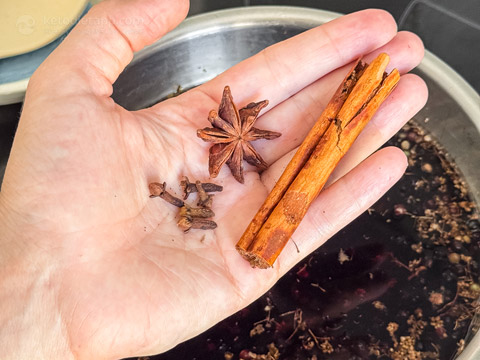
- Cinnamon, cloves and star anise: You can leave these out, but I wouldn’t. You only need a small amount, so they add a subtle warmth without turning the cordial into a heavily spiced drink. Ginger is an option too, although I found it too strong.
How To Make Sugar-Free Elderberry Cordial
Making elderberry cordial is easy, although removing all those tiny berries from the stems does take a little patience.
Once the berries are ready, they’re simmered with water and the spices until soft, then strained. The juice goes back into the saucepan with the allulose and lemon juice and is simmered again briefly.
Don’t worry if the cordial still looks fairly thin while it’s hot. It should stay pourable rather than becoming thick like pancake syrup, and it will thicken a little as it cools.
A Note on the Sweetener
I made this recipe with allulose and that’s the sweetener I’d recommend using here. You can experiment with others, but I wouldn’t expect them to behave exactly the same way. They can change the sweetness, texture and even how the cordial freezes.
Do I Need to Reduce the Cordial?
A little, yes, but there’s no need to cook it down into a thick syrup.
The extra simmering helps concentrate the flavor and removes some of the water, but the finished cordial should still pour easily.
How much it reduces will affect the final yield. My batch made about My batch made about 750 ml (just over 3 cups).
What Can I Use Instead of Allulose?
Allulose works really well in this recipe, but I know it isn’t easy to find everywhere.
If you’re in the UK, you can still buy allulose online, and it can be worth buying in bulk if you use it regularly. Otherwise, BochaSweet is another good option and is also available online.
Tagatose works well too. It’s another rare sugar and behaves much more like regular sugar than many low-carb sweeteners, which makes it a good choice for syrups and cordials.
I would avoid assuming that erythritol-based sweeteners will give exactly the same result. They will have a cooling aftertaste and will behave differently once the cordial is chilled or frozen. Plus, you won’t get that thick, syrupy feel.
How Long Does Elderberry Cordial Last?
Keep the cordial refrigerated in a clean, tightly sealed bottle or jar.
Homemade elderberry syrup is generally best kept in the fridge for up to 2 weeks. If you won’t use it all within that time, freezing is the better option.
Because this version doesn’t contain the large amount of regular sugar used in traditional syrups, I wouldn’t assume it will keep longer just because it’s sweet.
Can You Freeze Sugar-Free Elderberry Cordial?
Yes, and this is the easiest way to keep it for longer.
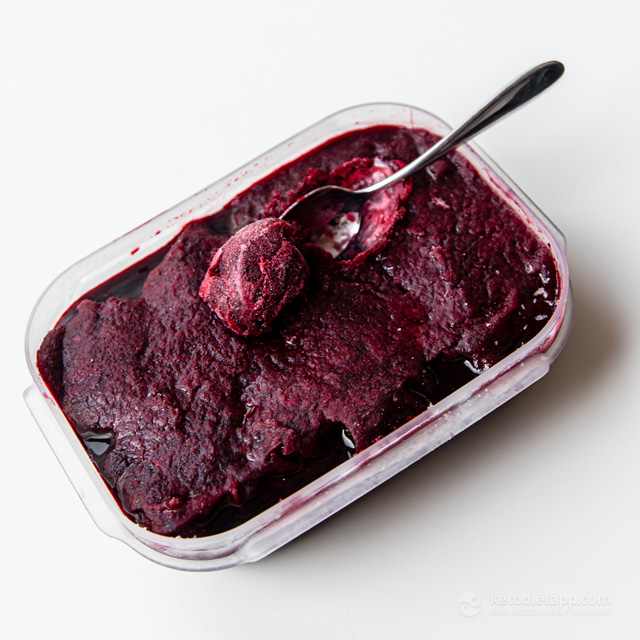
One thing I found when testing this: it doesn’t freeze solid.
Because of the amount of allulose, it stays soft and almost slushy in the freezer. I first tried freezing it in ice cube trays, thinking I’d be able to pop out individual portions, but that didn’t work at all — the cubes stayed too soft.
Instead, freeze it in a freezer-safe container and leave a little room at the top. Because it stays soft, you can scoop out what you need straight from the freezer.
For best quality, use it within about 6 to 8 months.
Can I Preserve Elderberry Cordial by Water-Bath Canning?
I wouldn’t use water-bath canning for this recipe.
Elderberries can vary in acidity, and American and European elderberries aren’t always acidic enough for standard water-bath canning. Tested elderberry canning recipes also use specific amounts of regular sugar.
Because this version uses allulose, I wouldn’t treat it as a tested canning recipe, even with the lemon juice added.
For longer storage, freeze it instead.
How to Prepare Bottles and Jars
Start with very clean bottles or jars. Wash them, along with the lids, in hot soapy water and rinse well. If you want to take an extra step, heat-safe jars or bottles can be submerged in boiling water for 10 minutes before filling.
Let them drain, then fill with the cordial. This helps keep everything clean, but it doesn’t make the cordial shelf-stable. Once cooled, keep it refrigerated or freeze it.
How to Use Elderberry Cordial
Elderberry cordial is concentrated, so you only need a small amount. You can:
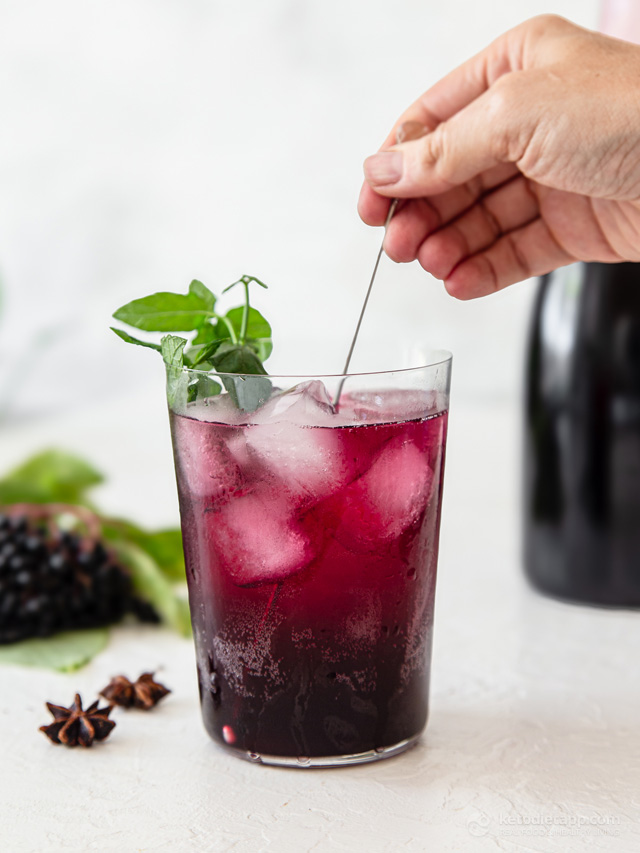
- dilute it with still or sparkling water
- add it to hot water or tea
- add a splash to unsweetened iced tea or lemonade
- use it in sugar-free cocktails or mocktails
- drizzle a little over unsweetened yogurt or chia pudding
Start with a small amount and add more to taste.
Common Questions
Can I use frozen elderberries?
Yes. Fresh or frozen elderberries both work well, so you don’t need to wait until elderberry season to make this.
Can I use dried elderberries?
I haven’t tested this recipe with dried elderberries, so I wouldn’t swap them gram for gram. Dried berries are much more concentrated and would need different amounts of water.
Can I leave out the spices?
Yes. You can make the cordial with just elderberries, lemon and allulose. That said, I really do recommend the cinnamon, cloves and star anise. They’re used in small amounts, so they add warmth without overpowering the elderberry flavor.
Can I use another sweetener?
You can experiment, but I made and tested this recipe with allulose. Other sweeteners can be much sweeter or behave differently once dissolved or frozen, so I wouldn’t recommend a straight 1:1 swap without testing.
Why didn’t my elderberry cordial freeze solid?
That’s because of the allulose. It lowers the freezing point, so the cordial stays softer and more slushy than plain juice or water. That’s also why I recommend freezing it in a container rather than ice cube trays (I’ve made that mistake once).
More Low-Carb Drinks and Syrups
Looking for more homemade low-carb drinks and syrups? Try these:
Is there another drink you’ve been missing since going low-carb? Let me know in the comments and I’ll see if I can make a sugar-free version!
Hands-on Overall
Serving size 2 tbsp/ 30 ml
Allergy information for Sugar-Free Elderberry Cordial (Low-Carb Elderberry Syrup)
✔ Gluten free
✔ Dairy free
✔ Egg free
✔ Nut free
✔ Nightshade free
✔ Pork free
✔ Avocado free
✔ Coconut free
✔ Fish free
✔ Shellfish free
✔ Beef free
Pescatarian
Vegetarian
Vegan
Nutritional values (per 2 tbsp/ 30 ml)
Net carbs3.5 grams
Protein0.2 grams
Fat0.1 grams
Calories20 kcal
Calories from carbs 89%, protein 4%, fat 7%
Total carbs5 gramsFiber1.5 gramsSugars0.1 gramsSaturated fat0 gramsSodium2 mg(0% RDA)Magnesium2 mg(0% RDA)Potassium60 mg(3% EMR)
Ingredients (makes about 750 ml, just over 3 cups)
- 500 g fresh elderberries, stalks removed (17.6 oz)
- 2 cups water (480 ml)
- 1 cinnamon stick
- 1 star anise
- 3-5 cloves
- juice of 1 lemon
- 500 g Allulose (17.6 oz)
Instructions
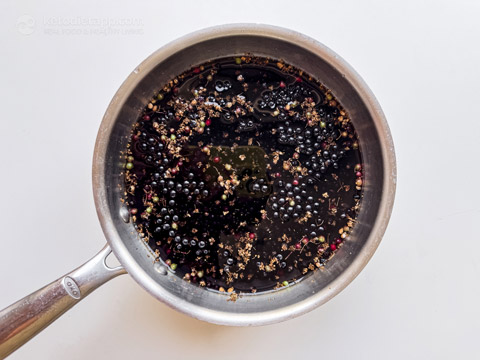
- Remove the elderberries from the stems, discarding any leaves, green berries or damaged fruit. Rinse well and place in a saucepan. Add 480 ml (2 cups) water.
- Add the cinnamon, star anise and cloves.
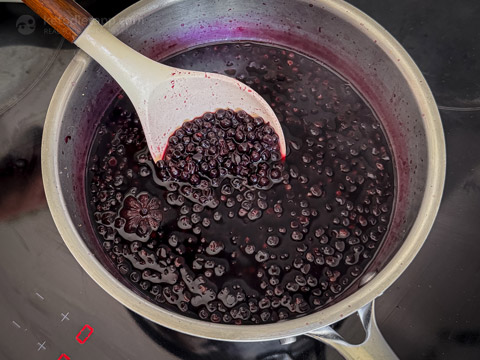
- Bring to a boil, then reduce the heat and simmer gently for 15 to 20 minutes, until the berries are soft and have released their juices.
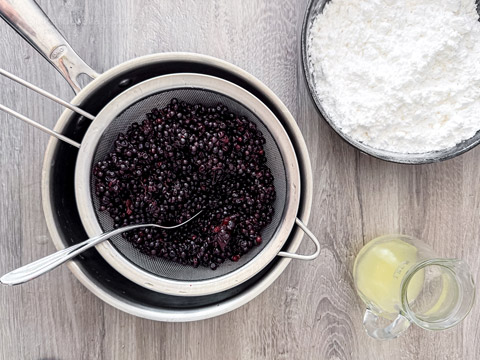
- Strain the mixture through a fine-mesh sieve, pressing the berries with the back of a spoon to extract as much juice as possible. Discard the solids.
- Pour the strained elderberry juice back into the cleaned saucepan. Add the allulose and lemon juice and stir to combine.
- Bring back to a gentle simmer and cook for about 10 minutes. The cordial should reduce slightly but will still be fairly fluid rather than thick like a traditional syrup.
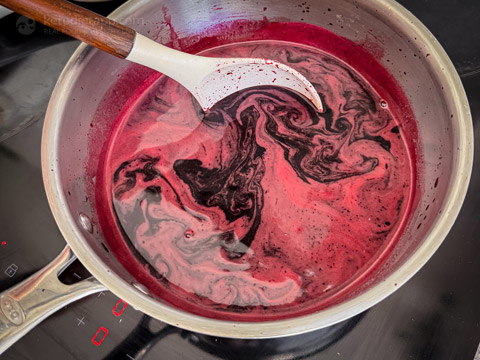
- Remove from the heat and pour into clean bottles or jars. Let cool, then refrigerate promptly. Store in the fridge for up to 2 weeks, or freeze for longer storage.
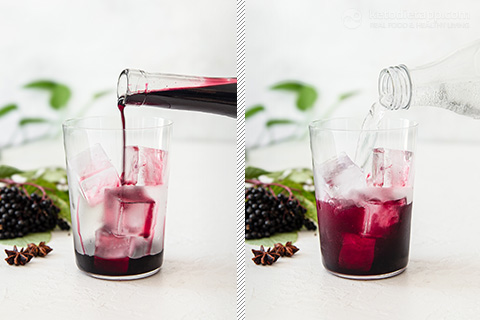
- To serve, dilute with still or sparkling water to taste.
Ingredients
- 500 g fresh elderberries, stalks removed (17.6 oz)
- 2 cups water (480 ml)
- 1 cinnamon stick
- 1 star anise
- 3-5 cloves
- juice of 1 lemon
- 500 g Allulose (17.6 oz)
Instructions
- Remove the elderberries from the stems, discarding any leaves, green berries or damaged fruit. Rinse well and place in a saucepan. Add 480 ml (2 cups) water.
- Add the cinnamon, star anise and cloves.
- Bring to a boil, then reduce the heat and simmer gently for 15 to 20 minutes, until the berries are soft and have released their juices.
- Strain the mixture through a fine-mesh sieve, pressing the berries with the back of a spoon to extract as much juice as possible. Discard the solids.
- Pour the strained elderberry juice back into the cleaned saucepan. Add the allulose and lemon juice and stir to combine.
- Bring back to a gentle simmer and cook for about 10 minutes. The cordial should reduce slightly but will still be fairly fluid rather than thick like a traditional syrup.
- Remove from the heat and pour into clean bottles or jars. Let cool, then refrigerate promptly. Store in the fridge for up to 2 weeks, or freeze for longer storage.
- To serve, dilute with still or sparkling water to taste.
Nutrition (per serving, 2 tbsp/ 30 ml)
Calories20kcal
Net Carbs3.5g
Carbohydrates5g
Protein0.2g
Fat0.1g
Saturated Fat0g
Fiber1.5g
Sugar0.1g
Sodium2mg
Magnesium2mg
Potassium60mg
Detailed nutritional breakdown (per 2 tbsp/ 30 ml)
Do you like this recipe? Share it with your friends!

