


NEW RICHLAND, Minn. — Floodwater seeped through the nursing home’s front door just before sunrise.
Inside the New Richland Care Center, staff members rushed to move 36 residents out of the building on Sept. 19 while they still could. They pushed elderly residents in wheelchairs through 4-inch-deep water to buses waiting in the parking lot, said nursing home administrator Robert Johannsen.
Inches turned to feet as the last three residents were wheeled out on hospital beds, lifted “as high as they can go” to escape the rising water, Johannsen said. Firefighters and volunteers from a high school football team pushed the beds to safety across the street, he said.
“It’s pretty devastating,” Johannsen said of the now-shuttered nursing home. “There was at least 2½ feet of water flowing down the hallways.”
The small-town, government-run nursing home is about 100 yards from a drainage ditch in southern Minnesota. It has flooded three times in 16 years, including during the September storm that was large but far from historic, according to the National Weather Service.
New Richland is one of 100 U.S. nursing homes that face some of the nation’s worst flood risk — where at least 2 feet of water during a big storm could endanger residents — according to a KFF Health News analysis of peer-reviewed flood hazard mapping provided by Fathom, a United Kingdom-based company considered a leader in flood simulation.
The KFF Health News analysis builds upon a 2025 investigation that used Fathom’s mapping to identify at least 170 U.S. hospitals at risk of significant flooding. Fathom’s estimates are generally seen as more modern than official flood maps released by the Federal Emergency Management Agency, which are often out of date and don’t account for the changing climate.
“Every community across the United States carries some level of flood risk,” said Oliver Wing, the chief scientific officer at Fathom. “There is this idea that unless you can either see the ocean or the Mississippi from your front room, then you’re not at risk of flooding — when the reality is that anywhere rain can fall, it can flood.”
The U.S. has nearly 15,000 nursing homes housing more than 1.2 million people. In floods and other disasters, the residents are especially vulnerable because many are medically frail, cognitively impaired, or immobile. Some require daily care that can’t be reliably provided during a disaster, yet they are also so fragile that relocation could send them to the emergency room.
Additionally, many nursing homes were built near coastlines or waterways in the 1970s, before widespread concern about climate change, to keep residents cool and content, said David Dosa, the head of geriatrics at the UMass Chan Medical School.
“It’s a lot more comfortable than being in an urban jungle,” Dosa said. “Obviously, now you’re in places that are a little more at risk.”
Dosa has studied nursing home evacuations since Hurricane Katrina flooded the New Orleans area in 2005. Dozens of people were killed in facilities that tried to ride out the storm and flooded after the levees broke.
After Katrina, the nursing home industry pivoted toward evacuations, although some of those decisions also led to deaths, Dosa said.

In preparation for the next three Gulf hurricanes, more than 270 nursing home evacuations were recorded, according to a peer-reviewed study Dosa co-wrote in 2011. Within the 30 days that followed each storm, the regions hit saw a cumulative total of 277 more nursing home resident deaths than expected, suggesting a “significant increase in mortality and morbidity associated with evacuation,” according to the study.
“It’s Russian roulette. You’re damned if you do. You are damned if you don’t,” Dosa said of evacuations. “Older adults and disasters don’t mix.”
A similar study published in 2024 found a 16% greater chance of ER visits among residents of Florida assisted living facilities who were evacuated before Hurricane Irma in 2017. People in assisted living facilities generally need less care than those in nursing homes.
“Assisted living residents are quite frail in their own right,” said Cassandra Hua, an assistant professor at UMass Lowell, who led that study. “But nursing home residents are usually at higher risk. So anything you see in assisted living might be multiplied in a nursing home setting.”
Even a few inches of flooding can interrupt nursing home care and force an evacuation. For each of the 100 nursing homes identified by the KFF Health News analysis, Fathom’s data predicted a 100-year flood event could bring at least 2 feet of water to the buildings.
A 100-year flood is an intense weather event with a 1% chance of occurring in any given year, but it can happen more often. Climate scientists largely agree that extreme weather is worsening as the planet warms, which allows the atmosphere to hold more moisture and causes sea levels to rise.
And storms are drenching regions once considered at lower risk for flooding, where essential facilities and entire communities might be less prepared, said Drew Gronewold, a University of Michigan climate scientist. In other regions, storms are now less frequent but becoming “off-the-charts” powerful, he said.
“Storm tracks are changing their trajectory,” Gronewold said. “These types of, in air quotes, ‘unanticipated events’ are going to be part of our future.”
Some of the nursing homes KFF Health News has identified as at risk have flooded in the past five years, including facilities in Florida, Kentucky, Texas, and Washington.
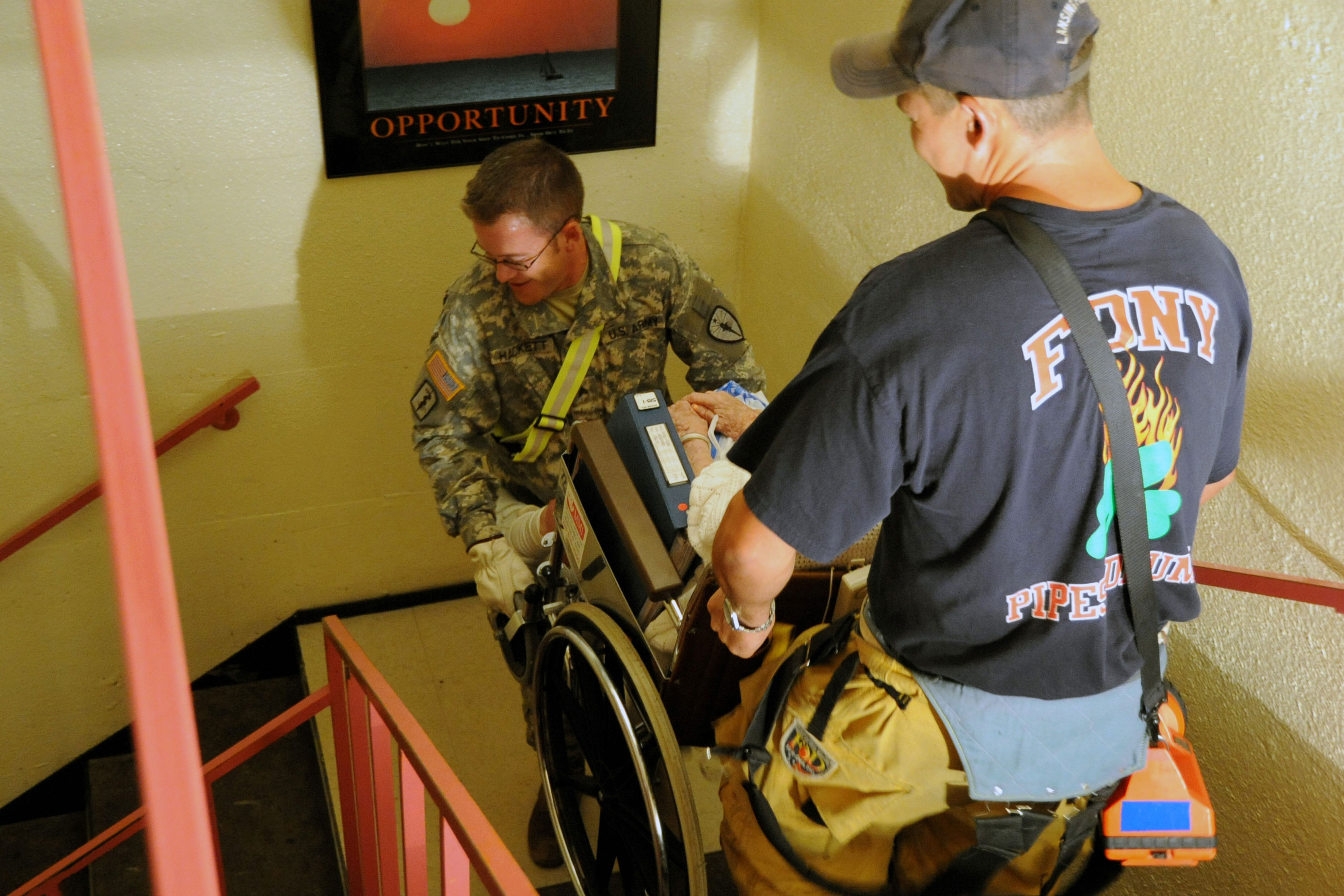
Five of the facilities flooded in 2012 as Superstorm Sandy clobbered New York, according to a report from the Natural Resources Defense Council, while a sixth, the elevated Seagate Rehabilitation and Nursing Center, narrowly rode out the storm. In Indiana, more than 150 people were evacuated from the five-story Munster Med Inn during Hurricane Ike in 2008. Members of the National Guard carried some residents down flights of stairs in the dark.
Then there is the New Richland Care Center. Local media reports show it was evacuated due to flooding in 2010 and 2016, then partially surrounded by floodwater in 2023, before the Sept. 19 evacuation.
Storms dropped 4 to 8 inches of rain on much of southeastern Minnesota the day before, setting off widespread flooding, said National Weather Service meteorologist Brennan Dettmann. The rainfall was heavy for September but would not have been out of place in July, he said.
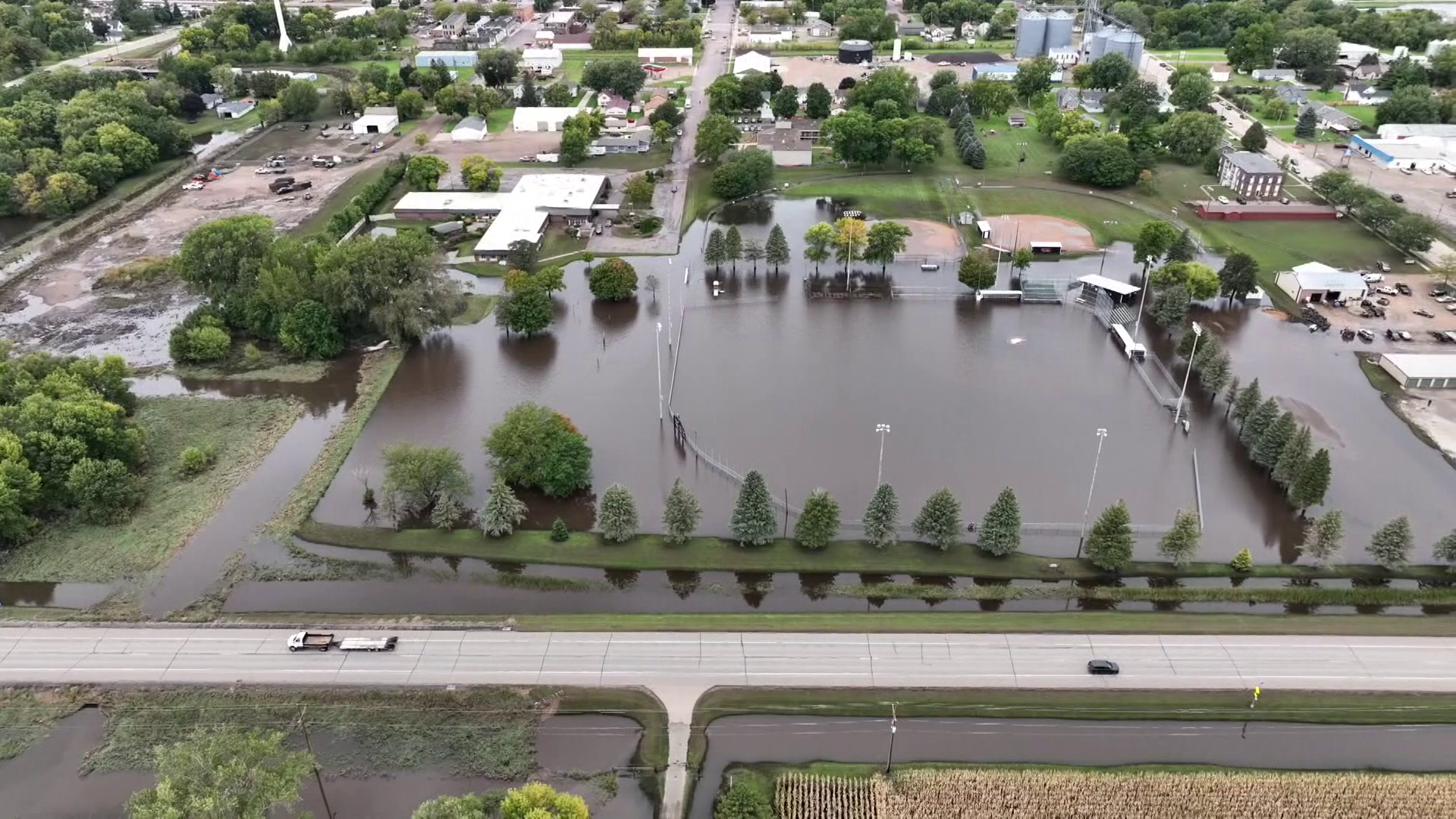
It was too much for New Richland. Storm runoff from nearby farms pooled in a low-lying baseball diamond at the edge of town before swamping nearby streets. Johannsen, the nursing home administrator, said maintenance workers who were trying to fix sewer drains called him in the middle of the night to warn about flooding in the park across the street.
“They said, ‘You need to come in. The water is rising,’” Johannsen said. “At that point, I think the water was a good 30 feet away from the building. I wasn’t really concerned.”
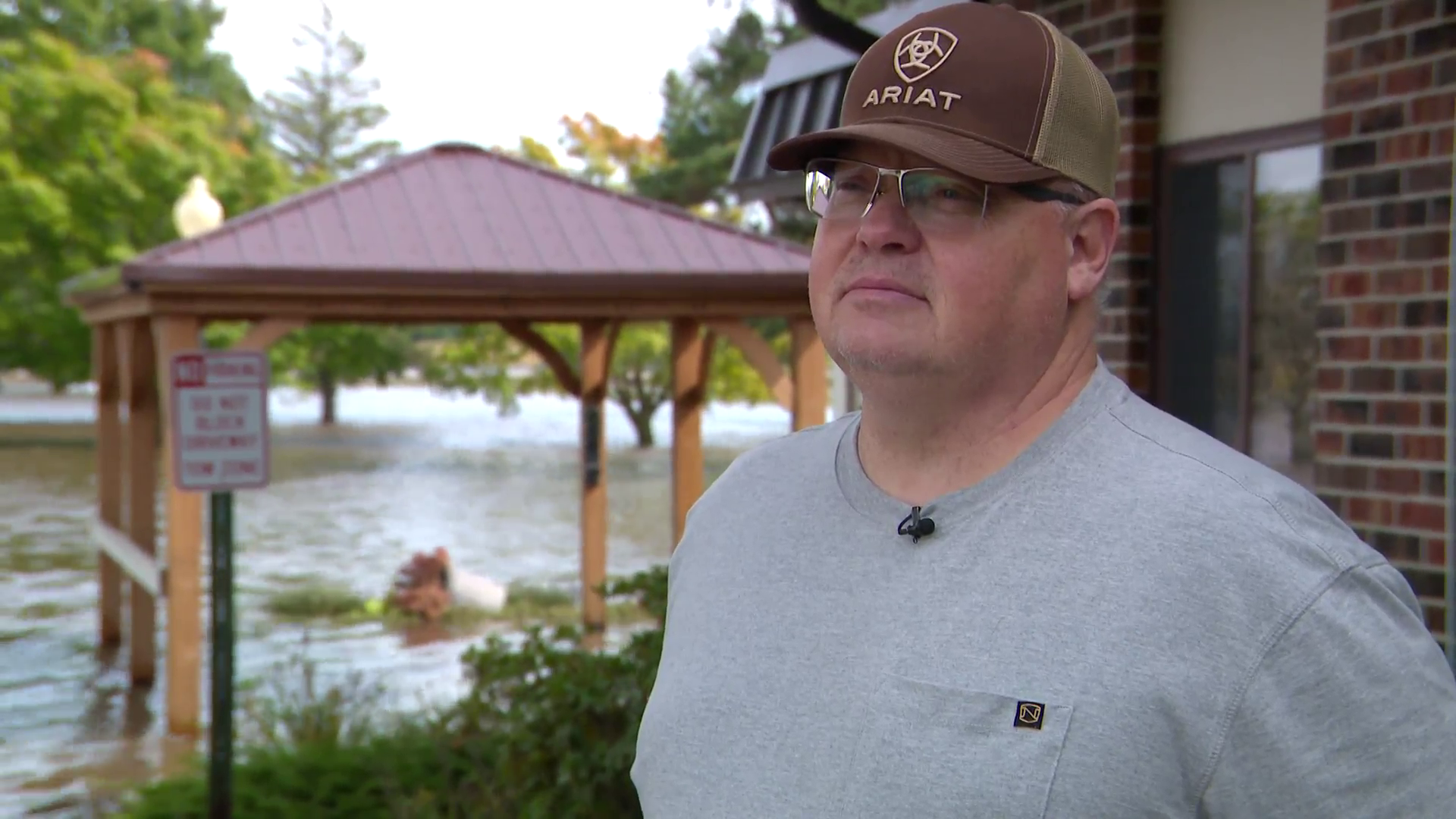
Wing, the Fathom scientist, said the danger should have been obvious. Although Minnesota’s natural landscape once would have absorbed heavy rains, the farmland around New Richland funnels runoff into creeks and ditches that lead to a low-lying bowl near the nursing home. It’s almost as if the location is designed to flood, Wing said.
“The choice has been made that we don’t want water in our crop fields. We want it in the nursing homes of vulnerable people,” Wing said. “That’s the choice that has been made, politically, in that part of Minnesota.”
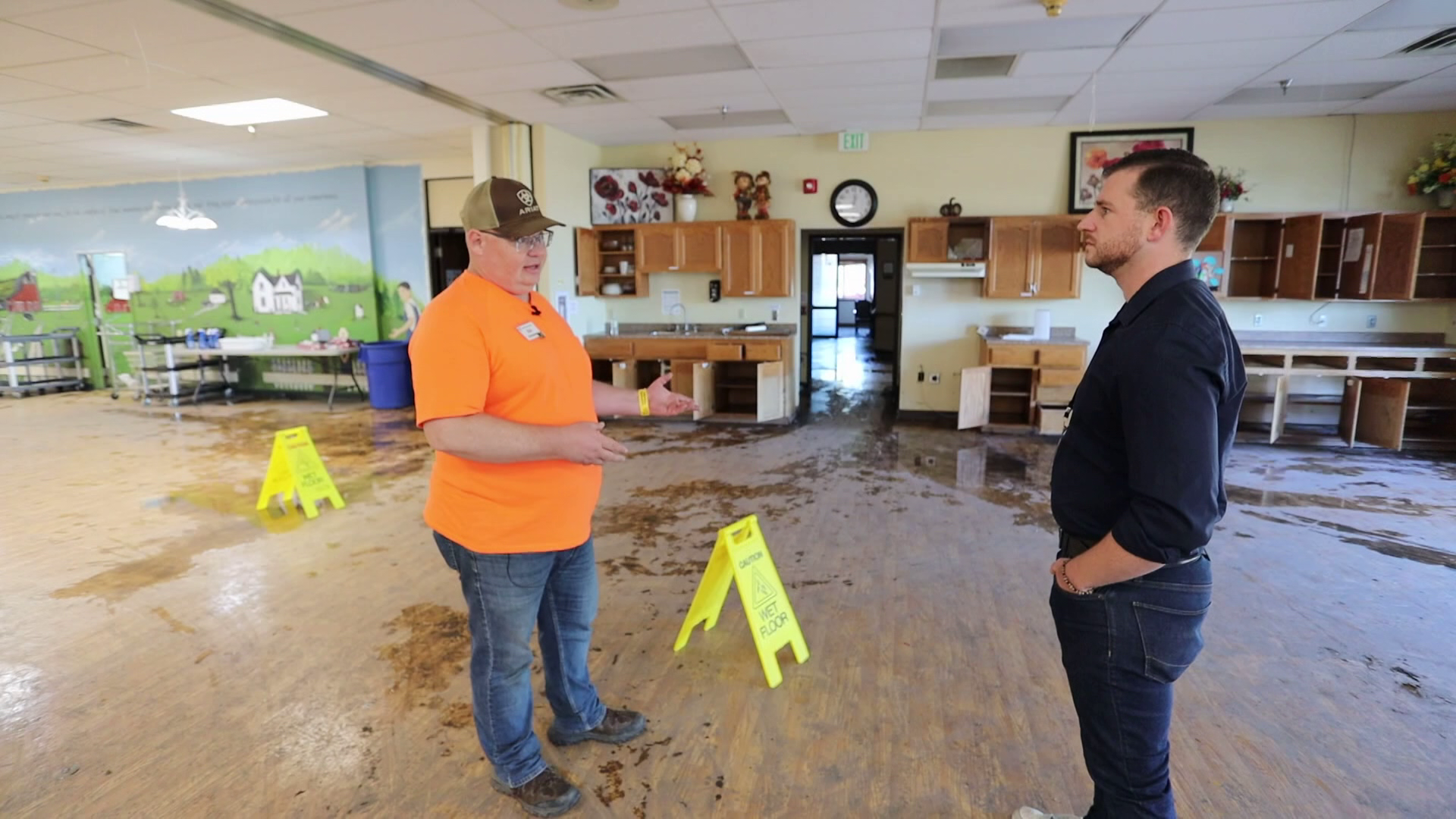
Inside the ruined nursing home, receding floodwaters left behind knee-high watermarks, mud-smeared floors, and a lingering smell that Johannsen said reminded him of growing up on a farm. Water destroyed treasured photo albums left behind in a low cabinet, he said.
Johannsen said the nursing home — which, with 85 employees, is one of the largest employers in town — will be closed for five months to a year for repairs. He said all its residents were moved into a school gymnasium and have been resettled across about nine area nursing homes.
“It was an awful experience that I hope nobody ever has to go through. Because these people lost homes,” Johannsen said. “My staff is losing their jobs. And I don’t know what to do.”
Methodology
For this analysis, we used data from Fathom, a United Kingdom-based company that specializes in flood-risk modeling worldwide. To assess the United States’ vulnerability, Fathom uses sophisticated computer simulations and detailed terrain data covering the country. It accounts for environmental factors such as climate change, soil conditions, and many rivers and creeks not mapped by other sources. Fathom’s modeling has been peer-reviewed and used by insurance companies, the World Bank Group, the Nature Conservancy, and government agencies in Florida, Texas, and elsewhere. The Iowa Flood Center has validated Fathom’s U.S. data.
Through a data use agreement, Fathom shared U.S. mapping data that predicts areas with at least a 1% chance of flooding in any given year. Fathom’s data estimates the effects of coastal, fluvial, and pluvial flooding and accounts for dams, reservoirs, and other structures that defend against floods.
To identify at-risk nursing homes, we used a Centers for Medicare & Medicaid Services database to map more than 14,000 nursing homes. With GPS coordinates as the center point, we created a circle with a 100-yard radius around each nursing home, which in most cases captured the building and nearby grounds. We then mapped Fathom’s flood-risk data to see where it overlapped with these circles. We started by looking for nursing homes where at least 20% of the circle’s area had a predicted flood depth of at least 1 foot. That gave us an initial list of more than 750 nursing homes.
Then we visually inspected those facilities using mapping software and Google Maps to confirm that floodwaters were predicted to reach or surround the buildings. We trimmed our list to the 100 nursing homes where the most flooding was predicted, with additional weight given to deeper water.
Our analysis does not account for how flooding beyond a nursing home’s footprint could still affect employees or patients. And it does not assess what steps facilities may have already taken to prepare for severe weather events.
Fathom provided guidance and feedback as we developed our analysis.

