



From meditation to intermittent fasting, yoga to high-intensity interval training, you’re already integrating loads of healthy living practices into your life. But did you know that when you do something is almost as important as the practice itself?
“Timing your wellness practices isn’t just a scheduling preference,” explains Valentina Lipskaia, Founder & Clinical Psychologist at Dzeny. “It has real neurological and psychological grounding, and getting it right can meaningfully amplify results.”
In this new series, we’re exploring the best time to take part in different wellness practices. We started things off with what many experts claim is the best way to start the day: meditation. For our second installment, we focused on different kinds of exercise and activity, whose benefits can change slightly depending on when you integrate them into your day. For the third and final installment, we’re bringing it all together with the fuel you need to make these and all of your body’s other biological processes possible: food.
From intermittent fasting to eating early dinners, how should you approach the timing of your meals? Is there a best time of day to focus on eating specific macronutrients? Is breakfast actually the most important meal of the day? As with all of the stories in this series, the recommendations below will vary depending on your individual body makeup.
“Hormone fluctuations (e.g., testosterone), loss of lean body tissue (muscle), and changes in caloric expenditure from training or competition can affect how/when meals are eaten and how to support recovery,” explains Kezia Joy, RDN. So be sure to balance the below with what you know about your own body and any advice given to you by your doctors, nutritionists, or other medical professionals.
Once you’ve digested all of that (pun very much intended), here’s the best way to get the ball rolling on a healthy approach to eating with your body’s natural circadian rhythm and needs in mind.
Is Breakfast Really the Most Important Meal of the Day?
For years, we were told that breakfast was the most important meal of the day. Then, in the late 2010s, people started saying that skipping breakfast to reap the benefits of intermittent fasting could reduce inflammation, promote autophagy, and maybe shed a few stubborn pounds.
So what’s the truth? What is the most important meal of the day? As with so many things health and wellness, the answer begins with: It depends.

For Katherine Livingstone, Associate Professor at the Institute for Physical Activity and Nutrition at Deakin University, eating with your natural circadian rhythm in mind means frontloading your calories towards the beginning of the day. This, she explains in an article for The Conversation, is “when your body can process it most efficiently1.”
Since protein is digested more slowly than carbs or fat, Livingstone recommends starting the day with a combination of high-quality protein and fiber-rich whole grains — think beans with high-fiber toast or brown rice congee with an egg on top.
“When lunch rolls around, you may be less tempted to eat a large meal,” she writes, noting that while a big lunch doesn’t disturb your circadian rhythm, “it can still make you feel sluggish while you wait for your body to digest it.”
Beefing up breakfast is a particularly good idea for those adhering to a demanding exercise regimen, according to Ben Walker, Founder & Personal Trainer at Anywhere Fitness.
“If you are actively training, I would not recommend intermittent fasting, as it will malnourish the tissues of your body while in active recovery,” he explains. “After working out and breaking down the muscle fibres, the tissues need glucose to restore glycogen, and they also need amino acids (from protein) to help repair. Fasting the body through this process can actually counteract your fitness goals and leave you weaker than before, without the muscle recovering and growing, and left damaged before performing the next workout.”
The Case for Skipping Breakfast
Ben Greenfield, a longevity, biohacking, and human performance expert and producer of the new documentary, Boundless, which is centered on the emotional toll of seeking physical perfection, offers a different perspective. He believes what to eat before a workout may not matter as long as you’re not doing intensive exercise.
“Unless you are an athlete doing a two-a-day exercise routine, you do not need to eat before your morning workout,” he says. “A lot of people do better with that because their gut is empty.”
However, he does note a “subtle nuance” worth taking into account.
“For most of the people who I work with, we do the morning workout on an empty stomach, but with ketones and amino acids,” he explains. He recommends about 10 to 20 grams of essential amino acids and a liquid ketone shot to fuel your body during the workout while leaving the stomach “somewhat empty” — which many prefer during intensive exercise.
Intermittent Fasting Is Different for Women
Despite his advice as it relates to breakfast and working out, Greenfield notes that the benefits of an intermittent fasting protocol are very dependent on your sex. For men, he recommends a strict 12- to 16-hour fast, but for women — “particularly premenopausal women still in their fertile years” — he offers more cautious advice.

“[Premenopausal women] do not do as well with a fast that exceeds 12 hours on a regular basis, because it downregulates hormones responsible for fertility, like luteinizing hormone and follicle-stimulating hormones,” he explains. “So for premenopausal women, I recommend 10 to 12 hours.”
Postmenopausal women, he continues, can feel free to adhere to the same fasting guidelines as men. For those in perimenopause, meanwhile, it’s often a question of listening to your own body. “Most perimenopausal women do better on a 10 to 12 hour daily fast rather than a 12 to 16 hour daily intermittent fast,” he says.
Mark Gillilan, a former biologist with a B.S. in Biology and the founder of Kyoto Botanicals, agrees. “I absolutely recommend IF with a 16-hour fast beginning immediately post-dinner and extending through mid-morning the following day,” he explains. “Having worked closely with low-carbohydrate and ketogenic physiology during my time at Atkins, prolonged glycemic control and baseline brain chemistry restoration are the main goals. Sleeping through many of those hours makes the task a lot easier and then when you do start your morning, your brain is operating on a stable metabolic baseline, preventing the early-morning glucose crashes that negatively impact energy.”
The Downside of Intermittent Fasting
For other experts, the timing of your first meal is less important than the potential nutritional repercussions of skipping breakfast entirely.
“I do not recommend intermittent fasting based solely on the fact that it simplifies your diet,” explains Dr. Chad Larson, a Naturopathic and Chiropractic Doctor and the founder and CEO of The Adapt Lab. “It loses its usefulness if it causes a decrease in protein consumption, impairs sleep quality, diminishes athletic performance, or contradicts medication regimens and/or medical requirements.”
Joy agrees. “Ultimately, what you consume in your meals will have the most influence on your health rather than the time frame in which you consume those meals,” she explains. “Creating a consistent approach to your daily eating habits will also provide the greatest benefit in maintaining that approach over a prolonged period of time.”
An Early Dinner Is Best, Within Reason
Once you’ve handled (or skipped) breakfast, what’s the right approach for the meals that follow? What’s the best time to eat dinner, and what time should you stop eating? Having your final meal on the early side was once gauche, but it’s currently rising in popularity. And for good reason — eating your last meal several hours before getting ready for bed is the best way to encourage truly restful sleep. Greenfield recommends finishing dinner at least three hours before bedtime, particularly if it’s heavy or spicy. This, he says, ensures that your body temperature has time to drop post-digestion, paving the way for better sleep.
Livingstone agrees, noting that eating late at night can disrupt the sleep-wake cycle by causing insulin spikes and delaying the release of melatonin.
To reap these benefits, Greenfield notes that some push this advice to the extreme. “Guys like Bryan Johnson are finishing at noon,” he says. But he also notes that there’s balance to be found.

“You can definitely make a case for better sleep when dinner is done well prior to bedtime,” he explains. “But I think you also have to balance that out with relationships, community, social activities.”
At home, he says, he compromises by having family dinner “at around 7:30, which is kind of late. But the happiness I derive from being able to sit down with the family and have dinner far exceeds any potential sleep-optimizing benefits of eating at 5 pm.”
What to Eat When
Once you’ve decided when you’re eating your meals, it comes time to decide what to eat. And for this, perhaps the easiest approach is to focus on the three major macronutrients — each of which, Walker explains, “performs a different function within your body.”
“Balancing them appropriately ensures there is enough energy to train, recover, and adapt to exercise, without gaining excess weight,” he says.
Protein
First up, the current darling of the health world: protein. Protein is essential for muscle growth, Walker explains, as it helps supply the amino acids required to repair and rebuild the microscopic muscle tears we seek to form when performing resistance training.
“Over time,” he explains, “this allows muscles to become stronger and larger and perform better.”
Protein, he adds, is “equally important during weight loss.” Not only does it help you feel fuller for longer, contributing to better portion control, but it also helps preserve lean muscle mass while the body is in a calorie deficit — something that’s of particular importance given the new prevalence of GLP-1 drugs.

Walker recommends that most adults consume between 1.6 and 2.2 grams of protein per kilo of body weight each day, which, he says, “provides an adequate target for supporting muscle maintenance and growth.”
Eating protein first thing in the morning helps you stay full all day, so aim for a high-protein breakfast. And if you’ve got a workout planned, Walker recommends consuming protein within 20 to 30 minutes after the fact. This, he says, encourages the muscles to absorb the macronutrient with enough time to recover for the next one. If you can front-load your protein, that’s a great strategy — but most people find it hard to hit their protein goals without spreading it out throughout the day.
Fats
Dietary fat has finally shed its erroneous poor image: We now know that healthy fats are crucial to all manner of processes in the body, and are particularly essential for brain health. Walker notes they also support the production of hormones involved in muscle growth and recovery, and help your body absorb certain vitamins like A, D, E, and K.
“When looking to cut weight, fat intake should not be very restricted, as doing so can negatively affect hormone production, recovery, and long term adherence to a healthy diet,” he explains. He recommends getting 20 to 30% of your total daily calories from healthy fats like avocado, olive oil, fatty fish, and coconut milk.
Larson notes that it’s beneficial to distribute your healthy fat consumption evenly among each meal of the day. Avocado at breakfast, a dense bean salad with tahini dressing at lunch, and a lovely piece of salmon at dinner can help you hit this goal easily.
Carbs
Carbs have long been demonized in nutrition circles — something that may well have contributed to America’s serious fiber problem. (TL;DR: More than 95% of Americans aren’t getting enough of this crucial substance.)
But now we know better, and we’re more than ready to see carbs return to the nutritional stage. After all, Walker explains, “carbs are the primary source of fuel during moderate to high intensity exercise.” He reminds us that this includes any activity that trains the anaerobic system, from hill running to resistance training, sprints to power lifts.
“Without adequate carbs, an athlete can feel weak if trying to perform repetitions in strength training, and feel exhausted if trying to do repetitive sprints,” he says. While he allows for the restriction or reduction of carbs alongside a more general calorie restriction if you’re looking to lose body fat, completely cutting them deprives your body of essential fuel. “Low glycogen stores not only lower performance, it also makes muscle recovery slower and maintaining muscle mass more difficult,” he explains.
To figure out how much of your diet should come from carbs, he recommends working backwards. First, establish your goal calorie intake, and account for the recommended protein and fat above. The remainder should be allocated to complex carbs like fruits, vegetables, and whole grains.
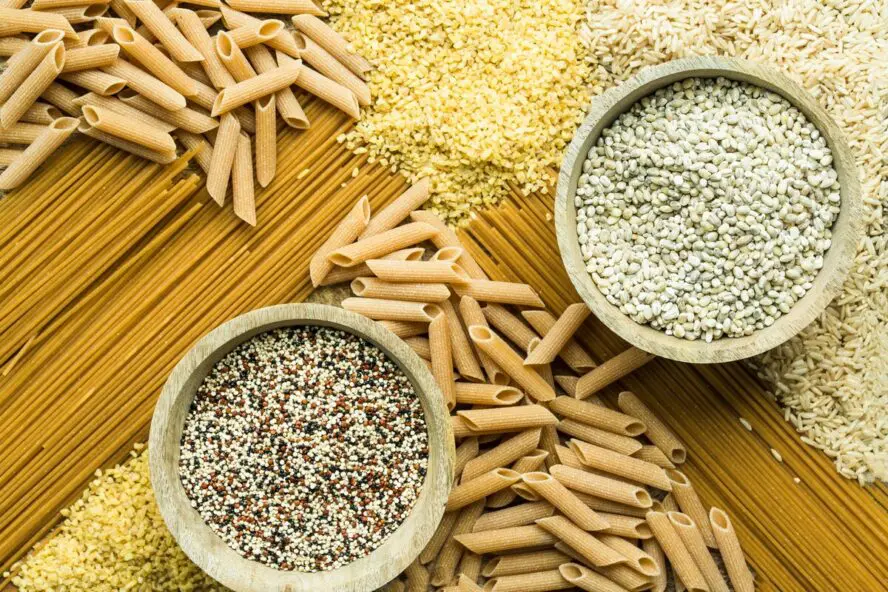
“This method ensures the body has enough protein to repair muscle tissue, enough fat to support hormones and overall health, and enough carbohydrates to fuel training, replenish glycogen stores, and aid in active recovery where the muscle cells repair,” he says.
Some experts, like Livingstone, recommend having carbs paired with protein first thing in the day, for a quick hit of energy. Greenfield offers the opposite advice, noting that saving the majority of your carbs for the end of the day is ideal, as it encourages cyclic ketosis: a gentler form of ketosis than the all-or-nothing approach of a fully keto diet.
Meanwhile, Larson suggests that “carbohydrates can be timed relative to periods of increased physical demand when energy expenditure is elevated.” In other words, eating carbs when your body needs them — right before a workout or other physical activity — is the best way to ensure your body has the fuel it needs.
But for Joy, what matters above all is balance. “Instead of thinking in terms of precise ratio of each food group, try to have as much nutritional ‘balance’ as you can with each meal,” she suggests. “Spread out your daily intake of protein to help maintain good muscle health; add adequate amounts of dietary fiber so that you can sustain a fairly consistent level of energy and digestive function; incorporate some amount of healthy fat into your diet to promote feelings of satiety (fullness); and vary how many carbs are eaten based upon how active you will be, because that is usually the time when they will provide the greatest benefit to your body.”
With a few small tweaks, you’ll be optimizing your diet in no time.
Sources: