



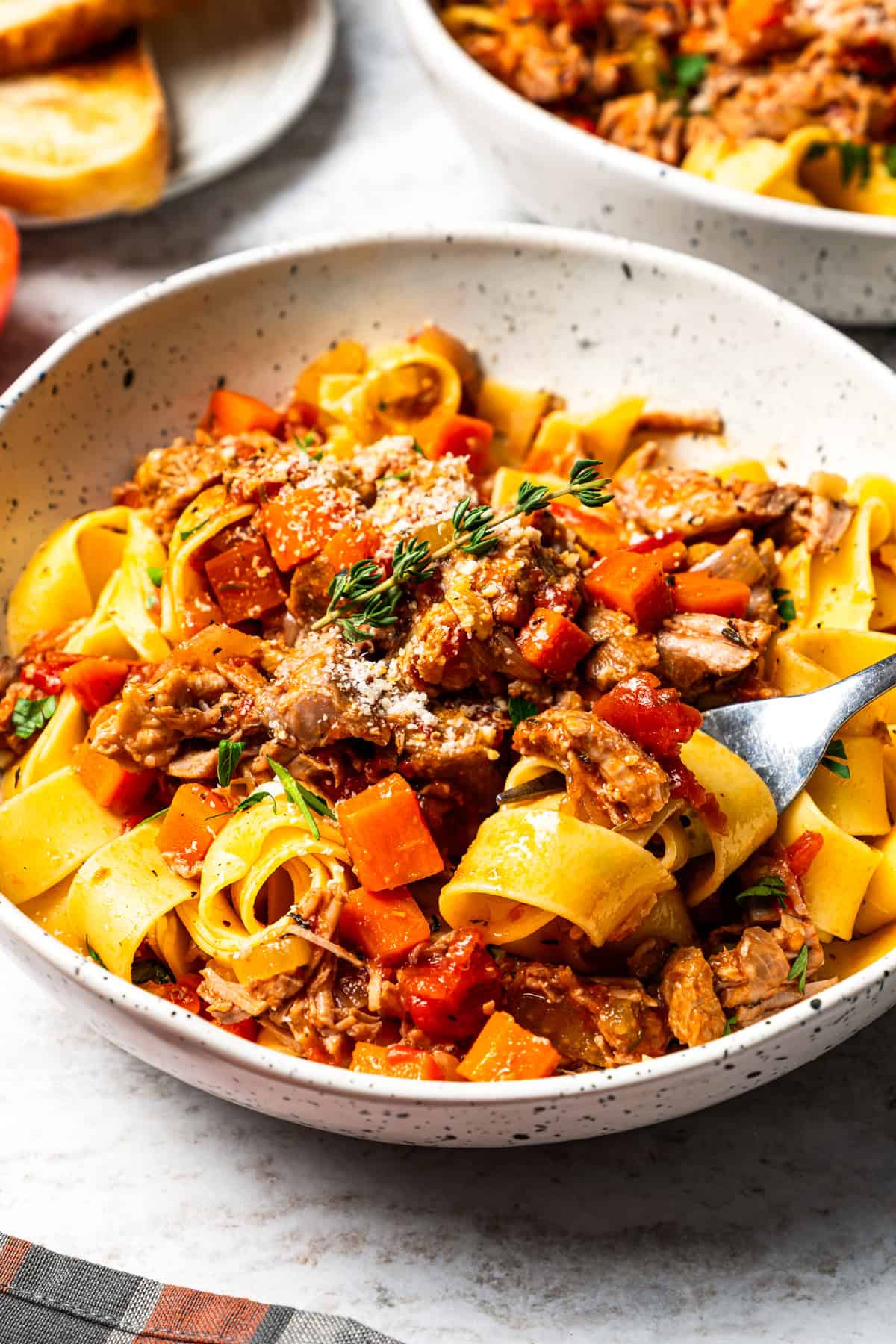
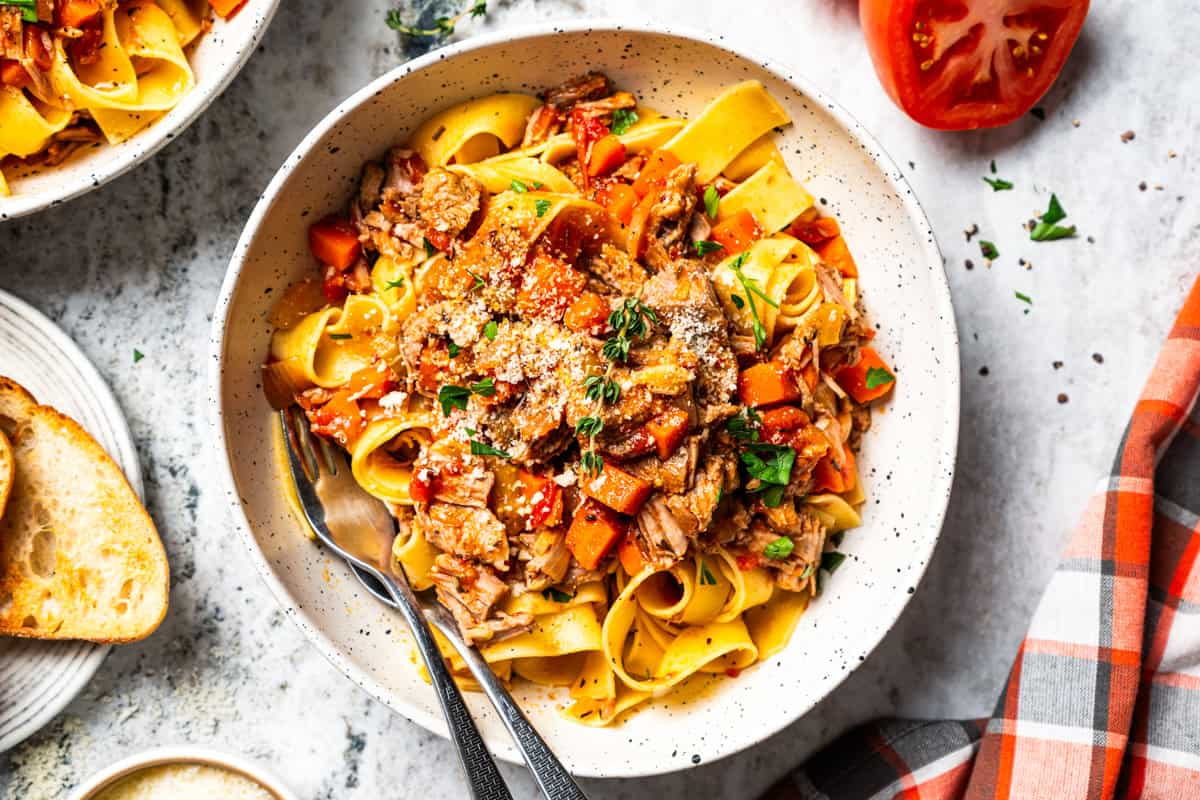
This slow-braised pork ragu recipe features tender pork shoulder simmered for hours in a savory tomato broth until it’s fall-apart tender and ready to shred into a rich, flavorful meat sauce. Toss it with pappardelle pasta and freshly grated Parmesan for a delicious, Italian-style family dinner.
Slow-Braised Pork Ragu Recipe
Pork ragu (also spelled ragù), like beef ragu, is a slow-cooked Italian meat sauce. I make this slow-braised pork ragu recipe with tender pork shoulder and rich tomato broth, simmered low and slow in the oven until the pork practically falls apart on its own. Searing the pork and sautéing the base lock in the flavors, but after that first step, the recipe is hands-off until it’s time to shred the pork into a delicious, flavorful sauce.
The best part about making pork ragu from scratch is that, like Bolognese, I can make a big batch and freeze leftovers for easy dinners. It’s delicious tossed with wide pappardelle pasta, and I love repurposing leftover ragu into more meals, like lasagna roll-ups and stuffed shells with meat sauce.


Ingredients in Pork Ragu
This slow-cooked pork ragu recipe uses simple ingredients and lets the oven do the work to bring out and meld all the flavors. Here’s what you’ll need and why. See the recipe card for exact measurements.
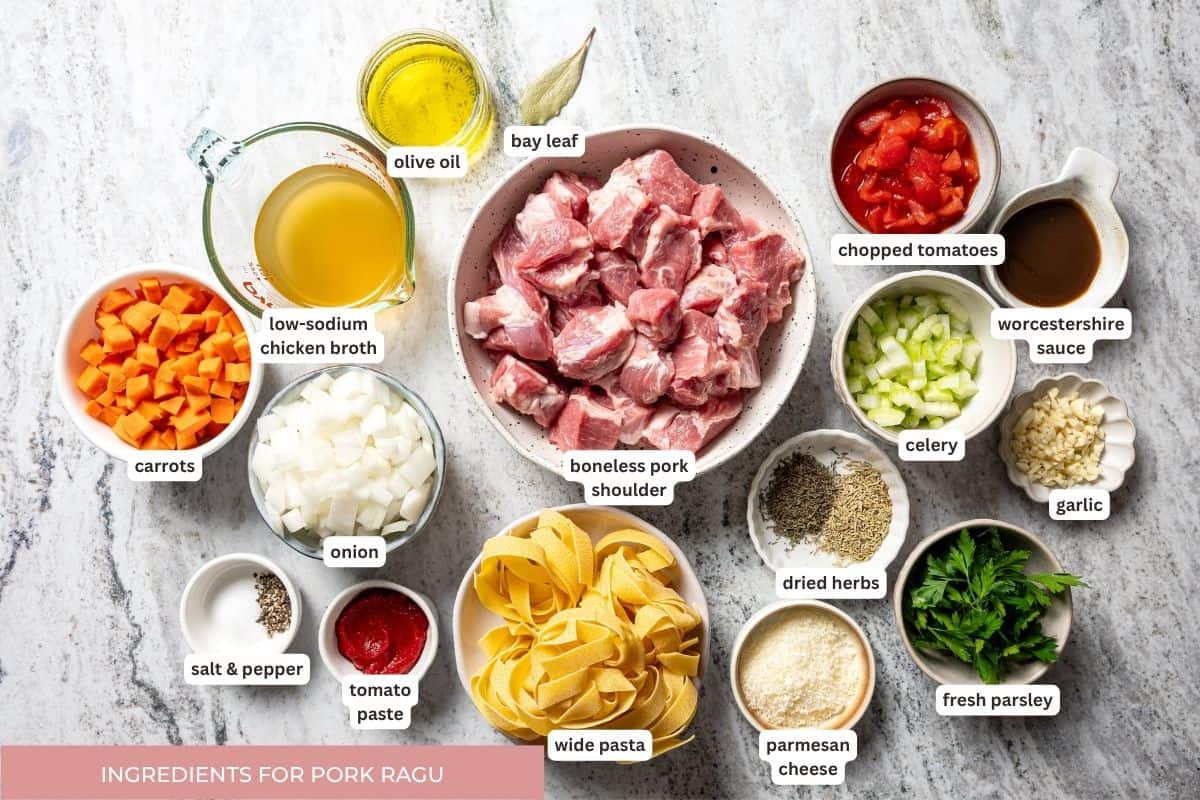
- Pork Shoulder – Also called a Boston butt, a pork shoulder is the best cut for braising because it gets tender and juicy while slow cooking.
- Diced Onion, Carrot, and Celery – These aromatic veggies form a traditional soffrito, or mirepoix.
- Fresh Garlic – You can also substitute ¼ teaspoon garlic powder for each fresh clove in the recipe.
- Tomato Paste and Canned Diced Tomatoes – If you only have canned whole tomatoes, crush them using a potato masher.
- Herbs – I use dried thyme and rosemary, or Italian seasoning, and a bay leaf. If you use fresh herbs, you’ll need about ½ the amount of finely minced rosemary and thyme leaves.
- Chicken Broth – I like to use low-sodium chicken stock or vegetable stock. You can use a combination of dry red wine (like Cabernet Sauvignon) and chicken stock for extra depth of flavor.
- Worcestershire Sauce – Or balsamic vinegar for a hit of acidity and a slightly tangier flavor. You could also use soy sauce, but use slightly less, as it can be saltier than Worcestershire sauce.
FAQ: What are the best pasta types for ragu?
The best pasta for ragu is wide, flat pasta with plenty of surface area for the chunky meat sauce to cling to. Pappardelle and tagliatelle are my first classic choices, but you can use any sturdy pasta, including penne, rigatoni, and ziti.
Recipe Tips
- Don’t skip searing the meat. Whether you make ragu with pork or beef, searing is an important step that locks in the flavors and juices.
- If your meat sauce is too thick, add a little more chicken broth or a splash of dry red wine. You can also set aside ½ cup of pasta water before you drain the pasta to add to the sauce if needed.
- Pork shoulder is cooked through when it shreds easily with a fork. If your braised pork is still tough, chances are it simply needs to cook for longer.
- You don’t have to shred the pork. Once cooked, feel free to leave the chunks whole for a rustic meat sauce.
Variations
- More herbs. You can use any combination of Italian herbs, as well as thyme and rosemary, or oregano and basil.
- Pork and fennel ragu. Stir in 1-2 teaspoons of fennel seeds along with the dried herbs. You can also sauté a sliced fennel bulb with the aromatics if you’d like. It’s a delicious combination with pork if you love fennel’s sweet, anise-like flavor.
- Spice it up. If you like your ragu with a bit of heat, add half of a finely chopped fresh red chilli or ¼ teaspoon of crushed red chilli flakes. Add more or less to taste.
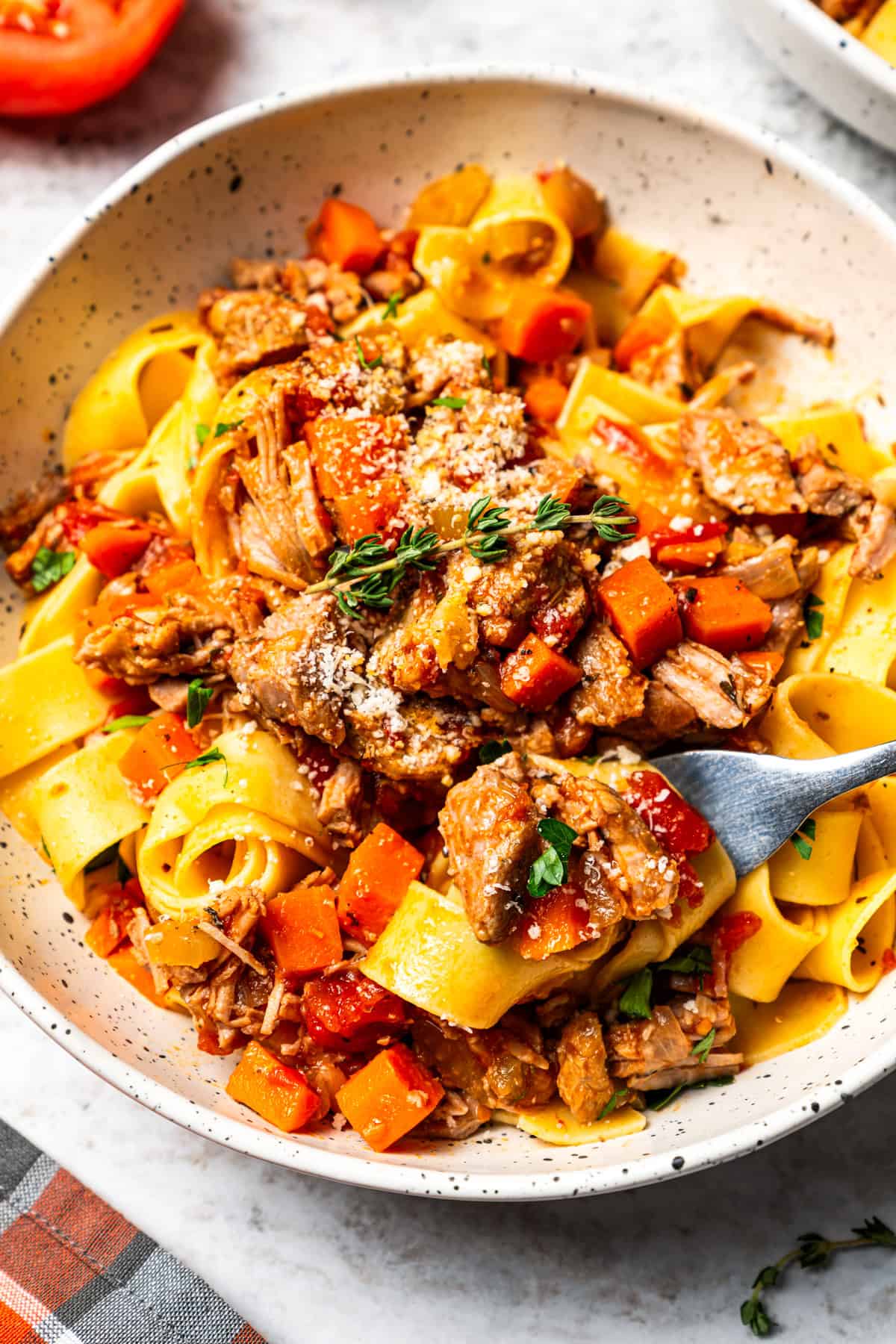
What to Serve With Pork Ragu With Pappardelle
Pin this now to find it later
-
Prep. Preheat the oven to 325˚F.
-
Sear the pork. Season the pork generously with salt and pepper. Heat 2 tablespoons of olive oil in a large Dutch oven over medium-high heat. Working in batches, sear the pork on all sides until deeply browned, about 6 to 8 minutes. Transfer to a plate.
-
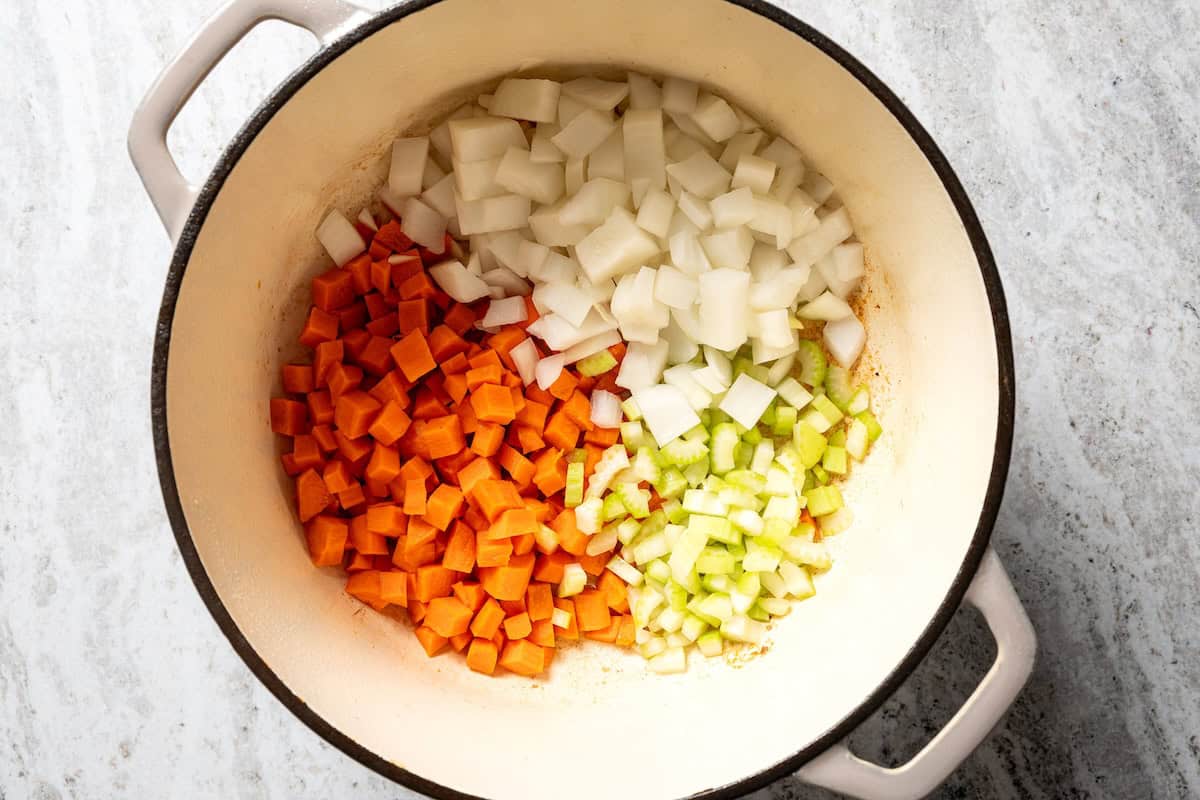
Make the flavor base. Reduce the heat to medium. Add the onion, carrots, and celery to the pot and cook for 7 to 8 minutes, stirring occasionally, until softened. Stir in the garlic and cook for 20 seconds or until fragrant. Add the tomato paste and cook for 2 minutes, stirring constantly, until it darkens slightly. Stir in the thyme and rosemary.
-
Combine. Add the tomato paste, canned tomatoes, chicken broth, Worcestershire sauce, and bay leaf. Return the pork and any accumulated juices to the pot.
-
Cook. Cover the pot with the lid and transfer it to the oven. Cook for 2½ to 3 hours, or until the pork is fork-tender and shreds easily. At this point, you can leave the pork in larger chunks for a rustic presentation or shred it into smaller pieces using two forks.
-
Make the pasta. Meanwhile, cook the pasta according to the package directions.
-
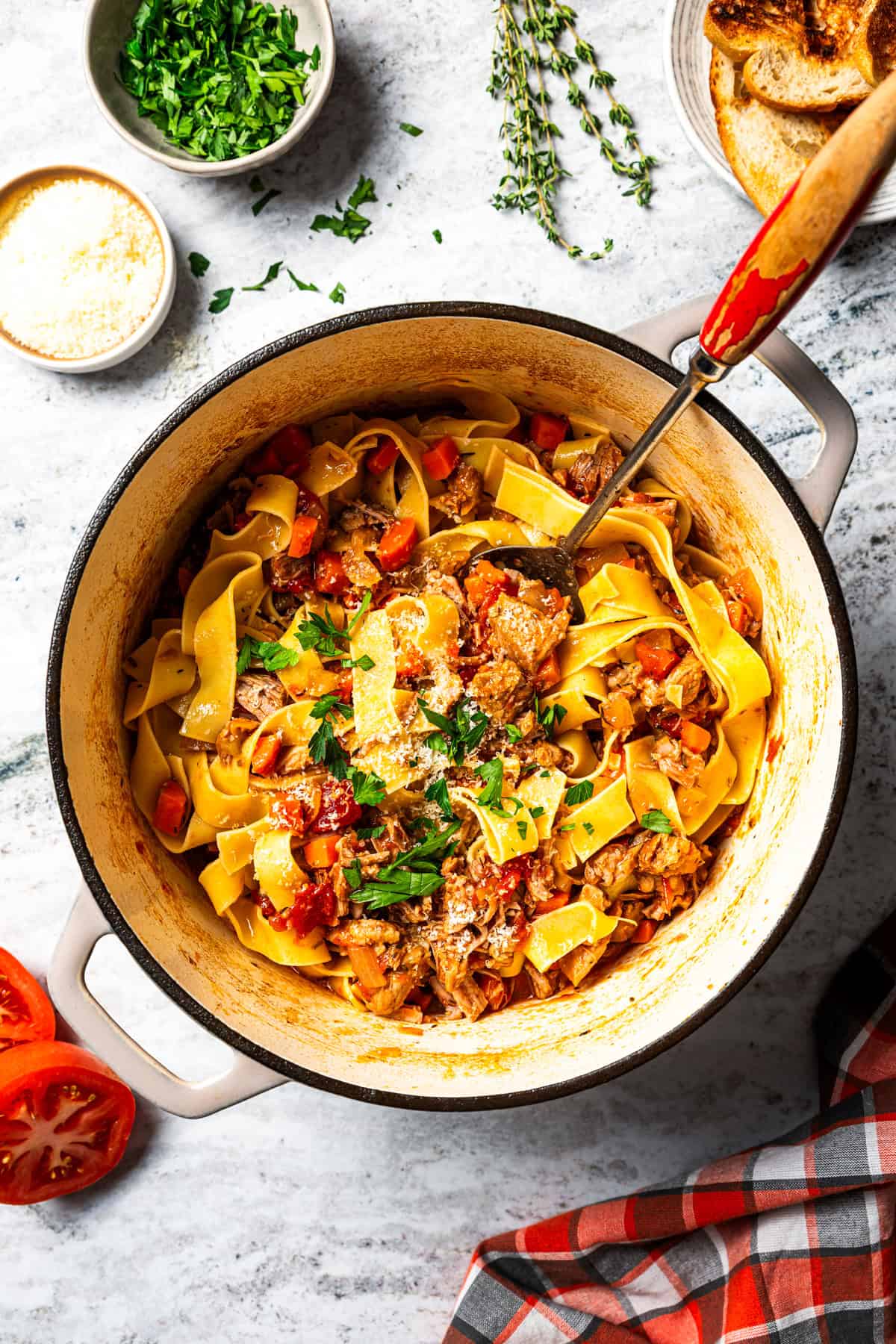
Serve. Add the cooked pasta to the ragu and stir in freshly grated Parmesan cheese. Toss until evenly coated. Garnish with chopped parsley and additional Parmesan cheese before serving.
- Pork shoulder works best because it gets tender during slow cooking.
- If the sauce thickens too much while braising, add a little more chicken broth.
- Reserve a little pasta water to loosen the sauce if needed.
Serving: 1cup | Calories: 465kcal | Carbohydrates: 50g | Protein: 37g | Fat: 13g | Saturated Fat: 3g | Polyunsaturated Fat: 2g | Monounsaturated Fat: 6g | Trans Fat: 0.1g | Cholesterol: 119mg | Sodium: 366mg | Potassium: 956mg | Fiber: 4g | Sugar: 6g | Vitamin A: 3830IU | Vitamin C: 13mg | Calcium: 116mg | Iron: 4mg
Nutritional info is an estimate and provided as courtesy. Values may vary according to the ingredients and tools used. Please use your preferred nutritional calculator for more detailed info.
How to Make Pork Ragu
When you’re ready to start your ragu, follow the steps below. This savory pork ragu takes about 10 minutes to prep, then the oven takes over the rest. Here’s what to do.
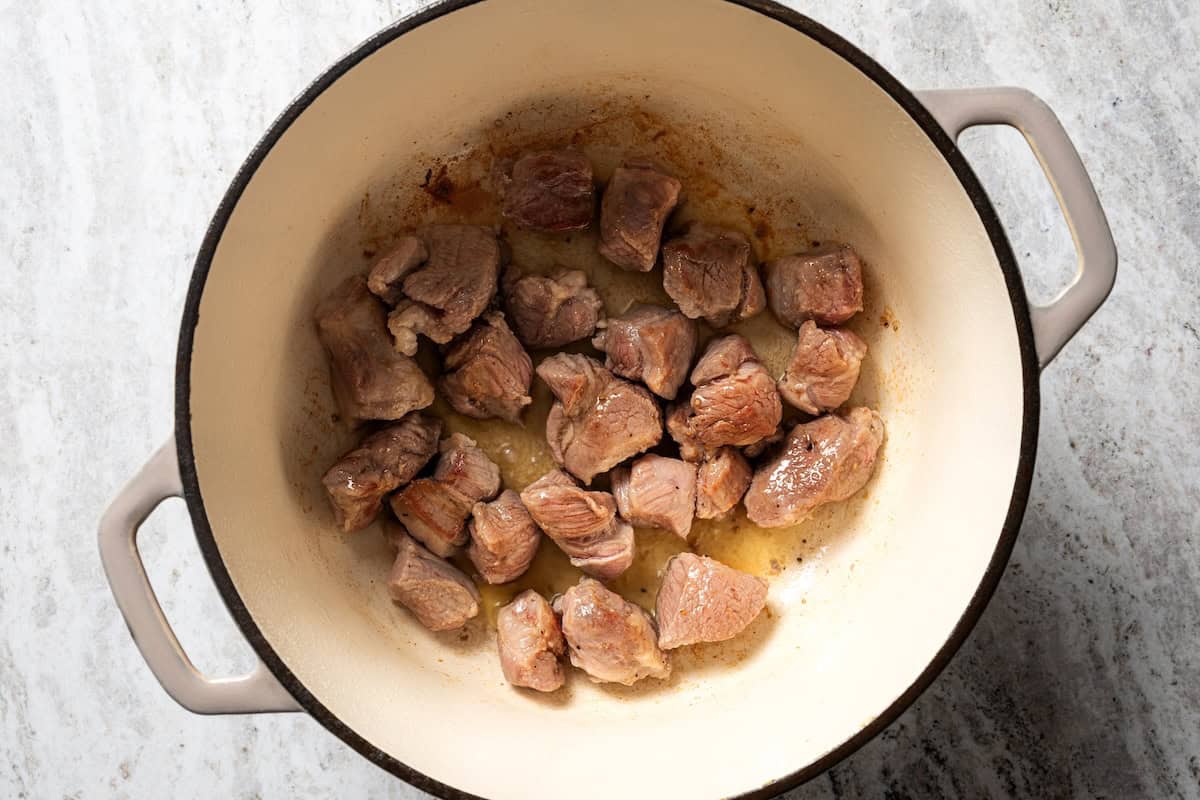
- Sear the pork. While the oven preheats to 325ºF, season the pork pieces all over with salt and pepper. Then, working in batches, you’ll sear the pork in a Dutch oven with oil. Cook over medium-high heat for 6-8 minutes, until browned on all sides. Remove the pork from the pot and set it aside for now.
- Make a flavor base. Next, lower the heat and sauté the onion, carrot, and celery until softened, then stir in the garlic. Add the tomato paste and cook it off for a minute or two, then add the thyme and rosemary.
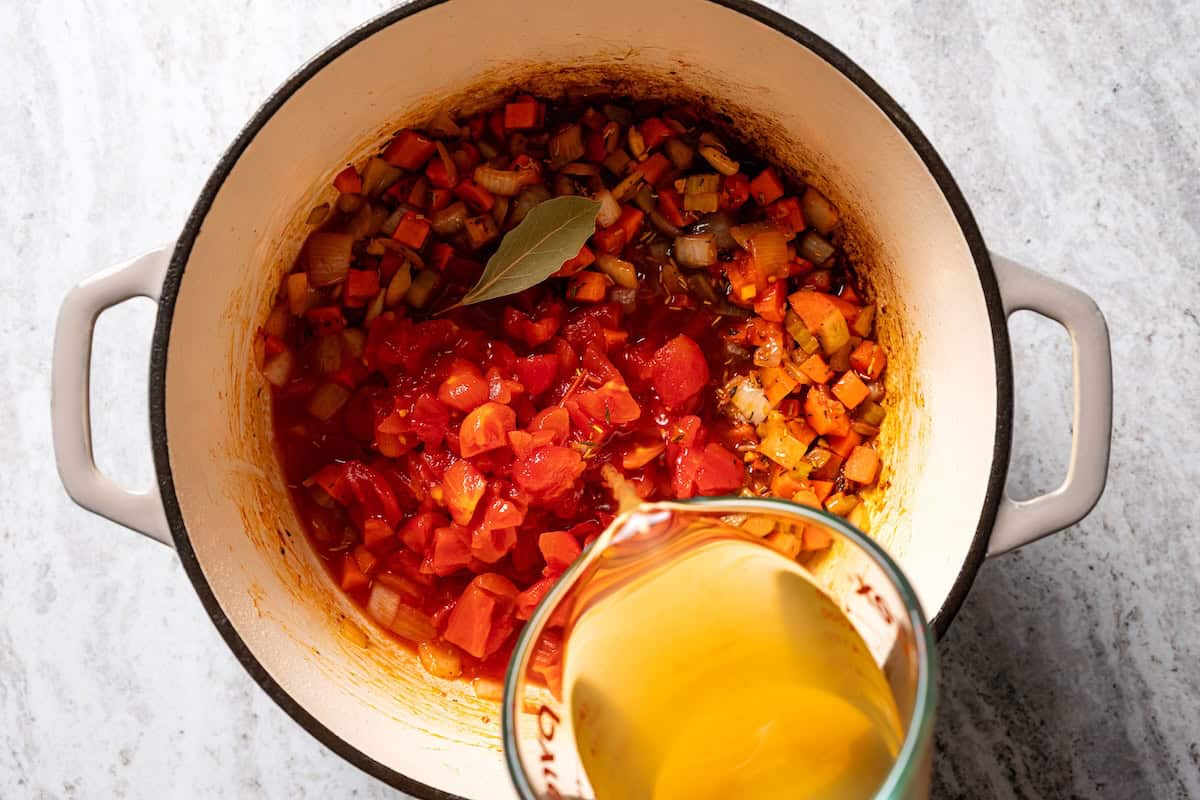
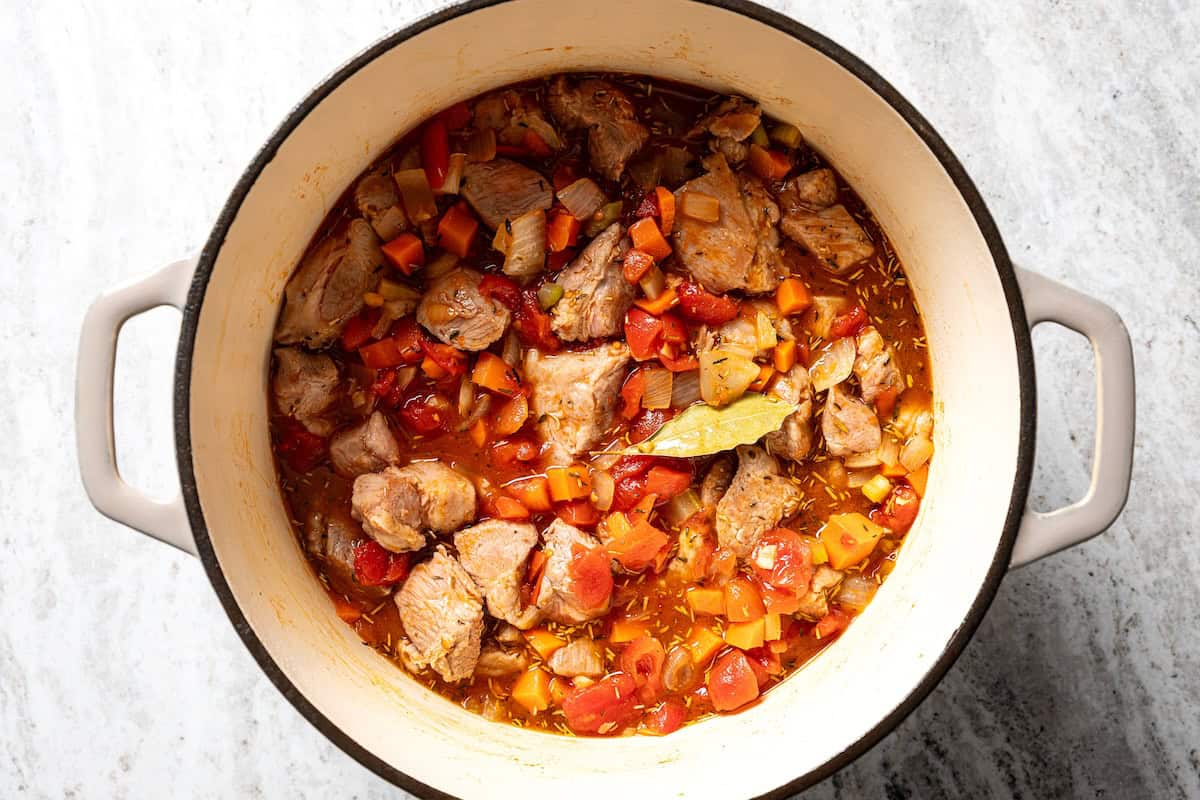
- Combine. Stir in the canned tomatoes, chicken broth, and Worcestershire sauce. Drop in a bay leaf, then return your seared pork to the pot, along with any juices.
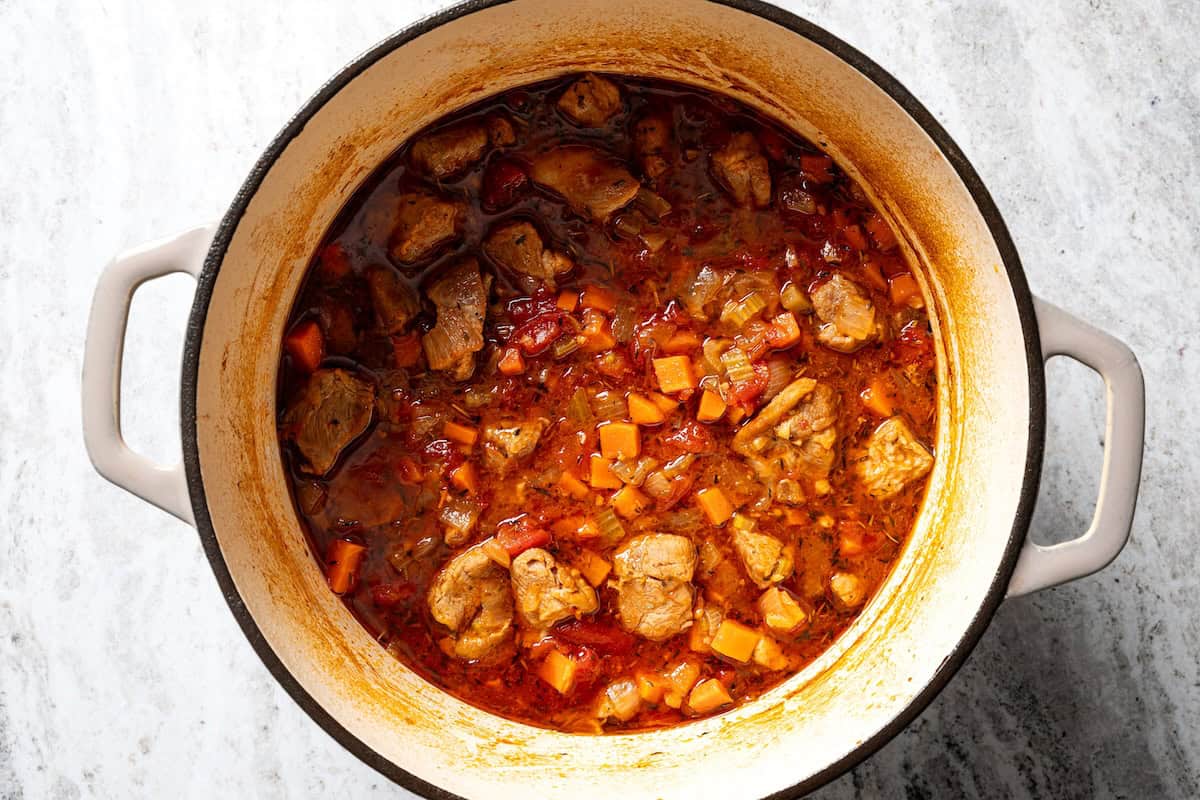
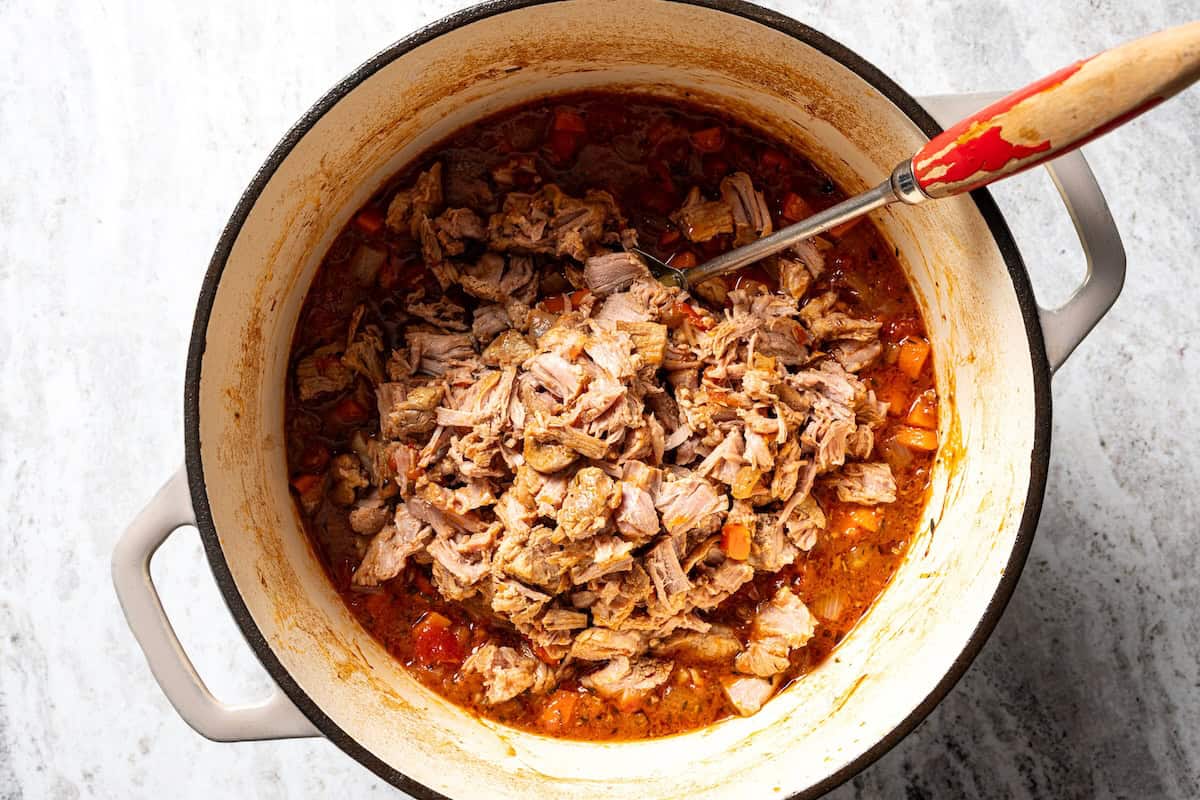
- Braise. Cover the pot and transfer the ragu to the oven. Cook for 2½ to 3 hours, until the pork pieces are tender and easy to shred with a fork.
- Shred the pork. You can shred the pork right in the pot or transfer it to a sheet pan or plate. Use two forks to shred it, and then stir the pork back into the sauce.
Serve Pork Ragu With Pappardelle Pasta
For a comforting family dinner, I love tossing my finished pork ragu with wide pasta ribbons. It’s the traditional way to enjoy ragu, and it’s quick.
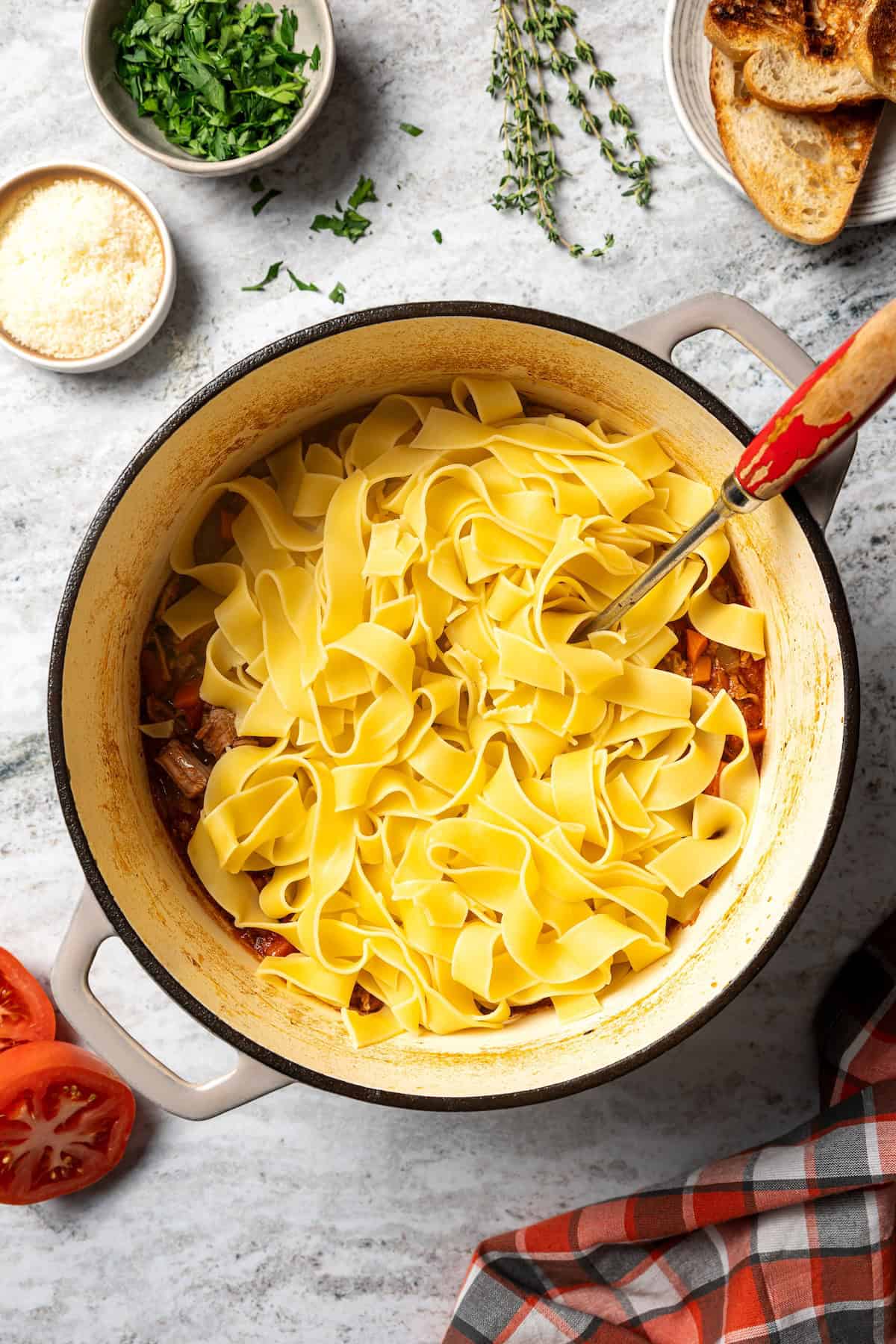
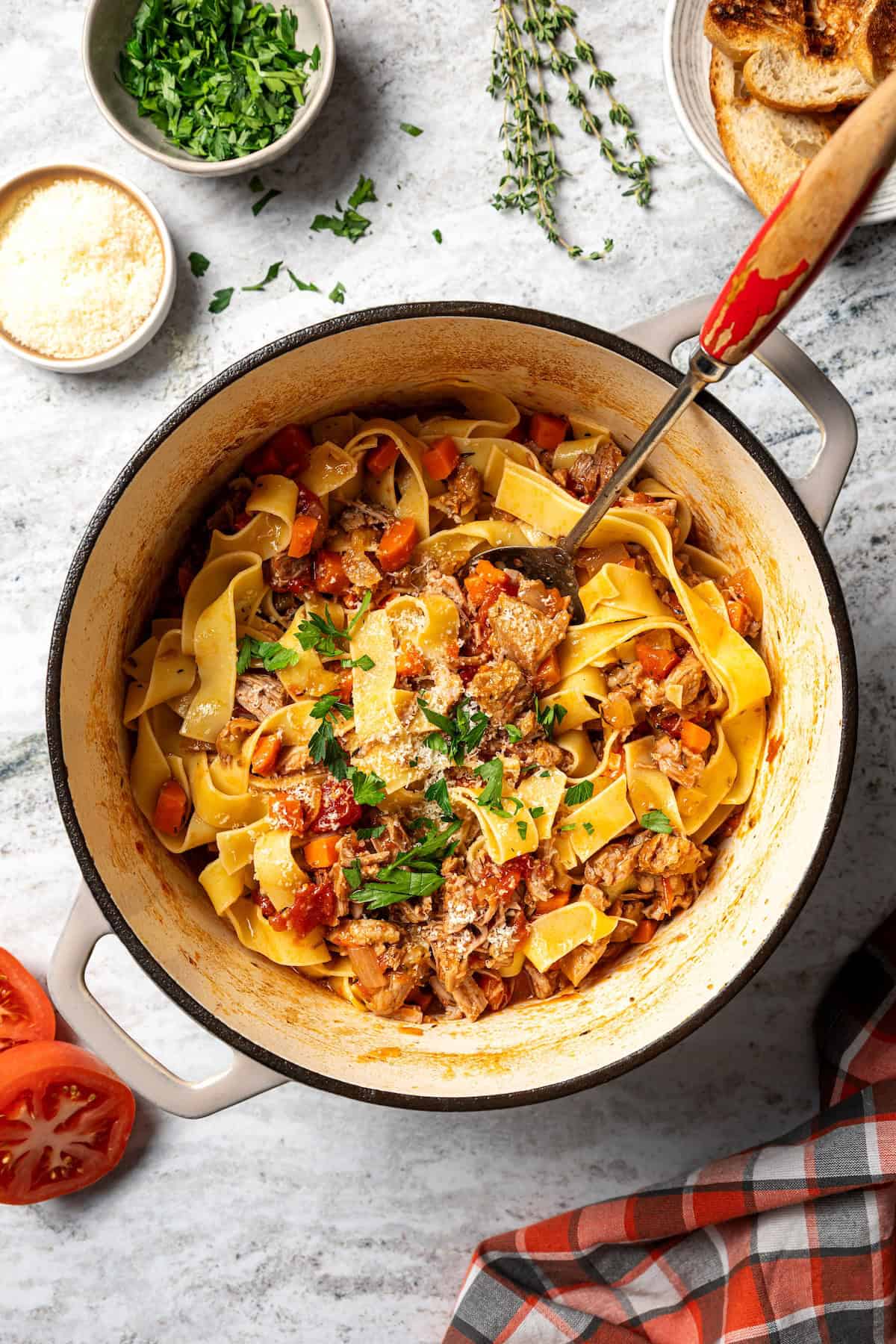
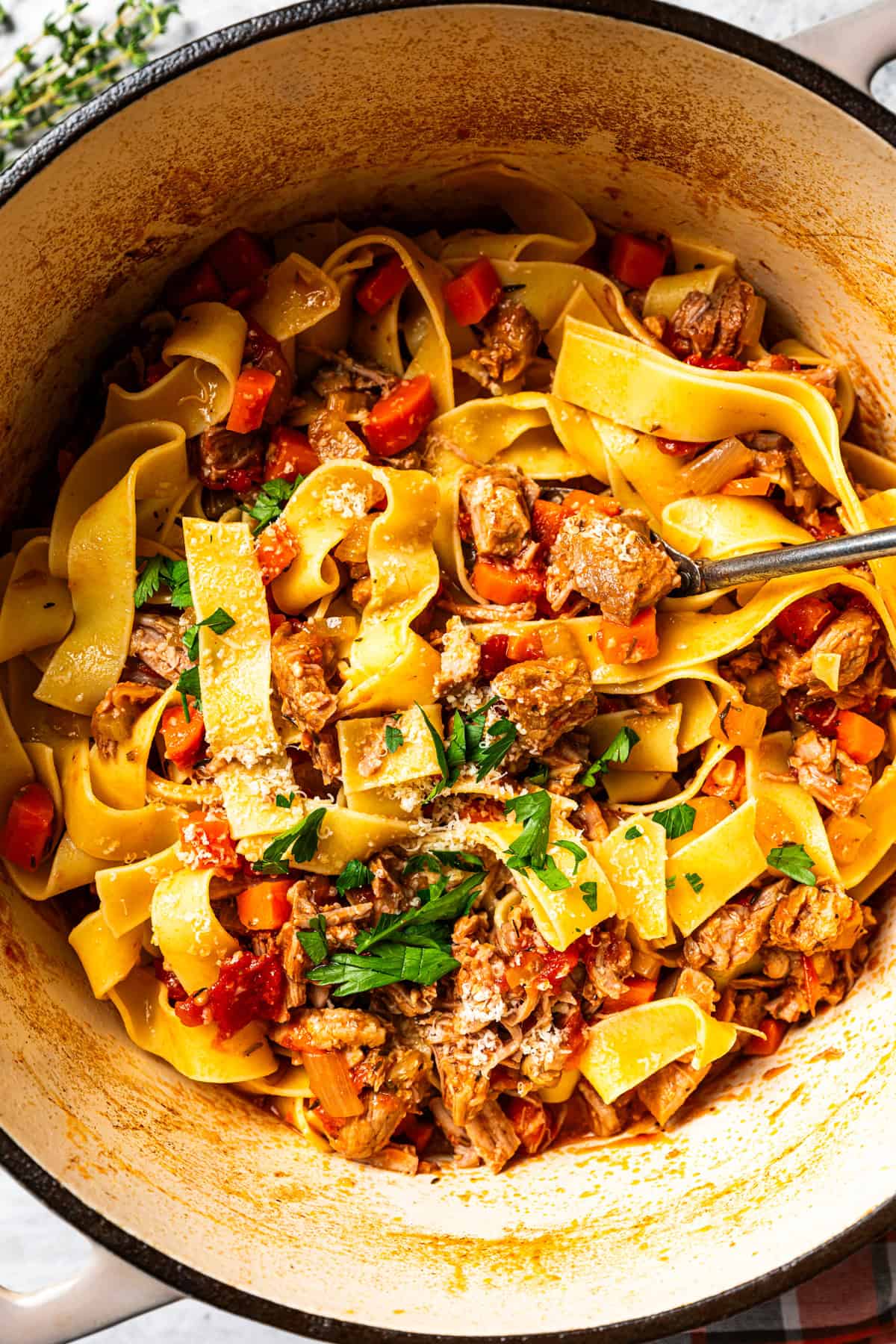
- Put it all together. When it’s time to serve, boil pappardelle pasta until al dente, then add it to the ragu with freshly grated Parmesan cheese. Toss until that’s well combined. Serve topped with an additional sprinkle of Parm and fresh parsley. Buon appetito!
Storage and Freezing
- Refrigerate. Store any leftover ragu in an airtight container and refrigerate it for up to 4 days.
- Reheat. Warm leftovers in a saucepan on the stove or in the microwave.
- Ragu freezes well. Seal the cooled meat sauce in a freezer bag or container and freeze it for up to 2 months. Thaw in the fridge overnight, or you can reheat the sauce from frozen over low heat.

