


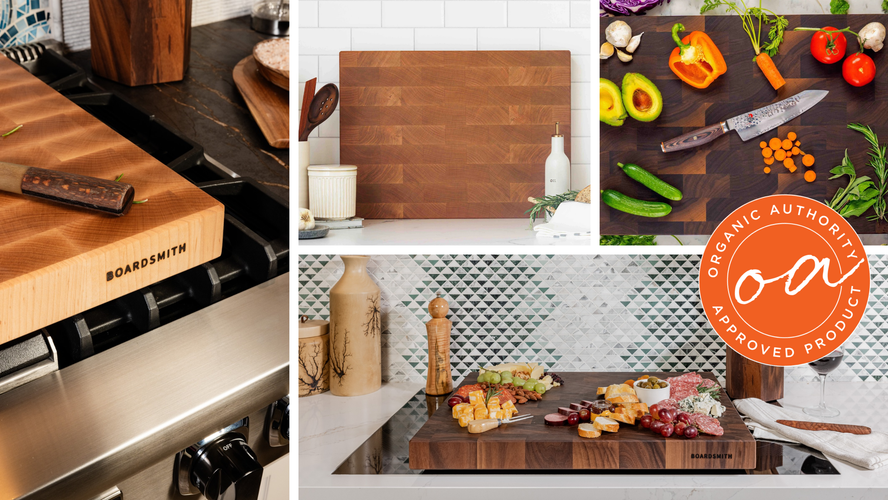
As a food writer, recipe developer, and avid home cook, I use a cutting board multiple times a day. And since it’s constantly in contact with the food I eat, it’s important that I use a durable board that’s safe and healthy. If it also looks good enough to stay out on the counter, even better.
My Boardsmith Walnut End Grain Cutting Board is one of my most-used kitchen items. It wasn’t a bargain buy, but I’ve tested and used dozens of cutting boards made from a variety of materials, and in my opinion this one is well worth the price. Here’s why I highly recommend a Boardsmith board.
TL;DR: The Boardsmith Walnut Board at a Glance
- Price: $295 at launch (for Black Walnut, smallest size)
- Material: Sustainably harvested solid hardwood, end-grain construction
- Wood Options: Black Walnut, Cherry, Maple
- Made in: Frisco, Texas, USA
- Made to order, ships in 2–3 weeks
- Sizes:
- 12 x 18 x 2 in.
- 16 x 22 x 2 in.
- 18 x 24 x 2 in.
- Add-on options: Finger grooves (+15), juice groove (+25–$35), feet and personalized engraving
The Verdict: If you’re someone who spends a lot of time in the kitchen but still relies on a plastic cutting board, we think a Boardsmith cutting board (or another option made without plastic!) should be one of the very first things you invest in.
| Pros | Cons |
| Beautiful, rich walnut grain | Expensive, especially in larger sizes |
| End-grain construction is gentle on knife edges | Heavy |
| Thick, durable construction | Requires regular oiling and hand washing |
| Three sizes and multiple customization options | Made-to-order production means a 2–3-week wait |
| Handcrafted in the USA |
Why It’s Time to Retire Your Plastic Cutting Board
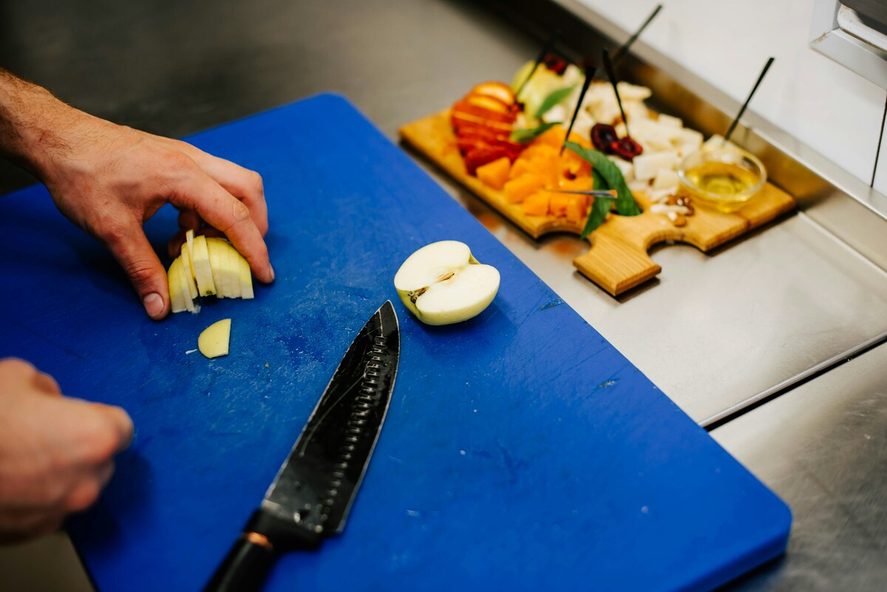
Research suggests that a plastic cutting board could be a major source of microplastics. One study estimates that polyethylene boards can shed as much as 50.7 grams of plastic per year and polypropylene boards can shed up to 49.5 grams per year1. It goes without saying that that’s not something you want in your dinner.
While the health effects of consuming microplastics aren’t entirely clear, and wood boards can also shed particles, there are other downsides to consider. Plastic boards can harbor bacteria in the nicks and scratches that your knife inevitably makes on the surface. And if you wash them in the dishwasher, they often warp and become difficult and unsafe to cut on.
If you’re ready to give up your plastic boards, note that most aren’t accepted by curbside recycling programs. Instead, you can upcycle them to use for crafts or other uses outside the kitchen.
How I Tested The Boardsmith Cutting Board
I’ve been using my Boardsmith board for over six months. I use it for all my daily chopping tasks and kitchen prep work, from dicing veggies for roasting to slicing avocados for toast. I mince herbs and smash garlic on the board, and use it to carve whole chickens and slice steaks.
I’ve also used it with serrated knives to slice bread and tested potential staining foods like dark berries and beets. If I let the juices sit on the board while I ate dinner, the wood still cleans up easily. And even if I chop things like onions or garlic, I never notice the board holding onto any strong odors.
I’ve also done all of the required maintenance to see exactly how cumbersome it is to maintain the board. I oil it regularly and hand wash the surface after every use — I’ll get into the details later, but I’ll just say that it’s not anything that should deter you from investing in your own.
What I Love About the Board
I love how substantial and sturdy this board is. It’s heavy and thick, which yes, can make it difficult to maneuver (and I don’t recommend storing it somewhere high). But that heft also gives it serious staying power on your countertop. Unlike lightweight plastic or composite cutting boards, this one stays exactly where you place it, even if you’re working through something dense like a butternut squash. It simply doesn’t budge.
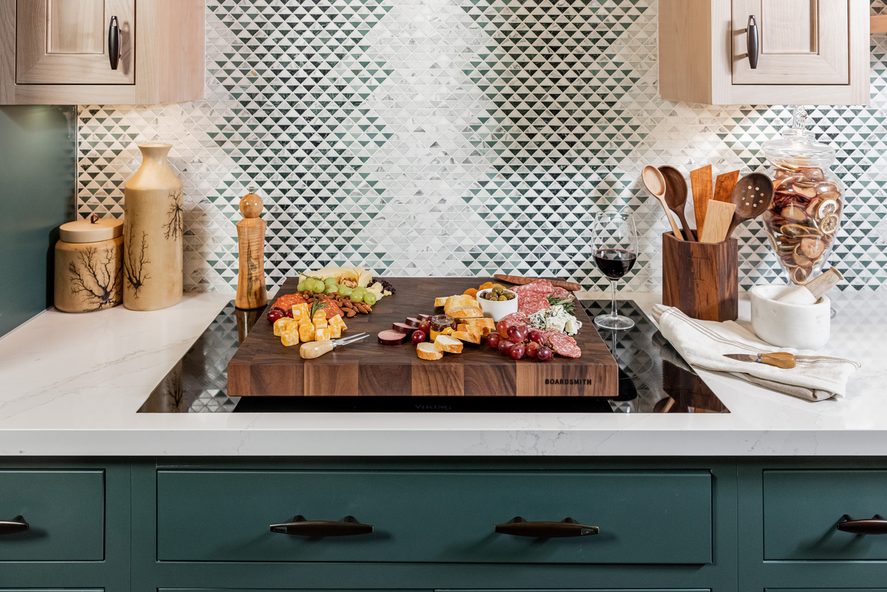
I also love that the board is attractive enough to use as a serving platter. It’s great as a charcuterie or cheese board for parties. I even like to just leave it out on the counter since I reach for it pretty much constantly, and it works well as kitchen decor.
Plus, this board is more than just a pretty (sur)face. Boardsmith uses an FDA-approved, food-safe waterproof adhesive to glue the wood together. According to the brand’s website, “your knife almost exclusively contacts wood when you chop. We did the math, and the total amount of glue your knife could encounter (on both faces of the board) is roughly equivalent to the size of a single grain of table salt.” We’d much prefer to take our chances with a grain of salt than up to 50 grams of plastics from your cheap alternatives.
What to Know Before You Buy
It’s worth noting that wooden boards, especially the thick models from Boardsmith, are on the heavy side. They come in a range of sizes, but the smallest board can weigh up to nine pounds. Of course, this is a part of that stay-put appeal, but this can make them awkward to clean at the sink.
Hardwood also requires more maintenance than synthetic materials. You’ll have to oil the board when it becomes dry (more on that below). And because Boardsmith hand-makes each board to order, keep in mind that there’s a two- to three-week lead time for delivery.
Walnut vs. Maple: Which Boardsmith Should You Get?
Maple and walnut are hardwoods that work well for cutting boards, with a few minor differences. Maple is the harder option; it has a 1,450 rating on the Janka hardness scale, which measures wood hardness. Walnut measures 1,010. A harder wood resists scratches better, but is also harder on your knife edge.
Black walnut is also darker in color, which makes it slightly better at hiding stains. But the biggest difference between the two wood options comes down to looks — if you prefer a lighter wood, go for maple. If you like dark wood, walnut is a great choice.
How to Care for It
How to Clean a Wooden Cutting Board
Wooden cutting boards should only be hand washed. Letting them sit wet can cause warping, so gently wash the board (don’t soak it) and thoroughly dry it. Air dry the board standing up on an edge to avoid warping.
If you want to do a deeper clean or sanitize your board — for example, after cutting raw meat — cover it in a 1:1 solution of water and distilled white vinegar. Let this soak in for a few seconds, then rinse it well.
How to Oil a Wooden Cutting Board
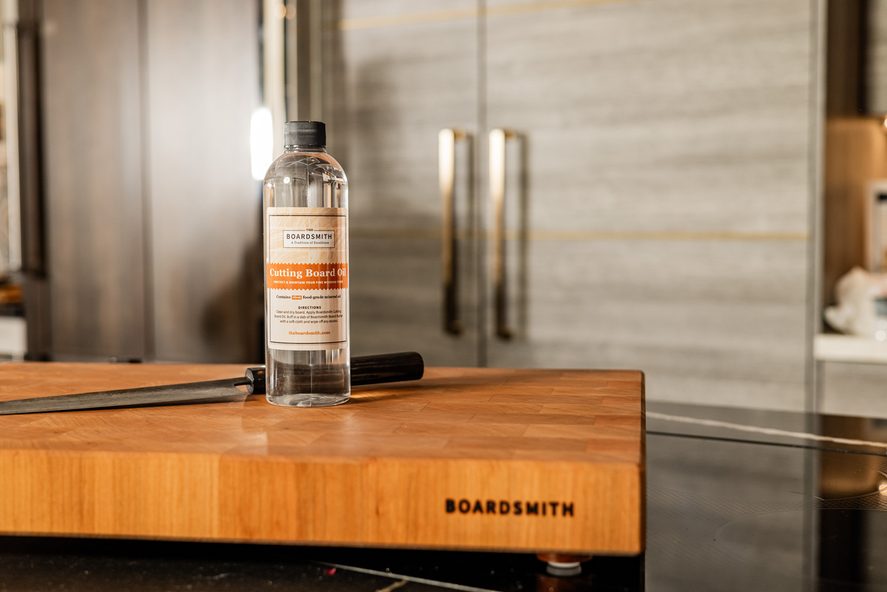
Roughly once a month, or whenever the board starts looking dry, oil your board. Boardsmith recommends applying both mineral oil and butter to lock in the hydration. I typically just apply food-safe mineral oil with my hands to all sides of the board, then buff it dry with a paper towel and let it sit overnight.
When you first get the board, it might need more frequent oiling, like every other week for the first few months.
Frequently Asked Questions
Yes, if you’re a frequent cook, want to limit your exposure to microplastics, and care about aesthetics in your kitchen, this is an excellent board.
According to the brand, the boards are handmade in Frisco, Texas, using domestic hardwoods.
Safe is an ambiguous word, and research on the health effects of microplastics isn’t settled, but we know that plastic boards shed particles that can end up in your food. Plastic can also harbor bacteria and doesn’t hold up well in the dishwasher.
Maple is harder than walnut, but walnut is gentler on your knife blade and may hide stains better over time. Both have their benefits, so it may come down to which you prefer the look of. Boardsmith also makes a black cherry board, which is the softest option and easiest on your knife edge.
No, do not put a wooden cutting board in the dishwasher. The high heat and water can warp it.
This depends on how often you’re using and washing the board. I oil mine monthly. Whenever your board loses its oiled sheen or starts to look pale, it’s time to oil it.
The Bottom Line
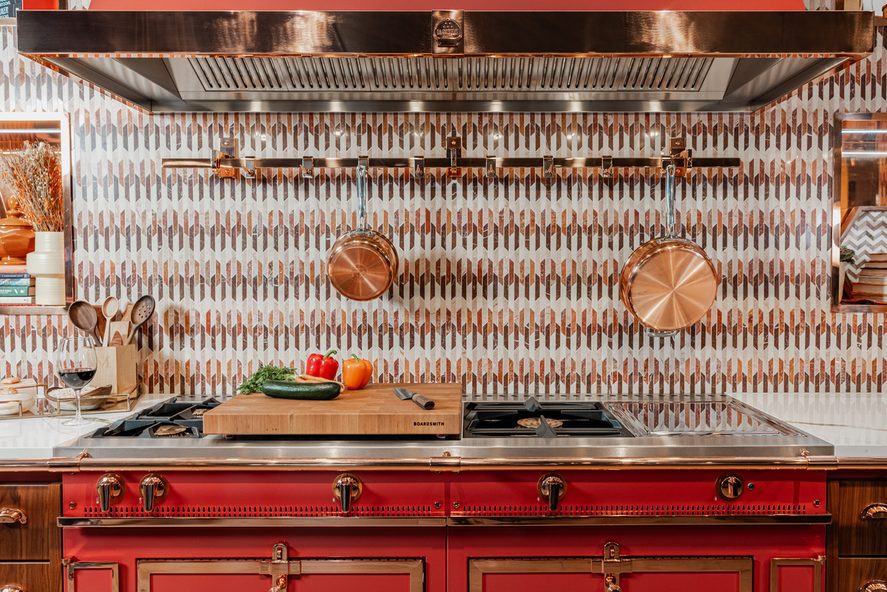
If you’re looking for a durable, high-quality board made of safe materials that you can display on your counter and use for decades, you can’t go wrong with a Boardsmith board.
I love the rich look and feel of black walnut, but cherry is a slightly less expensive option that’s gentler on your knife edge. Maple is in the middle price-wise and represents the hardest wood choice, so it resists nicks best.
If you’re not looking to spend over $200 on a cutting board at the minute, we get it — we’ve also reviewed several other great options made without plastic here.