

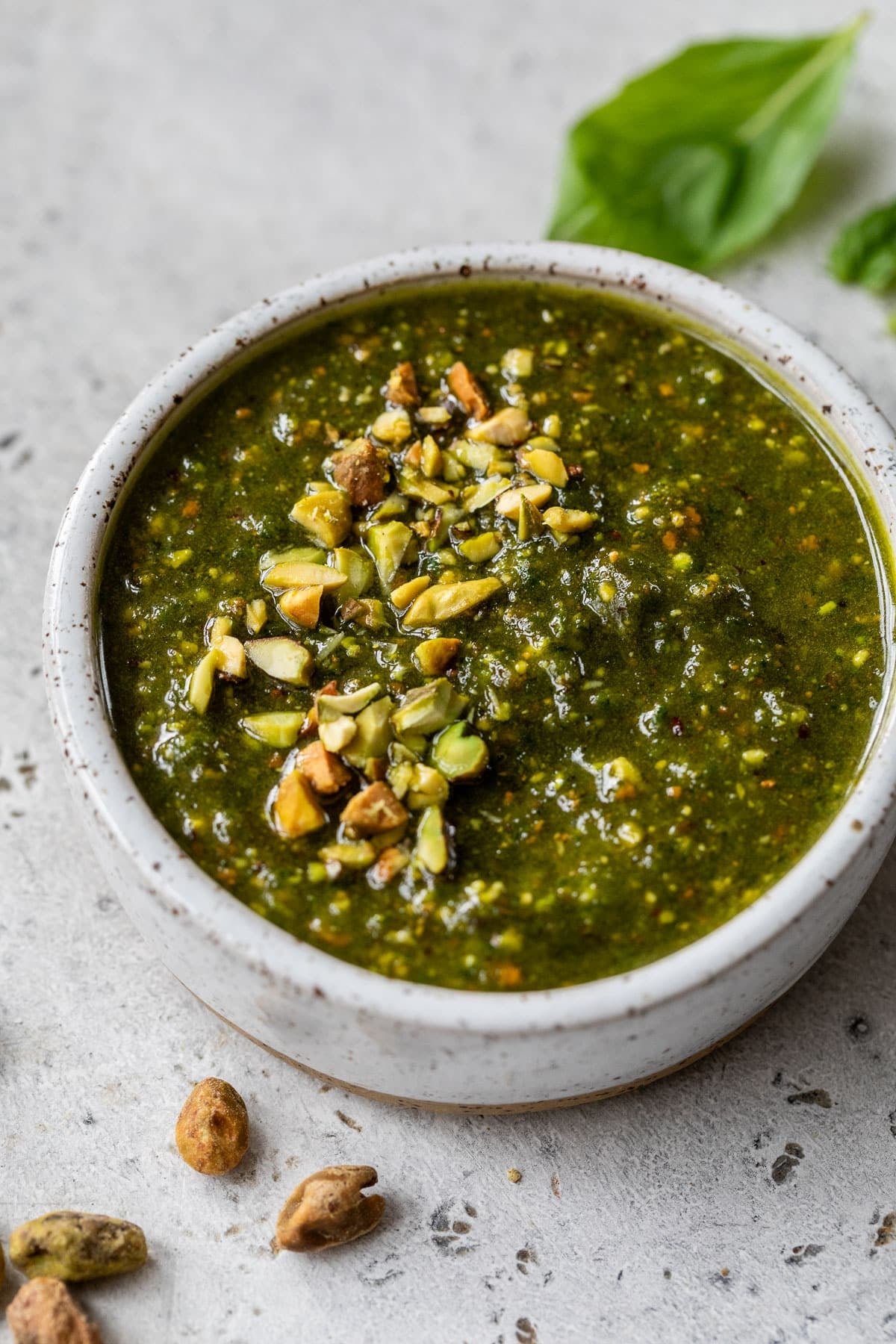
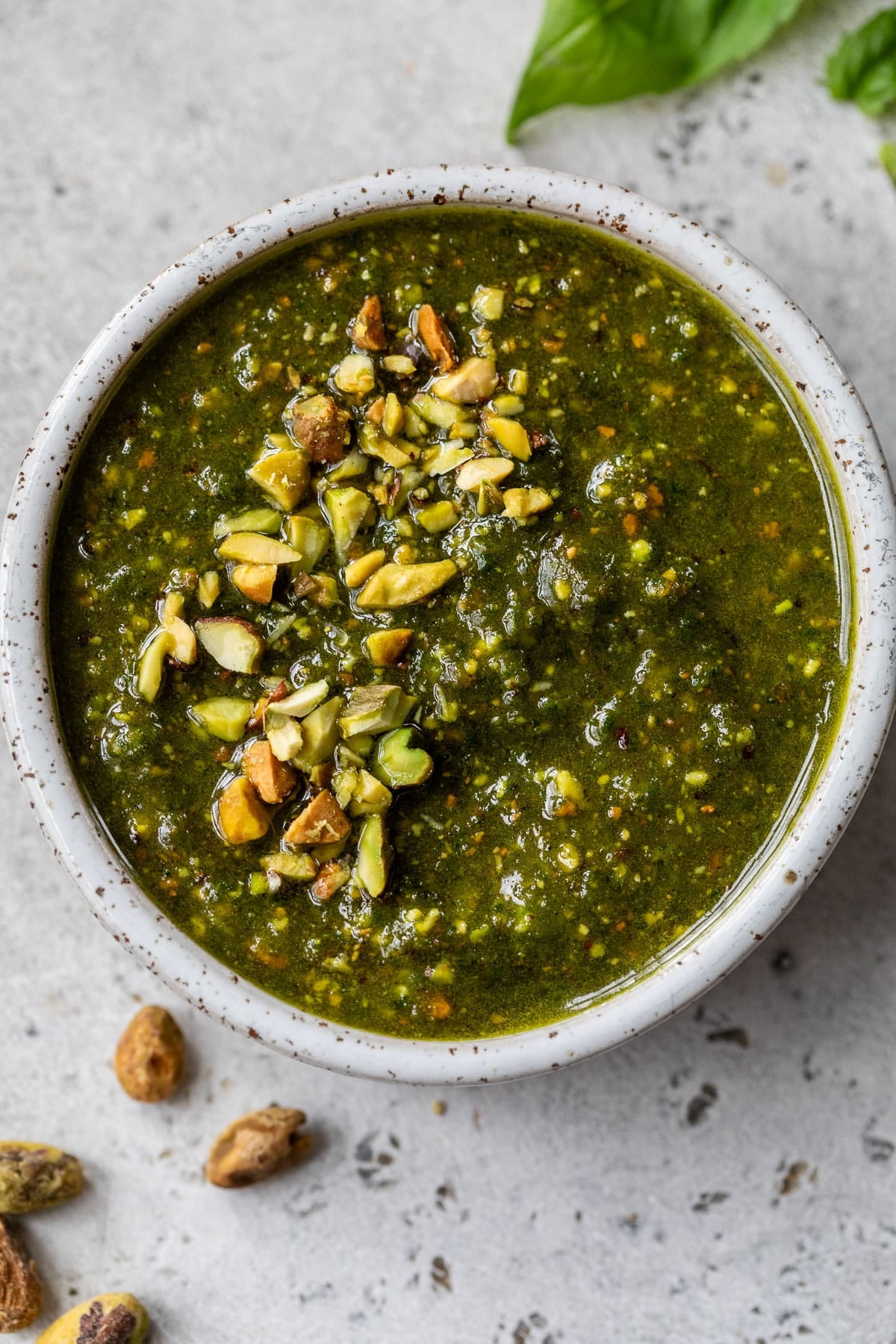
This 5-minute Pistachio Pesto recipe swaps pine nuts for pistachios, giving the classic Italian sauce a buttery, budget-friendly upgrade. It’s bright, herby, and pairs perfectly with pasta, pizza, and more!
Why you’ll love this recipe!

Pesto with a twist – Just like my almond pesto, I swapped the expensive pine nuts for pistachios for a budget-friendly, buttery, decadent twist.
Only 5 minutes – No complicated steps here. Just blend the ingredients in a food processor, then enjoy!
Use it on everything! Toss the pistachio pesto with pasta, spread it on a sandwich, drizzle it over a salad, or use it as a dip.
Basil, baby! It’s officially basil season, and I’m making as much homemade pesto as my fridge (and basil plants) can possibly handle.
But groceries are expensive, and pricey pine nuts aren’t always in my budget. My fix? Swapping them for something a little more economical, like pistachios!
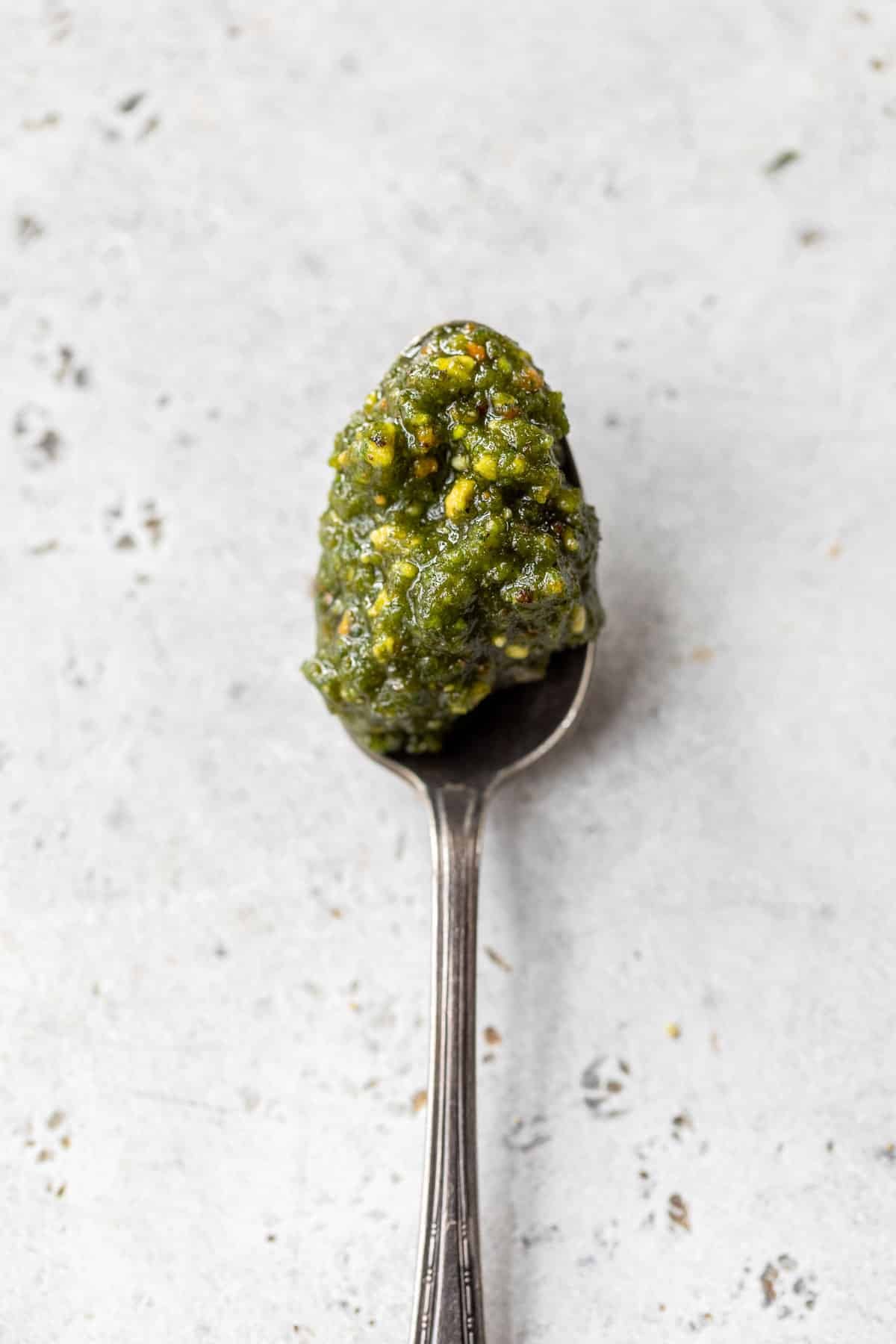
My Pistachio Pesto recipe puts a fun, budget-friendly twist on classic basil pesto. Shelled pistachios are blended with basil, parmesan, garlic, and olive oil to give this mouthwatering spread an extra hit of buttery richness.
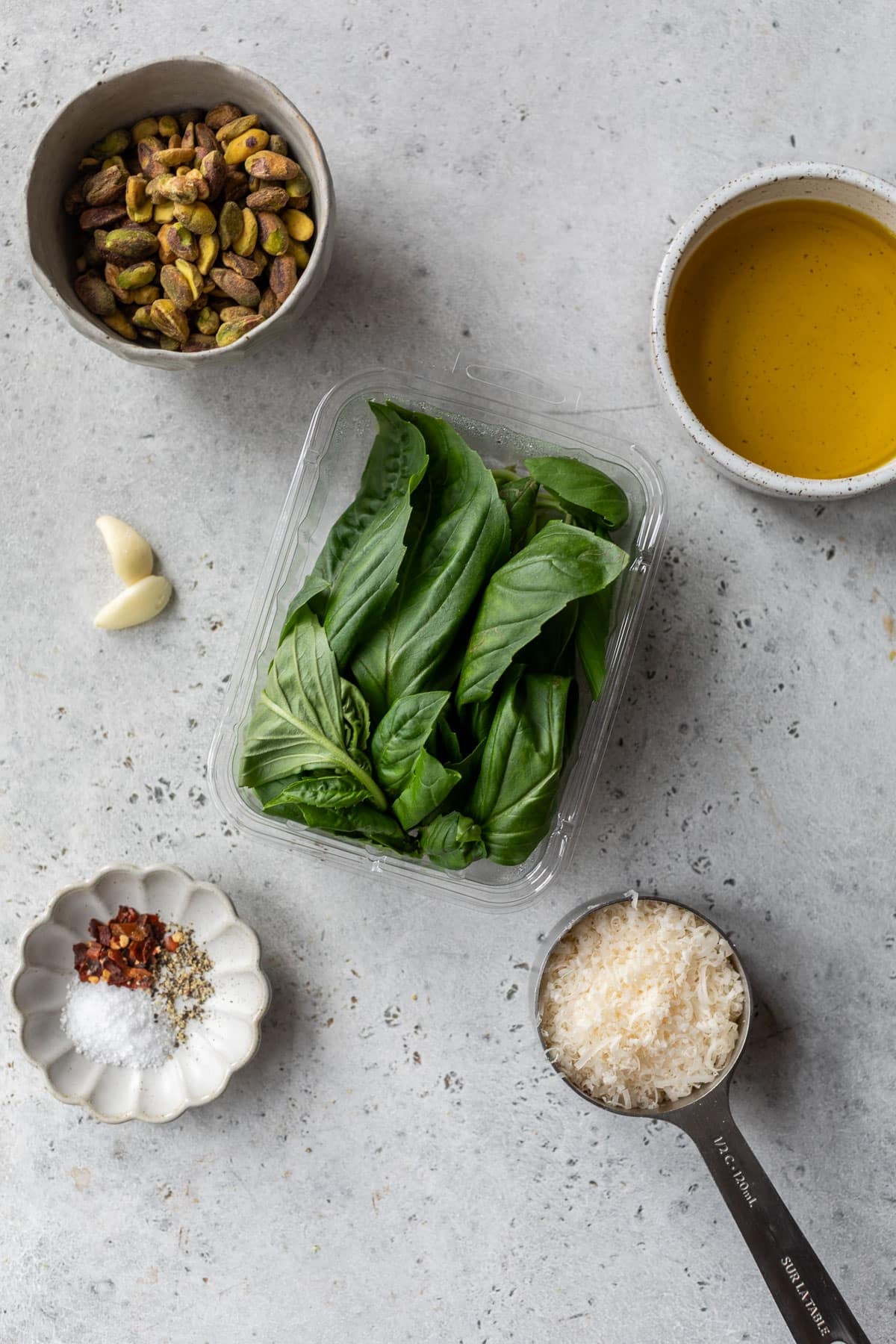
Pistachio Pesto Ingredients
Basil – This might be a given, but fresh basil leaves are the only option. I like to keep a basil plant in my kitchen for those pesto emergencies.
Pistachios – You can pop the shells off the pistachios yourself or buy shelled pistachios to save yourself the hassle (they’re a little more expensive but way more convenient). Look for unsalted pistachios, since you’ll be adding salt to the pesto.
This list is to provide further clarification on a few of the ingredients. See recipe card below for the full ingredient list.
Variations
- Dairy-free version: You can omit the parmesan cheese or replace it with nutritional yeast to make dairy-free pesto.
- Cheese upgrades: I’ve found that parmesan, Parmigiano Reggiano, or Pecorino Romano cheese grated from the block always makes my pesto taste like it was flown in from Italy.
- Add leafy greens: Running low on basil? Combine the basil leaves you do have with other fresh, leafy greens, like spinach, arugula, or kale.
- Add lemon: A squeeze of lemon juice or about 1 teaspoon of lemon zest can really brighten things up here.
How to Make Pistachio Pesto
Step 1: Combine. Add all of the ingredients EXCEPT the olive oil to a food processor. Pulse to combine.
Step 2: Add the oil. With the motor running, pour the olive oil in through the top of the food processor and continue blending until the pesto is smooth.
Step 3: Serve. Your pesto is ready to use as a dip, sandwich spread, or pasta sauce!
Erin’s Tips and Tricks
- Are your pistachios already salted? Remember to omit the extra salt from the recipe.
- Try toasting the pistachios in a dry skillet over low-medium heat until they’re fragrant. It’s not a necessary step in this recipe but will make the pistachio pesto taste even better.
- Taste the pesto as you go. It might need an extra pinch of salt, pepper, or red pepper flakes after blending.
- The pesto is ready when it looks almost smooth in the food processor. Be careful not to overprocess it, or else the basil leaves will taste bitter.
- This recipe makes 3/4 cup of pistachio basil pesto. You can always double or triple the recipe if you need more.
My Pro Tip
Go With High-Quality Ingredients
Pesto is the best because it’s easy to make with a handful of ingredients, right? True, but only if those ingredients are high-quality. Use bright green, glossy basil leaves, crunchy pistachios, whole garlic cloves, and parmesan grated right from the block for the very best pesto.
Ways to Use Pistachio Pesto
- You honestly can’t go wrong by dipping really great bread into a bowl of pesto.
- Or spread the pesto on the bread and layer some grilled veggies and cheese on top for a summery vegetable sandwich.
- Toss the pesto with cooked pasta, plenty of cheese, and arugula when you’re craving pistachio pesto pasta or a pesto pasta salad.
- Pesto + pizza = ♥️ It’s why I usually eat this burrata-topped pesto pizza all by myself (swap the kale pesto for this pistachio pesto).
- My grilled pesto chicken is one of my favorite summer dinners.
- Drizzle it over salads, grain bowls, or bowls of soup when you’re looking for more fresh flavor.
Storage
Refrigerator: Store the pesto in a sealed jar in the refrigerator for up to 3 days. To prevent it from browning, press a layer of plastic wrap directly on top of the pesto before securing the lid.
Freezer: I like freezing pesto in ice cube trays, then transferring the cubes to a freezer-safe container or bag. They freeze well for up to 5 months like this, and it’s easy to thaw as many cubes as I need later on.
More Pesto Recipes
If you made this recipe, be sure to leave a comment and star rating below. Thanks!
-
Add all of the ingredients EXCEPT the olive oil to a food processor then pulse to combine.
-
With the motor running, pour the olive oil in through the top and continue blending until everything is combined.
-
Transfer to a bowl or glass jar and enjoy!
-
Storage: Store pesto in a sealed jar in the refrigerator for up to 3 days, or in the freezer for up to 5 months.
*Calories are per serving and are an estimation.
Calories: 182kcal | Carbohydrates: 3g | Protein: 3g | Fat: 18g | Saturated Fat: 3g | Polyunsaturated Fat: 3g | Monounsaturated Fat: 12g | Cholesterol: 3mg | Sodium: 214mg | Potassium: 106mg | Fiber: 1g | Sugar: 1g | Vitamin A: 400IU | Vitamin C: 2mg | Calcium: 70mg | Iron: 1mg